Three People in Indonesia Convicted for Crypto-Funded Terrorism Financing
2026-04-07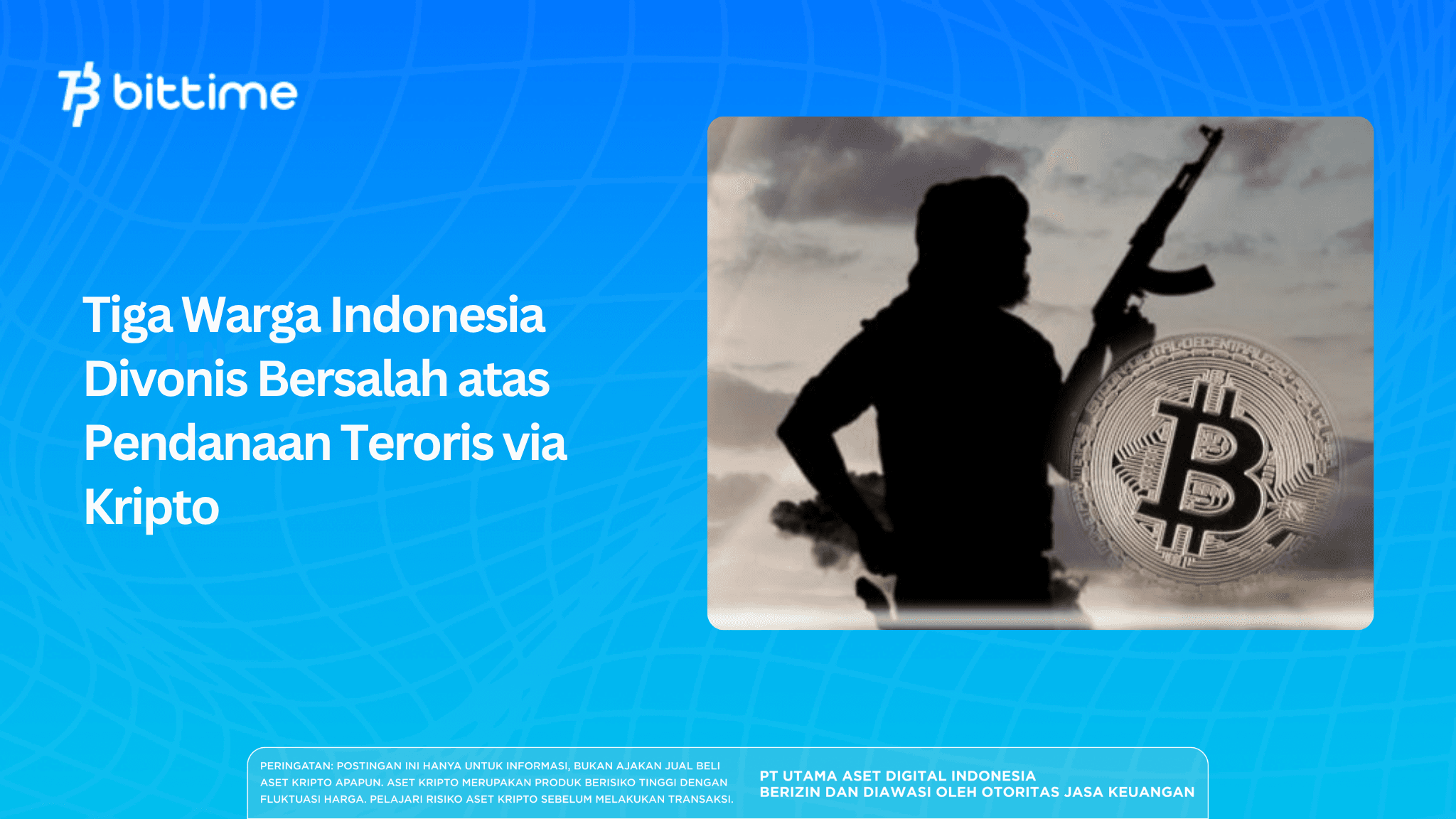
Indonesian courts handed down convictions against three individuals for funding terrorism using cryptocurrency between 2024 and 2025 — making it one of the most significant legal precedents in Southeast Asia's fight against crypto-enabled illicit finance.
The cases, published in detail by TRM Labs on April 5, 2026, mark what analysts are describing as one of the first times blockchain evidence anchored a terrorism financing conviction in the region.
All three defendants were proven to have sent cryptocurrency to Syria-based fundraising campaigns linked to ISIS. None of them carried out attacks. Their role was in the financial supply chain — collecting, converting, and moving money across borders to support networks engaged in or planning acts of terrorism.
That distinction matters legally, but it does not reduce the gravity of what they enabled. The Indonesian crypto terrorist network they served was transnational, adaptive, and deliberately structured to exploit the cross-border speed of digital assets.
Key Takeaways
- Three people were convicted between 2024–2025 for financing terrorism via crypto, including one who transferred over 49,000 USDT through 15 separate transactions to an overseas exchange.
- Blockchain evidence was central to each prosecution: investigators traced on-chain wallet addresses to ISIS-affiliated fundraising networks and presented that data as admissible court evidence.
- Indonesia's crypto compliance framework has fundamentally shifted: OJK now mandates suspicious transaction reporting for all crypto platforms, and these convictions demonstrate those reports trigger real investigations.
Register on Bittime now and start trading crypto with a fast, secure, and easy process on the app.
Who Were the Three Defendants and What Did They Do?
Each of the three individuals was charged and convicted in separate proceedings before Indonesian courts, with decisions reviewed by the Supreme Court.
One was proven to have sent 15 transactions totaling over 49,000 USDT from his account at an Indonesian exchange to a foreign-based exchange. That is a traceable, documented trail on a public ledger — one that investigators were able to reconstruct in full.
None of the defendants were alleged to have conducted attacks themselves. They occupied a critical link in the financing chain: collecting, transferring, and — in at least one case — converting funds into cryptocurrency to move money to individuals and networks engaged in, or planning, acts of terrorism.
The Syria connection is not incidental. All three sent funds to campaigns linked to ISIS networks based there.
This places the Indonesian cases within a broader international terrorism financing architecture — where cryptocurrency served as the mechanism of choice precisely because it could bypass traditional banking controls with speed and relatively low friction.
How the Investigation Worked: PPATK, Densus 88, and On-Chain Intelligence
The convictions did not happen through luck or tip-offs alone. They were the product of methodical financial intelligence work combining two capabilities that Indonesia has been quietly building for years.
PPATK, Indonesia's financial intelligence unit, has been central to this effort. Its SIPENDAR platform — a centralized database enabling real-time information sharing between financial institutions and law enforcement — gave Detachment 88, Indonesia's elite counter-terrorism unit, the ability to access financial records and trace networks in near real time.
PPATK's 2023 annual report documented a joint action with Special Detachment 88 to uncover ISIS terrorism funding sourced from domestic donations using crypto assets — channeled through a humanitarian organization soliciting public donations under the guise of providing aid. The disguise was deliberate and effective — until blockchain tracing made it visible.
TRM Labs provided the analytical layer. Investigators traced transactions on-chain, connected wallet addresses used by the defendants to broader financing networks, and presented that blockchain evidence as part of the formal evidentiary record at trial.
Cryptocurrency's permanent, public transaction history — often mistaken for a weakness in investigations — became the prosecution's strongest asset.
Why Crypto? And Why It Failed to Hide the Trail
There is a persistent misconception that cryptocurrency transactions are anonymous and therefore untraceable. This case is a direct rebuttal.
The cases are part of a broader regional shift in which terrorist cells are increasingly using cryptocurrency to move funds across borders and evade traditional financial monitoring — a pattern TRM Labs has tracked across multiple jurisdictions.
The appeal is understandable from a criminal perspective: fast cross-border transfers, no mandatory bank account opening with identity checks, and — historically — limited law enforcement capacity to analyze blockchain data. But that third factor has changed dramatically.
Every crypto transaction is recorded permanently on a public ledger. Wallet addresses, transaction amounts, timestamps, and fund flows are all visible and immutable.
When law enforcement has the right tools, that ledger becomes a detailed financial confession. The defendants in these Indonesian cases left exactly that kind of evidence trail — and investigators followed it all the way to a conviction.
What This Means for Indonesia's Crypto Industry
The regulatory implications of these convictions extend well beyond law enforcement. Indonesia's OJK took over supervision of crypto platforms from Bappebti in 2024, bringing VASPs under the same AML/CFT obligations as traditional financial institutions.
Suspicious transaction reporting for crypto platforms is now mandatory under SEOJK No. 20 of 2024. These convictions demonstrate that those reports can and do trigger active investigations.
For compliance teams at Indonesian crypto exchanges, this is a concrete signal: blockchain analytics is no longer optional infrastructure. It is a regulatory requirement with demonstrated law enforcement consequence. Compliance programs focused on the most obvious threat typologies will miss the facilitator layer of the ecosystem — the individuals who never conduct attacks but make them financially possible.
The regional picture supports Indonesia's trajectory. Across Singapore, Malaysia, and Indonesia, financial intelligence units are building technical capacity to trace virtual assets, share data in real time, and construct prosecution-ready cases. The three Indonesian convictions are evidence that investment in that capacity is producing results.
Conclusion
Three convictions. Forty-nine thousand USDT. Fifteen traceable transactions. And blockchain evidence that a court accepted as legally sufficient to imprison people for terrorism financing.
This case dismantles the assumption that crypto-funded terrorism operates in a legal grey zone beyond the reach of prosecutors. It does not. Indonesia has now demonstrated — before the Supreme Court — that on-chain intelligence can build a case strong enough to hold.
FAQ
What happened in the Indonesian terrorism financing crypto cases?
Between 2024 and 2025, three Indonesian individuals were convicted by courts for financing terrorism using cryptocurrency. All three transferred funds to ISIS-affiliated fundraising campaigns based in Syria.
How did investigators prove the crypto terrorism financing?
Authorities used on-chain blockchain analysis to trace wallet addresses, transaction flows, and links to known terrorism financing networks. This blockchain evidence was presented and accepted as admissible evidence in court proceedings.
How much money was transferred?
One defendant alone was proven to have conducted 15 transactions totaling over 49,000 USDT from an Indonesian exchange account to a foreign exchange. The full transaction history was reconstructed from blockchain records.
Is this the first crypto terrorism conviction in Southeast Asia?
According to TRM Labs, these cases represent one of the first terrorism financing convictions in Southeast Asia where blockchain evidence served as a central pillar of the prosecution's case.
What does this mean for crypto platforms operating in Indonesia?
Under SEOJK No. 20 of 2024 and OJK oversight, Indonesian crypto platforms are now legally required to report suspicious transactions — and these convictions demonstrate that such reports can initiate investigations leading to criminal prosecution.
How to Buy Crypto on Bittime?

Want to trade sell buy Bitcoins and crypto investment easily? Bittime is here to help! As an Indonesian crypto exchange officially registered with Bappebti, Bittime ensures every transaction is safe and fast.
Start with registration and identity verification, then make a minimum deposit of IDR 10,000. After that, you can immediately buy your favorite digital assets!
Check the exchange rate BTC to IDR, ETH to IDR, SOL to IDR and other crypto assets to find out today's crypto market trends in real-time on Bittime.
Also, visit the Bittime Blog for interesting updates and educational information about the crypto world. Find reliable articles about Web3, blockchain technology, and digital asset investment tips designed to enrich your crypto knowledge.
Disclaimer: The views expressed belong exclusively to the author and do not reflect the views of this platform. This platform and its affiliates disclaim any responsibility for the accuracy or suitability of the information provided. It is for informational purposes only and not intended as financial or investment advice.

.png)