Tether Reissuance Fee: Are USDT Hack Victims Really Being Charged a 20% Fee?
2026-11-26
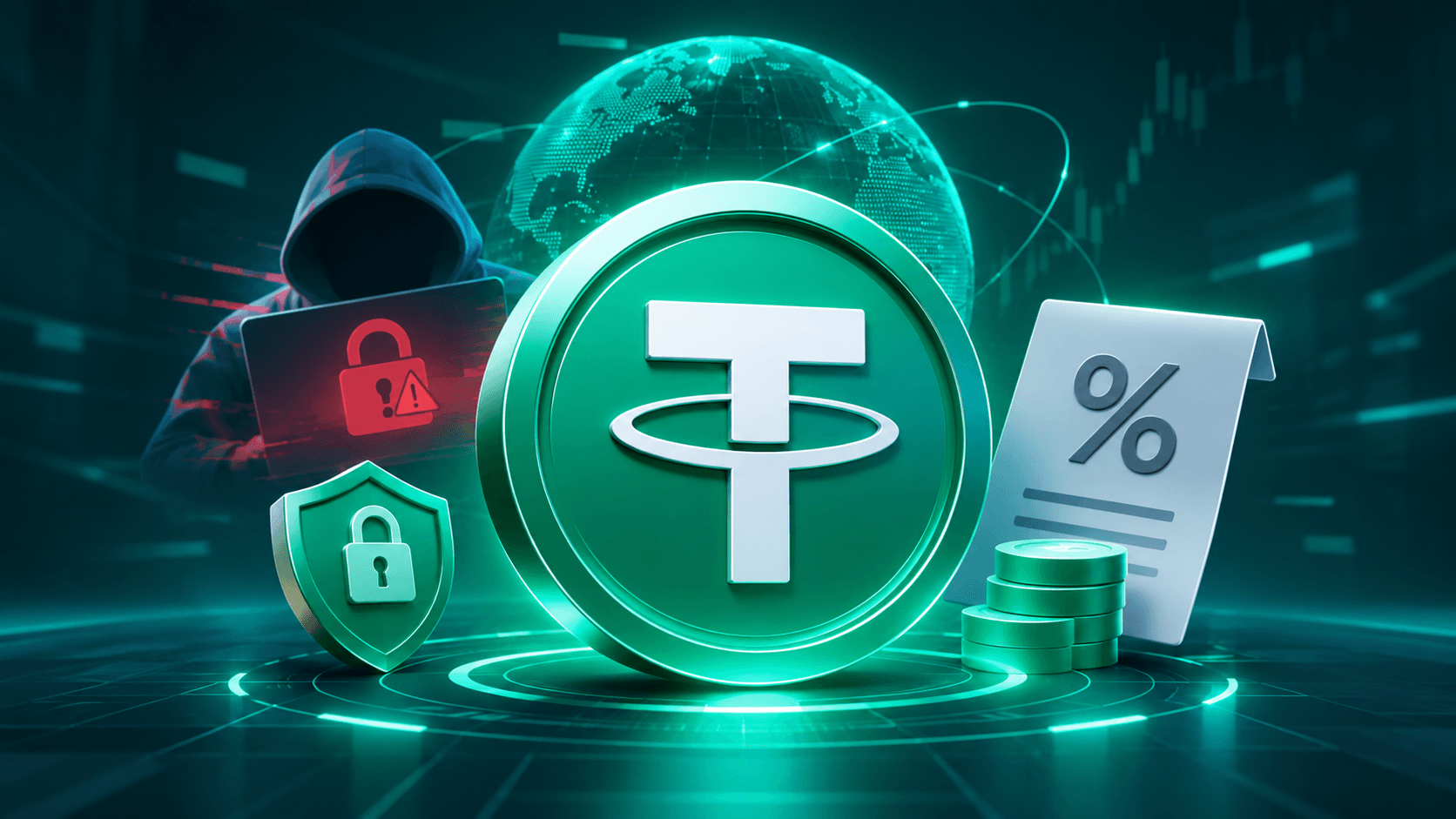
The Tether reissuance fee has sparked controversy after an investigation on November 24, 2026, revealed that the issuer of the stablecoin USDT stablecoin reportedly charged some hacking victims a fee of around 20% to recover their frozen assets.
Tether argued that the fee was necessary to cover expenses incurred during the recovery process, including legal costs. However, for victims who have already lost assets to a hack, a 20% deduction is certainly no small amount.
Key Takeaways
- Tether has reportedly charged a 20% reissuance fee in certain cases involving the recovery of hacked USDT.
- This fee differs from the official token recovery policy for eligible mistaken transfers.
- Successfully frozen USDT is not necessarily returned immediately because of ownership and legal issues.
Tether Reportedly Charges Up to 20% to Return USDT
Tether's ability to freeze stolen USDT has long been viewed as a way to help recover crypto assets. However, a new problem arises when victims try to get their funds back.
Some hacking victims have reportedly faced a reissuance fee of approximately 20%. In certain cases, assets have also been returned in stages.
Nevertheless, there has been no confirmation that this fee is an official rate applicable to all hacking victims.
Amid the controversy, you can monitor the latest developments in the Tether (USDT) price on Bittime to stay informed about the stablecoin's market conditions.
What Is the Tether Reissuance Fee?
The Tether reissuance fee refers to a charge associated with reissuing USDT as part of the recovery of frozen assets.
As a centralized stablecoin issuer, Tether has administrative authority to restrict token transfers from certain wallet addresses on networks that support this feature.
If the technical and legal requirements are met, frozen tokens can be burned and replaced with newly issued USDT for the rightful recipient.
In other words, this process does not reverse a blockchain transaction. Instead, it issues replacement tokens through an administrative mechanism.
Read also: Pokémon TCG Gacha on Binance Wallet: How to Participate, Costs, and Risks
The Bittok Case: USDT Frozen for More Than Five Years
The June 2020 Bittok hack is one example of how complicated crypto asset recovery can be. The Singapore-based exchange suffered losses of approximately US$50 million in the attack.
Tether managed to freeze some of the stolen USDT. Unfortunately, more than five years later, the funds reportedly still had not been returned.
During negotiations, Tether's lawyers reportedly told the company that acquired Bittok that returned assets would be subject to a 20% reissuance fee.
It remains unclear whether the fee was ultimately paid. The US$50 million figure represents the total losses from the hack, not the entire amount of USDT that was successfully frozen.
Why Does Tether Charge a 20% Fee to Return USDT?
Recovering stolen crypto assets is not as simple as freezing a wallet address. A number of administrative and legal matters must also be resolved.
Administrative and Asset Recovery Costs
The recovery process may involve reviewing transaction histories, verifying ownership, coordinating with relevant parties, and reissuing tokens.
Tether has stated that the fees charged help cover the costs of this process, including legal expenses.
Risk of Ownership Disputes
Tether CEO Paolo Ardoino explained that token reissuance in civil cases can be carried out in stages. This approach is intended to account for the possibility that other parties may claim the same funds.
Tether has also stated that it has reissued US$1.2 billion worth of USDT to rightful claimants and law enforcement agencies.
Although Tether has explained why it charges these fees, the lack of transparency surrounding how the 20% rate is determined remains a concern.
Read also: ANSEM Coin Plunges 40%: Bullpen Acknowledges Incident, Was the Wallet Hacked?
Differences Between Tether's 20% Reissuance Fee and 10% Token Recovery Fee
Tether has an official token recovery policy. However, that policy applies in a different context from the reissuance fees for hacked USDT that have attracted attention.
The token recovery service has its own requirements, including an asset value above US$1,000, technical eligibility, and user verification.
Meanwhile, cases of theft, fraud, and hacking are handled through separate procedures.
Read also: Rupiah Weakens to Rp18,279 Today: Is the BTC/IDR Price Affected?
Simulation of a 20% USDT Recovery Fee
How much would a 20% fee reduce the funds victims receive? The following simulation assumes the deduction is calculated directly from the amount of USDT successfully recovered.
These calculations are illustrative only, not official Tether invoices, and do not account for any additional expenses.
To check the value of USDT in Indonesian rupiah, you can use Bittime's USDT-to-IDR converter as a reference for calculating asset values.
How Does Tether Freeze and Return USDT?
Recovering stolen USDT can involve three main stages, from freezing an address to issuing replacement tokens.
1. Freezing Wallet Addresses
Tether can blacklist certain wallet addresses using supported administrative functions in its smart contracts.
Once frozen, USDT held at those addresses cannot be transferred. However, the restriction does not automatically apply to other crypto assets in the same wallet.
2. Ownership Verification and Legal Proceedings
Victims must prove asset ownership through transaction records and supporting documents. Depending on the case, the process may also require law enforcement or court involvement.
This stage can make asset recovery take much longer than the initial freeze.
3. Burning and Reissuing USDT
After establishing a legal basis and meeting the technical requirements, Tether may burn the frozen tokens and issue replacement USDT to the rightful recipient.
The original transaction history remains recorded on the blockchain and is not erased by this process.
Implications for the 2026 Binance Hack
The controversy over recovery fees drew further attention following the Binance hack on October 29, 2026, which reportedly caused approximately US$6.3 billion in losses.
Tether stated that it had frozen more than US$1.5 billion in USDT linked to the incident. Binance was also reportedly coordinating with Tether to pursue recovery of the funds.
Although Binance has used company funds to reimburse affected customers, recovering the stolen assets remains a separate process.
As of November 26, 2026, there had been no confirmation that a 20% reissuance fee would apply to the Binance case.
Read also: JSR Crypto Joins GMGN Clan, Records US$2.13 Million in Historical Profits
How to Recover Hacked USDT
If your USDT has been stolen, secure your accounts immediately and gather transaction evidence. Complete information can help the relevant parties investigate the incident.
Here are the steps you can take:
- Secure the affected wallet, exchange accounts, email accounts, and devices.
- Save the transaction hash (TXID), wallet addresses, asset amounts, and transaction times.
- Contact the relevant exchange's official customer support team.
- Report the theft to the authorities.
- Follow the reporting procedures of Tether's Information Requests team, if applicable.
- Prepare proof of ownership and supporting documentation.
Beware of crypto recovery services that guarantee the return of funds while demanding upfront payments, seed phrases, private keys, or verification codes.
Successful recovery still depends on technical conditions, investigation findings, and legal proceedings.
Is USDT Still Safe? The Risks of Stablecoin Centralization
The ability to freeze USDT is a double-edged sword. On one hand, the feature helps prevent criminals from moving stolen assets; on the other, users must accept that the stablecoin issuer has administrative control.
Some of the risks to understand include:
- Restrictions on transactions involving certain wallet addresses.
- Dependence on decisions made by the stablecoin issuer.
- Uncertainty about the cost and duration of asset recovery.
- Legal disputes and competing claims to ownership of funds.
Even holding USDT in a self-custody wallet does not fully eliminate the risk of an issuer-imposed freeze.
Nevertheless, the controversy over recovery fees does not automatically indicate a problem with Tether's reserves or USDT's price stability.
In addition to understanding each asset's risks, you can use the Bittime crypto investment app to monitor price movements and market developments before making investment decisions.
Conclusion
The controversy surrounding the Tether reissuance fee raises important questions about protecting hacking victims and the extent of stablecoin issuers' control over users' assets.
The reported 20% fee in certain cases highlights the need for more transparent standards for recovering crypto assets, including fee levels, victims' rights, and fund-return procedures.
For USDT holders, understanding the risk of asset freezes is just as important as considering wallet security and price stability.
Interested in following developments in USDT, stablecoins, and other digital assets? Sign up on Bittime to broaden your understanding of crypto market dynamics and make more informed investment decisions.

Bittime is a licensed Digital Financial Asset Trader (PAKD) regulated and supervised by Indonesia's Financial Services Authority (OJK) — where you can buy Bitcoin in Indonesia and hundreds of other crypto assets starting from Rp10,000. Registration is fast, secure, and available to get started today.
Track the USDT to IDR conversion rate and the real-time prices of your favorite crypto assets. Everything is available in a single crypto investment app that you can download for free from the Play Store.
Ready to get started? Sign up for Bittime now and put your investment strategy into action on a platform already trusted by millions of users in Indonesia.
FAQ
What Is the Tether Reissuance Fee?
The Tether reissuance fee is a charge associated with reissuing USDT to recover frozen assets. In certain hacking cases, the fee has reportedly reached approximately 20%.
Does Tether Charge All Hacking Victims a 20% Fee?
There has been no confirmation that this rate applies to all hacking victims. The 20% fee was identified in an investigation into how certain cases were handled.
What Is Tether's Official Token Recovery Fee?
For eligible mistaken transfers, the recovery fee can be as high as 10% of the asset value or US$1,000, whichever is greater. Hacking cases are handled through separate procedures.
Can Hacked USDT Be Recovered?
Yes, provided that technical, ownership, and legal requirements are met. However, freezing USDT does not guarantee that the funds will be returned to the victim.
Can Tether Freeze USDT in a Personal Wallet?
Yes. Tether has administrative authority to freeze USDT on networks that support this feature. Using a self-custody wallet does not eliminate the risk of a freeze imposed by the stablecoin issuer.
Disclaimer: The views expressed belong exclusively to the author and do not reflect the views of this platform. This platform and its affiliates disclaim any responsibility for the accuracy or suitability of the information provided. It is for informational purposes only and not intended as financial or investment advice.

.png)