US Import Tariffs for Indonesia Proposed at 18%, Could Be 25%?
2026-11-26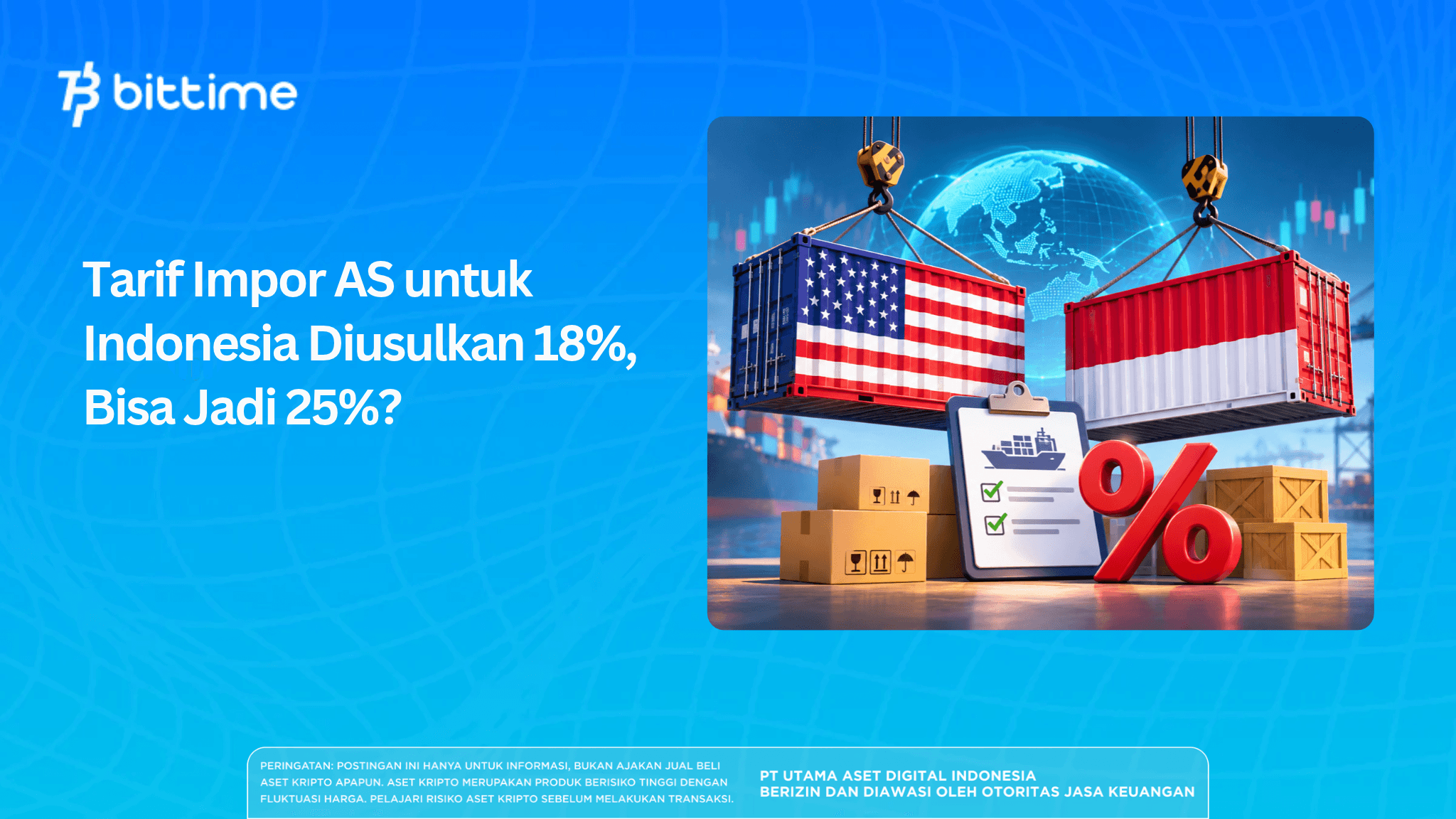
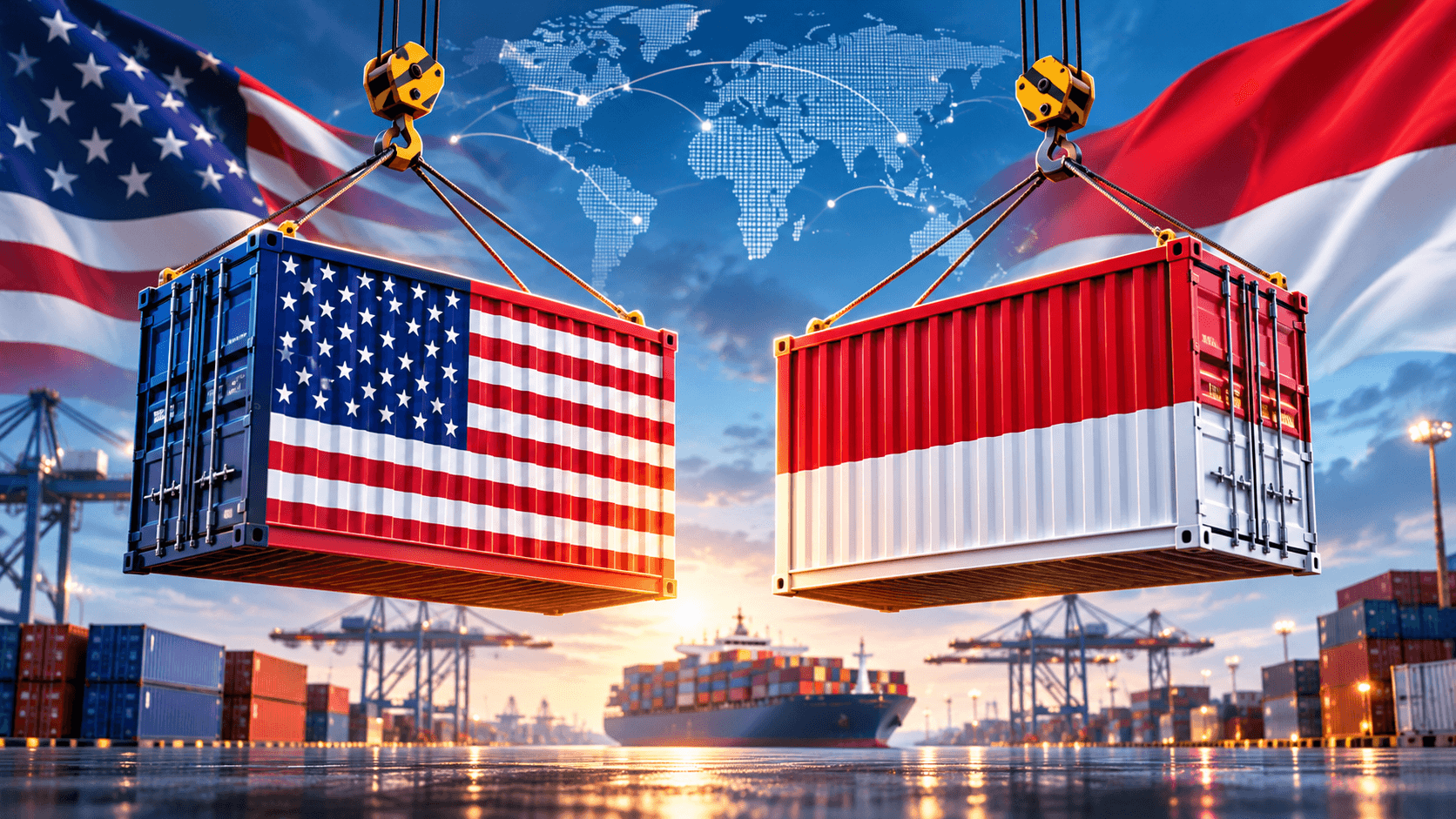
U.S. import tariffs are back in the spotlight after Donald Trump's administration proposed new trade measures targeting 14 trading partners on November 25, 2026. Indonesia is among them, facing a proposed tariff of up to 18%, with a potential 25% rate if the outcome of trade consultations is deemed unsatisfactory.
Although the policy has not yet taken effect, it warrants attention because the United States is one of Indonesia's major export markets. Its potential impact could extend from the competitiveness of domestic industries to movements in the rupiah, the Jakarta Composite Index (JCI), and the crypto market.
Key Takeaways
- The U.S. has proposed new import tariffs on 14 trading partners following a Section 301 investigation.
- Indonesia faces a proposed tariff of up to 18%, with a possible alternative rate of 25% depending on the outcome of the trade review.
- The tariff policy could affect Indonesian exports, the rupiah exchange rate, and global investor sentiment.
U.S. Proposes New Import Tariffs of Up to 18% on Indonesia
The Office of the United States Trade Representative (USTR) announced the proposed tariffs after conducting an investigation lasting approximately eight months into the industrial policies of several trading partners.
For Indonesia, the proposed rate of up to 18% takes into account existing Section 301 duties and exemptions for certain products. This means it does not automatically represent an additional 18% on top of all previous tariffs.
The USTR is also taking into account trade commitments under the Agreement on Reciprocal Trade (ART) between Indonesia and the U.S., signed on February 19, 2026.
Amid global trade uncertainty, you can also monitor the performance of gold-backed assets such as PAXG and XAUT on Bittime to help understand shifts in investor sentiment.
Why Is Indonesia on Trump's Latest 2026 Tariff List?
The U.S. government believes industrial policies in several countries have contributed to excess manufacturing capacity that could harm its domestic industries.
Section 301 Investigation
The investigation, which began on March 11, 2026, was conducted under Section 301 of the Trade Act of 1974.
This provision authorizes the U.S. to take action against other countries' trade practices that it considers harmful to its economic interests. Its legal basis differs from earlier reciprocal tariff measures imposed under emergency economic powers.
Excess Manufacturing Capacity
Washington believes financing support, government incentives, and industrial policies in several countries have contributed to production exceeding market demand.
The Indonesian government has rejected this assessment, stressing that domestic production and investment decisions are driven by market demand and commercial considerations.
Why Could Indonesia's Tariff Reach 25%?
The USTR has raised the possibility of an alternative tariff of up to 25% if Indonesia's trade consultations and commitments are considered insufficient.
However, this scenario would not take effect automatically. The final tariff rate still depends on the review process and developments in negotiations between the two countries.
Also Read: Rupiah Weakens to Rp18,279 Today: Will BTC/IDR Prices Be Affected?
List of 14 U.S. Trading Partners and Their Proposed Tariff Rates
Indonesia is not the only ASEAN country targeted by Trump's latest tariff proposal. Vietnam, Singapore, Malaysia, Thailand, and Cambodia are also on the list.
Vietnam could qualify for a 20% rate, India for 17%, and Singapore for 10% if they meet certain trade requirements.
In nominal terms, Indonesia's proposed rate is broadly comparable to those of Malaysia and Thailand. However, differences in calculation methods, product exemptions, production costs, and logistics efficiency will still shape each country's competitiveness.
Also Read: U.S. PCE Data for November 25, 2026: How Will It Affect Bitcoin Prices?
When Will the New U.S. Import Tariffs on Indonesia Take Effect?
As of November 26, 2026, no official effective date has been announced for the new tariff policy.
Here is the consultation schedule to watch:
- November 25, 2026: Announcement of the proposed tariffs.
- January 5, 2027: Deadline for submitting written comments and requests to participate in the hearing.
- January 25, 2027: Public hearing.
- After the hearing: Review of submissions and decision-making.
This consultation process gives governments and industry participants an opportunity to raise objections and propose policy adjustments.
5 Potential Impacts of Trump's Tariffs on Indonesia
If implemented, the new U.S. tariffs could affect various aspects of Indonesia's economy, particularly sectors that depend on the American market.
1. Competitiveness of Indonesian Exports
Higher import duties could make Indonesian products more expensive in the U.S. market.
Although tariffs are generally paid by American importers, Indonesian exporters may face pressure to lower their selling prices to remain competitive with suppliers from other countries.
2. Manufacturing and Employment
The textile, garment, footwear, furniture, and other manufacturing industries need to pay close attention to the scope of the policy.
If export orders decline, companies could face pressure on profit margins, production capacity, and employment. The scale of the impact will depend on the tariff classifications and exemptions applying to each product.
3. Economic Growth and the Trade Balance
From January to September 2026, Indonesia's non-oil-and-gas exports to the United States reached US$25.39 billion. During the same period, Indonesia recorded a non-oil-and-gas trade surplus with the U.S. of US$17.37 billion.
These figures illustrate the importance of the American market to Indonesia's foreign-exchange earnings. If export demand weakens, trade's contribution to economic growth could also be affected.
4. Rupiah Exchange Rate Against the U.S. Dollar
Global trade uncertainty could prompt investors to increase their U.S. dollar holdings. Pressure on the rupiah could intensify if this coincides with a decline in foreign-exchange earnings from exports.
Nevertheless, movements in the rupiah are also influenced by Bank Indonesia's policies, interest-rate differentials, and domestic economic conditions.
For crypto investors who want to track changes in the rupiah value of dollar-denominated assets, the USDT-to-IDR converter on Bittime can serve as an additional reference.
5. JCI and Foreign Investment Flows
Companies that rely on U.S. export markets may need to revise their revenue forecasts.
This could increase volatility in shares of exporters and manufacturers, particularly if trade uncertainty prompts foreign investors to reduce their exposure to emerging markets.
Also Read: Indonesia vs. Singapore Retirement Funds: Could Bitcoin Be a Retirement Investment?
Impact of Trump's Tariffs on Bitcoin and the Crypto Market
The effects of U.S. trade policy could also spill over into digital asset markets through changes in inflation expectations, liquidity, and investors' risk appetite.
During trading on November 25, 2026, major U.S. stock indexes reportedly opened more than 1% lower at one point, while the Nasdaq fell more than 3% amid a technology-stock sell-off and trade concerns.
U.S. Inflation and Federal Reserve Interest Rate Policy
Higher import tariffs could push up goods prices in the United States. If inflationary pressures persist, the Federal Reserve may have less room to cut interest rates.
High interest rates tend to pose challenges for risk assets such as Bitcoin and Ethereum because they can constrain market liquidity.
Conversely, an economic slowdown caused by trade barriers could also strengthen expectations of monetary policy easing.
3 Scenarios for the Tariffs' Impact on the Crypto Market
- Bullish: Trade negotiations ease uncertainty and increase investor appetite for risk assets.
- Bearish: Escalating tariffs worsen inflation concerns and weigh on liquidity expectations.
- Neutral: Investors remain on the sidelines while awaiting final trade policy decisions.
All three scenarios are also influenced by other factors, including institutional capital flows, monetary policy, and global economic conditions.
To follow the crypto market's response to developments in U.S. economic policy, you can monitor Bitcoin (BTC) prices and Ethereum (ETH) regularly on Bittime.
Indonesian Government's Response to the New U.S. Tariffs
Before the USTR's announcement, Coordinating Minister for Economic Affairs Airlangga Hartarto estimated that Indonesia's final tariff would not differ significantly from the 19% rate previously agreed under the ART.
The government has also challenged allegations of excessive domestic industrial production capacity during the investigation.
Continued bilateral negotiations will be important for maintaining access to the American market while providing greater certainty for domestic businesses.
Also Read: XRP Price Falls Below US$1 Today: Did Nvidia Really Buy XRP?
Indonesia's Economic and Financial Market Outlook for 2027
Looking ahead to 2027, developments in tariff negotiations, changes in export orders, the trade balance, rupiah movements, and Federal Reserve policy are among the indicators worth watching.
Indonesia may still be able to maintain its competitiveness if it secures tariff rates that compare favorably with those imposed on other supplier countries. However, the final decision and the range of products subject to import duties will be decisive.
Conclusion
The proposed U.S. import tariffs present a challenge for Indonesia's trade prospects heading into 2027. Although they could put pressure on exports and financial markets, the actual impact can only be assessed once the tariff structure and product exemptions have been finalized.
For investors, developments in negotiations and economic data should guide their assessments, rather than reactions to headlines about Trump's latest tariffs alone.
Want to stay informed about global economic developments and their impact on digital asset markets? Sign up on Bittime to expand your investment knowledge and follow developments in the crypto market.

Bittime is an authorized Digital Financial Asset Trader (PAKD) licensed and supervised by Indonesia's Financial Services Authority (OJK) — where you can buy Bitcoin in Indonesia and hundreds of other crypto assets starting from Rp10,000. Registration is fast and secure, and you can get started today.
Track the USDT to IDR conversion and real-time price movements of your favorite crypto assets. Everything is available in a single crypto investment app that you can download for free from the Play Store.
Ready to get started? Sign up for Bittime now and put your investment strategy into action on a platform trusted by millions of users in Indonesia.
FAQ
What Is the Latest U.S. Import Tariff Proposed for Indonesia in 2026?
The USTR has proposed tariffs of up to 18% on Indonesian products, with certain exemptions. This remains a proposal, not a final tariff rate in force.
Why Is Indonesia on Trump's Latest Tariff List?
Indonesia is included in a Section 301 investigation into industrial policies that the USTR believes contribute to excess manufacturing capacity. The Indonesian government disputes that assessment.
Could U.S. Tariffs on Indonesia Reach 25%?
Yes, if the U.S. government considers the outcome of consultations and Indonesia's trade commitments insufficient. However, the alternative tariff rate has not yet been approved.
When Will the New U.S. Import Tariffs Take Effect?
No official effective date has been announced. The USTR has scheduled a public hearing beginning on January 25, 2027, before proceeding with its decision-making process.
Do Trump's Tariffs Affect Bitcoin Prices?
Tariff policy can affect Bitcoin through inflation expectations, Federal Reserve interest rates, liquidity, and investor sentiment. However, the direction of Bitcoin prices cannot be predicted from trade policy alone.
Disclaimer: The views expressed belong exclusively to the author and do not reflect the views of this platform. This platform and its affiliates disclaim any responsibility for the accuracy or suitability of the information provided. It is for informational purposes only and not intended as financial or investment advice.

.png)