What Is Staking Crypto: Full Explanation, How It Works & Beginner's Guide
2026-04-19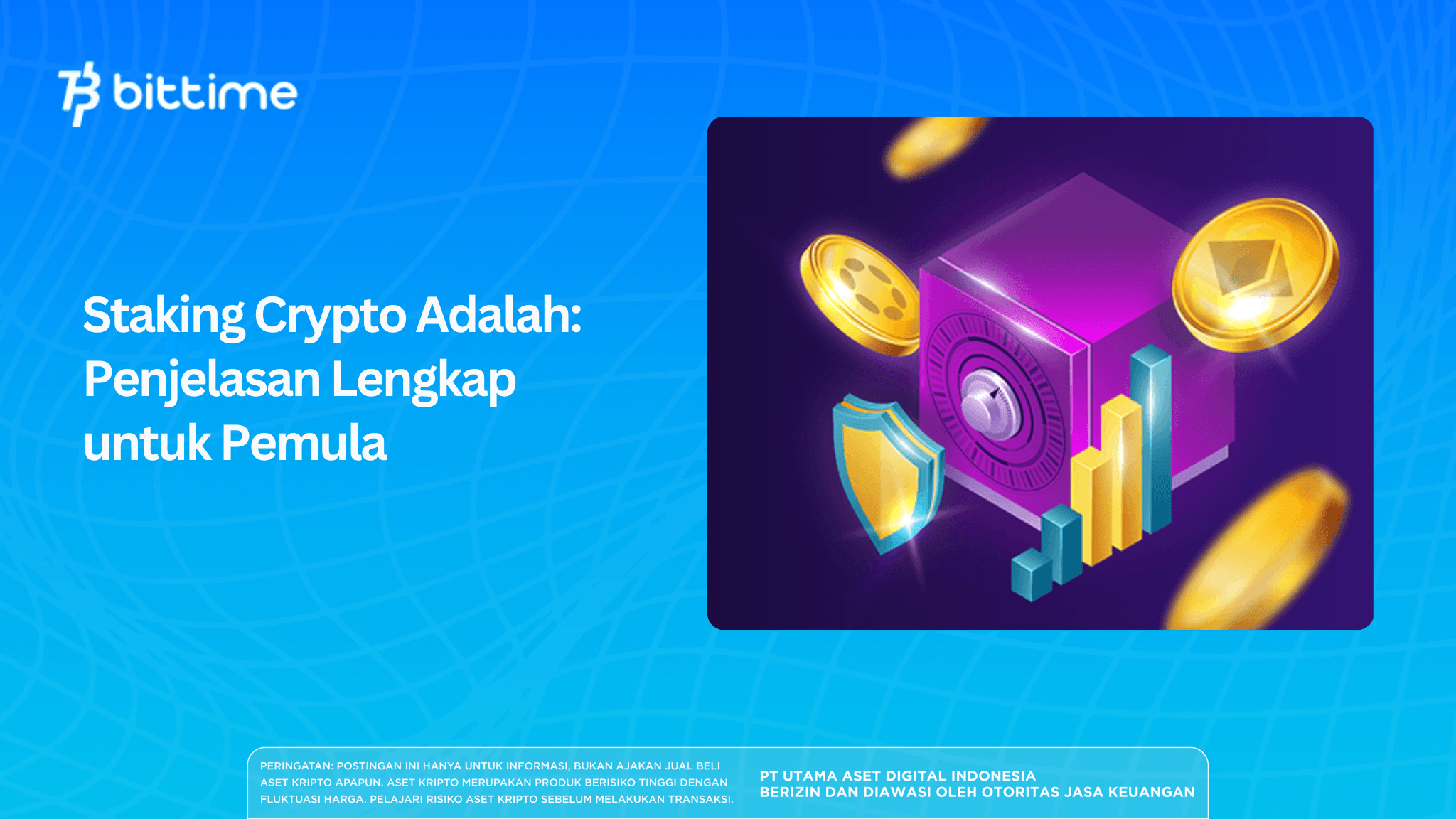
Staking crypto has become one of the most talked-about concepts in the digital asset space — and for good reason. As blockchain technology matures and more networks shift toward Proof of Stake (PoS), staking has emerged as a practical way for investors to earn passive income from their holdings.
But what exactly is staking crypto, how does it work, and is it the right move for you? This guide breaks it all down in plain language, covering everything from the core mechanics to the risks every investor should know before getting started.
Key Takeaways:
- Staking crypto means locking digital assets in a blockchain network to help validate transactions and earn periodic rewards in return.
- Rewards function similarly to bank interest, but potential gains — and risks — are considerably higher due to cryptocurrency's inherent market volatility.
- Lockup periods prevent you from selling or moving staked assets for a set time, so understanding each network's rules before committing is essential.
What Is Staking Crypto?
Staking crypto is a process where holders of certain cryptocurrencies lock up their tokens within a blockchain network for a defined period. In exchange, they receive rewards — typically paid in the same cryptocurrency — for helping to secure and operate the network.
This system is built on the Proof of Stake (PoS) consensus mechanism, which serves as an energy-efficient alternative to the Proof of Work (PoW) model used by Bitcoin.
Think of staking like placing money in a fixed-term savings account. Your funds work for the institution during the agreed period, and you earn interest in return.
In crypto, your staked assets help the blockchain run smoothly, and you earn rewards proportional to your contribution. Popular PoS-based assets that support staking include Ethereum (ETH), Cardano (ADA), and Solana (SOL).
How Does Staking Crypto Work?
The mechanics of staking revolve around validators. When you stake your crypto, your assets contribute to the network's ability to validate new transactions. Validators are nodes within the PoS system responsible for confirming that each transaction is legitimate and complies with the blockchain's protocol. In return, validators and staking participants receive rewards. Importantly, if a validator acts dishonestly or fails to meet network requirements, they risk losing part of their staked coins — a penalty process known as slashing.
Investors have several options: becoming an independent validator (which often requires a substantial minimum stake), joining a staking pool where multiple participants combine their resources, or utilizing liquid staking — a newer model that lets users stake assets while still using them as collateral in other decentralized finance (DeFi) protocols.
Benefits and Risks of Staking Crypto
Staking comes with compelling advantages and genuine risks that both deserve attention. On the upside, staking generates regular passive income with APY rates that vary by validator and network — making idle crypto assets work for you. It also strengthens the blockchain: more stakers mean a more decentralized, tamper-resistant network.
On the risk side, lockup periods mean you cannot sell or move staked assets for a set duration — ranging from hours to several days depending on the protocol. Market volatility is another concern; crypto prices can drop sharply while your assets are locked in, and rewards paid in crypto may not offset a significant price decline. Choosing a validator wisely matters too — always research their uptime, track record, and slashing history before committing.
How to Stake Crypto on Bittime in 4 Simple Steps
Staking crypto on Bittime is designed to be straightforward, even for beginners who are new to earning passive income from digital assets. Instead of letting assets sit idle, staking allows users to generate rewards over time with minimal active trading. The process is structured into four essential steps, making it accessible while still giving users full control over their assets and returns.
1. Create and Verify Your Account
Start by registering an account using an active email address. After that, complete the identity verification (KYC) process. This step ensures account security and unlocks full access to platform features, including staking and withdrawals.
2. Deposit Funds or Top Up Balance
Once your account is verified, the next step is funding it. Users can deposit via bank transfer or supported payment methods. The deposited funds will then be used to purchase crypto assets eligible for staking.
3. Buy Supported Crypto Assets
Not all cryptocurrencies can be staked. Users need to select assets that are supported by Bittime’s staking feature, such as ETH, ADA, SOL, or other available tokens. Choosing the right asset is important, as each offers different reward rates and staking conditions.
4. Start Staking and Confirm
Navigate to the staking menu, select your chosen asset, and enter the amount you want to stake. The platform will display estimated rewards and staking duration before confirmation. Once confirmed, your assets will begin generating rewards based on the selected terms.
With these four steps, staking on Bittime becomes a simple yet effective way to grow crypto holdings. For users looking to reduce exposure to short-term volatility, staking offers a calmer, more structured approach to participating in the crypto market.
Conclusion
Staking crypto is a legitimate and increasingly popular way to generate passive income from digital assets. It works best for those who take time to understand the mechanics, weigh the risks honestly, and choose their validators and platforms with care. With the right approach, staking can be a valuable addition to any well-considered crypto investment strategy.
FAQ
1. What is the difference between staking and crypto mining?
Mining uses massive computational power (Proof of Work) to validate transactions, while staking locks up coins as collateral (Proof of Stake). Staking is far more energy-efficient and requires no specialized hardware.
2. Is staking crypto safe?
Generally yes, when done through reputable platforms on well-established networks. That said, price volatility, lockup periods, and validator risks mean it's never entirely risk-free.
3. What is the minimum amount needed to start staking?
It varies by network. Ethereum requires 32 ETH to run a solo validator node, but staking pools allow participation with much smaller amounts. Many other networks have considerably lower minimums.
4. What is a lockup period in crypto staking?
The duration during which staked assets cannot be withdrawn, sold, or transferred. Its length is set by each protocol and can range from a few hours to several weeks.
5. Are staking rewards taxable?
In many jurisdictions, staking rewards are treated as taxable income when received, and further gains from selling those rewards may be subject to capital gains tax. Always consult a qualified tax professional for advice specific to your country.
Disclaimer: The views expressed belong exclusively to the author and do not reflect the views of this platform. This platform and its affiliates disclaim any responsibility for the accuracy or suitability of the information provided. It is for informational purposes only and not intended as financial or investment advice.

.png)