Is a Seized Asset Custody Fund (SACF) Legit or a Scam? Here's the Analysis
2026-07-28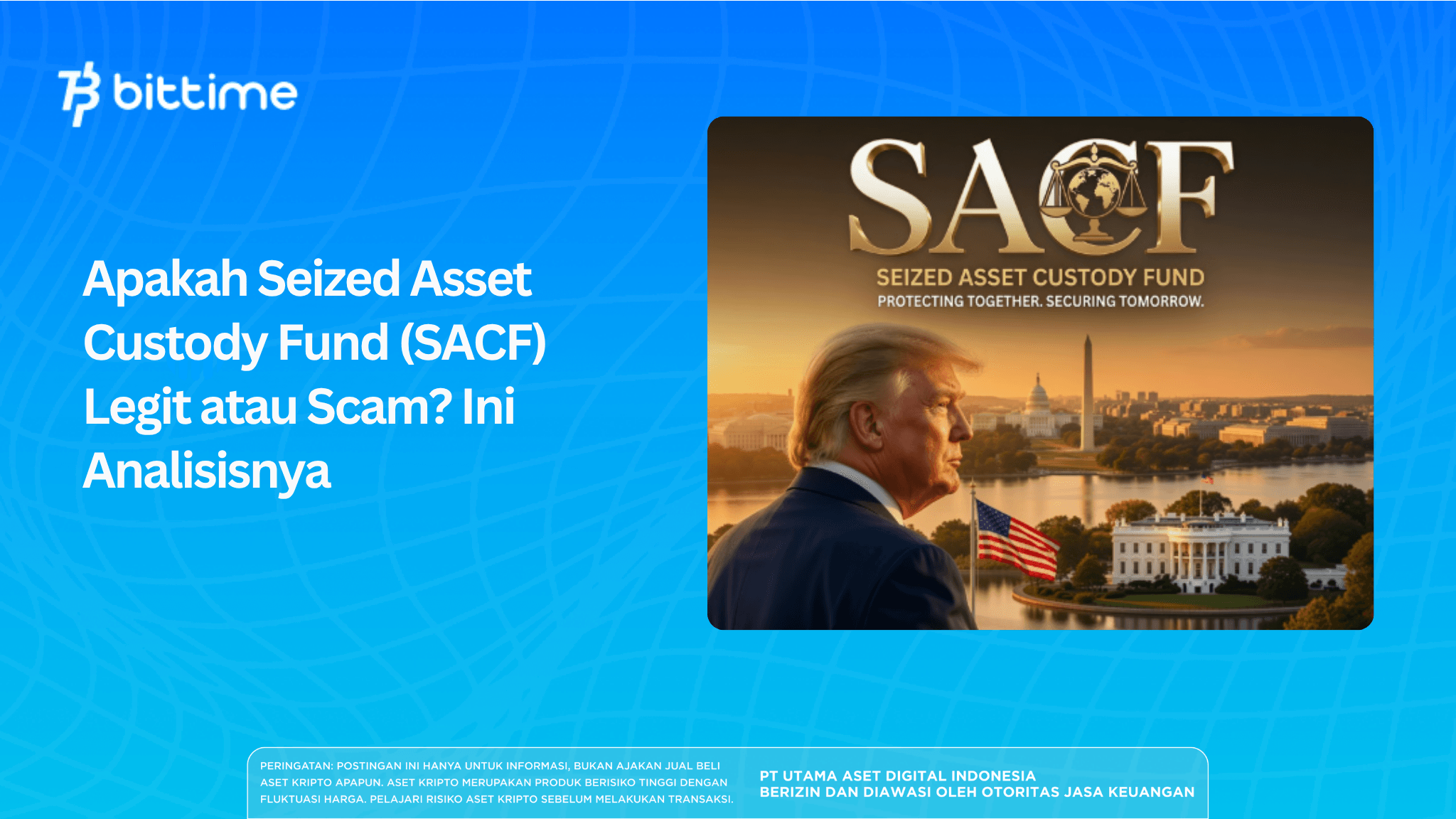
Is it Seized Asset Custody Fund (SACF) Is it legit or a scam? This question naturally arises, as the project uses a grand narrative about tokenizing seized assets, recovering the proceeds of crime, and benefiting the public.
Key Takeaways
- SACF is an SPL token on the Solana network that carries the narrative of managing and tokenizing various types of confiscated assets.
- There is no adequate public information available regarding the team's identity, legal entity, evidence of asset reserves, financial audits, or official relationships with government agencies.
- SACF has not been confirmed as a scam, but a number of transparency deficiencies put it in the category of high-risk speculative tokens that are worth being wary of.
What is a Seized Asset Custody Fund (SACF)?
Seized Asset Custody Fund or SACF is a Solana-based token with contract address:
SACFEuRRK1QxJV1PEXTaWo88DSfk2hxjnSton9Ehdad
This project proposes that assets seized from fraud, money laundering, criminal activity, sanctions, and forfeiture proceedings can be placed in a reserve. These assets can then be represented on-chain to make the recovery process more transparent.
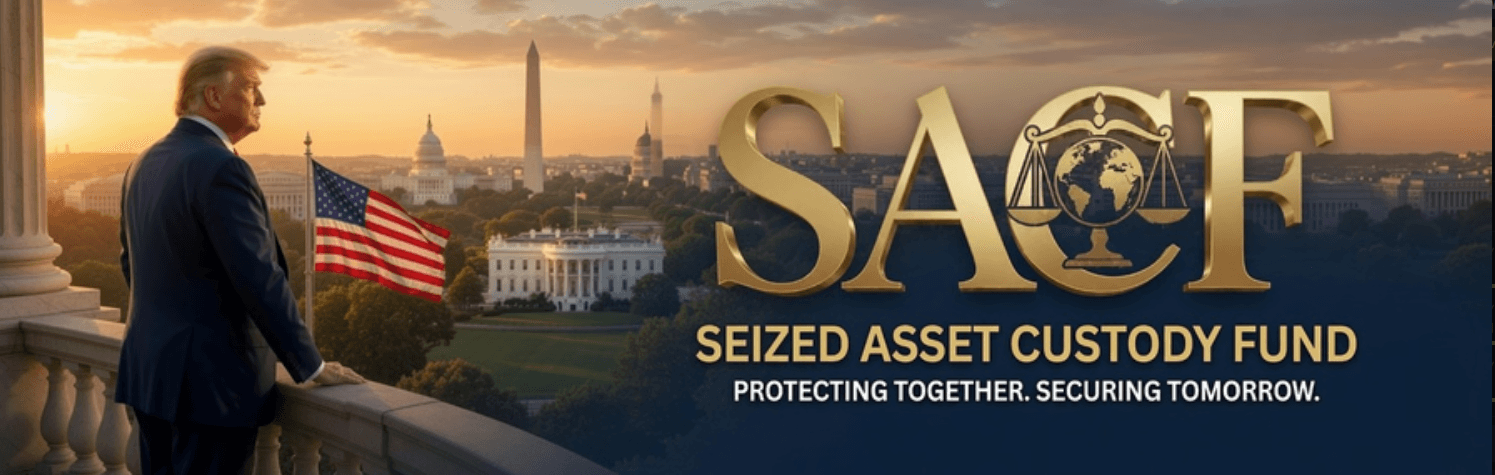
The types of assets mentioned in the project narrative are very broad, including:
- Crypto wallets and assets
- Land and real estate
- Oil, gas and mineral rights
- Gold, diamonds, and precious metals
- Vehicles, ships and aircraft
- Stocks and financial instruments
- Cash and business ownership
- Luxury goods and forfeiture property
The problem is, the mere existence of a token on the blockchain doesn't automatically prove the existence of the underlying asset. Nor does a token necessarily confer ownership rights, profit sharing, voting rights, or legal claims on its holder.
In the project's public materials, SACF is often described as a symbol or "reserve narrative" representing a category of seized assets. There is no detailed explanation of the legal relationship between a SACF token and the value of a specific asset.
Read also: Is the Oil Strategic Reserve (OSR) Legit? Check the Facts Before You Get Fomo!
Who is the Team Behind the SACF Project?
The public pages reviewed do not list the names of founders, team members, directors, advisors, or asset managers. Information about their professional backgrounds and experience in crypto, custodianship, law, asset recovery, or investment management is also missing.
The project does have a roadmap with stages called custody, reserve, managers, and standards.
However, these stages are still a general outline. No names of custodian companies, fund managers, auditors, law firms, or independent parties responsible for implementing each stage are specified.
Anonymity doesn't automatically prove a project is a scam. A number of crypto projects are built by pseudonymous developers. However, transparency standards should be higher when a project claims to be associated with:
- High-value physical assets
- Confiscated property
- Reserve management
- Public asset recovery
- Cross-jurisdictional legal proceedings
- Fund management or custodian
The bigger the claim made, the stronger the evidence that should be provided.
You can also register at Bittime to access major crypto assets and stay updated on news about Solana, new tokens, blockchain security, and real-world asset trends. Always conduct your own research before purchasing any digital asset.
What Does the SACF Project Claim?
SACF brings up several key claims and concepts that need to be separated from verifiable facts.
Various seized assets can be combined into one reserve
The project describes a reserve that may include digital assets, property, commodities, energy resources, luxury goods, vehicles, businesses, and financial instruments.
Blockchain can unlock the asset recovery process
Tokenization is considered a pathway to easier monitoring of asset management. While blockchain allows token transactions to be publicly visible, it can only verify data entered into it.
Blockchain cannot independently prove that a piece of land, vehicle, gold, or mineral rights are truly under the project's control. Verifying real-world assets still requires legal documentation, independent appraisals, custodians, and regular audits.
The value of the recovery proceeds will provide public benefits.
The project's content states that the value of recovered assets can be directed towards public benefit. However, there's no mechanism yet explaining how these benefits will be distributed, who will receive them, or how token holders will acquire economic rights.
SACF becomes a public symbol for asset reserves
SACF is described as an on-chain pathway that represents the concept of custodianship of various seized assets. The use of the words "representation" or "narrative" is important, as they differ from the statement that a token is legally backed by a specific asset.
Read also: What Is IF Coin? Is Robinhood Chain's Memecoin Legit or Not?
Is SACF Connected to Government or Legal Institutions?
There has been no public evidence to suggest that the SACF is issued, authorized, or managed by the government, courts, prosecutors, police, or confiscated asset management agency.
The project page displays a countdown to the international finance ministers' meeting on August 31, 2026. The meeting is listed on the official agenda.
However, the presence of a countdown or mention of a global event does not prove that SACF is a participant, partner, sponsor or project approved by the organizer.
Before accepting claims of institutional affiliation, investors need to look for evidence such as:
- Announcement on the official website of the relevant institution
- Letter of appointment or cooperation agreement
- Name and signature of authorized official
- Registration or contract number
- Relevant court documents
- Press releases from both parties
- Explanation of the scope of cooperation
Logos, activity names, photos of figures, or countdowns to certain events are not proof of partnership.
In projects that actually manage confiscated assets, the chain of custody must be documented. Managers also need procedures for recording, assessing, storing, controlling access, auditing, and legally disposing of assets.
Read also: Is Pons Launchpad Legit or a Scam? Learn How It Works and the Risks
How Does Confiscated Asset Tokenization Work?
Accountable tokenization of seized assets requires more than just token creation.
1. The legal status of the assets must be clear
Seized assets may not necessarily be able to be sold or transferred. Seizure can occur while legal proceedings are still ongoing, while permanent seizure usually requires a judgment or other legal basis.
2. Assets must be verified and valued
Property, precious metals, vehicles, businesses, and financial instruments require ownership inspections and independent appraisals. Their value can also change while in storage.
3. A custodian must be appointed
The party holding the assets needs to be identified. For physical assets, the custodian is responsible for security and inventory. For crypto assets, the manager must explain the private key system, multi-signature wallet, access control, and transfer procedures.
4. The relationship between the token and the asset must be explained.
Legal documents need to answer several questions:
- Do tokens represent ownership of assets?
- Do token holders receive income?
- Can tokens be exchanged for underlying assets?
- Who bears the loss if an asset loses value?
- What happens if the project is dissolved?
- Which country's law applies?
5. Audits and reporting must be carried out
Reserves should be reviewed periodically by an independent party. The list of assets, values, storage locations, liabilities, and changes in reserves should be reconcilable.
6. Distribution of results must be transparent
If assets are auctioned or generate revenue, the project must explain how the proceeds are used. Without a clear distribution mechanism, tokens may simply exploit the real-world asset's theme without providing economic rights to the actual asset.
The SACF materials reviewed do not provide a comprehensive explanation of this process. The project focuses more on asset categories and the concept of reserves than on their legal and operational structure.
Read also: Is Show Token (SHOW) Safe or a Scam? Check the Facts
Is There an Audit or Verification of SACF Contracts?
This section needs to be divided into three types of audits: contract scanning, security audits, and financial audits.
Automatic scanning of contracts
The trading pair analytics page displays a “no issues” status on the automated check. However, the same page warns that the results of the check are not always accurate.
Automated scans generally look for basic technical risks, such as specific authorities, token characteristics, or contract patterns. A clean slate does not prove that:
- The project team is trustworthy
- Reserve assets are actually available
- Tokens have intrinsic value
- Liquidity will remain available
- The manager will not sell his ownership
- Project legal claims are valid
Token authority status
Third-party data indicates that SACF has a supply of one billion tokens and that mint, freeze, and metadata change controls have been lifted. The reviewed wallet page also marked the token as unverified.

Revoking a mint authority means that new token units can no longer be created using that authority. Revoking a freeze authority means that the issuer cannot freeze account tokens using the removed freeze authority.
This is a technical indicator that can be considered positive, but not proof of complete legitimacy. Tokens with a fixed supply can still be subject to risks of ownership concentration, low liquidity, misleading promotions, or the lack of underlying assets.
Independent security audit
No complete security audit reports from independent firms were found on the public pages of the projects reviewed. Automated scans from analytics platforms are not equivalent to code audits, which have scope, methodology, findings, and auditor identities.
Financial audit and evidence of reserves
There are no financial reports, reserve lists, proof of asset ownership, independent appraisal reports, or auditor opinions regarding the claimed assets.
Even proof of reserves has limitations and is not always equivalent to a comprehensive financial statement audit. Proof of reserves at any one point in time may not necessarily indicate liabilities, legal ownership, or overall financial condition.
Read also: Is FireFaucet Win Legit? Here's How It Works, Its Security, and Its Earning Potential
How to Check SACF Project Team and Transparency?
Investors can perform basic checks with the following steps.
Find the identities of the founders and team members
Check that the team name is consistently listed on the website, professional accounts, interviews, code repositories, and company documents. Photos and names alone are not enough, as identities can be forged.
Check legal entity
Look for the company name, country of registration, company number, office address, and director names. Ensure the data comes from the official registry, not just from the project website.
Search for technical and legal documents
Projects with asset reserve claims should have more than just a landing page. Documents worth looking for include:
- Whitepaper
- Tokenomics
- Terms of use
- Privacy policy
- Token holder rights document
- Proposal report
- Security audit
- Financial statement audit
- Custodial structure
Verify contract address
The mint address is the unique identifier for a token on the Solana network. Don't rely solely on the name, ticker, or logo, as others can create similar-looking tokens.
Check holder distribution
The reviewed wallet page recorded approximately 98 holders as of July 28, 2026, with the ten largest addresses controlling approximately 20.6% of the supply.
This data is subject to change and requires further analysis, as some addresses may be liquidity pool or infrastructure-related accounts.
Check liquidity and trading activity
At the time of the inspection on July 28, 2026, the SACF/USDC pair had liquidity of around $50,000 and a 24-hour volume of around $7,900. In contrast, the SACF/SOL pair in the inspected link only had liquidity of around $7 and virtually no trading activity.
Thin liquidity increases the risk of price impact. Investors may be able to purchase tokens but struggle to resell them in large quantities without driving the price down.
Look for evidence from the party claiming to be a partner.
Don't just check the project announcement. Look for confirmation from a third-party website. Real partnerships are usually announced by both parties or supported by verifiable documentation.
Market authorities also advise caution when information about the individuals or entities involved is difficult to obtain. Investors should understand the rights attached to the token and not rely solely on promises of future value.
Read also: Is the USFR (United States Food Reserve) Legit? Here Are the Facts
What Are the Warning Signs of a Risky Project?
No single indicator automatically proves a scam. However, a combination of the following signs should raise your alertness.
Team cannot be verified
The unavailability of the manager's identity makes it difficult for investors to assess his experience, reputation and accountability.
Claims of huge assets without detailed evidence
The project mentions many categories of high-value assets, but has not provided a list of assets, storage locations, ownership documents, or audited values.
There is no explanation of token holder rights.
Investors need to know whether SACFs are simply narrative tokens or actually provide a claim to assets and earnings.
Institutional terms without verified affiliation
The use of terms like fund, custody, reserve, public recovery, and seized assets can create a sense of formality. These terms do not automatically indicate that the project is under the supervision of a regulator or legal entity.
Automated audits are considered a guarantee
The technical status of "no issues" only covers certain parameters. It does not certify that a project is safe, solvent, legal, or asset-backed.
Token is still very new
The wallet page notes that SACF was created in July 2026. New projects do not yet have a long track record that can be used to evaluate team consistency, reporting, and roadmap execution.
Token not verified
Unverified status does not necessarily mean fraud, but indicates that users should perform additional checks before interacting with the token.
Liquidity is unevenly distributed
A very small SACF/SOL pool can potentially lead to misleading prices or extreme price impact. Users should check the pool, asset pair, and liquidity depth before making a swap.
Prices are easily influenced by thin markets
New tokens with limited volume and traders are more vulnerable to volatility and pump-and-dump schemes. This risk is even greater for thinly traded alternative assets.
Read also: America Oil Reserve Agility (AMORA): Legit or Just a Narrative Token?
So, Is SACF Legit or a Scam?
Based on the available evidence, there is insufficient evidence to declare SACF a fully legitimate project. Critical elements such as team identity, legal entity, proof of asset reserves, independent audits, token holder rights, and institutional affiliations have not been adequately clarified.
However, the absence of such information is not enough to render a definitive verdict that SACF is a scam. A scam label requires stronger evidence, such as deliberate deception, misappropriation of funds, forged documents, market manipulation, or proven affiliation claims.
A more proportional assessment is:
SACF is a high-risk speculative token with several transparency warning signs. This project should be treated with caution until additional, independently verifiable evidence is available.
Investors should not consider SACFs as tokens backed by seized assets simply because the narrative uses the terms reserve and custody.
Conclusion: Is SACF Worth Watching?
SACF offers an interesting concept by connecting Solana tokens, seized assets, and blockchain transparency. Its contract address is live, the token supply is verifiable, and SACF already has a liquidity pool.
On the other hand, the most crucial part of the project's claims remains unproven. There's no list of reserve assets, financial audits, custodial reports, legal structure, complete team identities, or documentation outlining token holders' rights.

Now that you understand SACF’s potential, don’t miss out on this trending token. Sign up on Bittime and start trading crypto now.
Bittime is a licensed and regulated Digital Financial Asset Trader (PAKD) supervised by Indonesia’s Financial Services Authority (OJK) — where you can buy Bitcoin in Indonesia and hundreds of other crypto assets starting from just Rp10,000. The registration process is fast, secure, and you can get started today.
Track USDT to IDR conversions and monitor your favorite crypto assets in real time. Everything is available in one crypto investment app that you can download for free on the Play Store
Ready to start? Register now on Bittime and execute your investment strategy with a platform trusted by millions of users in Indonesia.
FAQ
Is SACF proven to be a scam?
There's not enough evidence to definitively label it a scam. However, the lack of transparency regarding the team, audits, legal entity, and proof of assets makes the risk level high.
Is SACF really guaranteed by seized assets?
There is no evidence of reserves or legal documentation proving that SACF tokens are backed by any specific seized assets. Asset narratives do not equate to ownership or legal security.
Is SACF an official government token?
No evidence of official affiliation with governments, legal institutions, or seized asset managers has been found. Mentioning an international agenda does not automatically indicate a partnership.
Have SACF contracts been audited?
The automated scanner didn't reveal any specific issues, but the results aren't a complete security or financial audit. The checked wallet page also still marked SACF as an unverified token.
What is the biggest risk of buying a SACF?
The main risks include unproven asset claims, limited team transparency, unclear token holder rights, and relatively low market liquidity. Investors also face the risk of volatility and difficulty selling tokens.
Disclaimer: The views expressed belong exclusively to the author and do not reflect the views of this platform. This platform and its affiliates disclaim any responsibility for the accuracy or suitability of the information provided. It is for informational purposes only and not intended as financial or investment advice.

.png)