Rupiah Savings Shrink by Rp172 Trillion! Are People Starting to Switch to Dollars?
2026-06-04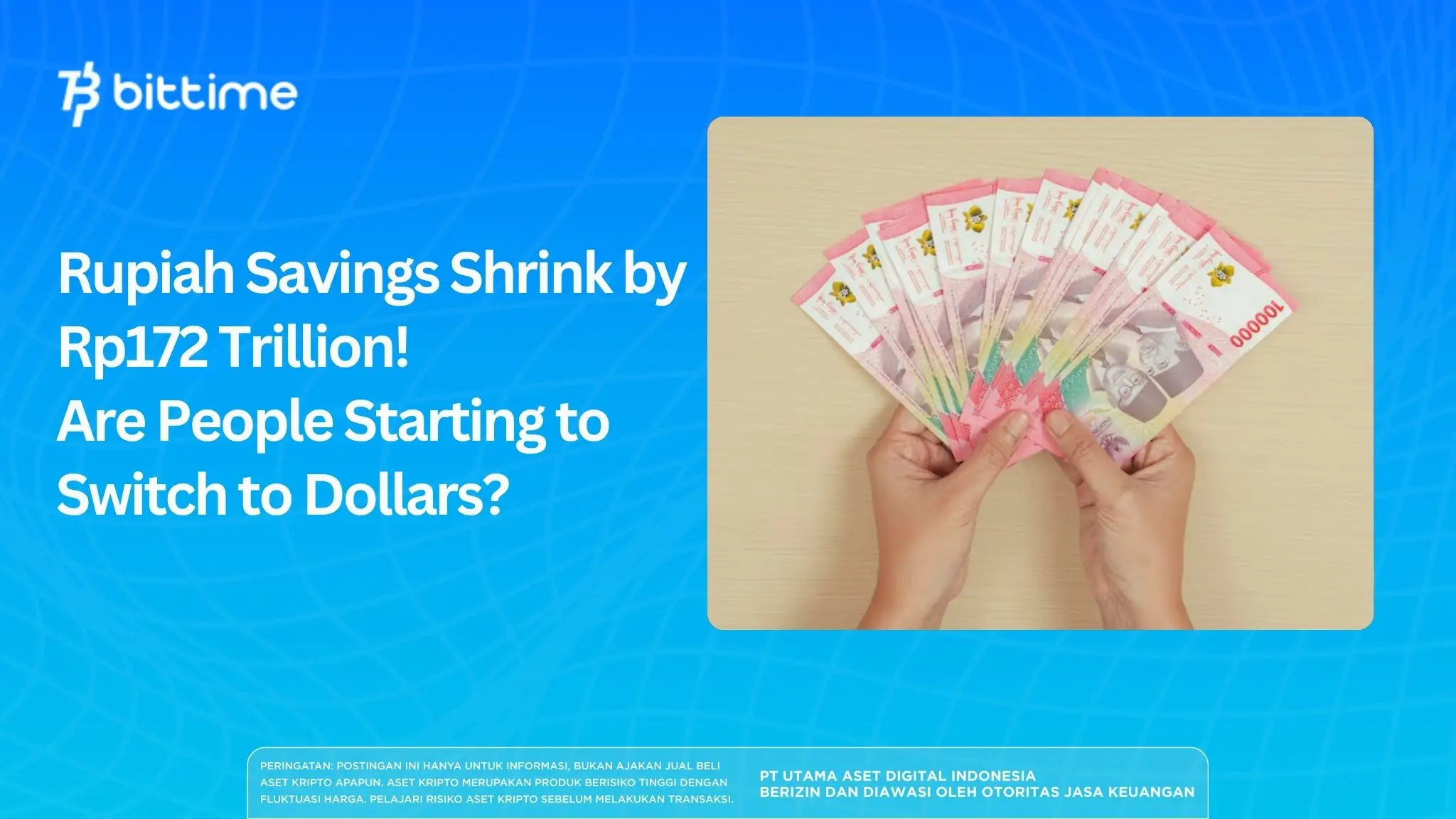
Bittime - The decline in public savings in rupiah currency has begun to come under scrutiny. Quoting kontan.co.id (simpanan-rupiah-susut-dollar-semakin-diminati),The latest data from the Deposit Insurance Corporation (LPS) shows that rupiah-denominated third-party funds (DPK) in banks have shrunk by around IDR 172 trillion in recent months.
At the same time, deposits in foreign currencies, particularly US dollars, actually show an increasing trend.
This phenomenon raises an important question: are Indonesians starting to reduce their exposure to the rupiah and shifting to dollar-based assets?
Key Points
Rupiah deposits fell by around Rp172 trillion while foreign currency deposits increased.
The strengthening of the US dollar and asset diversification are the main factors behind the change in depositor preferences.
The increase in dollar deposits does not automatically mean a capital outflow from Indonesia.
Register at Bittime now and start trading crypto with a fast, safe, and easy process in the app.
Rupiah Deposits Decline, Foreign Currency Funds Increase

The decline in rupiah savings occurred when people and businesses began to look for instruments that were considered capable of maintaining the value of their assets.
In recent months, foreign currency deposits and US dollar-based savings have recorded better growth than rupiah deposits.
This change generally occurs when the US dollar strengthens against various world currencies, including the rupiah.
When the exchange rate rupiah weakens, some investors and customers tend to increase their ownership of dollar-denominated assets as a diversification measure.
However, it is important to note that an increase in foreign currency deposits does not necessarily mean that people are losing confidence in the rupiah.
Most of these movements are also influenced by the needs of international transactions, import payments, and company hedging strategies.
Read also:How to Deposit Rupiah and Crypto Assets on Bittime: It's So Easy!
Why is the US Dollar Back in Demand?
There are several factors driving the increased interest in the US dollar.
1. Global Dollar Strengthening
The high interest rate policy implemented by the US central bank in recent periods has kept dollar assets attractive to global investors. When yields on dollar-based instruments rise, international capital flows tend to shift towards the United States.
As a result, many developing country currencies, including the rupiah, are facing depreciation pressure.
2. Global Economic Uncertainty
Geopolitical tensions, economic slowdown in several major countries, and uncertainty about the direction of global interest rates are making investors more cautious.
Under these conditions, the US dollar is still considered a relatively stable safe haven asset compared to developing country currencies.
3. Portfolio Diversification
Many investors aren't abandoning the rupiah entirely; they're simply increasing their dollar-denominated assets to balance out exchange rate risk.
This strategy is commonly used by individuals with long-term investment needs and companies that have payment obligations in foreign currencies.
What is the Impact on the Rupiah?
Increased interest in dollars could put additional pressure on the rupiah exchange rate if it occurs on a large scale.
When demand for dollars increases, the rupiah exchange rate has the potential to weaken due to the increased demand for foreign currency. However, so far, this situation remains within manageable limits for monetary authorities.
Bank Indonesia has a number of instruments to maintain rupiah stability, ranging from foreign exchange market intervention to liquidity management in domestic financial markets.
Furthermore, Indonesia's strong foreign exchange reserves are a key factor in maintaining market confidence in the stability of the national economy.
Read also:Buy USDT P2P with Rupiah Cheaply and Without Fees? Here's Bittime's OTC Alternative
Is This a Sign of Capital Outflow?
Not always.
The decline in rupiah deposits and the increase in dollar deposits do not necessarily indicate capital outflow or the departure of capital from Indonesia.
In many cases, the funds remain in the national banking system, simply moving from rupiah accounts to foreign currency accounts.
Capital outflow is usually characterized by the outflow of funds abroad through the sale of domestic assets or the transfer of investments to other countries.
Therefore, investors need to distinguish between shifts in currency preferences and actual capital outflows.
What Should Investors Pay Attention to?
In the current situation, some important indicators that are worth monitoring include:
Movements in the rupiah exchange rate against the US dollar.
Bank Indonesia's interest rate policy.
Third party banking fund data.
Foreign capital flows in the stock and bond markets.
Indonesia's foreign exchange reserves position.
Domestic inflation rate.
These indicators can provide insight into whether the trend of increasing dollar savings is temporary or will develop into a larger shift in investment behavior.
Conclusion
The decline in rupiah savings of up to IDR 172 trillion indicates a change in preference among some people towards savings instruments.
Amid the strengthening of the US dollar and global economic uncertainty, foreign currency deposits have become an increasingly popular diversification option.
However, this phenomenon cannot be directly interpreted as a loss of confidence in the rupiah or the occurrence of a massive capital outflow.
For now, this movement more reflects the efforts of investors and business actors to manage exchange rate risk amidst still-dynamic market conditions.

Bittime is a licensed and regulated Digital Financial Asset Trader (PAKD) supervised by Indonesia’s Financial Services Authority (OJK) — where you can buy Bitcoin in Indonesia and hundreds of other crypto assets starting from just Rp10,000. The registration process is fast, secure, and you can get started today.
Track USDT to IDR conversions and monitor your favorite crypto assets in real time. Everything is available in one crypto investment app that you can download for free on the Play Store
Ready to start? Register now on Bittime and execute your investment strategy with a platform trusted by millions of users in Indonesia.
FAQ
Why are rupiah savings decreasing?
The decline was influenced by changes in preferences among some depositors who increased their holdings of US dollar-denominated assets.
Are Indonesians abandoning the rupiah?
Not necessarily. Most are still diversifying their assets, not converting their entire savings to dollars.
What is a foreign currency deposit?
Foreign currency deposits are term deposits that use foreign currencies such as US dollars as their denomination.
Does increasing dollar deposits mean capital outflow?
Not always. The funds may still be held in Indonesian banks in foreign currency accounts.
What impact will it have on the rupiah exchange rate?
If demand for dollars increases significantly, the rupiah could face weakening pressure. However, Bank Indonesia has instruments to maintain market stability.
Disclaimer: The views expressed belong exclusively to the author and do not reflect the views of this platform. This platform and its affiliates disclaim any responsibility for the accuracy or suitability of the information provided. It is for informational purposes only and not intended as financial or investment advice.

.png)