BACH Shares After Djarum Acquisition: Price Trends and Prospects
2026-08-05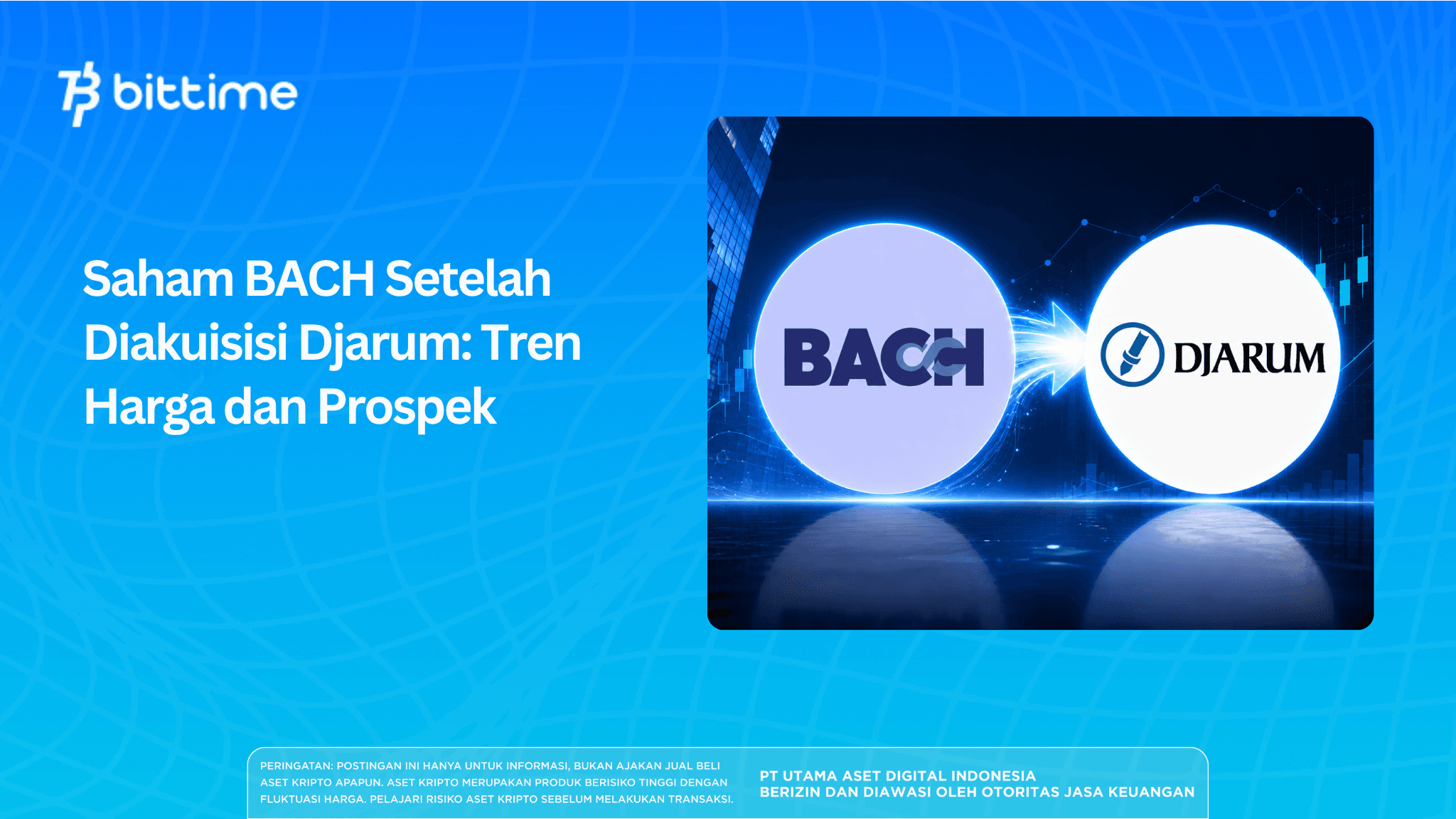
BACH's latest developments have drawn intense attention in Indonesia's capital market following a major corporate action involving one of the country's leading conglomerates.
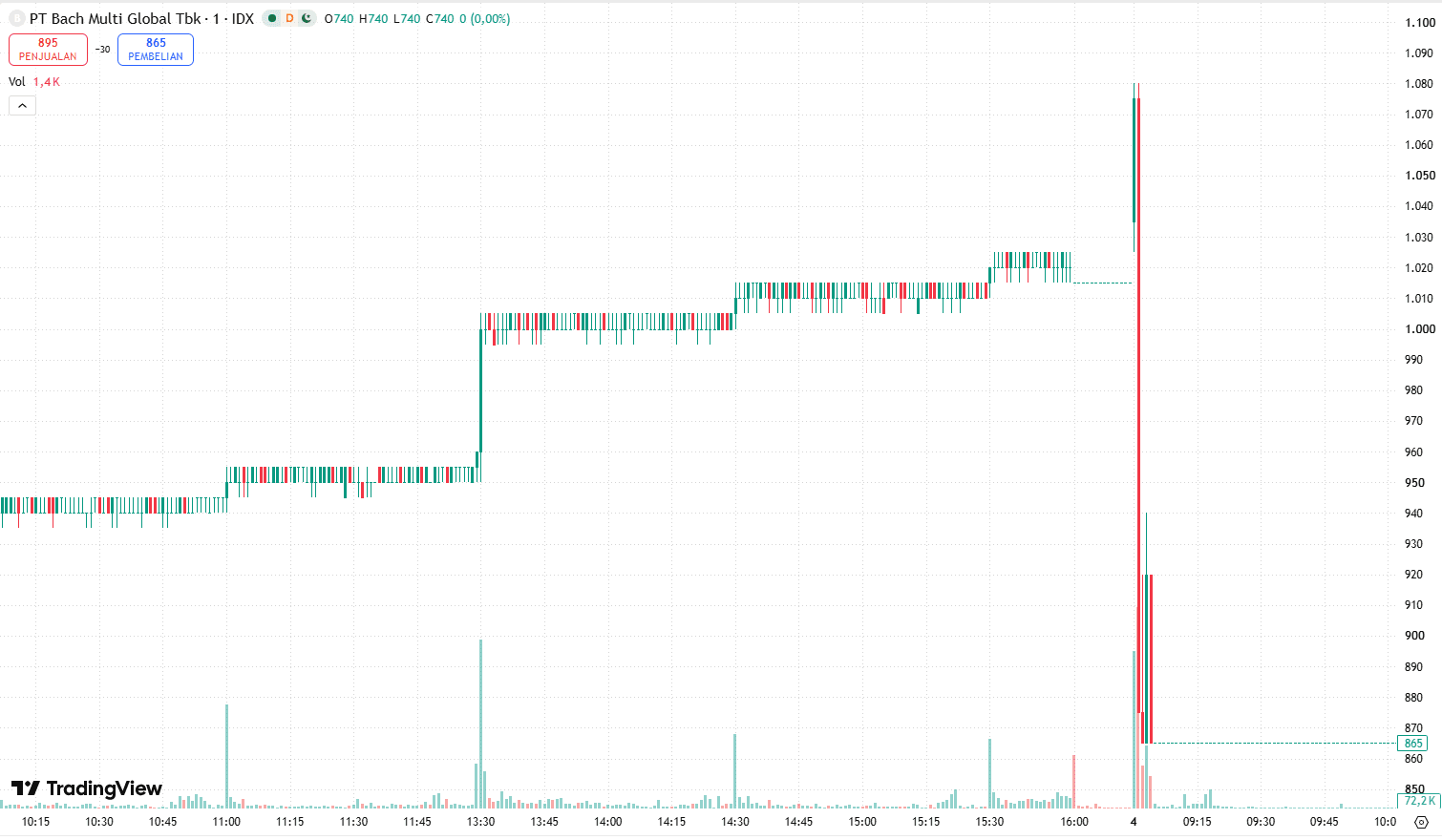
On Tuesday, August 4, 2026, BACH shares plunged to the Lower Auto-Rejection (ARB) limit, ending a six-day winning streak.
Key Takeaways
- BACH shares fell 14.78% to Rp865 on August 4, 2026, after posting gains for six consecutive trading days
- BACH was acquired by Djarum through PT Global Telekomunikasi Prima, which now controls 51% of the shares, creating opportunities for telecommunications infrastructure synergies
- Fundamentals remained solid, with 2025 revenue rising 40% to Rp1.73 trillion and net profit nearly doubling to Rp156 billion
Six-Day Rally Before Hitting ARB
BACH shares closed 14.78% lower at Rp865 per share, with transaction value reaching Rp204.46 billion.
Earlier in the session, the stock opened higher at Rp1,030 and even touched an intraday high of Rp1,080 before reversing course and plunging.
For many market participants, this moment offers a valuable lesson: acquisition euphoria does not continue indefinitely, and a profit-taking phase often follows an extended rally.
Before the sharp correction, BACH shares had been in a very strong uptrend. From July 27 to August 3, 2026, the price surged about 93%, from Rp525 to Rp1,015 per share.
The stock posted double-digit gains on nearly every trading day, ranging from 1.90% on the first day to 15.34% on the final day before the correction.
The main driver of the rally was the confirmation that Djarum Group had become the new controlling shareholder.
The market viewed the move positively because BACH would join an established telecommunications infrastructure ecosystem that includes major companies such as PT Sarana Menara Nusantara Tbk (TOWR), Protelindo, iForte, and SUPR.
This synergy is expected to provide access to a broader range of projects, expand the customer base, and increase recurring revenue from infrastructure construction and maintenance services.
Even after hitting ARB, BACH shares were still up about 65% compared with their July 24, 2026 level. This indicates that positive sentiment toward the acquisition remained strong, although the market naturally needed to lock in profits after such a rapid rise.
Read also: Foreign Investors Buy Rp9.33 Trillion of MAPI Shares: Is the Stock Still Attractive?
Why Did BACH Shares Fall to the ARB Limit?
One of the most common questions recently has been: why did BACH shares fall so sharply when the acquisition news was clearly positive? The answer lies in a combination of technical factors and market psychology occurring at the same time.
First, profit-taking pressure was substantial after six consecutive days of gains. Many investors who entered at lower levels decided to sell as the price approached Rp1,100.
Sell orders accumulated to a total of 1.06 million lots, with the largest concentrations at Rp865 and Rp900. The surge in trading volume showed that a massive ownership shift occurred within a single day.
Second, foreign investor selling intensified the pressure. Foreign investors recorded a net sell of Rp15.42 billion, with sales reaching Rp21.35 billion compared with purchases of only Rp5.93 billion.
Domestic investors accounted for 93.33% of transactions, but that was not enough to stop the decline when foreign funds exited simultaneously.
Third, from a technical perspective, the price had moved too far above its moving averages, triggering a natural correction. The ARB mechanism acts as an emergency brake on the exchange, preventing an even more extreme decline and giving investors time to think more rationally.
Read also: BRPT, TPIA, BREN, and CUAN: Which Stocks Are Worth Watching?
BACH's Outlook After the Djarum Acquisition
Behind the short-term price volatility, BACH's long-term outlook has become clearer with the support of its new controlling shareholder.
Its core businesses in telecommunications infrastructure construction and maintenance, as well as generator rental and sales, closely align with the needs of Djarum's ecosystem.
Throughout 2025, the company's fundamentals improved sharply. Revenue rose nearly 40% to Rp1.73 trillion, while net profit jumped 97.5% to about Rp156 billion, with a 9% net profit margin and return on equity of 29%. This strong performance was achieved even before synergies with Djarum Group were fully realized.
Going forward, BACH could receive a steady stream of projects from more than 40,000 telecommunications sites managed by affiliated companies.
In addition, there is significant potential to cross-sell services to major corporate clients, including PLN, telecommunications operators, and technology companies.
The company has also set an ambitious target of increasing net profit to Rp401 billion by 2030, nearly three times its 2025 result. Of course, risks remain.
Success will depend heavily on how quickly and effectively the business integration process across the group's subsidiaries is executed. Competition in telecommunications infrastructure and backup power supply also cannot be underestimated.
To keep up with the latest developments in BACH shares, daily technical analysis, and real-time corporate action news, you can register with Bittime. The platform provides comprehensive market data and timely financial news updates, helping you make investment decisions more calmly and systematically.
Strategies for Responding to BACH's Price Movements
For investors who already hold the stock, the ARB event should not be met with panic. The wisest step is to reassess the company's long-term fundamentals and compare them with the current price.
If confidence in the Djarum synergy remains intact, the decline could provide an opportunity to average down.
For those who have not yet entered, it is strongly advisable to wait for signs of price stabilization before buying.
Watch whether the sell queue begins to shrink, whether consistent buying pressure emerges, and whether the company starts releasing new updates about its business plans.
Keep tracking other stock tokens such as AMZON, AMDON, and NFLXON as well as MSFTON, then you can start trading on the trusted exchange, only on Bittime.
Conclusion
BACH's plunge to the ARB limit in early August 2026 was driven by profit-taking after a very strong six-day rally, not by a deterioration in the company's fundamentals.
In fact, its new status as part of Djarum Group has strengthened BACH's long-term outlook due to the substantial potential for infrastructure synergies.
Investors need to distinguish between short-term noise and the long-term narrative. Corrections like this can often create attractive entry points for those who believe the new management can deliver the performance targets it has set.
Interested in investing in global stocks? Check out tokenized stocks like AAPLX and TSLAX on the Bittime market.
Bittime is a licensed Digital Financial Asset Trader (PAKD) platform supervised by Indonesia's Financial Services Authority (OJK)— where you can buy Bitcoin in Indonesia and hundreds of other crypto assets starting from Rp10,000. Registration is fast and secure, and you can get started today.
Track the USDT-to-IDR conversion rate and the real-time price movements of your favorite crypto assets. Everything is available in one crypto investment app that can be downloaded free from the Play Store.
Ready to get started? Register with Bittime now and put your investment strategy into action on a platform trusted by millions of users in Indonesia.
FAQ
What Is the Latest Price of BACH Shares After the Djarum Acquisition?
At the close on August 4, 2026, BACH shares stood at Rp865 per share, down 14.78% from the previous day. The price was still about 65% higher than before acquisition speculation intensified.
Why Did BACH Shares Fall Sharply and Hit ARB?
The decline was triggered by heavy profit-taking after a six-day rally, compounded by foreign investor selling that resulted in a net sell of Rp15.42 billion. The buildup of sell orders locked the price at the daily lower limit.
What Are the Benefits of Djarum's Acquisition of BACH?
The acquisition gives BACH access to Djarum's telecommunications infrastructure ecosystem, including Protelindo, TOWR, iForte, and SUPR. This could generate more long-term contracts, expand the market, and increase the company's recurring revenue.
How Did BACH Perform Financially in 2025?
In 2025, BACH recorded revenue of Rp1.73 trillion, up nearly 40% year over year. Net profit nearly doubled to Rp156 billion, with a 9% net profit margin and ROE of 29%.
Is BACH Still Worth Buying After the Correction?
Whether to buy depends on each investor's time horizon and risk tolerance. Long-term fundamentals appear to be improving due to the new synergies, but short-term price volatility may remain high. Always conduct your own research before investing.
Disclaimer: The views expressed belong exclusively to the author and do not reflect the views of this platform. This platform and its affiliates disclaim any responsibility for the accuracy or suitability of the information provided. It is for informational purposes only and not intended as financial or investment advice.

.png)