RWA Crypto: Tokenizing Real-World Assets for Investors
2025-10-27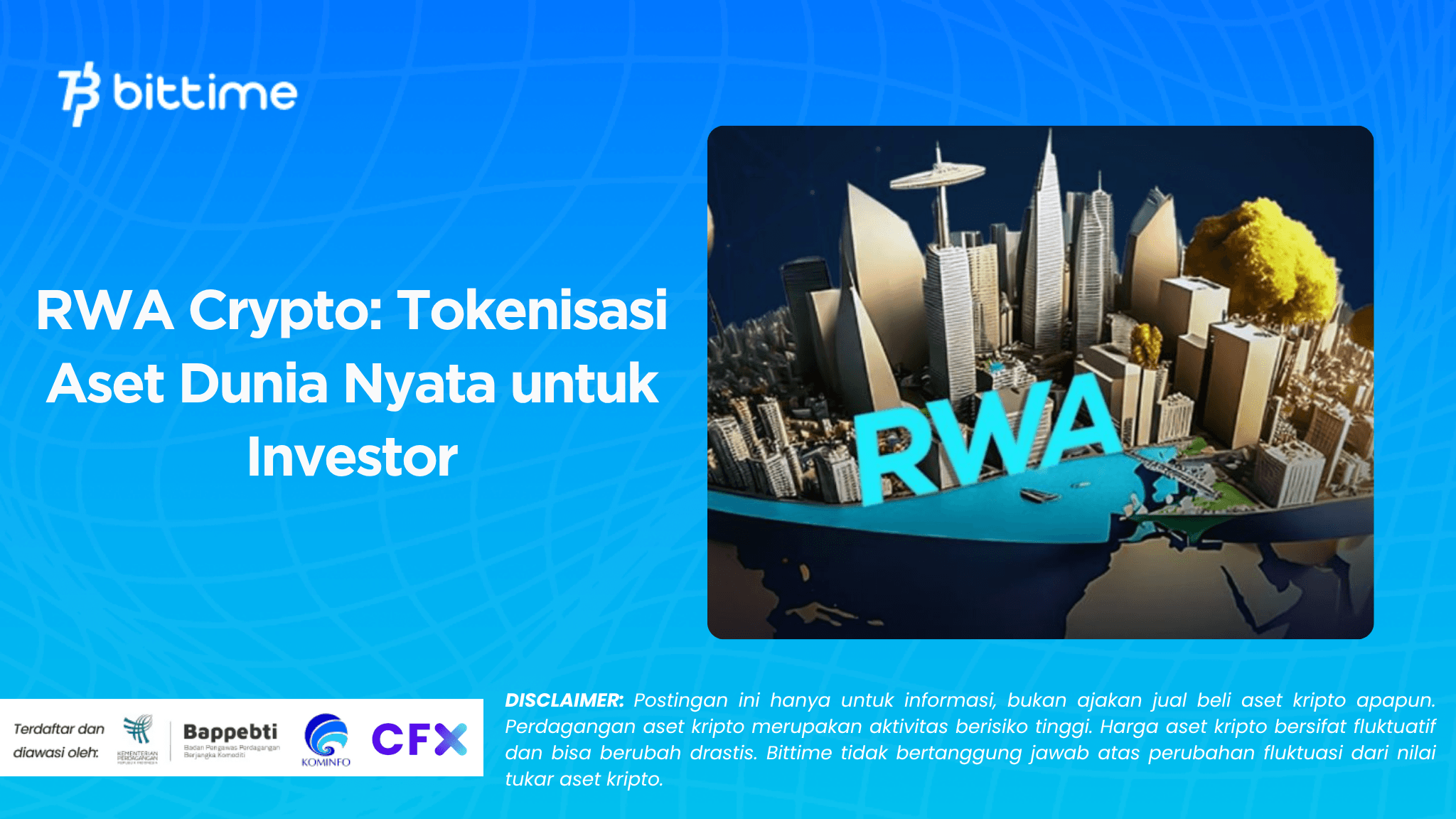
Bittime - Inflow or inflow of funds into the sectorreal world asset tokenization inflowrecorded a significant spike in recent months.
This phenomenon marks a new chapter in the relationship between traditional finance and the blockchain ecosystem.
From US government bonds to commercial property, more and more real-world assets are now being converted into digital tokens and traded on public blockchain networks.
RWA Changing the Crypto Investment Map
Data from the RWA.xyz platform shows the total value of real-world assets that have been tokenized has reachedUS$34.86 billion (Rp579.8 trillion) as of the end of October 2025, up about 11 percent in one month.
These figures demonstrate the growing confidence of both institutional and retail investors in the potential of RWA tokenization as a more efficient and transparent investment vehicle.
What Is Real-World Asset Tokenization (RWA)?
Tokenizing real-world assets means converting ownership claims to physical or financial assets—such as property, bonds, or commodities—into digital tokens on the blockchain.
Through this mechanism, investors can own a small portion of a large-value asset, while ownership and transactions are permanently recorded on a decentralized network.
This model offers two main advantages: accessibility and liquidityRetail investors can participate without having to purchase the entire asset, while financial firms can expand their investor base globally.
However, the tokenization process is not simple. It requires a dedicated entity, a custodial system, and legal certainty to link digital ownership to physical assets in the real world.
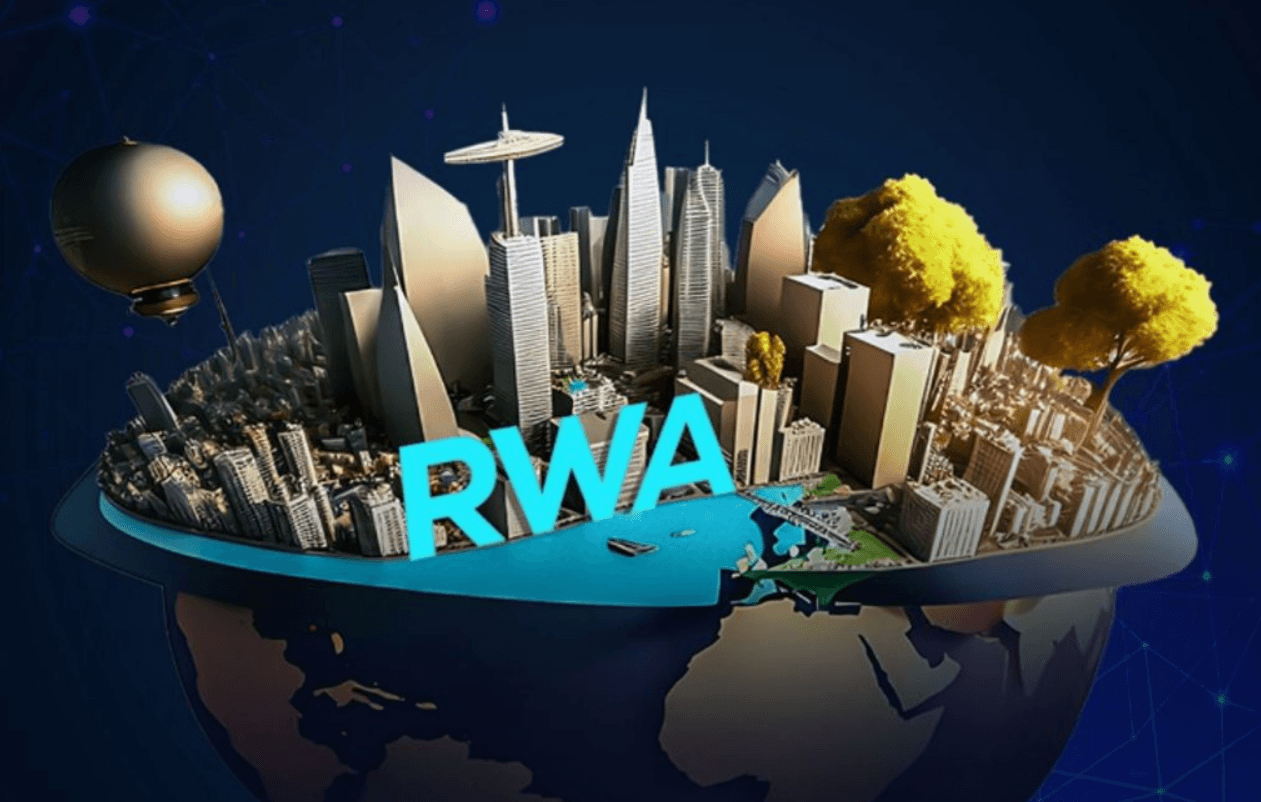
RWA Inflow Reaches Record High
According to a RedStone Finance report, the total market value of RWA tokenization jumped fromUS$5 billion in 2022 to over US$24 billion by mid-2025.
While projections from CoinDesk put the tokenization market value in the range ofUS$500 billionin the next two years, beyond stablecoins.
This increase in capital flows is mainly coming from large financial institutions and investment funds that are starting to channel their portfolios into real asset-based tokens,like tokenized Treasuryand government bonds.
These products offer stable returns with relatively low risk, while providing exposure to the blockchain ecosystem.
Some platforms such asCentrifuge, Maple Finance, and Ondo Financerecorded a double-digit increase in transaction volume in the last quarter, confirming the trend that tokenization is no longer an experiment, but a natural evolution of digital finance.
Factors Driving the Tokenization Surge
There are several key factors driving the growth of real-world asset tokenization inflows.
First, the search for liquidity in traditional assets that were previously difficult to trade globally. Through tokenization, markets become more open with lower transaction costs.
Second, increasing regulatory support in a number of countries. The United States, the European Union, and Singapore are beginning to develop legal frameworks that recognize digital ownership.
Third, Ethereum dominance and Layer-2 networkswhich enables fast transactions with low fees has accelerated the massive adoption of tokenization.
Furthermore, the increasing demand for fixed-income assets amid global macroeconomic uncertainty is driving investors to seek more flexible and transparent alternatives through tokenization.
Challenges That Still Await
Despite rapid inflow growth, several obstacles remain to hinder RWA growth. The biggest challenges come from regulation and secondary liquidity.
Many jurisdictions do not yet have uniform legal standards for tokenization, creating uncertainty for issuers and investors.
For example,Chinese authoritiesrecently asked a number of brokers in Hong Kong to suspend real-world asset tokenization activities due to unclear ownership and reporting risks.
Furthermore, most of the RWA tokens already issued still have minimal trading volume, making it difficult for investors to exit their positions without significantly lowering the price.
Other technical challenges include inter-blockchain interoperability, on-chain integration of physical asset data, and ensuring the security and legal ownership of tokenized assets.
Impact on Investors and the Financial World
The surge in RWA tokenization inflows has significant implications for investors and the global financial sector. For retail investors, tokenization presents an opportunity to own a portion of a premium asset previously exclusive to institutions.
For financial institutions, this paves the way for new efficiencies in the issuance, recording and distribution of financial products.
However, investors need to understand the inherent risks: unsettled regulations, token value fluctuations, and potential mismatches between the value of physical assets and token prices on the secondary market.
Issuer transparency and custodian credibility are key factors in maintaining investor confidence.
If the ecosystem is able to overcome legal and technical hurdles, tokenization of real-world assets has the potential to becomekey pillars of global digital financial transformation.
Conclusion
Tokenizing real-world assets is no longer just a futuristic concept, but a real-world implementation that is now attracting trillions of rupiah in global capital.
The rapidly increasing inflow demonstrates market confidence in the integration between traditional assets and blockchain.
While regulatory and liquidity challenges remain, the direction of development is clearly towards a more open and efficient financial system.
For investors and institutions, understanding the mechanisms and risks of tokenization is key to capitalizing on the enormous opportunities that are currently opening up.
FAQ
What does inflow mean in the context of real-world asset tokenization?
Inflow refers to the amount of funds or assets entering a real-world asset tokenization project or platform, typically measured in US dollars or on-chain capitalization.
How big is the RWA tokenization market currently?
Its value has reached aroundUS$34.86 billion as of October 2025, and is projected to reach hundreds of billions of dollars in the next few years.
Can all assets be tokenized?
Technically, almost any asset can be tokenized—from real estate and bonds to precious metals and even works of art. However, its implementation depends on the legality and economic value of the asset.
What are the main risks of investing in real-world asset tokenization?
Key risks include low liquidity, uncertain regulation, and potential value mismatches between physical assets and their digital tokens.
How do regulations affect the direction of RWA inflow?
Regulation is a key factor. Countries that provide legal clarity and investor protection tend to attract greater inflows, while legal uncertainty can hinder the growth of the tokenization market.
How to Buy Crypto on Bittime
Want to trade sell buy Bitcoins and crypto investment easily? Bittime is here to help! As an Indonesian crypto exchange officially registered with Bappebti, Bittime ensures every transaction is safe and fast.
Start with registration and identity verification, then make a minimum deposit of IDR 10,000. After that, you can immediately buy your favorite digital assets!
Check the exchange rate BTC to IDR, ETH to IDR, SOL to IDR and other crypto assets to find out today's crypto market trends in real-time on Bittime.
Also, visit the Bittime Blog for interesting updates and educational information about the crypto world. Find reliable articles about Web3, blockchain technology, and digital asset investment tips designed to enrich your crypto knowledge.
Disclaimer: The views expressed belong exclusively to the author and do not reflect the views of this platform. This platform and its affiliates disclaim any responsibility for the accuracy or suitability of the information provided. It is for informational purposes only and not intended as financial or investment advice.
.png)