Russia Prepares Official Crypto Market: Why Only BTC, ETH, and USDT?
2026-08-12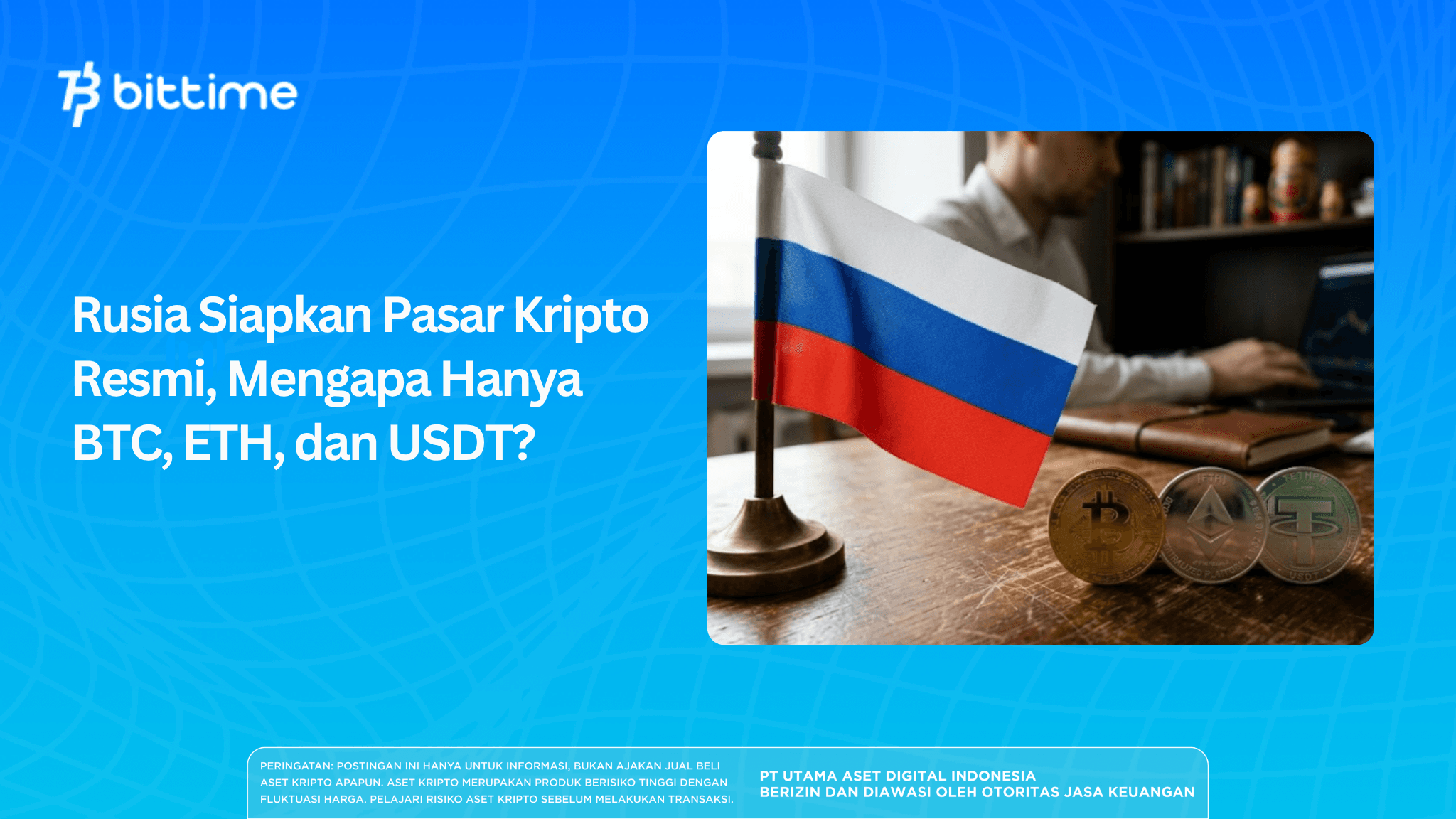
Russia is starting to build a new form of digital asset market after years of debating the position of cryptocurrency in its financial system.
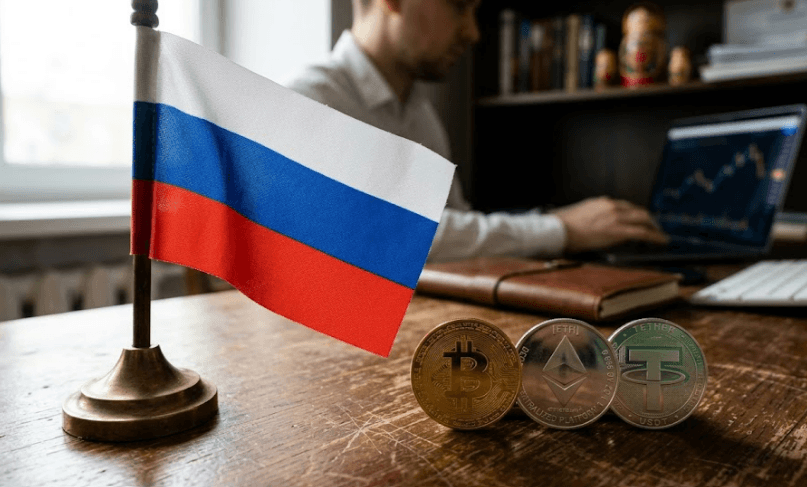
Russian crypto regulation is now moving towards official trading through supervised intermediaries, with BTC, ETH, and USDT being the three assets proposed for the initial phase.
This move marks a significant shift in the Russian government's approach. Cryptocurrency is not being made a domestic payment tool, but its trading and ownership are beginning to be placed within a more formal market framework.
Key Takeaways
- Russia is preparing a regulated crypto market scheduled to begin operations under new laws on September 1, 2026.
- BTC, ETH, and USDT were chosen as initial assets because they meet liquidity and market maturity criteria.
- Russian retail investors will face a knowledge test and a purchase limit of 300,000 rubles per year through each intermediary.
Russia Builds Crypto Market Under Central Bank Supervision
The legalization step for Russian crypto had actually entered the legislative stage before the list of assets was announced.
On July 21, 2026, the Bank of Russia announced that the Russian parliament had adopted a law regulating the circulation of cryptocurrency. The regulations are scheduled to take effect on September 1, 2026.
The law allows both non-qualified and qualified investors to conduct cryptocurrency transactions through official intermediaries.
Non-qualified investors are required to take a test before purchasing crypto assets that meet liquidity criteria. The purchase value is limited to 300,000 rubles per year through one intermediary.
Qualified investors also need to take the test, but are not subject to nominal purchase limits and can trade available cryptocurrencies according to market rules.
The Bank of Russia is also preparing supporting infrastructure that includes crypto exchanges, brokers, asset management companies, and digital depositories. These institutions will operate within the regulator's supervisory and licensing framework.
Read Also: Putin Signs New Crypto Law, Now Russia Can Control Digital Assets
On July 27, the Bank of Russia announced draft regulations for cryptocurrency and digital rights trading. The regulator also set minimum capital requirements for digital depositories ranging from 50 million to 250 million rubles, depending on the type of services provided.
With this structure, Russian crypto trading is slowly being directed to resemble conventional financial market patterns.
Investors will no longer have to rely solely on foreign crypto platforms or trading channels outside domestic oversight. These activities will have official channels through licensed institutions.
For Indonesian investors who want to follow the developments and trade crypto assets like BTC and ETH, Bittime provides access to digital asset trading in one platform.
Why Russia Chose BTC, ETH, and USDT
The choice of these three assets relates to market characteristics, especially liquidity, market capitalization, trading volume, and price track record.
Bitcoin and Ethereum are the two largest crypto assets by market capitalization and have long trading histories. USDT also has enormous global trading activity as a stablecoin designed to track the US dollar.
These criteria are important for regulators because an official market requires assets with sufficient liquidity to reduce the risk of prices being too easily manipulated.
This initial list also shows that Russia is not opening retail access to all cryptocurrencies at once. The regulator is choosing assets deemed to have sufficiently mature markets.
This approach gives Russian BTC and Russian ETH a special position as primary crypto assets within the new framework. USDT also has a place due to its role as a liquidity instrument in the global crypto market.
The choice of USDT is interesting because Russia in June 2026 also issued a consultation paper on the development of a ruble-based stablecoin. The Bank of Russia noted that dollar-based stablecoins still dominate the global market, while several countries are beginning to consider national stablecoins to maintain monetary sovereignty.
Thus, the presence of Russian USDT does not mean the Russian government is making the dollar a domestic payment tool. USDT remains positioned as a crypto asset within a regulated market.
Read also: BREAKING: Russia Bans Gold Exports Above 100 Grams Starting May 1
What Are the Russian Crypto Trading Rules for Investors?
Access to Russian crypto assets will differ based on investor category.
Non-qualified investors
This group essentially includes investors who have not yet met the requirements to be qualified investors.
They can purchase cryptocurrencies that meet the regulator's criteria after taking a knowledge and risk test. Purchase value is limited to 300,000 rubles per year for each intermediary.
This limit is one of the ways the Bank of Russia reduces the risk of significant losses for retail investors.
Qualified investors
Qualified investors still need to take the test, but get much broader access.
They can buy and sell cryptocurrencies without the nominal limits applicable to non-qualified investors. The Bank of Russia also stated that this group can trade cryptocurrencies without quantity limits based on the established framework.
Exchanges and intermediaries
Transactions will involve more formal infrastructure. Crypto exchanges can provide trading, while digital depositories are tasked with recording rights to cryptocurrencies.
Brokers and asset management companies can also act as transaction intermediaries, including in organized trading.
Industry participants have a transition period until July 1, 2027, to obtain licenses and adjust their activities to the new requirements.
Can Crypto Already Be Used as a Payment Tool in Russia?
Not yet.
This is one of the most important parts of Russian crypto regulation that is easy to misinterpret.
The new law allows cryptocurrency trading through official infrastructure, but the use of cryptocurrency as a payment tool within Russia remains prohibited.
There is an important exception for cross-border transactions.
Russian exporters and importers can use cryptocurrency in cross-border payments without restrictions on the type of cryptocurrency or wallet within the established framework. These transactions can be conducted through intermediaries or directly.
This policy shows the specific function of cryptocurrency that Russia wants to develop.
For the domestic market, the regulator maintains control over the payment system. For international trade, cryptocurrency can be one of the alternative channels.
This context is also related to the development of Russian digital assets amid changes in the cross-border payment system. The Moscow Times previously reported that cryptocurrency is increasingly being considered by Russia to facilitate cross-border trade when access to the global financial system faces various obstacles.
Read Also: Russia Legalizes Bitcoin Mining and International Trading Using Crypto
What Is the Impact on BTC, ETH, and USDT?
The new framework can provide additional legitimacy to the three assets on the initial list.
Bitcoin gains access to a trading channel supervised by the Russian regulator. With BTC's position as the largest crypto asset by market capitalization and global liquidity, Bitcoin is the most easily accepted candidate in the initial phase.
Ethereum also benefits from this recognition. ETH has a broad ecosystem and high liquidity, thus meeting the characteristics needed for organized trading.
Meanwhile, USDT has a different function. The stablecoin is widely used as an intermediary asset in crypto trading because its value tracks the US dollar.
However, the impact on the global price of BTC or ETH is likely not immediate or large. The purchase limits for non-qualified investors and the requirement to use official intermediaries keep Russian retail access controlled.
The greatest value of this policy actually lies in the legitimacy and infrastructure development.
If exchanges, brokers, custodians, and record-keeping systems can operate well, Russia will have an official channel for cryptocurrency activities that were previously more difficult to place within the domestic legal framework.
At the same time, the regulator still has room to change the list of assets that can be traded.
This means BTC, ETH, and USDT should be seen as an initial list, not a final list of all assets that will be available in the Russian market.
Read Also:Buying and Selling Oil Using Crypto: Russia Receives Payments from China and India
Conclusion
Russia is building a more formal cryptocurrency market under the supervision of the Bank of Russia.
The framework is scheduled to take effect on September 1, 2026, with exchanges, brokers, asset management companies, and digital depositories as part of the trading infrastructure.
BTC, ETH, and USDT were chosen as initial assets because they have the liquidity and trading history that meet the regulator's criteria.
Retail investors will face a knowledge test as well as a purchase limit of 300,000 rubles per year through each intermediary, while qualified investors get broader access.
Check the prices of Bitcoin (BTC), Ethereum (ETH), XRP, Solana (SOL), GRAM, and BNB as well as leading memecoin DOGE. You can trade directly on Bittime!
Bittime is a Digital Financial Asset Trader (PAKD) platform licensed and supervised by the Financial Services Authority — where you can buy Bitcoin in Indonesia and hundreds of other crypto assets starting from Rp10,000. The registration process is fast, secure, and can be started today.
Monitor the USDT to IDR conversion and price movements of your favorite crypto assets in real-time. All available in one crypto investment app that can be downloaded for free on the Play Store.
Ready to start? Register now on Bittime and execute your investment strategy on a platform trusted by millions of users in Indonesia.
FAQ
Has Russia legalized cryptocurrency?
Russia has passed a law regulating the circulation of cryptocurrency, and the rules are scheduled to take effect on September 1, 2026.
Which cryptocurrencies will be traded in Russia?
The Bank of Russia has proposed Bitcoin, Ethereum, and USDT as the main assets for organized trading in the initial phase.
What is the crypto purchase limit for Russian retail investors?
Non-qualified investors can purchase cryptocurrencies that meet the criteria after taking a test, with a limit of 300,000 rubles per year through each intermediary.
Can Bitcoin be used for payments in Russia?
No, cryptocurrency remains prohibited from being used as a domestic payment tool in Russia. However, exporters and importers can use cryptocurrency for cross-border transactions according to the applicable legal framework.
Why did Russia choose BTC, ETH, and USDT?
All three have high liquidity and trading activity as well as long trading histories, making them more suitable for the regulated crypto market criteria being built by the Bank of Russia.
Disclaimer: The views expressed belong exclusively to the author and do not reflect the views of this platform. This platform and its affiliates disclaim any responsibility for the accuracy or suitability of the information provided. It is for informational purposes only and not intended as financial or investment advice.
.png)