Rupiah Weakening? Expectations for a Fed Rate Hike Rise
2026-08-31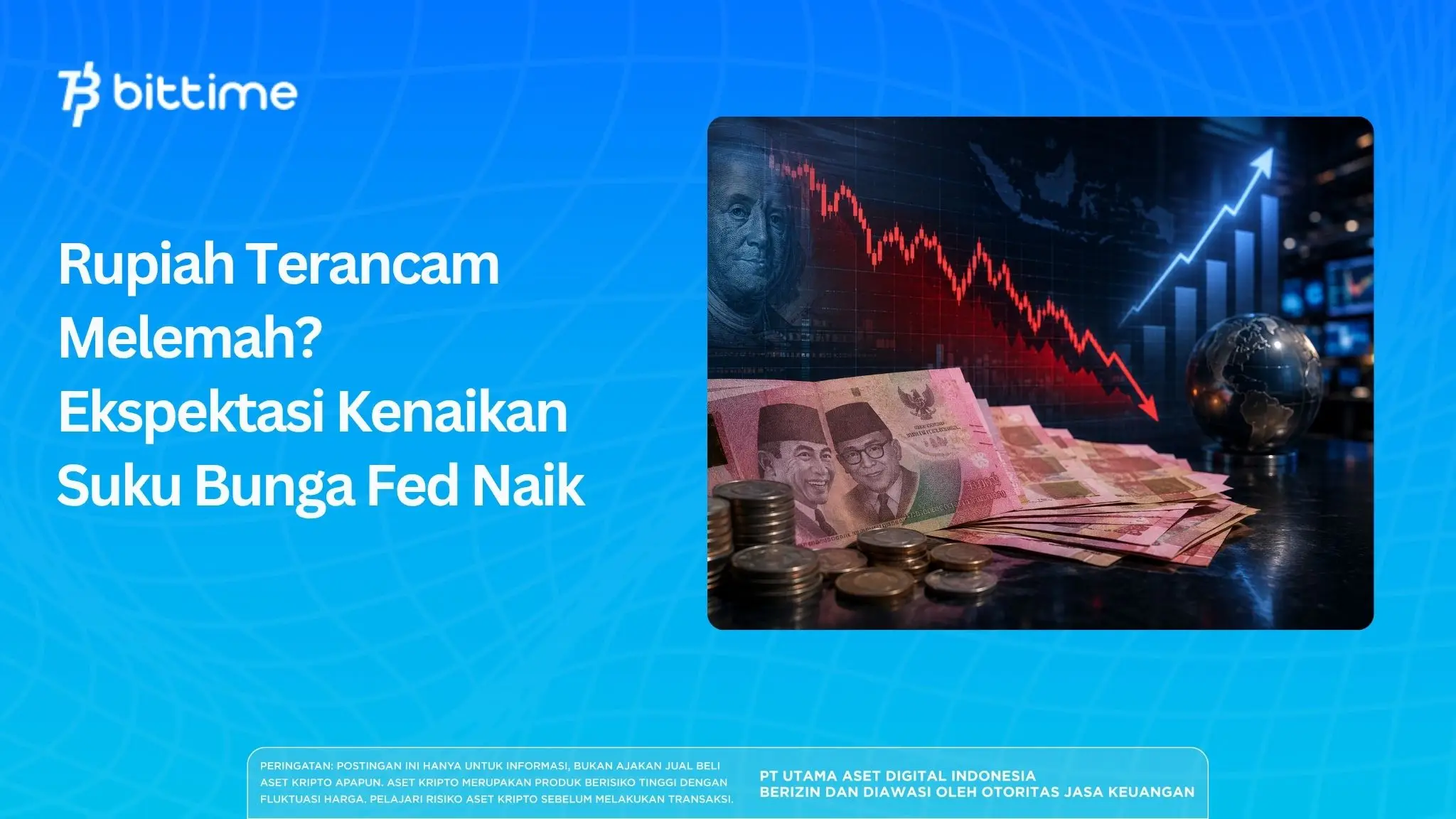
Pressure on Asian currencies increased again after markets raised expectationsFed interest rate hike in September 2026.
Rupiah is one of the currencies that gained attention as the US dollar strengthened and Treasury yields moved higher following the Federal Reserve's latest statement on inflation.
On August 31, 2026, market reports placed the rupiah at around Rp17,756 per US dollar.
For comparison, Bank Indonesia's JISDOR reference rate in the last trading session, August 28, 2026, was Rp17,703 per US dollar.
This condition raises questions about whether rupiah weakens deeper backrelevant.
The answer depends largely on the Fed's policies, global capital flows, commodity prices, and Bank Indonesia's ability to maintain the attractiveness of rupiah assets.
Key Takeaways
The market probability of a Fed rate hike in September 2026 increased to 54%–57%, from around 31%–35% a week earlier.
The rupiah traded at around Rp17,756 per US dollar on August 31, while the JISDOR was last at Rp17,703 per dollar on August 28, 2026.
Bank Indonesia maintained the BI-Rate at 5.75% with stability of the rupiah exchange rate as one of the main considerations.
Why is the Rupiah Under Pressure After Fed Expectations Rise?
The latest sentiment emerged after Federal Reserve Chairman Kevin Warsh reiterated the importance of ensuring inflation moves toward the 2% target.
In his speech at Jackson Hole on August 28, Warsh said the Fed needs to be confident that underlying inflation is moving toward its target at an adequate pace.
The market then increased the bets on Fed rate hike at the September meeting.
Crypto Briefing lists the probability at around 53.5%, while Reuters reports the odds have risen to around 57%.
This shift in expectations also boosted US bond yields. The two-year Treasury yield reportedly rose toward 4.33%, while the US dollar hovered near a two-week high.
How Does the Fed's Interest Rate Hike Put Pressure on the Rupiah?
Relationship betweenThe Fed's interest rateand the rupiah primarily works through the difference in yields between US and emerging market assets.
When US interest rates rise, Treasury bonds offer higher returns with relatively low risk.
Global investors then have a greater incentive to move some capital into dollar assets.
Demand for dollars is increasing, while emerging market currencies such as the rupiah may lose support from foreign capital flows.
This is the core, the impact of the Fed rate hike on the rupiah.
Not because the Fed directly determines the USD/IDR exchange rate, but because changes in US interest rates change the price of capital and risk preferences of investors worldwide.
Read Also:How to Deposit Rupiah and Crypto Assets on Bittime
Rupiah Remains in Vulnerable Area Today
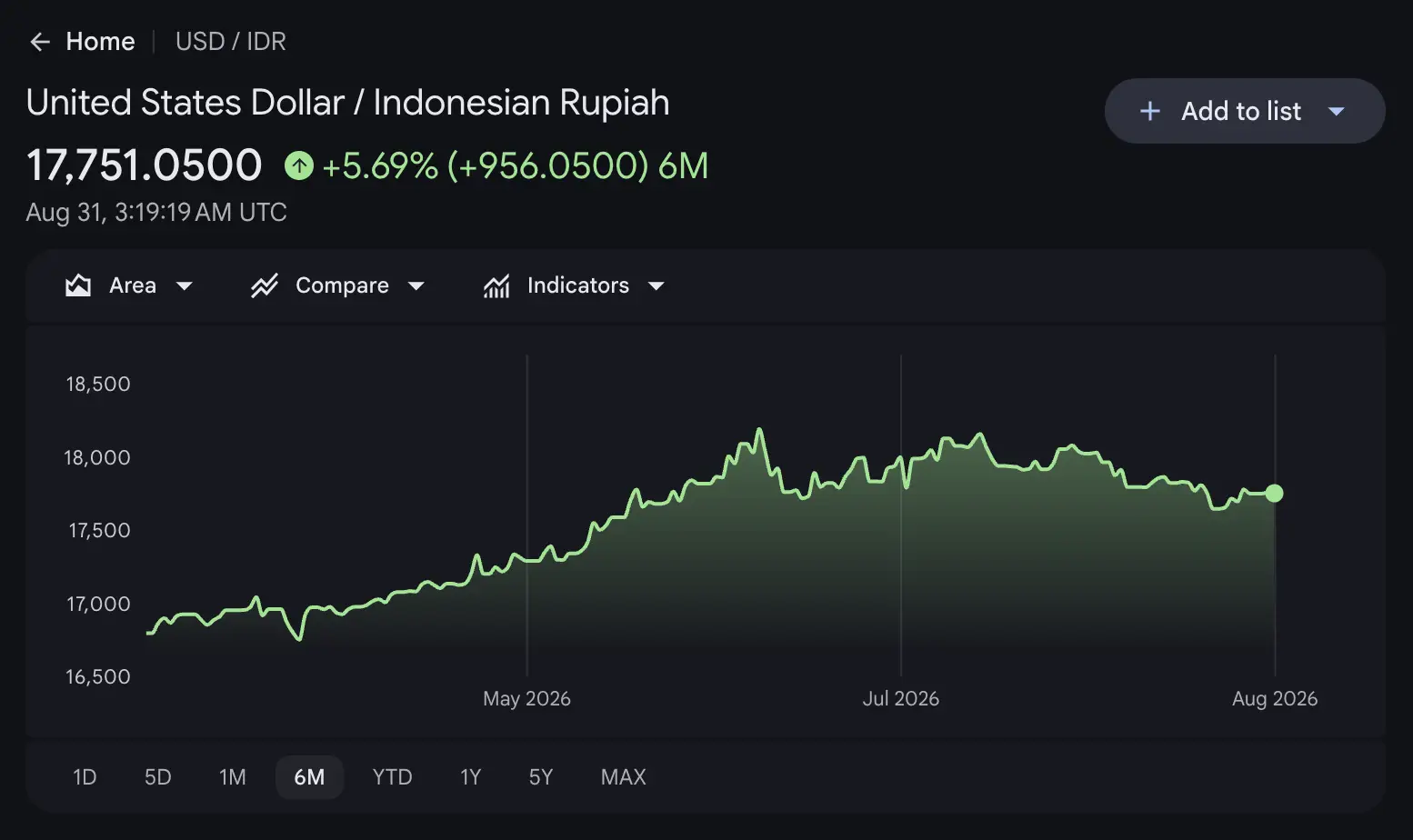
Source: Google Finance
The August 31 report saidrupiah todaywas around Rp. 17,756 against the US dollar.This position is quite close to the JISDOR level of Rp17,703 recorded by Bank Indonesia on Friday, August 28.
Pressure on the rupiah is actually not a new phenomenon in 2026.
In June, Bank Indonesia even made an unscheduled interest rate increase of 25 basis points after the rupiah weakened more sharply than expected.
Reuters noted that the rupiah at that time touched around Rp18,190 per US dollar before strengthening after BI's action.
This means that the level at the end of August was still stronger than the extreme pressure phase in June.
However, the probability increasesFed rate hike creating new sources of volatility.
Read Also:The Fed Cuts Interest Rates in September, What Impact Will This Have on the Crypto Market?
Bank Indonesia Has Room to Steer Clear of Weakening
Bank Indonesia does not only rely on interest rates to maintain rupiah exchange rate.
Stabilization policies can include interventions in the spot market, domestic non-deliverable forwards, offshore markets, and monetary instruments to increase the attractiveness of domestic assets.
At the meeting on August 18–19, 2026, BI maintained the BI-Rate at 5.75%, the Deposit Facility at 4.75%, and the Lending Facility at 6.50%.
BI emphasized that this decision is consistent with efforts to maintain rupiah stability amid global turmoil while maintaining inflation at the target of 2.5% ±1%.
This policy means that the interest rate differential between Indonesia and the US remains an important variable.
If the Fed does raise interest rates, BI's policy space will be tested again.
Read Also:A Complete Guide to OTC USDT IDR Transactions on Bittime
A Strong Dollar Isn't the Only Risk to the Rupiah
Assess whether rupiah under pressureIn addition, you also need to consider the price of oil.Indonesia has a need to import energy, so rising oil prices could increase demand for dollars and add pressure on the external balance.
By late August, Brent was back around US$90 per barrel amid Middle East geopolitical tensions.
The combination of high oil, rising Treasury yields and a strong dollar is a less than friendly environment for a number of Asian currencies.
Domestic factors also play a role. Foreign capital flows, Indonesian inflation, foreign exchange reserves, economic growth, and investor perceptions of the sustainability of fiscal and monetary policies can determine whether the weakening is temporary or develops into a trend.
For those of you who want to follow the movements of the digital asset market amidst changes in The Fed's policy, you can register on Bittime and monitor market conditions.
Will the Rupiah Weaken Further?
The downside scenario would gain support if the Fed raises interest rates in September, US inflation remains high, and Treasury yields continue to rise.
In such conditions, investors can maintain a defensive position on the dollar so that rupiah weakens along with other emerging market currencies.
Conversely, the rupiah could gain room to strengthen if US economic data reduces the likelihood of an interest rate hike or if BI succeeds in attracting foreign capital flows.
US employment and inflation data ahead of the FOMC meeting are therefore important catalysts.
The chance of an interest rate increase of around 54%–57% also means the outcome is uncertain.
Markets can still change expectations quickly if new economic data differs from forecasts.
Read Also:Complete Guide to Converting IDR to USDT on Bittime 2026
Fed Rate Hike Also Important for Crypto Market
The Fed's policy changes don't just affect exchange rates. Higher US interest rates typically increase the cost of capital and can suppress demand for riskier assets, including technology and crypto stocks.
Therefore, digital asset investors also need to monitor the movement of the dollar, Treasury yields, andThe Fed's interest rate.
Global liquidity is often the link between US monetary policy, foreign exchange markets, and crypto asset valuations.
Read Also:Bitcoin Heads to the September FOMC: Will the BTC Rally Stop?
Rupiah Not in Crisis Yet, but Fed Pressure Needs to Be Monitored
Rising expectationsFed interest rate hike adding to the challenges for the rupiah ahead of September 2026.
A relatively strong dollar and higher Treasury yields could reduce the attractiveness of emerging market assets and boost demand for the US currency.
However, the rupiah's position of around Rp. 17,700 is still better than the extreme pressure that occurred in June when the exchange rate briefly exceeded Rp. 18,000 per dollar.
Bank Indonesia also maintains a tight policy with a BI-Rate of 5.75% to maintain stability.
Thus, the risk rupiah under pressure is indeed increasing, but the next direction is not determined by just one factor.
The Fed's decision, US inflation data, oil prices, capital flows, and BI's response will be the main determinants of the next movement of the USD/IDR.
Read Also:Guide on How to Buy USDT with IDR Balance on the Bittime App

Bittime is a licensed and regulated Digital Financial Asset Trader (PAKD) supervised by Indonesia’s Financial Services Authority (OJK) — where you can buy Bitcoin in Indonesia and hundreds of other crypto assets starting from just Rp10,000. The registration process is fast, secure, and you can get started today.
Track USDT to IDR conversions and monitor your favorite crypto assets in real time. Everything is available in one crypto investment app that you can download for free on the Play Store
Ready to start? Register now on Bittime and execute your investment strategy with a platform trusted by millions of users in Indonesia.
FAQ
Why does the rupiah weaken when the Fed's interest rates rise?
Higher US interest rates could make dollar-denominated bonds and assets more attractive. Capital flows could shift away from emerging markets, increasing demand for dollars and putting pressure on the rupiah.
What is the rupiah exchange rate today?
On August 31, 2026, market reports indicated the rupiah was trading at around Rp17,756 per US dollar. The last official JISDOR from Bank Indonesia on August 28 was Rp17,703 per dollar.
Will the Fed raise interest rates in September 2026?
Not yet certain. Markets on August 31 estimated the chance of a rate hike at around 54%–57%, up sharply from the roughly one-third chance the previous week. The actual decision will be determined by the FOMC.
What is the impact of the Fed rate hike on the rupiah?
A Fed rate hike could strengthen the dollar, increase Treasury yields, and reduce the relative attractiveness of rupiah assets. This could result in pressure on the USD/IDR and foreign capital inflows.
What can Bank Indonesia do if the rupiah continues to weaken?
BI can use interest rate policy, foreign exchange intervention, monetary instruments, and measures to attract foreign capital. In August 2026, BI maintained the BI-Rate at 5.75% while emphasizing exchange rate stabilization.
Disclaimer: The views expressed belong exclusively to the author and do not reflect the views of this platform. This platform and its affiliates disclaim any responsibility for the accuracy or suitability of the information provided. It is for informational purposes only and not intended as financial or investment advice.

.png)