Crypto Regulations in Russia and the U.S.: A Comparison of Bitcoin and Other Cryptocurrency Rules
2026-08-21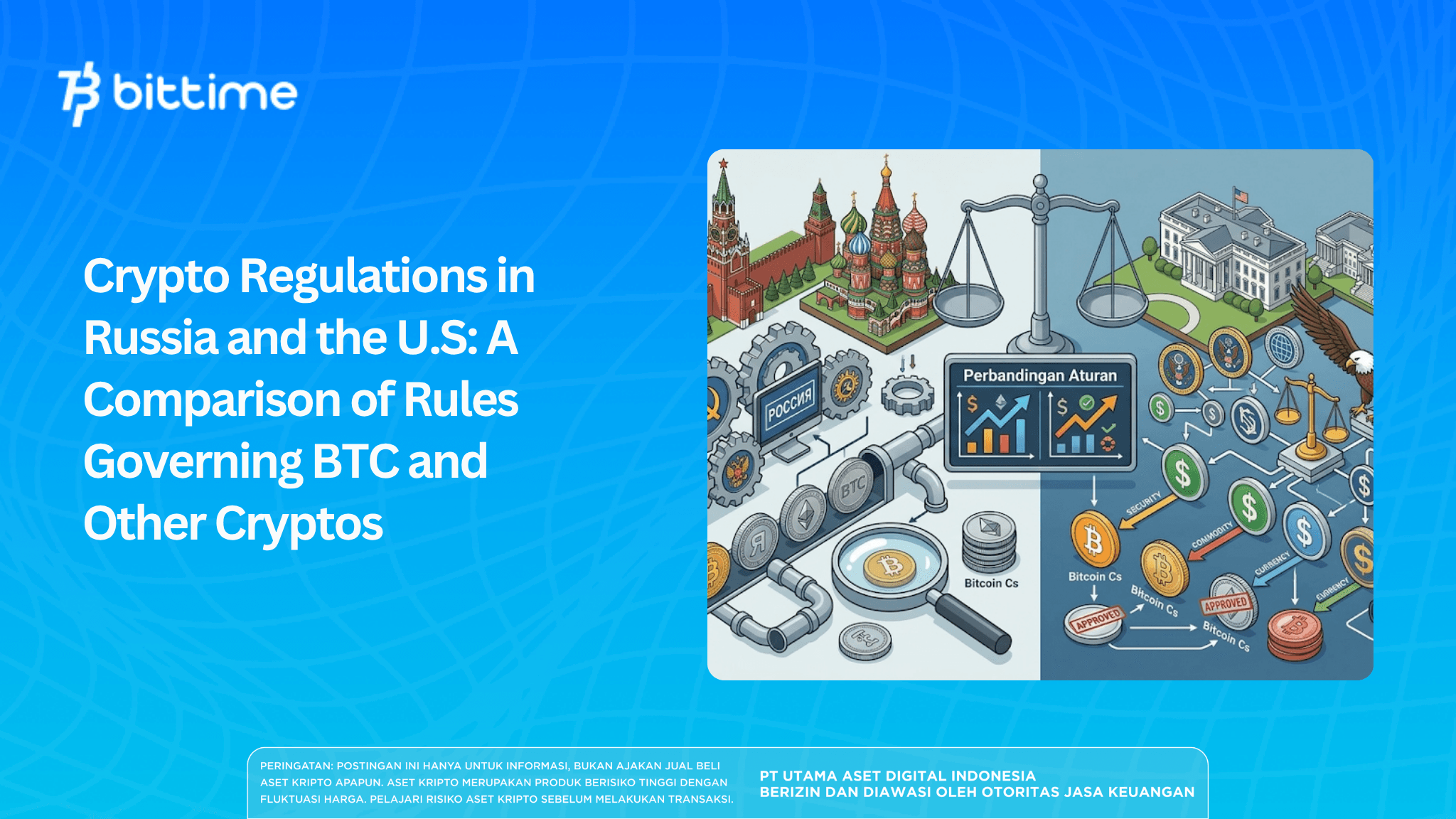
Crypto asset regulation entered a new phase in 2026. Russia began implementing a comprehensive legal framework for digital asset trading, while the United States took a different approach through the SEC's Regulation Crypto Assets proposal and the CLARITY Act legislative process.
These differences matter to investors, blockchain companies, and trading platforms because they determine how Bitcoin (BTC), Ethereum (ETH), stablecoins, and other tokens can be traded, used for fundraising, or developed within each country's ecosystem.
Key Takeaways
- Russia is moving faster legislatively, with major digital asset rules scheduled to take effect on September 1, 2026.
- The United States is taking a capital markets-based approach, with the SEC proposing fundraising pathways that do not require all traditional securities registration mechanisms.
- The CLARITY Act remains an important factor because it could provide a more permanent legal foundation for dividing digital asset regulatory authority between the SEC and CFTC.
Russia Chooses a More Centralized Crypto Framework
Under Russia's crypto regulations, the government is taking an approach that places digital asset trading under the strict supervision of the Bank of Russia.
The new law is scheduled to take effect on September 1, 2026, creating a more comprehensive legal framework compared with the previous situation, which was relatively characterized by regulatory uncertainty.
One important aspect is the requirement for crypto market participants to operate through regulated structures. Exchanges, brokers, and custodians must meet registration requirements as well as capital and supervisory standards.
Russia also differentiates access based on investor status. Non-qualified investors can purchase crypto assets that meet certain criteria through intermediaries, subject to a limit of 300,000 rubles per year for each intermediary. Qualified investors, on the other hand, can obtain broader access without this limit.
This means Russia is not simply legalizing crypto. The country is attempting to build a legal but controlled market, with restrictions on retail investors and stronger oversight.
Read Also: Russia Prepares Official Crypto Market, Why Only BTC, ETH, and USDT?
United States Builds a Dedicated Pathway for Crypto
The U.S. approach is very different. On August 18, 2026, the U.S. Securities and Exchange Commission (SEC) submitted the Regulation Crypto Assets proposal, designed to create a special offering regime for certain investments involving crypto assets.
This proposal is important because the SEC acknowledges that disclosure systems designed for traditional stocks and bonds are not always suitable for the characteristics of blockchain projects.
Rather than placing all crypto assets into a single category, the SEC is proposing several dedicated pathways.
For early-stage projects, there is a startup exemption that allows fundraising of up to US$5 million over a four-year period with simpler disclosure requirements.
Meanwhile, the fundraising exemption provides a pathway for issuers that require larger amounts of capital. Tier 1 allows fundraising of up to US$20 million over a 12-month period, while Tier 2 reaches US$75 million over 12 months.
This approach shows that the United States is attempting to create regulations that not only limit risks but also maintain the country's appeal as a hub for blockchain innovation.
Start your financial journey today. Sign up on Bittime and build your investment portfolio with ease.
Comparison of Crypto Regulations in Russia and the USA
When comparing crypto regulations in Russia and the USA, the clearest difference lies in the primary objectives of their respective regulatory frameworks.
This difference shows that the crypto competition between the United States and Russia is not simply about which country is more Bitcoin-friendly.
The competition is also about which country can create an attractive legal environment for blockchain companies without losing control over financial risks.
Clarity Act Becomes Key to U.S. Crypto Regulation
One important element in crypto regulation in the United States and Russia is the position of the Digital Asset Market CLARITY Act.
Unlike the SEC proposal, the CLARITY Act is designed as a broader legislative framework to determine the structure of the digital asset market and the division of authority between the SEC and the Commodity Futures Trading Commission (CFTC).
The SEC itself stated that the Regulation Crypto Assets proposal is closely connected to the development of this legislation. The SEC proposal uses several concepts that align with Congress's efforts to provide greater clarity regarding the status of digital assets.
However, the two are not entirely the same. Regulation Crypto Assets primarily focuses on offerings and fundraising through certain investment contracts. Questions concerning secondary trading, custody, exchanges, and several other aspects still require additional rules.
This is where the CLARITY Act becomes strategically important. If enacted into law, the framework could provide a more permanent legal foundation than SEC administrative rules.
Read Also: U.S. Tightens Stablecoin Rules Through the GENIUS Act, What Does It Mean for USDT?
Russia Is Faster, America Is More Flexible?
In terms of implementation timing, Russia currently appears to be further ahead. Its digital asset law has already been passed, and most of the key provisions will take effect in September 2026.
The United States is taking a longer route. The SEC only submitted its proposal in August 2026 and is still allowing a 60-day public comment period after publication in the Federal Register. Therefore, the rules cannot yet be considered final regulations.
However, moving faster does not automatically mean being more industry-friendly. Russia provides legal certainty through strict restrictions on investors and domestic use.
The United States is instead attempting to create a more flexible pathway for crypto issuers, including the possibility that an investment contract could exit the securities regime once a project meets certain conditions.
Therefore, the two countries are actually pursuing different objectives: Russia emphasizes control and certainty in a legalized market, while the United States seeks to combine investor protection with innovation and competitiveness.
What Does It Mean for Bitcoin and the Crypto Market?
For Bitcoin, the direct impact of these regulatory differences needs to be interpreted carefully. Russia's rules do not mean BTC automatically becomes a domestic payment instrument. Instead, the new framework places greater emphasis on trading and certain uses within permitted activities.
In the United States, the SEC proposal also does not mean Bitcoin receives a new status across the board. Its focus is on certain investment contracts involving crypto assets.
The proposal's definitions and scope are sufficiently specific that tokenized equity, debt, and other traditional securities remain outside its framework.
The implications are greater for crypto companies, token issuers, exchanges, and institutional investors. Certainty regarding how to raise capital and trade digital assets can influence where blockchain companies choose to build their businesses.
Read Also: Impact of U.S. Treasury Yields on BTC
Conclusion
Crypto regulation in the United States and Russia in 2026 shows two different models. Russia is moving faster with a licensed system, investor limits, and centralized oversight.
The United States is taking a gradual approach through the SEC while awaiting the possibility of a broader legislative framework through the CLARITY Act.
Therefore, comparing crypto regulations in Russia and the USA should not be measured solely by which country has looser rules.
The more important question is whether these regulations can create legal certainty, protect investors, and still provide room for blockchain innovation.
Start trading crypto with major assets such as BTC/IDR and ETH/IDR directly in the Bittime app.
Bittime is a licensed Digital Financial Asset Trader (PAKD) platform regulated and supervised by the Financial Services Authority (OJK) — where you can buy Bitcoin in Indonesia and hundreds of other crypto assets starting from Rp10,000. Registration is fast, secure, and you can get started today.
Monitor the USDT to IDR conversion and the price movements of your favorite crypto assets in real time. Everything is available in a single crypto investment app that can be downloaded for free from the Play Store.
Ready to get started? Sign up on Bittime now and execute your investment strategy with a platform trusted by millions of users in Indonesia.
FAQ
What is the main difference between crypto regulations in Russia and the United States?
Russia uses a more centralized regulatory model with licensing, oversight by the Bank of Russia, and restrictions on retail investors. The United States is building a framework that is more focused on asset categories and capital market rules through the SEC and legislation such as the CLARITY Act.
What is the crypto Clarity Act?
The crypto Clarity Act refers to the Digital Asset Market CLARITY Act, a proposed U.S. legislation aimed at establishing a digital asset market structure and clarifying the division of authority between the SEC and CFTC.
Is the Regulation Crypto Assets proposal in the U.S. already a final rule?
No. The Regulation Crypto Assets proposal announced by the SEC on August 18, 2026, is still a proposal and must go through a public comment period before it can potentially become a final rule.
Has Russia legalized Bitcoin?
Russia has established a legal framework that allows digital currency trading under certain conditions.
Which is more crypto industry-friendly, Russia or the United States?
Both have different advantages. Russia offers certainty through rules that have already been enacted, but with strict controls. The United States offers a more flexible pathway for innovation and fundraising, although parts of its framework are still undergoing legislation and rulemaking.
Disclaimer: The views expressed belong exclusively to the author and do not reflect the views of this platform. This platform and its affiliates disclaim any responsibility for the accuracy or suitability of the information provided. It is for informational purposes only and not intended as financial or investment advice.

.png)