Prabowo Meets MSCI CEO: Can Indonesia Escape a Stock Market Downgrade?
2026-11-24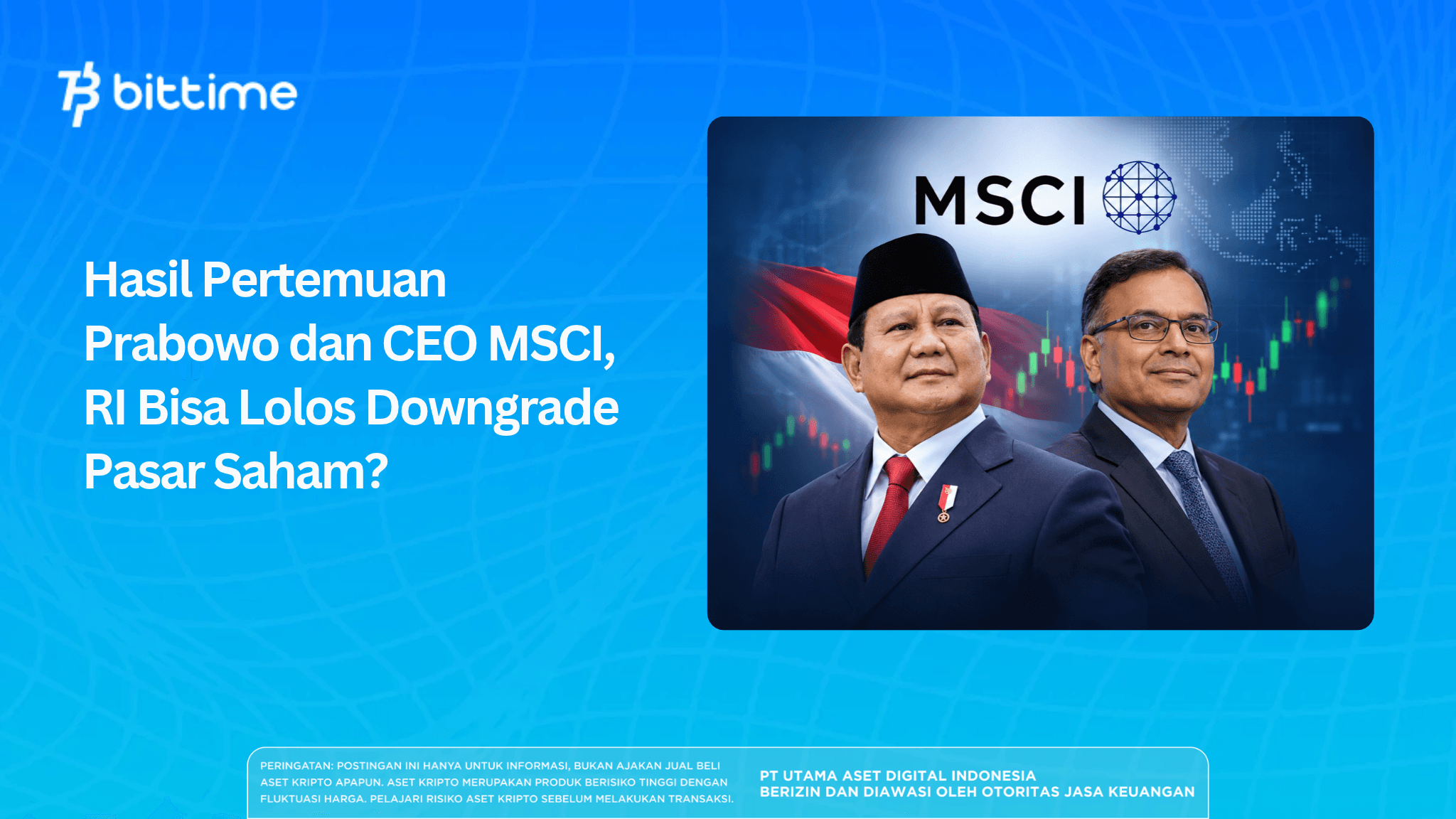
Reports that Prabowo met with MSCI CEO Henry Fernandez have drawn investors' attention after the two reportedly spoke via teleconference on November 10, 2026. The discussion was said to open up the possibility of Indonesia avoiding a downgrade in its equity-market classification from Emerging Market to Standalone Market.
During the discussion, which reportedly lasted more than an hour, Prabowo was said to have pledged to improve stock exchange governance and strengthen oversight by the Financial Services Authority (OJK). MSCI was reportedly open to considering alternatives to a downgrade, although no official decision has been made. So what actually changed following the discussion?
Key Takeaways
- Prabowo and the MSCI CEO reportedly discussed alternatives to a downgrade during a teleconference on November 10, 2026.
- The government has committed to improving transparency, oversight, and enforcement of capital market regulations.
- The news provided positive sentiment for the Jakarta Composite Index (JCI) and the rupiah, but MSCI's final decision remains subject to the consultation process.
Outcome of the Meeting Between Prabowo and the MSCI CEO
Prabowo's conversation with Henry Fernandez reportedly took place during a conference call facilitated by Ray Dalio, the founder of Bridgewater Associates.
Danantara CEO Rosan Roeslani and several government representatives were also said to have joined the discussion.
Prabowo reportedly outlined plans to reform Indonesia's capital market, including strengthening the OJK's independence, enforcing regulations more consistently, and improving communication with global investors.
Fernandez was said to have responded positively to those commitments. MSCI was reportedly willing to consider options other than downgrading Indonesia directly to Standalone Market status.
However, the details of the conversation have not been independently confirmed. The OJK also stated that it had not received official confirmation of the outcome of the communication between Prabowo and MSCI.
This means the reports offer renewed hope but cannot yet be regarded as a binding agreement.
Read also: Rupiah Weakens to Rp18,279 Today: Will BTC/IDR Prices Be Affected?
Why Is MSCI Threatening to Downgrade Indonesia?
The threat of a downgrade arose after MSCI determined that several issues in Indonesia's stock market had not been adequately addressed.
Through a consultation announced on October 15, 2026, MSCI highlighted four main concerns:
- Ownership transparency: Information about shareholders and beneficial owners was considered to require greater clarity.
- Shareholding concentration: Several listed companies have highly concentrated ownership structures.
- Coordinated trading: MSCI raised concerns about trading practices that could undermine market integrity.
- Regulatory enforcement: Announced reforms need to be accompanied by evidence of implementation and consistent oversight.
These issues relate to how easily global investors can access the market, understand ownership structures, and trade shares under fair conditions.
Emerging Market vs. Standalone Market: What's the Difference?
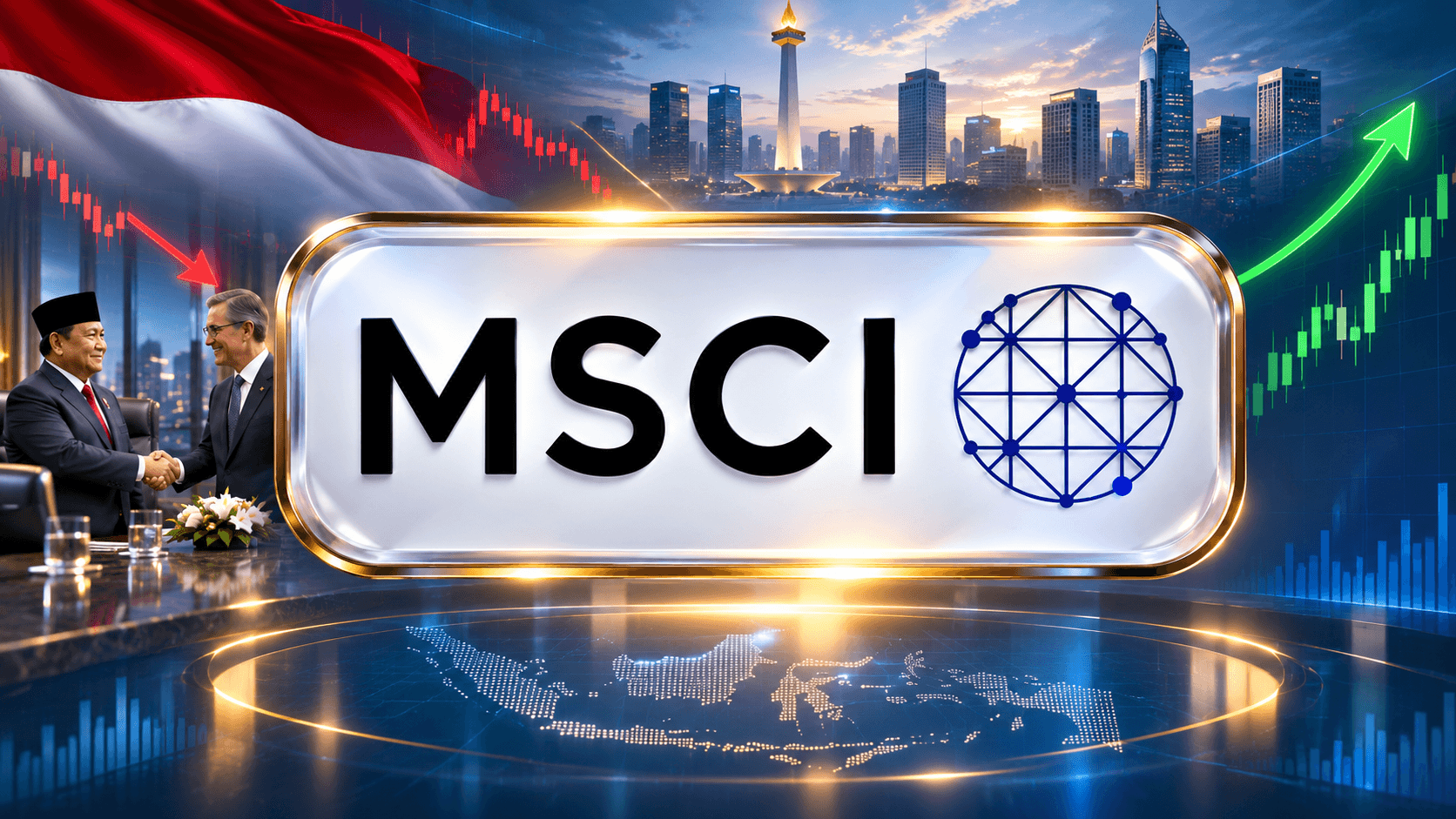
Indonesia currently retains Emerging Market status under MSCI's classification.
However, the global index provider has proposed moving Indonesia directly to Standalone Market status, rather than simply downgrading it to Frontier Market status.
A change in classification could affect the position of Indonesian stocks in indices used as benchmarks by many international investment managers.
For readers who also follow global equity markets, Bittime offers tokenized assets linked to US-listed stocks, such as AAPLX and MSFTON. These instruments differ from shares traded directly on the Indonesia Stock Exchange (IDX) and are not part of the MSCI Indonesia stock list.
Can Indonesia Avoid an MSCI Downgrade?
The possibility remains open, but there is no guarantee that Indonesia will retain its Emerging Market status.
MSCI's reported willingness to consider alternatives is a positive development. However, the final decision will still depend on the results of the official assessment and consultation.
MSCI previously stated that it would consider reform developments if substantial improvements were made to the governance and functioning of Indonesia's capital market.
Therefore, the outcome of the conversation between Prabowo and Henry Fernandez cannot be separated from concrete steps taken by the government, the OJK, and the Indonesia Stock Exchange (IDX).
Read also: Bitcoin Price Today at Rp1.12 Billion, Fear & Greed Index at 11: Is a Rebound Coming?
Five Capital Market Reforms Under MSCI's Scrutiny
To maintain international investors' confidence, capital market reforms must deliver measurable changes.
Here are five key areas of focus:
- Clarify shareholder structures. Improve ownership disclosures, including information on shareholders holding more than 1%.
- Strengthen HSC reporting. Identify listed companies with highly concentrated ownership under High Shareholding Concentration (HSC) reporting.
- Improve investor classification. Provide more detailed information about market participant categories.
- Increase free float. Implement a roadmap toward a minimum public free-float requirement of 15%.
- Strengthen supervision. Ensure that suspected manipulation and coordinated trading are addressed through effective regulatory enforcement.
Some of these measures have already been introduced, while others still require further implementation.
MSCI will assess whether the changes genuinely improve market quality and accessibility rather than remaining merely policy announcements.
Read also: Can Hajj and Umrah Be Paid for with Stablecoins? Here's How It Works
How the Prabowo–MSCI Meeting Affected the JCI and the Rupiah
Reports of the discussion between Prabowo and the MSCI CEO were among the positive factors influencing trading on Monday, November 23, 2026. The Jakarta Composite Index (JCI), which had fallen more than 1.6% early in the session, reversed course to gain more than 1.4% at around 10:42 a.m. WIB.
By the close, the index had risen 1.35% to 5,215.85.
A similar move was seen in the rupiah. After weakening to around Rp18,290 per US dollar, the currency reportedly recovered to approximately Rp18,180 at 2:33 p.m. WIB.
Bank Indonesia viewed news of the communication as a positive development supporting optimism about domestic financial markets.
Nevertheless, movements in the JCI and the rupiah were not determined entirely by the MSCI news. Global economic conditions, capital flows, and interest-rate expectations also influenced both.
Exchange-rate movements also attracted the attention of investors holding dollar-denominated digital assets. To compare their values in rupiah, you can check the USDT-to-IDR conversion on Bittime, keeping in mind that market prices for USDT do not always match the spot dollar exchange rate exactly.
Why Is MSCI's Decision Important to Foreign Investors?
MSCI indices serve as benchmarks for many international fund managers when allocating investments. If Indonesia's status changes, funds tracking certain indices may need to adjust their portfolios.
A downgrade could trigger selling pressure on affected shares, while retaining Emerging Market status could reduce one source of market uncertainty.
However, the amount of capital entering or leaving the market will still depend on investors' decisions and the applicable index rules.
Read also: 9 Crypto Events This Week That Could Shape Bitcoin's Direction—Don't Miss Them
When Will MSCI Announce Its Final Decision on Indonesia?
The consultation process is still underway and will help determine the future classification of Indonesia's stock market.
Here are the important dates to watch:
During this process, MSCI continues to apply restrictions to certain changes involving Indonesian equity indices.
As a result, progress on reforms and MSCI's official announcements are the two key developments to monitor through mid-2027.
What Are the Risks for Indonesian Stock Investors?
The possibility of avoiding a downgrade offers hope, but uncertainty has not completely disappeared.
Several risks deserve attention:
- Classification changes: A new status could affect Indonesian stocks' positions in global indices.
- JCI volatility: Share prices may fluctuate sharply in response to news developments.
- Foreign capital flows: International investors may adjust their holdings in line with their investment policies.
- Stock liquidity: Companies with highly concentrated ownership may face greater trading risks.
- Reform implementation: The effectiveness of capital market reforms still needs to be demonstrated through data and regulatory oversight.
For investors, official information from MSCI, the OJK, and the IDX provides a more reliable basis for analysis than speculation about the outcome of negotiations.
Meanwhile, readers exploring diversification can compare equities with digital gold-backed assets such as PAXG and XAUT on Bittime. Both have different characteristics and risks, and neither guarantees protection against stock market declines.
Conclusion
Reports of Prabowo's meeting with the MSCI CEO have raised the possibility that Indonesia could avoid a stock market downgrade. Henry Fernandez was reportedly open to considering alternatives, while the government pledged to improve capital market governance and oversight.
However, Indonesia has not yet been declared safe from a downgrade. The final outcome still depends on the implementation of reforms and MSCI's decision, which is scheduled to be announced no later than June 30, 2027.
If you want to follow developments in global financial markets and digital assets, you can register with Bittime to access crypto market information and explore investment options suited to your risk profile.

Bittime is a Digital Financial Asset Trader (PAKD) platform licensed and supervised by Indonesia's Financial Services Authority (OJK) — where you can buy Bitcoin in Indonesia and hundreds of other crypto assets starting from Rp10,000. Registration is fast and secure, and you can get started today.
Monitor USDT-to-IDR conversions and real-time price movements of your favorite crypto assets. Everything is available in one crypto investment app that you can download for free from the Play Store.
Ready to get started? Register with Bittime now and put your investment strategy into action on a platform trusted by millions of users in Indonesia.
FAQ
What Was the Outcome of Prabowo's Meeting with the MSCI CEO?
Prabowo and Henry Fernandez reportedly discussed reforms to Indonesia's stock market via teleconference on November 10, 2026. MSCI was said to be open to considering alternatives to a downgrade, but the details of the discussion have not been independently confirmed.
Has MSCI Canceled Indonesia's Downgrade?
No. MSCI is still conducting consultations on a potential change in Indonesia's classification from Emerging Market to Standalone Market. No final decision has been announced.
Why Does MSCI Want to Downgrade Indonesia's Stock Market?
MSCI has highlighted concerns about shareholder transparency, high ownership concentration, suspected coordinated trading, and the effectiveness of regulatory enforcement. Indonesia needs to demonstrate concrete improvements to address these concerns.
How Would an MSCI Downgrade Affect the JCI?
A downgrade could affect foreign investment flows and put pressure on certain Indonesian stocks. The extent of the impact would depend on changes to index composition and the decisions of institutional investors.
When Will MSCI Announce Its Final Decision on Indonesia?
MSCI will accept consultation feedback until April 30, 2027. The final decision is scheduled to be announced no later than June 30, 2027, with possible updates before that date.
Disclaimer: The views expressed belong exclusively to the author and do not reflect the views of this platform. This platform and its affiliates disclaim any responsibility for the accuracy or suitability of the information provided. It is for informational purposes only and not intended as financial or investment advice.

.png)