Blockchain Development and Regulation in Indonesia in 2025: Legality and New Directions for the Digital Industry
2025-10-13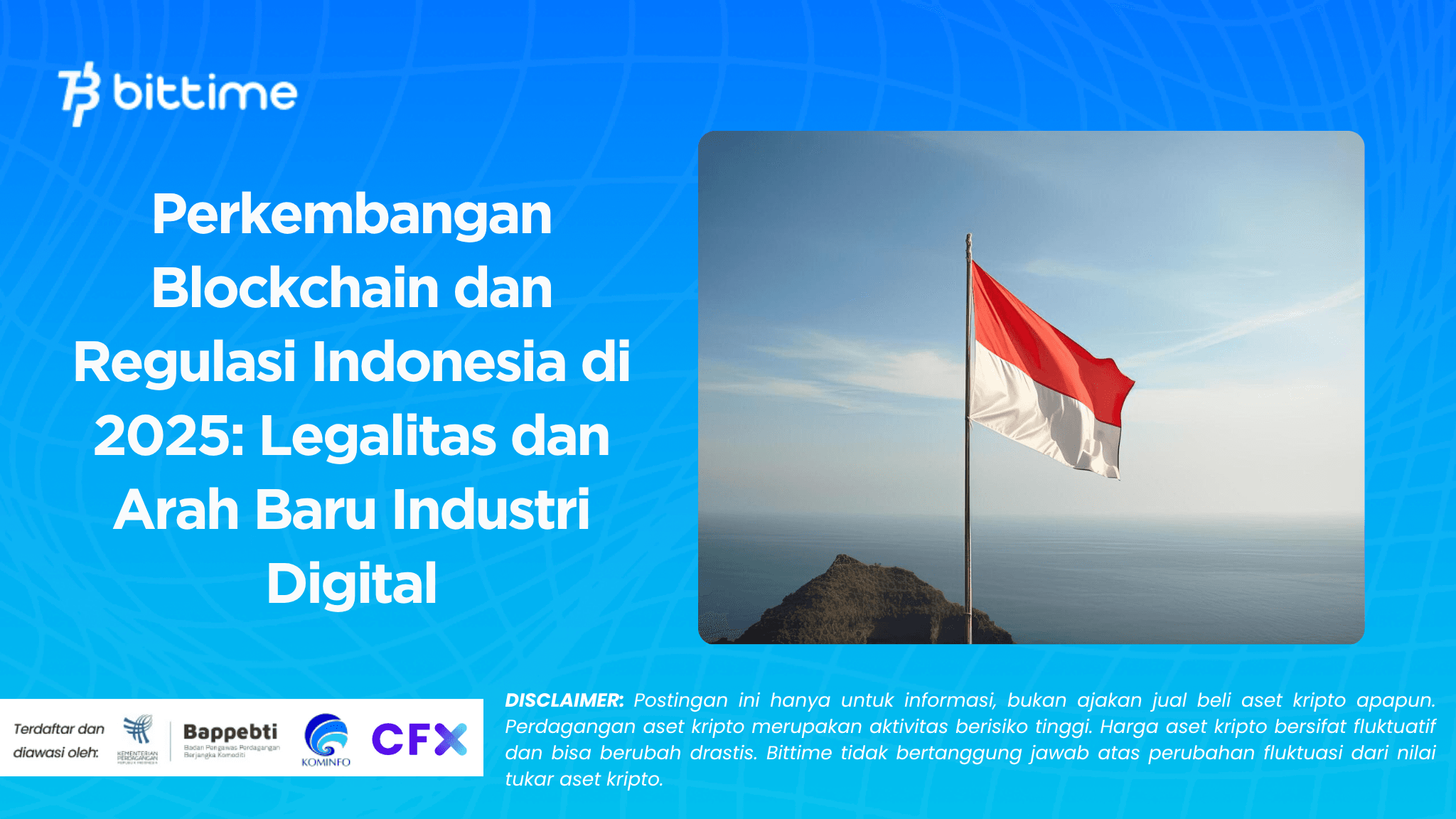
Bittime - The development of blockchain in Indonesia has now entered a new phase. The government has officially recognized blockchain technology as part of the national digital infrastructure through Government Regulation (PP) No. 28 of 2025 concerning Risk-Based Business Licensing.
This regulation places blockchain on par with other strategic technologies such as artificial intelligence (AI) and digital identity.
Article 186 states that blockchain-based business operators can obtain a Business Identification Number (NIB) and Standard Certificate as legal requirements.
However, for projects related to financial activities, such as asset tokenization or crypto asset trading, permission from the Financial Services Authority (OJK) remains a requirement.

This step marks an important shift from mere recognition of technology towards governance and consumer protection.
Companies such as Upbit Indonesia view this policy as a strategic move to strengthen the domestic blockchain ecosystem, while also creating a safer and more transparent business climate.
Crypto Supervision Transfers from Bappebti to OJK
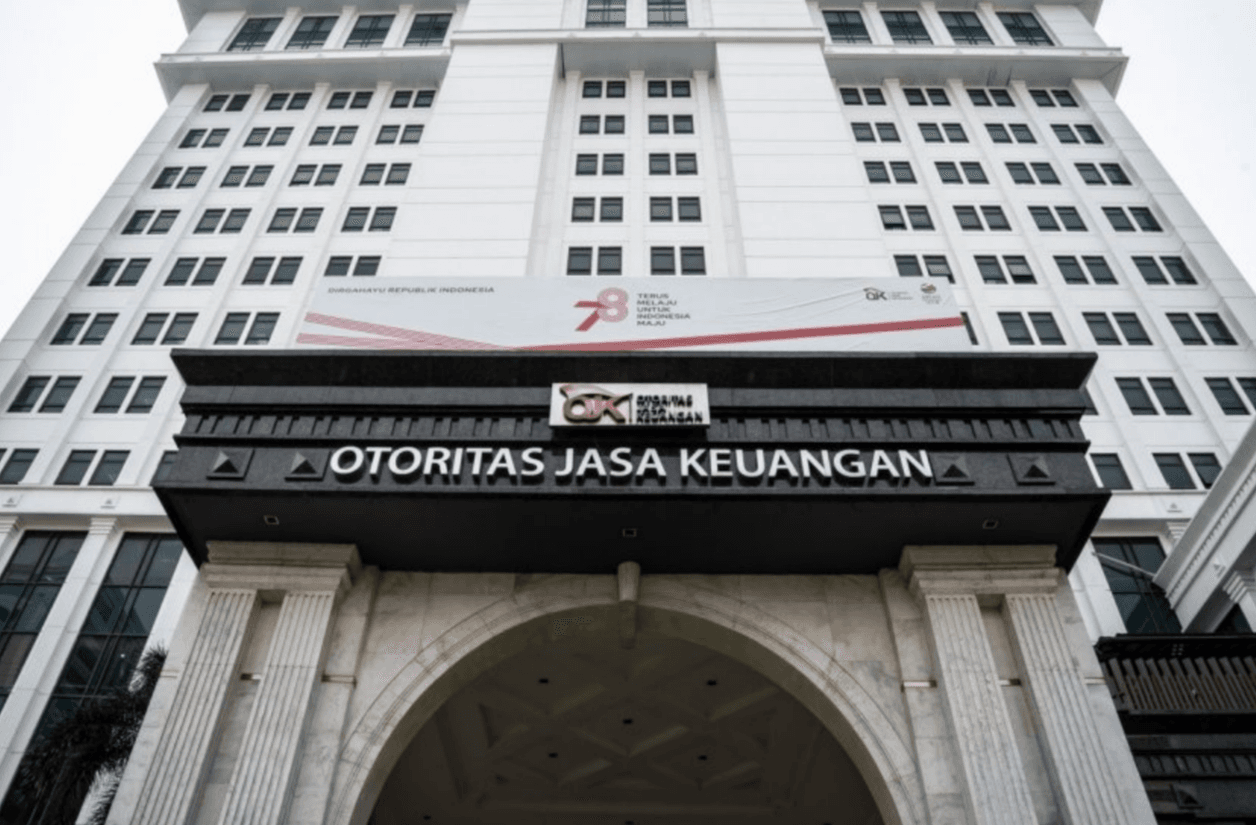
Starting in January 2025, the crypto asset industry in Indonesia will be officially supervised by the OJK, replacing the role of Bappebti.
This shift is in line with the change in the status of crypto assets, which are now categorized as digital financial assets, no longer as commodity futures.
This change was also followed by the issuance of Minister of Finance Regulation (PMK) Number 50 of 2025, which states that crypto asset transactions are no longer subject to Value Added Tax (VAT).
Thus, digital assets are now treated as equivalent to securities or other financial instruments.
Even so, crypto exchange operators are still required to have operating licenses and implement data security and investor protection systems.
This policy is expected to increase public confidence in the crypto industry, which has often been considered high risk.
Legal Basis and Supporting Regulations
Prior to the enactment of PP 28/2025, the legal framework for blockchain and digital assets was already outlined in several previous regulations.
The Electronic Information and Transaction Law (ITE) and the Government Regulation on Electronic System Implementation provide the legal basis for digital contracts and smart contract-based activities.
In addition, Minister of Trade Regulation No. 99 of 2018 and Bappebti Regulations No. 5 and 9 of 2019 have regulated the trading of crypto assets as commodities in physical and futures markets.
However, these old regulations are still limited to trade aspects and do not yet cover the potential of blockchain in non-financial sectors such as logistics, energy, and public data management.
PP 28/2025 expands this legal space with a cross-sector approach, opening up wider opportunities for blockchain-based innovation outside the financial realm.
Challenges in Implementing Regulations
Although the direction of regulation is becoming clearer, the implementation of blockchain in Indonesia still faces a number of challenges. One of them is the lag in regulation behind technological innovation.
Many new regulations are drafted after the technology has already developed in the field, so adaptation is often late.
Coordination between agencies is also a challenge. Ministries and regulators often have different views on the supervision of the digital industry.
In addition, industry players' literacy regarding legal aspects and business licenses is still low, making it difficult for some startups to meet operational standards.
From a technical standpoint, blockchain also faces challenges in scalability, interoperability between networks, and high energy consumption in certain systems.
The government needs to balance regulations so as to continue encouraging innovation without adding technical burdens on industry players.
Future Direction and Projections of Regulations
Going forward, the direction of blockchain regulation in Indonesia is projected to be more adaptive and inclusive. The government, through the Indonesian House of Representatives, has begun discussing revisions to the Financial Sector Development and Strengthening Law (P2SK), which is expected to include new provisions related to digital finance and blockchain technology.
Meanwhile, Bank Indonesia (BI) continues to pursue the Digital Rupiah (Garuda Project) as part of its Central Bank Digital Currency (CBDC) initiative. The program is designed to strengthen the national payment system with blockchain technology and distributed ledger technology.
Indonesia is also expected to align its regulatory standards with international rules, including globally applicable Anti-Money Laundering (AML) and Know Your Customer (KYC) policies.
Conclusion
The development of blockchain and regulations in Indonesia in 2025 shows a major step towards legal certainty.
With the recognition of blockchain through PP 28/2025, as well as the transfer of crypto supervision to the OJK, the government has demonstrated its serious commitment to building a healthy digital ecosystem.
Although challenges remain, particularly in terms of literacy, policy synchronization, and infrastructure readiness, the more open policy direction sends a positive signal to investors and local developers.
The success of implementing this regulation will determine Indonesia's position in global technology competition in the coming years.
FAQ
What does blockchain recognition mean in PP 28/2025?
The government has officially included blockchain in the category of national strategic technologies, providing a legal basis for developers and companies to operate legally.
Why is crypto supervision now under the OJK?
Since crypto assets are now categorized as digital financial assets, rather than commodities, the OJK is considered more appropriate as the primary regulator.
Are crypto transactions still subject to VAT?
No. Based on PMK 50/2025, digital asset transactions are exempt from VAT because they are treated as financial instruments.
What about the old regulations from Bappebti and the Ministry of Trade?
The regulation remains applicable to aspects of futures trading, but has now been supplemented and expanded by PP 28/2025.
What is the relationship between Digital Rupiah and blockchain?
Digital Rupiah is a Bank Indonesia project to create a blockchain-based digital currency managed by the central bank, not commercial crypto.
How to Buy Crypto on Bittime

Want to trade sell buy Bitcoins and crypto investment easily? Bittime is here to help! As an Indonesian crypto exchange officially registered with Bappebti, Bittime ensures every transaction is safe and fast.
Start with registration and identity verification, then make a minimum deposit of IDR 10,000. After that, you can immediately buy your favorite digital assets!
Check the exchange rate BTC to IDR, ETH to IDR, SOL to IDR and other crypto assets to find out today's crypto market trends in real-time on Bittime.
Also, visit the Bittime Blog for interesting updates and educational information about the crypto world. Find reliable articles about Web3, blockchain technology, and digital asset investment tips designed to enrich your crypto knowledge.
Disclaimer: The views expressed belong exclusively to the author and do not reflect the views of this platform. This platform and its affiliates disclaim any responsibility for the accuracy or suitability of the information provided. It is for informational purposes only and not intended as financial or investment advice.

.png)