Differences Between Crypto Spot and Futures for Beginner Traders
2026-07-16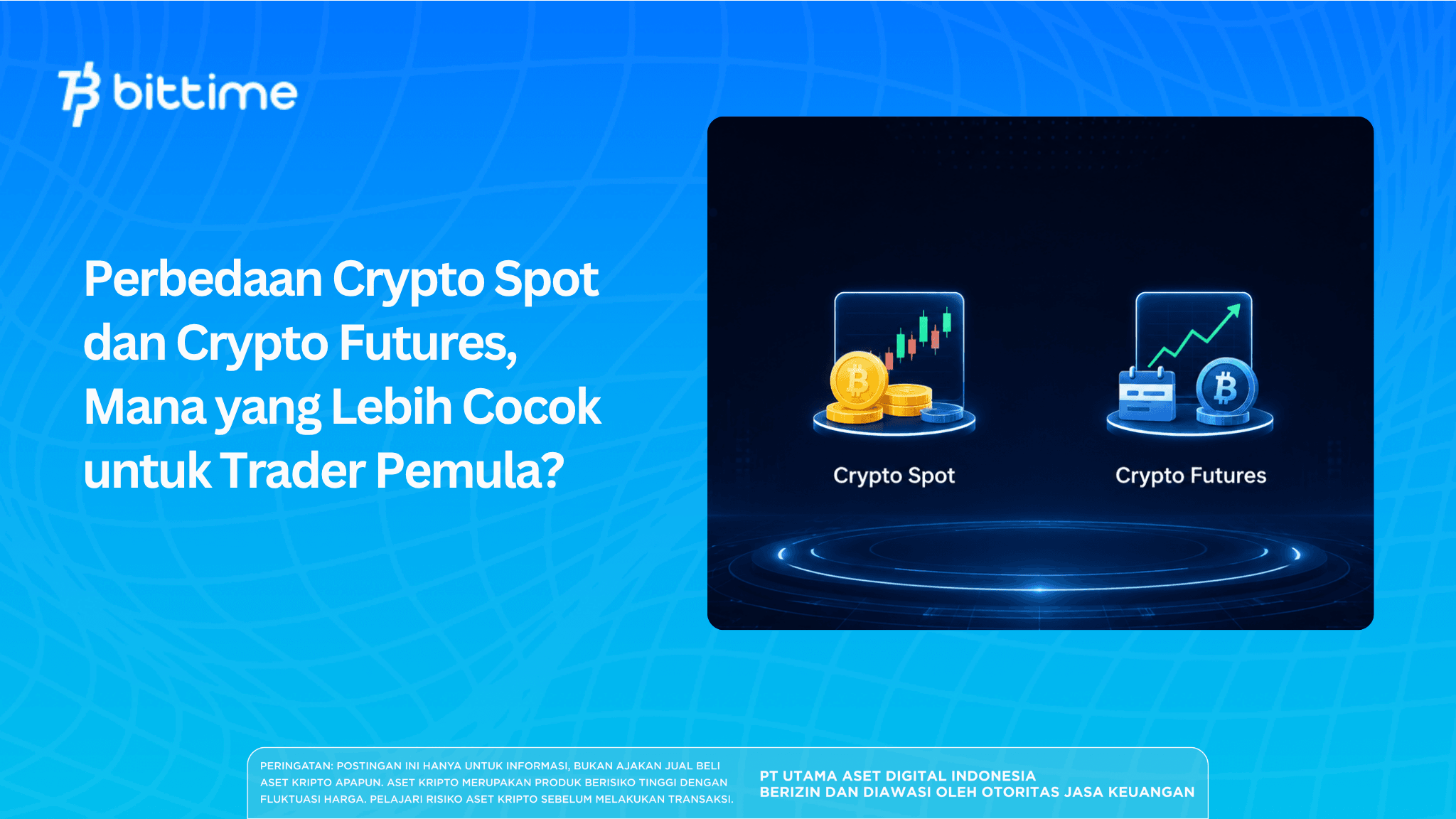
The differences between crypto spot and crypto futures lie in asset ownership, the use of leverage, how to make a profit, and the level of risk.
Spot trading is simpler because users purchase assets directly, while futures trading involves trading contracts based on price movements. For beginners, understanding this difference is crucial before investing capital.
Key Takeaways
- Spot trading allows users to buy crypto assets directly without the risk of liquidation due to leverage.
- Futures trading supports both long and short positions, but carries the risks of margin calls, funding fees, and liquidation.
- Beginner traders are generally better off starting with spot before considering Bittime Futures or other derivative products.
What is Crypto Spot?
Crypto spot trading involves buying or selling crypto assets at the market price at the time of the transaction. When purchasing Bitcoin, Ethereum, or other assets through the spot market, users receive a balance of those assets corresponding to the purchase amount.
For example, you buy Rp1 million worth of Bitcoin on the spot market. Once the transaction is complete, you own the Bitcoin worth the purchase amount, minus the transaction fee.
If the price of Bitcoin rises by 10%, the value of the asset theoretically also increases by approximately 10%. Conversely, if the price falls by 10%, the value of the holdings also decreases. A loss is only truly realized when the asset is sold for less than the purchase price.
In spot trading, users usually do not use leverage. The capital issued is in accordance with the value of the asset purchased.
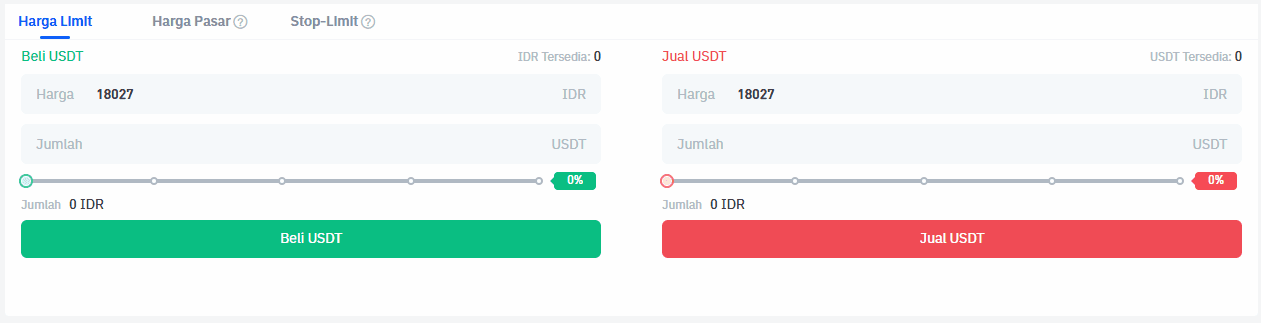
Source bittime.com/trade
The main characteristics of crypto spot trading include:
- Buy or sell assets directly.
- Transaction prices follow the market at that time.
- Does not use margin or leverage on the usual spot mechanism.
- Does not have a liquidation price due to leveraged loans.
- Assets can be held for the short term or long term.
- Profit is generally obtained when the selling price is higher than the purchase price.
- Users can transfer assets to wallets if the platform supports withdrawals.
It's important to understand that holding a balance on a centralized exchange isn't always the same as holding assets in a personal wallet. While assets are on the platform, private key management is typically handled by the service provider. Therefore, account security and the platform's credibility remain important.
Read also: Bittime Secures First Futures Trading License in the Era of OJK Crypto Oversight
What Are Crypto Futures?
Crypto futures are derivative products that allow traders to trade on the price movements of crypto assets without having to purchase the underlying asset directly.
Traders open contracts whose value follows the price of Bitcoin, Ethereum, or other assets. The outcome of a transaction is determined by the price change after the position is opened.
In futures trading, there are two main position directions:
Long Position
A long position is used when a trader predicts a price increase. Traders profit if the price increases after the position is opened.
Short Position
A short position is used when a trader predicts a price decline. Traders can profit if the asset's price falls after the position is opened.
The ability to take short positions is one of the key differences between crypto spot and futures. In regular spot trading, traders typically must first purchase the asset and wait for the price to rise. With futures, traders can trade on predictions of both price increases and decreases.
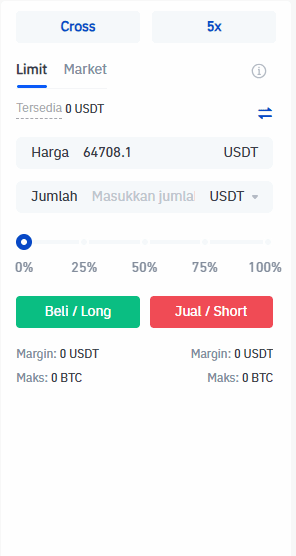
Source bittime.com/futures
Most popular crypto futures products are perpetual futures. Perpetual contracts don't have a fixed expiration date, so positions can be maintained as long as the trader has sufficient margin and avoids liquidation.
To keep perpetual contract prices close to spot prices, platforms typically employ a funding rate mechanism. Funding can be paid by long traders to short traders, or vice versa, depending on market conditions.
Read also: What Is ABTON? How to Buy Abbott Tokenized Stock on Bittime
Difference between Crypto Spot and Crypto Futures
The difference between crypto spot and crypto futures isn't just about asset ownership. They have different cost structures, objectives, and risk profiles.
1. Asset Ownership
In spot trading, users purchase crypto assets directly. The Bitcoin or other asset balance is credited to the account after the transaction is completed.
In futures trading, traders don't purchase the underlying asset. They simply open a contract that tracks the price movements of that asset.
2. Use of Leverage
Regular spot trading does not use leverage If you have capital of Rp1 million, the value of the position you open will be approximately Rp1 million.
Futures trading can utilize leverage. With 10x leverage, a margin of IDR 1 million can be used to open a position with a notional value of approximately IDR 10 million.
Leverage doesn't create additional capital for free. It simply increases exposure to price movements. Therefore, profits and losses will increase simultaneously.
3. Profit Direction
In crypto spot trading, the simplest profits are made when an asset is bought at a low price and sold at a higher price.
In crypto futures trading, traders can open a long position when predicting an increase or a short position when predicting a decrease.
4. Liquidation Risk
Spot trading without borrowing doesn't carry the risk of liquidation due to margin calls. While asset prices can drop sharply, the system won't automatically close the asset balance simply because the market price drops.
In futures, positions can be liquidated when the margin is no longer sufficient to cover losses. The system will automatically close the position to prevent losses from exceeding the available collateral.
5. Time Period
Spot can be used for both daily trading and long-term investment. Users can hold assets as long as they believe in their prospects.
Futures are more often used for short-term transactions, speculation, or hedging. Positions can be held longer, but funding costs and liquidation risks must be considered.
6. Cost Structure
On the spot, the main costs are usually trading fees, spreads, and withdrawal fees if assets are transferred to another wallet.
In futures, traders can face:
- Trading fee.
- Funding fee.
- Spread.
- Slippage.
- Costs or consequences of liquidation.
- Losses due to the use of leverage.
- Margin changes when volatility increases.
7. Difficulty Level
Spot trading is relatively easy to understand. Users simply specify the asset, purchase amount, entry price, and exit plan.
Futures require additional understanding of leverage, margin, liquidation price, mark price, funding rate, isolated margin, cross margin, and managing long and short positions.
Read also: How to Buy AAPLX on Bittime: Tokenized Apple Stock for Beginners
Contoh Kasus Trading Spot Crypto
Suppose a trader buys crypto assets worth IDR 2 million.
If the price increases by 10%, the asset's theoretical value would be approximately Rp2.2 million before accounting for costs. The potential gross profit would be approximately Rp200,000.
If the price drops 10%, the asset's value becomes approximately Rp1.8 million. The loss is unrealized until the asset is sold.
In a spot market without leverage, a 10% decline means the position value drops by approximately 10%. Traders don't automatically lose their entire capital just because of a small adverse movement.
However, spot trading remains risky. Crypto asset prices can fall significantly, and there's no guarantee they'll return to their purchase price.

Crypto Futures Trading Case Example with Leverage
For example, if a trader uses a margin of IDR 1 million and 10x leverage, their notional position value would be approximately IDR 10 million.
If the price moves 5% in the direction of the position, the gross profit could easily approach Rp500,000 before costs. This is equivalent to approximately 50% of the initial margin.
However, if the price moves 5% against the position, the gross loss could also approach IDR 500,000. The closer the loss is to the maintenance margin limit, the greater the risk of the position being liquidated.
This example is simplified. The actual liquidation price is influenced by:
- The amount of leverage.
- Initial margin.
- Maintenance margin.
- Isolated or cross mode.
- Mark price.
- Trading fees.
- Funding fee.
- Margin addition or reduction.
- Terms and conditions of each platform.
High leverage narrows the gap between the entry price and the liquidation price. Therefore, the maximum leverage available on the platform doesn't necessarily mean you should use it.
Read also: What is the Global Digital Water Reserve (GDWR) on Solana?
Isolated Margin and Cross Margin in Futures Trading
Before trying futures trading, traders need to understand the two commonly used margin modes.
Isolated Margin
With isolated margin, margin is allocated specifically to a single position. If that position experiences a loss, the impact is limited to the margin placed on that position, unless the trader adds additional margin.
Isolated mode is easier to control because the risk of each position is separated. However, positions can still be liquidated if margin is insufficient.
Cross Margin
With cross margin, the available balance in the account can be used to maintain a position. The advantage is that the position has a larger margin cushion.
The risk is that a single losing position can deplete a significant portion of your account balance. If left unchecked, losses can impact funds not previously allocated to that position.
For traders new to futures, isolated margin is usually easier to limit losses per position. However, using isolated margin does not eliminate leverage risk.
Read also: What Is USPR? Supply, Liquidity, and Risk on Solana
Spot vs. Crypto Futures: Which is Safer?
Judging from its product structure, spot without leverage is relatively simpler and has lower mechanical risk than futures.
Spot traders still face the risks of volatility, price declines, incorrect asset selection, project failure, and platform security. However, traders don't face liquidation prices simply because prices move against them.
Sumber AI Generated Image
In futures, relatively small price movements can result in significant losses when using high leverage. Traders can also lose their entire position margin in a short period of time.
Therefore, the question “which is safer?” needs to be answered by considering:
- Trader knowledge.
- Experience dealing with volatility.
- The amount of leverage.
- Stop-loss discipline.
- Position size.
- Psychological conditions.
- Ability to read costs and contract rules.
- Readiness to lose trading capital.
Futures aren't just a version of a spot with greater profit potential. They're a different instrument that requires more active risk management.
Read also: Forex Trading: Definition and Complete Explanation for Beginners
Which is More Suitable for Beginner Traders?
For most beginners, spot trading is more suitable as a first step.
Spot allows traders to learn the basics, such as:
- How to read the order book.
- The difference between market orders and limit orders.
- Crypto asset volatility.
- Determination of entry price.
- Take profit strategy.
- Use of stop-loss.
- Diversification.
- Position size management.
- Controlling emotions when prices move quickly.
Once traders are able to consistently execute spot strategies, they can begin to learn about futures through simulations or very small amounts.
Futures should be considered when a trader has:
- Understanding leverage and margin.
- Able to calculate the risk per transaction.
- Use stop-loss in a disciplined manner.
- Have a written trading plan.
- Able to accept losses without engaging in revenge trading.
- Understanding funding rates and liquidation prices.
- Not using basic needs funds.
- Have experience reading market conditions.
When Can Futures Trading Be Used?
Futures aren't just used for speculation. Experienced traders can also use them for hedging.
For example, an investor holding Bitcoin in the spot market but anticipating a short-term correction could open a short futures position to mitigate the impact of a decline in portfolio value.
However, hedging isn't inherently risk-free. Incorrect position size, funding fees, the basis between futures and spot prices, and volatility fluctuations can all prevent protection from working as planned.
Futures are more relevant for traders who need:
- Short position.
- Capital efficiency.
- Portfolio hedging.
- Market-neutral strategy.
- Short term trading.
- Execution based on momentum.
- Measured risk management.
Spot Trading Risks That Still Need to be Understood
Although relatively simpler, crypto spot trading still carries high risks.
Some of the main risks are:
- Asset prices may fall sharply.
- Tokens may lose liquidity.
- Projects may fail or be abandoned.
- Accounts can be hacked due to weak security.
- Users can mistakenly send assets to different networks.
- Fake tokens may use names that resemble genuine projects.
- Decisions can be influenced by FOMO.
- Long term storage does not guarantee profits.
Spot does not have the risk of liquidation due to leverage, but the value of the fixed asset can approach zero if the project fails.
Futures Trading Risks to Watch Out For
Futures risks are more complex because they involve contracts and margins.
These risks include:
- Automatic liquidation.
- Losses are magnified by leverage.
- Funding fees reduce the return on a position.
- Stop-loss is affected by momentary volatility.
- Slippage when the market moves quickly.
- Cross margin erodes account balance.
- Overtrading because the capital looks bigger.
- Error opening long or short.
- Revenge trading after experiencing losses.
- System disruption during extreme volatility.
Beginner traders often focus on the potential profit from leverage without considering the distance to liquidation. However, the primary goal of risk management is not to maximize position value, but rather to keep losses manageable.
Tips for Starting Spot Trading for Beginners
To start spot trading in a more measured way:
- Use funds that are ready to bear the risk.
- Choose assets with adequate information and liquidity.
- Start with a small amount.
- Avoid buying just because the price is viral.
- Set a stop loss.
- Avoid placing all capital in one asset.
- Use two-factor authentication.
- Note down the reason for purchase and the sales plan.
- Learn the difference between market orders and limit orders.
- Evaluate each transaction periodically.
Tips for Learning Bittime Futures
Bittime Futures provides crypto contract trading that supports both long and short positions. Futures products can also use leverage, so users should read the contract rules, margin mode, and liquidation mechanism before opening a position.
A more rational approach for beginners is:
- Study the futures account before making a deposit.
- Use trial or simulation funds if available.
- Start from low leverage.
- Select isolated margin to limit the margin per position.
- Use stop-loss since opening the transaction.
- Limit risk to a small portion of capital.
- Don't add positions just to chase losses.
- Check the funding rate before maintaining a position.
- Don't use the maximum leverage just because it's available.
- Close the position when the initial scenario is no longer valid.
You can register at Bittime to try spot trading, learn about Bittime Futures features, and monitor the latest crypto market developments. Ensure the features you're using are available for your account and region, and then read the product terms and conditions before making a transaction.

Conclusion
The differences between crypto spot and crypto futures lie primarily in asset ownership, leverage, position direction, fee structure, and liquidation risk.
Spot trading allows users to purchase assets directly and is relatively easier to understand. Futures trading allows for long and short positions with leverage, but increases the risk of loss and the possibility of liquidation.
For beginner traders, spot is generally a more suitable option for learning market fundamentals, capital management, and trading discipline. Futures can be learned once traders understand leverage, margin, stop-loss, funding rates, and liquidation prices.
Use small amounts, avoid FOMO, and choose instruments based on your risk management ability—not just profit potential.

Bittime is a licensed and regulated Digital Financial Asset Trader (PAKD) supervised by Indonesia’s Financial Services Authority (OJK) — where you can buy Bitcoin in Indonesia and hundreds of other crypto assets starting from just Rp10,000. The registration process is fast, secure, and you can get started today.
Track USDT to IDR conversions and monitor your favorite crypto assets in real time. Everything is available in one crypto investment app that you can download for free on the Play Store
Ready to start? Register now on Bittime and execute your investment strategy with a platform trusted by millions of users in Indonesia.
FAQ
What are the main differences between crypto spot and futures?
Spot involves the direct purchase of crypto assets, while futures trade contracts based on price movements. Futures can also use leverage and carry liquidation risk.
Is spot trading suitable for beginners?
Spot is relatively more suitable for beginners because its mechanism is simpler and there's no liquidation due to leverage. However, asset prices can still fall, leading to losses.
Can futures trading generate profits when prices fall?
Yes. Traders can open a short position if they predict the price will fall. If the prediction is incorrect and the price rises, the position could incur a loss or be liquidated.
Do futures always have an expiration date?
No. Traditional futures contracts have an expiration date, but crypto perpetual futures don't have a fixed maturity. Perpetual positions still require margin and may be subject to funding fees.
What is a safe leverage for beginners?
No leverage is completely safe. The higher the leverage, the narrower the distance to liquidation. Beginners should prioritize spot or learn futures with low leverage and limited capital.
Disclaimer: The views expressed belong exclusively to the author and do not reflect the views of this platform. This platform and its affiliates disclaim any responsibility for the accuracy or suitability of the information provided. It is for informational purposes only and not intended as financial or investment advice.

.png)