Sphinx Guide: Blockchain Technology for Fast Energy & Derivatives Trading
2026-03-11
The digital asset market continues to move in a more serious direction. Now, blockchain is not only used for tokens and DeFi, but is also beginning to be aimed at institution-grade trading infrastructure. This is where the question "What is Sphinx?" becomes interesting.
Sphinx is here as a project that wants to bring a new approach to commodities, securities, and derivatives trading through a blockchain system that is faster, more structured, and closer to institutional needs.
For readers interested in Sphinx blockchain, on-chain commodities trading, and 24/7 energy derivatives, this project is worth paying attention to.
Its focus is not merely to create a regular exchange, but to build a Layer 1 foundation that supports order matching, fast settlement, operational efficiency, and an environment that is more ready for modern trading applications.
We will discuss the core features, how it works, and why Sphinx is relevant to the future of digital market infrastructure.
Key Takeaways
- Sphinx blockchain is designed to support commodities, securities, and derivatives trading within a high-performance blockchain framework.
- This project highlights the concepts of real-time atomic settlement, coprocessor architecture, and Layer 1 infrastructure for institutional needs.
- Sphinx is interesting to discuss in the context of on-chain commodities trading, blockchain capital efficiency, and the future of blockchain-based institutional exchanges.
What Is Sphinx?

If we talk about what Sphinx is, the easiest way to understand it is as a blockchain infrastructure built for more serious modern trading needs. Sphinx does not focus merely on token narratives.
Instead, this project aims to improve the core parts of the exchange system, starting from order matching, transaction execution, clearing, and settlement, to risk management, which still heavily depend on centralized systems.
Because of that, Sphinx blockchain is better seen as a market technology foundation, not just a regular crypto application.
Sphinx is also interesting because from the start it has targeted institutional needs. This means its design is directed toward supporting high performance, orderly systems, and integration that is more friendly for real-world use cases.
In this context, terms such as institutional blockchain exchange, Sphinx L1 Layer1 global, and real-time atomic settlement become highly relevant.
Sphinx tries to deliver a global decentralized network that is still able to pursue the speed and certainty of execution usually associated with traditional trading venues.
With an approach like this, the project is trying to bridge two worlds, namely institutional market performance and blockchain flexibility.
Read Also: Join the Bittime Futures Public Beta Waitlist and Get Trial Funds Rewards up to 1500 USDT
Why Is Sphinx Different from Regular Blockchain Projects?
Many blockchains focus on general applications. Sphinx is narrower, but sharper. It is built specifically for the needs of exchanges, order books, and derivatives products. This makes its direction clearer for the financial industry.
Because of that, when people search for what Sphinx is, the answer is not only about a new Layer 1. Sphinx is better understood as an infrastructure engine that aims to make commodities and derivatives trading on blockchain feel more practical, faster, and closer to professional standards.
How Does Sphinx Blockchain Work for Fast Trading?
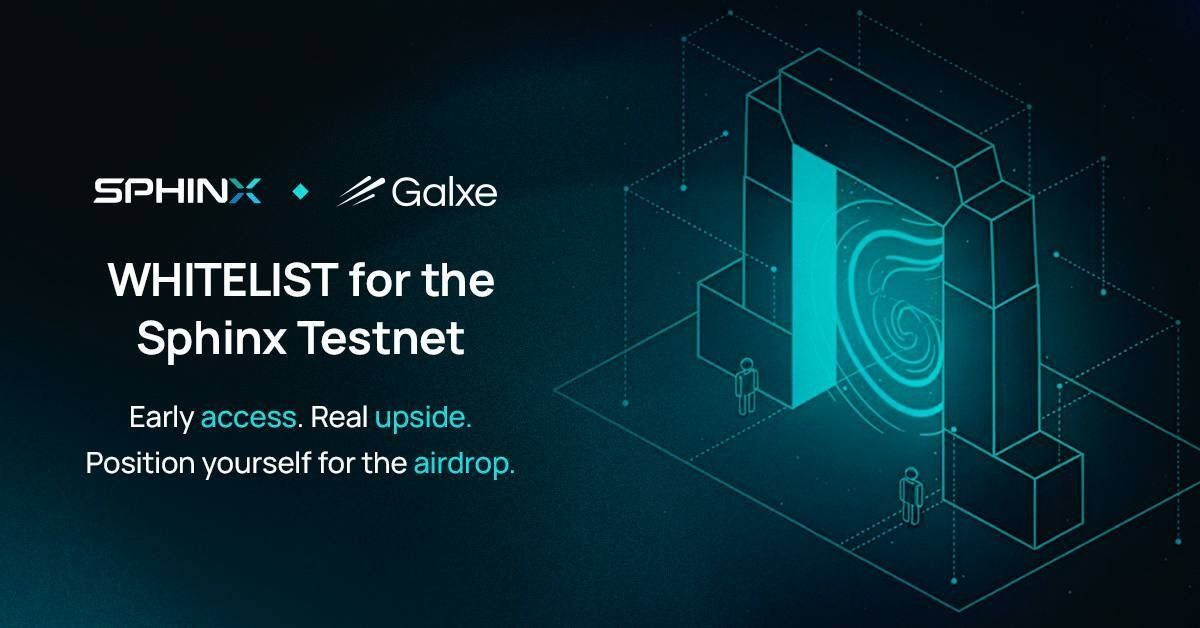
To understand the strength of Sphinx, we need to look at its architecture. This project places validators as the drivers of the main blockchain, then adds coprocessors as a special computing environment for specific execution needs, as well as relayers for network communication, routing, and client access.
A structure like this makes Sphinx blockchain not rely only on one ordinary computing layer.
There is a separation of functions designed so that order matching, transaction processing, and state synchronization can run more efficiently. This is why terms such as real-time atomic settlement and execution speed stand out so strongly in discussions about Sphinx.
From the use case side, this model is highly interesting for on-chain commodities trading and derivatives markets. Sphinx wants to overcome long-standing bottlenecks such as slow order matching, trade netting, inefficient settlement, and the need for blockchain capital efficiency.
In a broader context, this is also relevant to searches such as BTC stablecoin cross margin, because modern markets indeed demand more flexible cross-asset margin management.
Although its official focus is more on cross-asset margining in general, the basic idea is aligned with the needs of institutional traders who want cleaner capital usage.
When combined with fast finality, EVM compatibility, and a smart contract environment, Sphinx tries to provide a technical foundation for exchanges that are more resilient and more ready to be used at scale.
Read Also: 7 Effective Crypto Trading Methods for Beginners, Complete with Tips and Tricks
What Is the Role of the Coprocessor in Sphinx?
A coprocessor can be imagined as a special auxiliary engine. It handles certain computing needs without making the whole main system heavy. This approach is important for trading applications that demand high speed and precision.
With this model, Sphinx tries to balance decentralization and performance. That is why this project is often discussed in the context of blockchains that want to serve professional markets, not just ordinary transactions.
Sphinx for Energy Derivatives and Institutional Exchanges
One of the most interesting parts of Sphinx is its plan to launch an energy derivatives exchange as a feature application. This makes the project different from many other blockchains that only provide the network and leave everything else to third-party developers.
In Sphinx’s approach, its infrastructure itself is directed to support more real markets, including energy contracts such as oil, natural gas, and electricity. Because of that, terms such as 24/7 energy derivatives and institutional blockchain exchange are very close to this project’s narrative.
Sphinx appears to want to leverage blockchain’s advantages to make energy product trading feel more efficient, faster, and open to continuously running market models.
From a market point of view, this is important because the derivatives industry requires settlement certainty, risk management, transparency, and good cost control. This is where Sphinx offers values such as real-time atomic settlement, a fully collateralized model, and a system that tries to reduce counterparty risk.
For readers looking for low-cost on-chain trading, Sphinx is also relevant because efficiency is not only about fees, but also about reduced operational friction, settlement time, and the need for intermediary layers.
With a foundation like this, the project is trying to show that blockchain can be used for more than just speculative assets. It can become a more serious trading infrastructure for global commodities and derivatives markets.
Read Also: Crypto Trading Strategies for Beginners, Don’t Do This!
Is Sphinx Suitable for Retail Traders?
Conceptually, Sphinx is closer to the needs of institutions and infrastructure builders. However, its impact can still be felt by retail traders if its ecosystem develops. Faster and more efficient infrastructure can ultimately benefit all layers of users.
For retail users, its main value lies in the direction of innovation. Sphinx shows that blockchain is becoming more serious about entering financial trading areas that were previously dominated by closed systems.
Conclusion
Sphinx is an interesting project because it tries to bring blockchain to a more mature level of market infrastructure. If you are looking for what Sphinx is, the answer is a Layer 1 built for the world of commodities, securities, and derivatives trading with a focus on speed, settlement certainty, and a more institutional design.
In the context of Sphinx blockchain, on-chain commodities trading, blockchain capital efficiency, and real-time atomic settlement, this project has a fairly clear direction and is different from many other networks.
For anyone following the development of digital markets, Sphinx is worth monitoring as an example of how blockchain is beginning to be directed toward more serious financial needs.
If you want to continue exploring the world of digital assets and crypto markets, visit Bittime Exchange to see trading opportunities, then read the latest updates on Bittime Blog.
FAQ
What Is Sphinx?
Sphinx is a Layer 1 blockchain infrastructure designed to support commodities, securities, and derivatives trading with a more institutional approach.
What are the advantages of Sphinx blockchain?
Its advantages lie in its high-performance focus, coprocessors for special computation, EVM compatibility, and a design aimed at fast settlement.
Does Sphinx support on-chain commodities trading?
Yes, the direction of this project is indeed strongly focused on on-chain commodities trading, including the development of an energy derivatives exchange as its flagship application.
What is real-time atomic settlement in Sphinx?
This term refers to fast and direct transaction settlement on the blockchain, so that credit risk and settlement delays can be minimized.
Why is Sphinx relevant for institutional blockchain exchanges?
Because its design focuses on order matching, execution, clearing, margining, compliance, and performance needs that are closer to institutional standards.
How to Buy Crypto on Bittime?

Want to trade, sell, and buy Bitcoin and invest in crypto easily? Bittime is ready to help! As an Indonesian crypto exchange officially registered with Bappebti, Bittime ensures every transaction is safe and fast.
Start by registering and verifying your identity, then make a minimum deposit of Rp10,000. After that, you can immediately buy your favorite digital assets!
Check the rates for BTC to IDR, ETH to IDR, SOL to IDR and other crypto assets to find out today’s crypto market trends in real time on Bittime.
In addition, visit Bittime Blog to get various interesting updates and educational information about the crypto world. Discover trusted articles about Web3, blockchain technology, and digital asset investment tips designed to enrich your knowledge in the crypto world.
Disclaimer: The views expressed belong exclusively to the author and do not reflect the views of this platform. This platform and its affiliates disclaim any responsibility for the accuracy or suitability of the information provided. It is for informational purposes only and not intended as financial or investment advice.

.png)