Ordihood Art (ORDIHOOD): A Bitcoin Ordinals and BTC-Based NFT Platform
2026-09-03
Ordihood Art (ORDIHOOD) is attracting attention amid the growing trend of blockchain-based inscriptions and NFTs.
The project brings a concept inspired by Bitcoin Ordinals to Robinhood Chain, offering a way to store digital artwork directly on-chain.
Unlike conventional NFTs, which generally use smart contracts to point to specific metadata or files, Ordihood promotes the concept of inscription, which stores content directly on the blockchain.
This concept makes Ordihood worth watching, although it is important to understand that the technology operates on Robinhood Chain, not the Bitcoin mainnet.
Key Takeaways
- Ordihood Art brings a Bitcoin Ordinals-inspired inscription concept to Robinhood Chain and allows users to store digital content on-chain.
- The platform offers inscribe, marketplace, and launchpad features for inscription-based assets and tokens.
- ORDIHOOD Token is a high-risk asset because it is still in its early stages, with relatively low liquidity and market capitalization.
What Is Ordihood Art and ORDIHOOD?
Ordihood Art is a platform that adopts the inscription concept to create digital artifacts stored directly on the blockchain.
Based on the project's materials, users can upload images, text, or other files and then inscribe them onto Robinhood Chain.
This concept is similar to Bitcoin Ordinals, a protocol that allows data such as images and text to be placed on satoshis through Bitcoin transactions.
In Ordinals, inscriptions are stored on-chain and can be tracked and transferred through Bitcoin transactions.
However, there is an important difference. Bitcoin Ordinals natively operates on the Bitcoin network and does not require an additional blockchain or a dedicated token.
Meanwhile, Ordihood is built for Robinhood Chain, an Ethereum-compatible Layer-2 blockchain that uses ETH as gas.
Robinhood itself explains that the chain is built on Arbitrum technology and is intended for financial applications and real-world assets.
Therefore, Ordihood is better understood as an Ordinals-inspired inscription platform rather than Bitcoin Ordinals itself.
Read Also: Bitcoin Pizza Day History: The World's First BTC Transaction
How Does Ordihood Inscription Work?
The core concept of Ordihood is to place files or data directly into blockchain transactions.
In the project's materials, this approach is likened to carving information into digital stone: once stored on the network, the data is designed to be permanent and difficult to alter.
This model differs from some traditional NFTs. In conventional NFTs, the token may contain metadata pointing to an image or asset stored on an external server or storage network such as IPFS.
Bitcoin Ordinals itself does store inscription content on-chain. Ordinals documentation explains that inscription data is placed within transactions and can include various types of content.
Ordihood attempts to bring a similar experience to Robinhood Chain. Based on the project's materials, each inscription is assigned a sequential number, and the platform aims to make early numbers part of a collection's scarcity.
Nevertheless, claims regarding uniqueness and ownership need to be assessed based on the technical contract mechanisms and platform implementation.
The same file can theoretically be replicated on another blockchain or application, meaning that the “scarcity” of a collection is not determined solely by the existence of its data on-chain.
Track the development of Robinhood Chain tokens and other crypto assets by registering with Bittime and following the latest market updates.
Features Offered by Ordihood
Ordihood is designed not only as a place to create inscriptions. The project's materials highlight three main functions: Inscribe, Market, and Launchpad.
Through the Inscribe feature, users can add images, text, or other files to the blockchain. Users can also create collections individually or in bulk.
There is also Market, which is designed as a marketplace for trading inscriptions. The concept resembles an NFT marketplace, but the assets being traded are inscription-based digital artifacts.
The third feature is Launchpad, which is intended for launching tokens based on a bonding curve mechanism.
The project describes this concept as a market formed through a price curve, meaning the trading mechanism does not rely entirely on traditional liquidity.
Users need a wallet compatible with Robinhood Chain as well as ETH to pay transaction fees. Robinhood confirms that ETH is used as the gas asset on the network.
Read Also: Trump Bitcoin Digital Trading Cards Launch on Bitcoin Network: A Major Success?
ORDIHOOD Token and Its Price Movement
In addition to the inscription platform, Ordihood has the ORDIHOOD Token, which is traded on decentralized markets.
Based on the provided market screenshot, the ORDIHOOD/ETH pair showed extremely high volatility.
On the visible 4-hour candle, the price was around 0.0002643 ETH, with a change of approximately +91.80%, while volume stood at around 712 thousand tokens.
The screen also showed liquidity of approximately US$46 thousand and a market cap/FDV of around US$247 thousand.
These figures indicate that ORDIHOOD remains a small-cap asset. Therefore, price movements can be very rapid, and slippage can become an important factor when trading activity increases.
A price surge does not automatically indicate that the project's fundamentals have developed at the same pace. Investors need to distinguish between gains driven by volume and sentiment and sustainable growth in platform adoption.
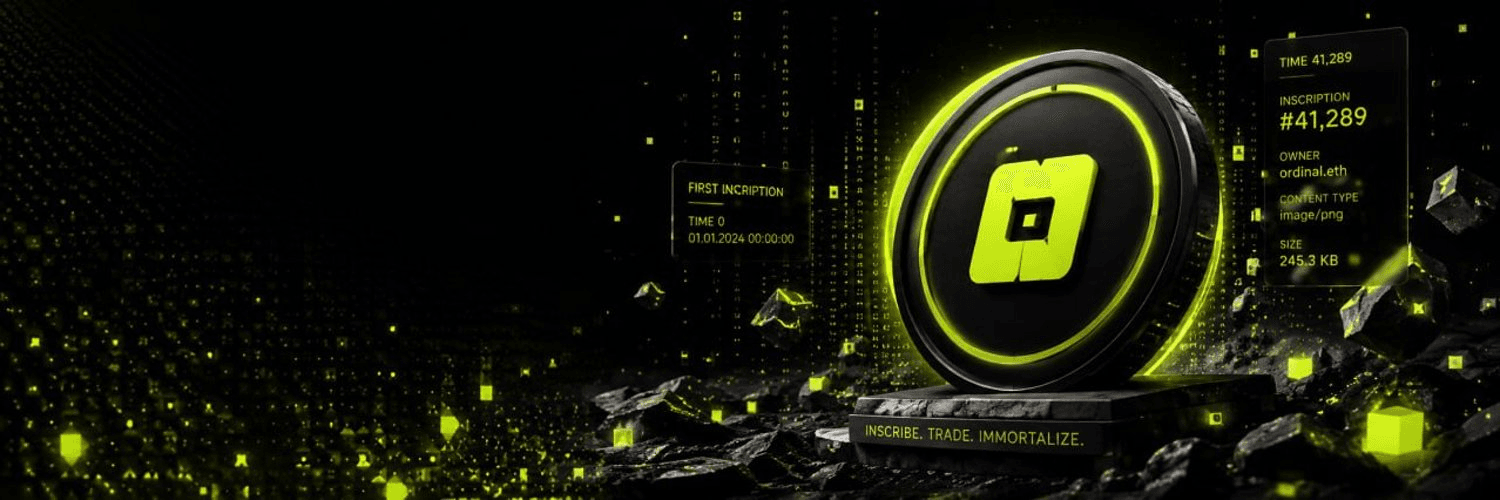
Ordihood Roadmap and the Opportunity for Blockchain-Based NFTs
The Ordihood roadmap deserves attention, particularly in terms of ecosystem development. If the platform can increase the number of inscriptions, digital collections, marketplace activity, and launchpad usage, the ecosystem's utility could potentially grow.
The concept of Bitcoin NFTs and inscriptions has itself opened a new perspective on digital assets that store data directly on the blockchain.
Ordinals documentation shows that inscriptions can be transferred, traded, and associated through parent-child relationships to form collections.
Ordihood attempts to bring this narrative to a new network. One advantage is that users can experience inscriptions on a blockchain compatible with the Ethereum ecosystem.
However, long-term success will depend on adoption, liquidity, smart contract security, transaction costs, and the platform's ability to maintain user activity.
Read Also: 17 Most Expensive NFTs in the World, Complete with Prices and Images
Does Ordihood Have a Future?
The opportunity for BTC-based NFTs and inscriptions remains interesting because they offer a different approach to digital asset ownership. However, Ordihood needs to be evaluated based on actual product development, rather than simply the “Ordinals” narrative.
The most important point is to distinguish Bitcoin Ordinals from projects using similar concepts on other blockchains. Bitcoin Ordinals has unique characteristics because inscriptions are connected to satoshis and use the Bitcoin network directly.
For prospective ORDIHOOD users and investors, several indicators worth monitoring include marketplace trading volume, the number of inscriptions, token liquidity, launchpad feature development, contract security, and community activity.
If the ecosystem develops organically, Ordihood could become an interesting experiment in the development of Bitcoin-inspired inscription-based NFT platforms.
Conversely, high volatility and a small market capitalization mean ORDIHOOD remains a speculative asset.
Start trading BTC/IDR with Bittime here!
Conclusion
Ordihood Art attempts to introduce a Bitcoin Ordinals-inspired inscription concept to Robinhood Chain. The platform offers the ability to create on-chain digital artifacts, an inscription marketplace, and a token launchpad.
Its potential lies in the development of blockchain-based digital collections and growing interest in assets that store data directly on-chain.
However, investors need to understand that Ordihood is not native Bitcoin Ordinals. The project operates on Robinhood Chain and carries its own risks as an ecosystem that is still developing.
Bitcoin is already available and ready to trade on Bittime with the BTC/USDT pair. There are also other assets on the Bitcoin BRC20 network, such as SATS and ORDI.
Bittime is a licensed Digital Financial Asset Trader (PAKD) platform authorized and supervised by the Financial Services Authority (OJK) — where you can buy Bitcoin in Indonesia and hundreds of other crypto assets starting from IDR 10,000. Registration is fast, secure, and can be started today.
Track USDT to IDR conversions and your favorite crypto asset price movements in real time. Everything is available in a single crypto investment app that can be downloaded for free from the Play Store.
Ready to get started? Register with Bittime now and execute your investment strategy with a platform trusted by millions of users in Indonesia.
FAQ
What Is Ordihood Art?
Ordihood Art is an inscription platform on Robinhood Chain that brings a Bitcoin Ordinals-inspired concept for creating and trading digital artifacts on-chain.
Does Ordihood Use Bitcoin?
Not directly. Ordihood operates on Robinhood Chain, not the Bitcoin mainnet. Its concept is inspired by inscriptions and Bitcoin Ordinals.
What Is ORDIHOOD Token?
ORDIHOOD is a token associated with the Ordihood ecosystem and traded through decentralized markets. Because its market capitalization and liquidity are relatively small, its volatility can be very high.
What Is the Difference Between Ordihood and Bitcoin Ordinals?
Bitcoin Ordinals operates directly on the Bitcoin blockchain and connects inscriptions with satoshis. Ordihood uses Robinhood Chain and adapts the inscription concept to that blockchain environment.
Is Ordihood Suitable for Investment?
ORDIHOOD should be considered a high-risk speculative asset. Prospective investors should examine liquidity, the token contract, platform activity, roadmap development, and utility before making a decision.
Disclaimer: The views expressed belong exclusively to the author and do not reflect the views of this platform. This platform and its affiliates disclaim any responsibility for the accuracy or suitability of the information provided. It is for informational purposes only and not intended as financial or investment advice.

.png)