Is NODF Legit or a Scam? Check the Facts, Contracts, and Risks
2026-10-16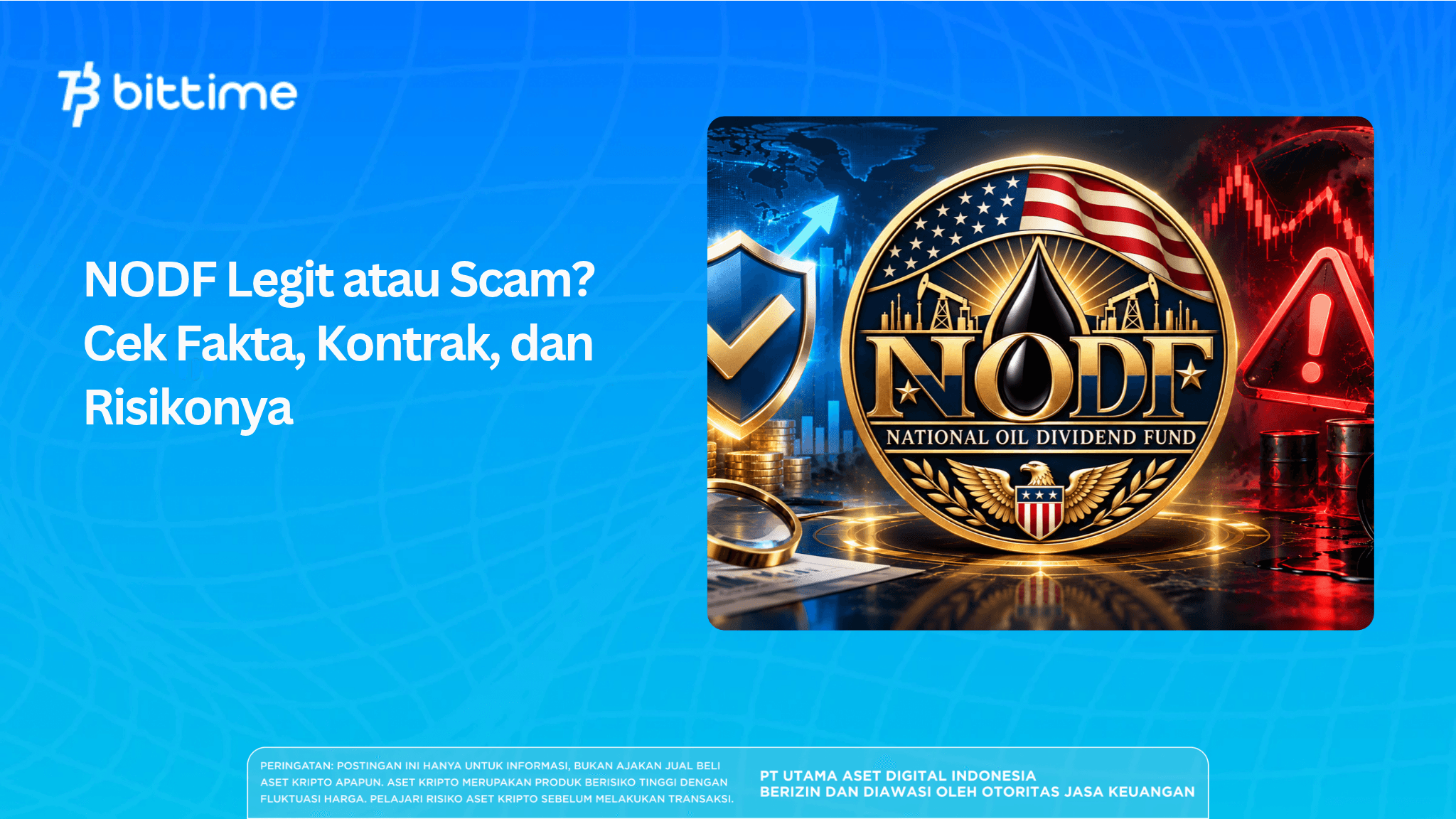
Is NODF legit or a scam? The evidence verified during this review is insufficient to establish either conclusion. An assessment of National Oil Dividend Fund should begin with the token's identity, its operators, and evidence of the project's activities before addressing its safety or potential returns.
A name containing the words “Oil,” “Dividend,” and “Fund” may raise questions about oil assets and income distributions. However, the name does not prove asset ownership, dividend entitlements, or backing from any institution, so each claim must be examined separately.
Key Takeaways
- NODF's credibility cannot yet be determined because the project's information and the specified token data have not been successfully verified.
- The token address must be matched before using price, liquidity, holder, or risk indicator data.
- A token's appearance on a DEX tracking service does not automatically establish its legality, safety, or backing by real-world assets.
What Is National Oil Dividend Fund (NODF)?
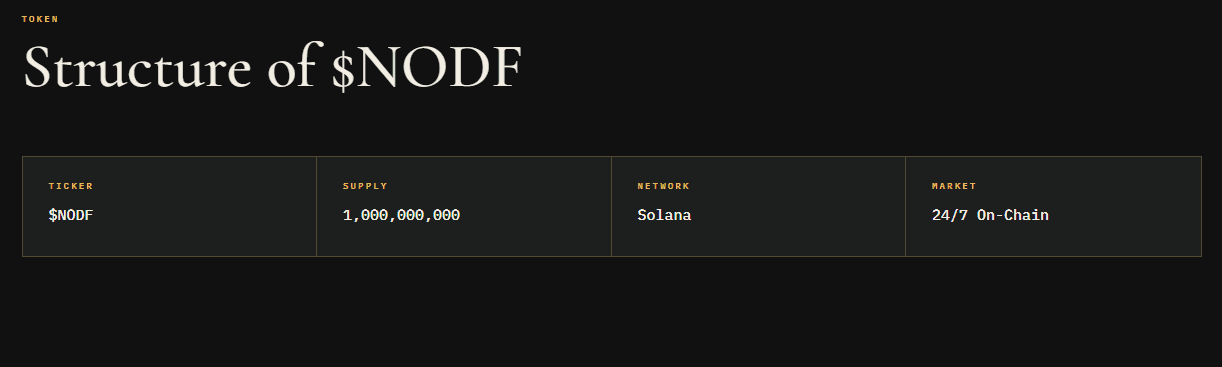
National Oil Dividend Fund, or NODF, is the name of the asset examined in this article. The provided references point to a token page on the Solana network and a website at nodf.site.
However, the contents of both pages could not be inspected directly. As a result, the token's utility, the operators' identities, the revenue model, and the relationship between the website and the token address cannot be presented as verified facts.
Limited access is not evidence that a project is problematic. Conversely, the existence of a domain or a token-page link is also insufficient to establish that the project operates as its name suggests.
When reading an NODF token review, check whether the writer clearly identifies the specific asset being examined. A review without a token address risks discussing a different asset, even if its name and ticker are identical.
Read also: What Is American Rewards Fund (ARF)? How It Works and Its Risks
Is NODF Legit or a Scam? The Limits of What Can Be Concluded
The term “legit” is often used to describe several different things at once, such as a genuine project, a licensed business, a secure contract, or a profitable investment. In fact, each aspect requires different evidence.
A verifiable operator identity helps establish who is responsible. However, that identity does not automatically prove the security of the code or the project's ability to generate revenue.
Likewise, a functioning contract does not guarantee that buyers can sell tokens at their expected price. Market conditions and liquidity still affect transaction outcomes.
For the NODF discussed here, the defensible conclusion is that there is insufficient information to assess its overall credibility. This article does not establish that the token is safe, licensed, or proven to be fraudulent.
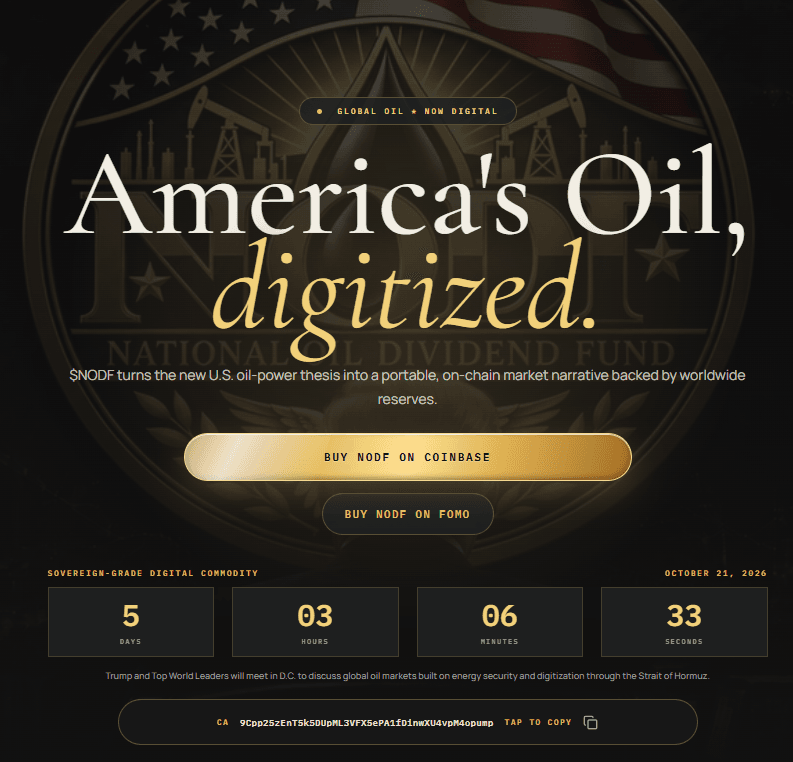
The NODF Contract Address Under Review
The address listed in the token reference used for this article is:
BNj1neW1sZYxHpYX2dPm6o1VwJFEpbxy3X6tjAqZpump
The network specified in that reference URL is Solana. This address defines the scope of the review, but it has not been confirmed as the official address published by the project's operators.
On Solana, a token's identity is commonly referred to as its mint address. Readers still frequently search for this identifier using the term “NODF contract address,” but a mint address must not be confused with a trading pool or wallet address.
Before comparing data, perform the following checks:
- Compare every character of the address across the project's channels and token page.
- Make sure the network matches.
- Distinguish the token identifier from the trading-pair address.
- Check whether the blockchain explorer data refers to the same address.
- Record the date of the review so that changes can be tracked.
Do not replace the address with another search result simply because the token name matches. Data from a different address cannot be used to draw conclusions about this asset.
Read also: What Is FISH Token? Exploring the Fair Pond Game on Solana
Does NODF Actually Distribute Oil Dividends?
Oil dividend distributions could not be substantiated during this review. This question must be answered using documents and payment evidence, not the project's name.
If a project offers income derived from oil, its explanation must connect the economic activity to token holders' rights. Readers need to know where the funds come from, who manages them, and the basis for their distribution.
Relevant evidence may include:
- Documents establishing links to oil assets or oil-related businesses.
- The identities of the operating company and related parties.
- Verifiable revenue reports.
- Eligibility rules, calculation methods, and payment schedules.
- Distribution records consistent with those rules.
Token transfers to several wallets do not establish the source of the income. Payments can serve various purposes, so promotional giveaways, incentives, and proceeds from business operations must be distinguished.
Similarly, an increase in a token's price is not the same as a dividend. Gains from price changes depend on market transactions, whereas income distributions require a clear mechanism and funding source.
Does Appearing on CoinMarketCap Mean NODF Is Safe?
CoinMarketCap offers a service called DexScan, which can automatically track assets using blockchain data. Therefore, a page on a DEX service must be distinguished from a comprehensive assessment of a project's operators and business activities.
Market data helps readers observe trading activity. However, this information does not, by itself, establish rights to oil assets, the validity of corporate documents, or guaranteed payments.
The reference page for the address discussed here could not be accessed. This article therefore does not assume that the page carries any verification badge, security score, or particular trading status.
Use market trackers as one of several due diligence tools. Conclusions about the project still require evidence relevant to the claims being assessed.
NODF Token Risks to Examine
The following section outlines areas to investigate; it does not claim that all these problems have been found in NODF.
Liquidity and the Ability to Sell
Liquidity determines how large a transaction can be executed without causing a sharp price change. High trading volume does not necessarily indicate sufficient market depth.
Check the trading pair, pool size, and sources of liquidity. For this token, those figures were unavailable during the review, so its market conditions could not be assessed.
Ownership Concentration
Holder distribution helps determine whether most of the supply is concentrated in a small number of addresses. However, liquidity pool and custodian wallets must be identified before drawing conclusions.
The number of holders alone also does not reveal how many independent owners there are. One party may control multiple addresses, while a single address may represent many users.
Control Over the Token
Technical due diligence should include checking the authority to mint tokens and freeze token accounts, where applicable to the implementation. These controls have not been successfully verified for this NODF address.
The absence of a particular authority does not automatically eliminate all risks. Operator transparency, token distribution, and trading conditions must still be assessed.
Audit Relevance
An audit is relevant only if its report covers the components actually used by the project. An auditor's logo or a claim that a project “has been audited” should be checked against the original report and its scope.
An audit is also not a guarantee of price performance or investment returns. A code review does not substantiate every business claim made outside the blockchain.
Read also: Is B22 Legit? Checking Its Contract, Liquidity, and Risks
Five Pieces of Information Needed Before Assessing NODF
To go beyond a project's name and website appearance, prioritize these five pieces of information:
- Token identity confirmation: evidence that the project recognizes the mint address under review.
- Operator identity: the responsible party and verifiable contact information.
- Product documentation: an explanation of the token's utility and the services already available.
- Evidence supporting economic claims: supporting documentation if the project offers oil assets or income distributions.
- Technical and market data: contract, distribution, liquidity, and audit information, together with the review date.
If new information becomes available, reassess the project based on the additional evidence. An announcement of plans differs from a product launch, while partnership claims should be confirmed by the parties named.
Do not fill information gaps with figures from another token. It is better to withhold a conclusion than to produce an assessment that appears complete but concerns the wrong asset.
Conclusion
The question of whether NODF is legitimate or a scam remains unresolved because key information could not be verified. The token's identity, operators, revenue mechanism, and market conditions must be examined before reaching a firmer conclusion.
If you want to explore other crypto assets, understand their product information and risks before considering signing up for Bittime. This article does not claim that NODF is available on Bittime or endorsed by the platform.
Bittime is a Digital Financial Asset Trader (PAKD) licensed and supervised by Indonesia's Financial Services Authority (OJK) — where you can buy Bitcoin in Indonesia and hundreds of other crypto assets starting from IDR 10,000. Registration is fast and secure, and you can get started today.
Track the conversion of USDT to IDR and the real-time price movements of your favorite crypto assets. Everything is available in one crypto investment app that you can download for free from the Play Store.
Ready to get started? Sign up for Bittime now and put your investment strategy into action on a platform trusted by millions of users in Indonesia.
FAQ
Is NODF Legit or a Scam?
The evidence obtained in this review is insufficient to establish either conclusion. This lack of verification does not prove fraud, but neither does it justify calling the project credible.
Is the NODF Token Safe to Buy?
Its safety cannot be fully assessed because the technical and market data for the specified address have not been verified. Do not treat the project's name or the existence of a token page as a guarantee of safety.
How Can I Verify the NODF Contract Address?
Compare the complete mint address across the project's channels, token page, and a Solana explorer. Make sure it is not a wallet address used to receive funds or a trading pool address.
Does NODF Really Distribute Oil Dividends?
Such distributions have not been substantiated in this review. Verifiable explanations of the revenue source, recipient eligibility rules, and distribution records are required.
Does Appearing on CoinMarketCap Mean NODF Is Verified?
Not automatically. DEX services can display assets based on blockchain data. The status of a specific page must still be checked, and its existence does not replace a project assessment.
Disclaimer: The views expressed belong exclusively to the author and do not reflect the views of this platform. This platform and its affiliates disclaim any responsibility for the accuracy or suitability of the information provided. It is for informational purposes only and not intended as financial or investment advice.
.png)