Mining Bitcoin in Space: Nvidia Startup Poised to Be First
2026-03-10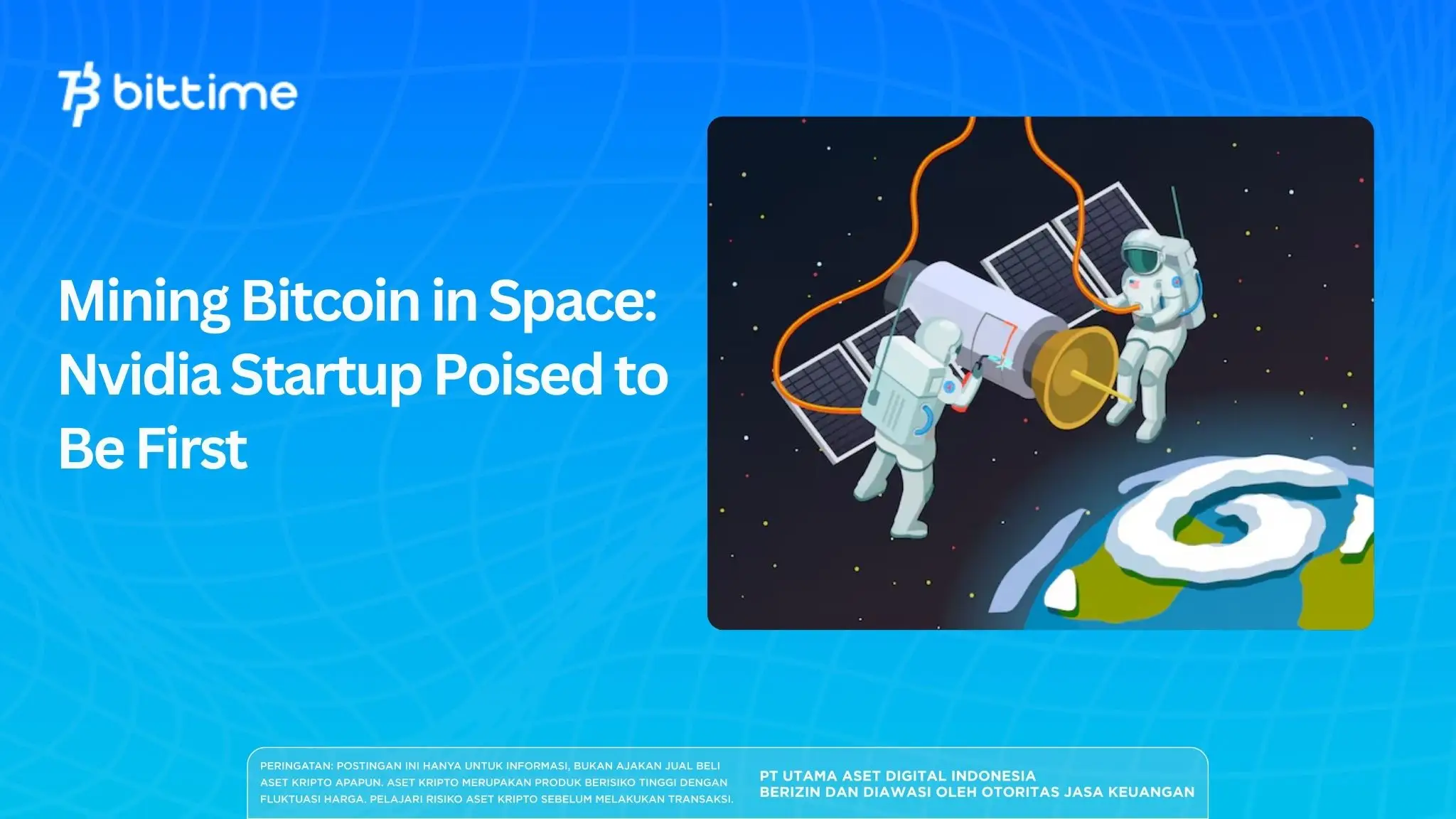
A startup called Starcloud has just announced a plan that sounds like science fiction but is actually happening: mining Bitcoin from Earth orbit using solar-powered satellites.
CEO Philip Johnston confirmed these plans in an interview with HyperChange on March 7, 2026, and they immediately went viral in the global crypto community.
If the Starcloud-2 launch goes ahead as scheduled in late 2026, the Redmond, Washington-based company will be the first in the world to mine Bitcoin in space.
Key Takeaways
Starcloud will launch a second satellite containing a Bitcoin ASIC miner into low-Earth orbit in late 2026.
ASICs are 30x cheaper per kilowatt than GPUs, which is the main reason mining makes more sense in space.
This project is still experimental, real profitability has not been proven, but it is technically feasible.
Register at Bittime now and start trading crypto with a fast, safe, and easy process in the app.
Who is Starcloud?
Starcloud was founded in early 2024 with the mission of building orbital data centers to address the growing energy needs of AI computing. The company is backed by Nvidia and has closed a $2.4 million pre-seed round, valuing it at around $100 million.
The core team is no ordinary group. CEO Philip Johnston has a McKinsey background, experience on satellite projects for national space agencies, and holds degrees from Harvard, Wharton, and Columbia.
The CTO has 20 years of experience at Airbus Defence & Space with a PhD from Imperial College London.
The Chief Engineer previously worked for 20 years at Microsoft and SpaceX developing tracking systems for Starlink.
In November 2025, Starcloud successfully launched Starcloud-1, a 50 kg refrigerator-sized satellite carrying an Nvidia H100 chip into low-Earth orbit.
This is the first time a GPU of this class has ever operated in space, and it reportedly successfully ran and trained a small AI model directly from orbit.
Read also:Free Crypto Mining Apps 2026: The Best Options for Earning Profits from Crypto
Why Bitcoin? Why Now?
The short answer: economics. Johnston explains that the ASIC chips used to mine Bitcoin are much cheaper and more efficient to operate in space than GPUs for AI.
"A 1-kilowatt B200 GPU can cost $30,000. A 1-kilowatt ASIC is only about $1,000," Johnston said. This 30-fold difference is significant when launch costs are still calculated per kilogram of payload.
Read also:How to Buy Bitcoin (BTC)
Three structural advantages that make space attractive for Bitcoin mining:
Free and constant solar energy: in low Earth orbit, satellites receive almost continuous exposure to sunlight without competing with Earth's power grid.
Natural cooling: the vacuum temperature of outer space reaches -270 degrees Celsius, eliminating the need for expensive and energy-intensive cooling systems in conventional data centers.
Without energy regulation: no noise complaints, no fluctuating local electricity rates, and no risk of government raids for excess energy consumption.
Johnston even calls this more than just an idea: "Bitcoin mining consumes about 20 GW of power continuously.
It doesn't make sense to do this on Earth, in the end all this will be done in space."
The Big Plan: 88,000 Satellites
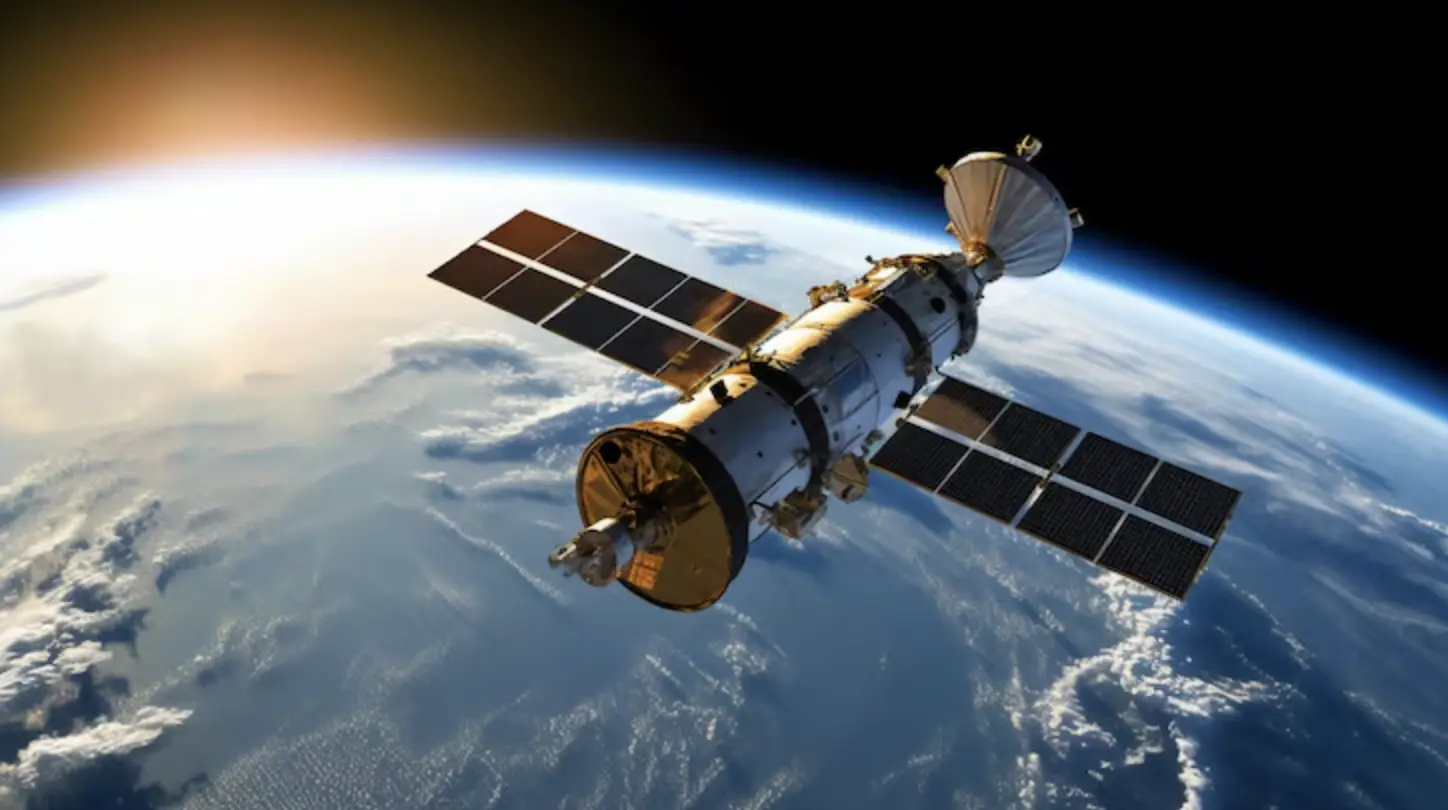
Starcloud has filed an application with the United States FCC to operate a constellation of up to 88,000 satellites as an orbital data center.
Within that massive network, some capacity will run AI workloads, while others will mine Bitcoin using orbit-based solar energy.
Starcloud-2, the second satellite that will carry Bitcoin ASIC miners, is scheduled to launch in late 2026, likely using SpaceX's Starship rocket, which is designed to carry heavy payloads into orbit.
If successful, Starcloud would be the first company to ever mine cryptocurrency outside of Earth.
Competitors are also starting to move.
Intercosmic Energy is another startup developing a similar concept, using satellites as decentralized Bitcoin issuance centers, but to date there has been no concrete implementation.
Read also:Free Crypto Mining Apps 2026: The Best Choice to Make Profit from Crypto
Unanswered Risks
The idea is interesting, but a number of big questions don't yet have concrete answers.
First, launch costs remain expensive
Even with Starship pushing the price per kilogram into orbit, deploying thousands of ASIC miners in space still requires a much larger investment than a conventional data center on Earth.
Second, the hardware in orbit is beyond repair
ASIC chips become obsolete quickly, with their generation cycles lasting 12–18 months. On Earth, miners can simply replace old hardware with new. In orbit, that's not an option. Johnston himself admits that profitability could plummet rapidly as the next generation of ASICs emerges.
Third, the harsh physical conditions of outer space
Radiation, orbital debris, and extreme thermal cycles are real challenges that there is no evidence yet that can be overcome on a long-term commercial mining scale.
The head of AWS even stated in early February 2026 that space-based data centers were still “very far from a solid economic reality,” a skeptical view from one of the world’s largest cloud players.
Read also:How to Mine Bitcoin at Home: Methods and Equipment
Conclusion: What Does This Mean for Bitcoin?
In theory, if Starcloud succeeds and this model proves profitable, the implications for the Bitcoin network are significant. Global hashrate could be geographically diversified into orbit, reducing reliance on mining centers concentrated in a few countries.
Signal latency in vacuum is also slightly faster than Earth's atmosphere, which could theoretically reduce orphaned blocks in the block propagation process.
But currently, Bitcoin's price is at $69,041, down nearly 48% from its ATH of $126,080 in October 2025, and mining difficulty has just dropped 7% from its record high.
Miners on Earth are struggling with dwindling margins. Starcloud arrives at a time when the industry is searching for true efficiency breakthroughs.
Whether Bitcoin mining from space will become a reality in the next five years, or remain an expensive experiment that never reaches commercial scale, remains to be seen. What is clear is that this is no longer just talk.
How to Buy Crypto on Bittime?

Want to trade sell buy Bitcoins and crypto investment easily? Bittime is here to help! As an Indonesian crypto exchange officially registered with Bappebti, Bittime ensures every transaction is safe and fast.
Start with registration and identity verification, then make a minimum deposit of IDR 10,000. After that, you can immediately buy your favorite digital assets!
Check the exchange rate BTC to IDR, ETH to IDR, SOL to IDR and other crypto assets to find out today's crypto market trends in real-time on Bittime.
Also, visit the Bittime Blog for interesting updates and educational information about the crypto world. Find reliable articles about Web3, blockchain technology, and digital asset investment tips designed to enrich your crypto knowledge.
FAQ
What is Starcloud and who supports it?
Starcloud is a Redmond, Washington-based startup backed by Nvidia that plans to build orbital data centers and mine Bitcoin from space.
When will Starcloud start mining Bitcoin in space?
The Starcloud-2 satellite carrying the Bitcoin ASIC miner is scheduled to launch in late 2026, likely aboard SpaceX's Starship rocket.
Why are ASICs better suited for space mining than GPUs?
ASICs are 30 times cheaper per kilowatt than GPUs — at $1,000 per kilowatt versus $30,000 for a B200 GPU, the difference is significant when the cost is calculated per kilogram of launch payload.
What are the advantages of mining Bitcoin in space?
Three main advantages: free and constant solar energy, natural cooling from the vacuum of space, and no local energy regulations or electricity rates.
What is the biggest risk of this project?
In-orbit hardware cannot be replaced when it wears out, launch costs remain prohibitive, and radiation and orbital debris are physical challenges that have not yet been proven to be surmountable on a commercial scale.
Disclaimer: The views expressed belong exclusively to the author and do not reflect the views of this platform. This platform and its affiliates disclaim any responsibility for the accuracy or suitability of the information provided. It is for informational purposes only and not intended as financial or investment advice.

.png)