What Is Margin? Definition, Types, Functions, Formulas, and Examples
2026-08-11
Margin is a measure that shows the difference or ratio between revenue and costs to assess a business's level of profitability. In finance and trading, margin can also refer to the funds or collateral required to open a position using less capital than the actual transaction value.
Because the term is used differently across contexts, understanding what margin means is essential to avoid confusing it with profit.
Key Takeaways
- In business, margin is used to measure how much revenue remains after certain costs are deducted.
- Common types include gross profit margin, operating margin, and net profit margin.
- Margin trading has a different meaning because it involves collateral or borrowed funds used to open an investment position.
What Is Margin?
In a business context, margin refers to the difference between revenue and the costs required to generate that revenue. Margin is usually expressed as a percentage so a company can compare profitability across periods or with other businesses.
For example, if a business generates Rp100 million in sales and Rp20 million in net profit, its net profit margin is 20%.
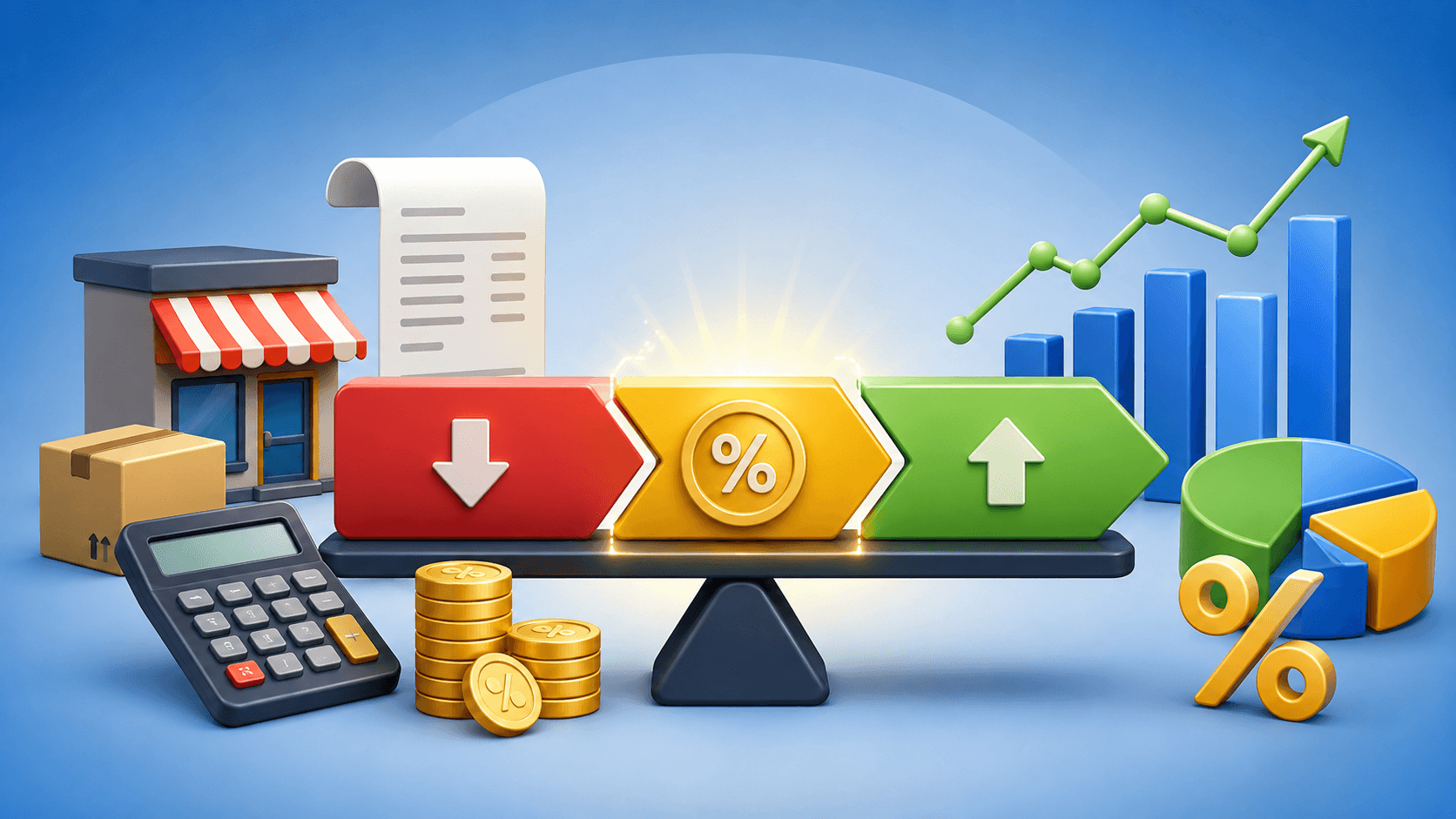
Source: AI-Generated Image
A higher margin generally indicates that more revenue remains after the relevant costs are taken into account. However, the ideal margin can vary depending on the business model and industry.
Read also: Futures Liquidation Conditions: When Can a Trader's Position Be Liquidated?
Functions of Margin in Business
Margin serves several important functions in business management.
- Measure profitability.
- Evaluate production cost efficiency.
- Help determine selling-price strategies.
- Compare performance across periods.
- Identify costs that need to be controlled.
Margin calculations also help management determine whether higher revenue is actually producing better profits or is instead being accompanied by an excessive increase in costs.
If you follow developments in investing and digital assets, you can sign up on Bittime and read the latest crypto news to broaden your understanding before making investment decisions.
Types of Margin You Need to Understand
1. Gross Profit Margin
Gross profit margin or gross margin measures the percentage of profit remaining after the cost of goods sold is deducted from revenue.
The formula is:
Gross Profit Margin = (Revenue - COGS) / Revenue × 100%
This margin helps assess how efficiently a company produces goods or services before other operating expenses are taken into account.
2. Operating Profit Margin
Operating margin indicates a business's ability to generate profit from its core operating activities.
Operating Margin = Operating Profit / Revenue × 100%
Operating expenses are already included, while items such as interest and taxes are not the primary focus of this calculation.
3. Net Profit Margin
Net profit margin shows net profit as a percentage of total revenue after various expenses, interest, and taxes have been taken into account.
The formula is:
Net Profit Margin = Net Profit / Revenue × 100%
Read also: Perpetual Futures vs. Quarterly Futures: What Is the Difference?
How to Calculate Margin, with Examples
For example, suppose a business has:
- Revenue: Rp200 million
- COGS: Rp120 million
- Net profit: Rp30 million
Gross profit margin:
(Rp200 million - Rp120 million) / Rp200 million × 100% = 40%
This means that after COGS is deducted, the business still has gross profit equal to 40% of sales.
Meanwhile, the net profit margin is:
Rp30 million / Rp200 million × 100% = 15%
This means that every Rp100 of revenue generates approximately Rp15 in net profit. Both gross profit margin and net profit margin use revenue as the basis for comparison.
Read also: Futures Open Interest: How to Read Market Trends and Sentiment
Difference Between Margin and Profit
Margin and profit are related, but they are not the same thing.
Profit shows the nominal amount of earnings. For example, a company's net profit may be Rp30 million.
Profit margin shows that profit as a percentage of revenue. If revenue is Rp200 million and profit is Rp30 million, the profit is Rp30 million while the net profit margin is 15%.
This distinction is important because two companies can earn the same nominal profit while operating at different levels of efficiency.
Read also: Margin Call in Crypto Futures? Do This to Avoid Liquidation
What Is Margin Trading?
In investing, the meaning of margin changes. Margin trading involves collateral and the use of borrowed funds to open a position whose value exceeds the investor's own capital. An investor can purchase an asset by paying part of its value while the remainder is financed through the available facility.
Using margin can magnify both potential gains and potential losses. If the account value falls below certain requirements, the investor may receive a margin call or face the closure of the position.
Because it carries higher risk, margin trading should be distinguished from profit margin in business.
Read also: How to Protect a Spot Crypto Portfolio with Futures
Conclusion
Margin is an important indicator for understanding business profitability, while the term has a different meaning in trading. Gross margin, operating margin, and net margin help measure a company's efficiency, whereas margin trading relates to collateral and the use of additional capital.
Understanding the formulas and the context in which margin is used will help you assess both business conditions and investment risks more accurately.

Maximize your opportunities in both bull and bear markets with Bittime Futures. Sign up and start trading now!
Bittime is a licensed Digital Financial Asset Trader (PAKD) platform regulated and supervised by Indonesia's Financial Services Authority (OJK) — where you can buy Bitcoin in Indonesia and hundreds of other crypto assets starting from Rp10,000. Registration is fast and secure, and you can get started today.
Track the conversion from USDT to IDR and monitor the real-time price movements of your favorite crypto assets. Everything is available in one crypto investment app that can be downloaded for free from the Play Store.
Ready to get started? Sign up on Bittime now and execute your investment strategy on a platform trusted by millions of users in Indonesia.
FAQ
What does margin mean?
Margin is the ratio or difference between revenue and costs used to assess business profitability. In trading, margin can refer to funds used as collateral for a position.
How do you calculate margin?
The basic formula is profit divided by revenue, then multiplied by 100%. The type of profit used depends on whether you are calculating gross, operating, or net margin.
What is the difference between margin and profit?
Profit is the nominal amount of earnings, while margin expresses profit as a percentage of revenue.
What is gross profit margin?
Gross profit margin is the percentage of gross profit remaining after COGS is deducted from revenue. This indicator helps assess production efficiency.
What is margin trading?
Margin trading is the practice of using margin or collateral to take an investment position with a larger value. This method can increase both potential returns and the risk of losses.
Disclaimer: The views expressed belong exclusively to the author and do not reflect the views of this platform. This platform and its affiliates disclaim any responsibility for the accuracy or suitability of the information provided. It is for informational purposes only and not intended as financial or investment advice.

.png)