7 Local Indonesian Cryptocurrencies 2026 (Latest Developments)
2026-03-30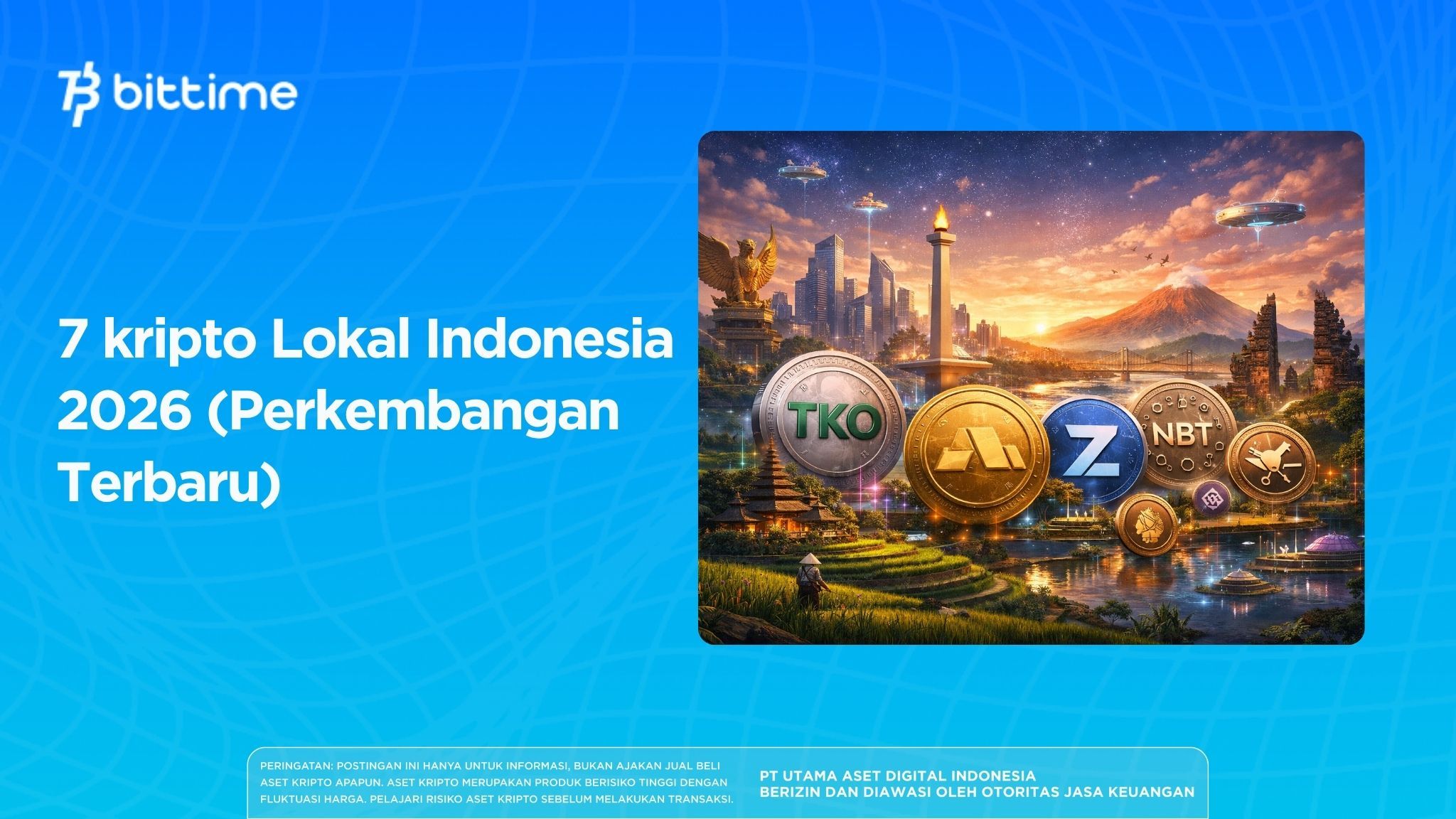
Indonesia is not just a large crypto market; it is also becoming a serious producer.
In recent years, some cryptocurrencies created by Indonesian children have emerged, ranging from exchange-ecosystem-based tokens to physical gold-backed tokens to tokens developed to strengthen the agricultural and MSME sectors.
Amidst the ever-maturing regulatory landscape following the transition of oversight from Bappebti to the OJK, the question of the trustworthiness of Indonesian-made crypto has become increasingly relevant for both retail and institutional investors.
This article summarizes 9 local Indonesian cryptocurrencies, both those that are still actively traded and those that are important lessons, along with their regulatory context, technology, and current market position as of 2026.
Key Points
- Indonesia's local crypto ecosystem is transitioning from speculation to real utility with increasingly stringent regulatory pressures.
- There is no guarantee of security as the main risks still come from regulation, project reputation, and dependence on the parent platform.
- The most promising models today are tokens based on real utility and real assets rather than mere hype-based tokens.
A Brief History of Indonesian Local Crypto
The development of Indonesia's local crypto market is inextricably linked to the evolution of its regulations. Before 2019, crypto asset trading in Indonesia was in a gray area.
Bappebti then took concrete steps by issuing Regulation No. 5 of 2019, which classifies crypto assets as commodities that can be traded on futures exchanges, not as currencies or means of payment.
Bank Indonesia's position itself has not changed: Crypto is not a legal means of payment..
The first wave of Indonesian-made cryptocurrencies emerged between 2020 and 2022, fueled by the global DeFi euphoria and increasing internet penetration.
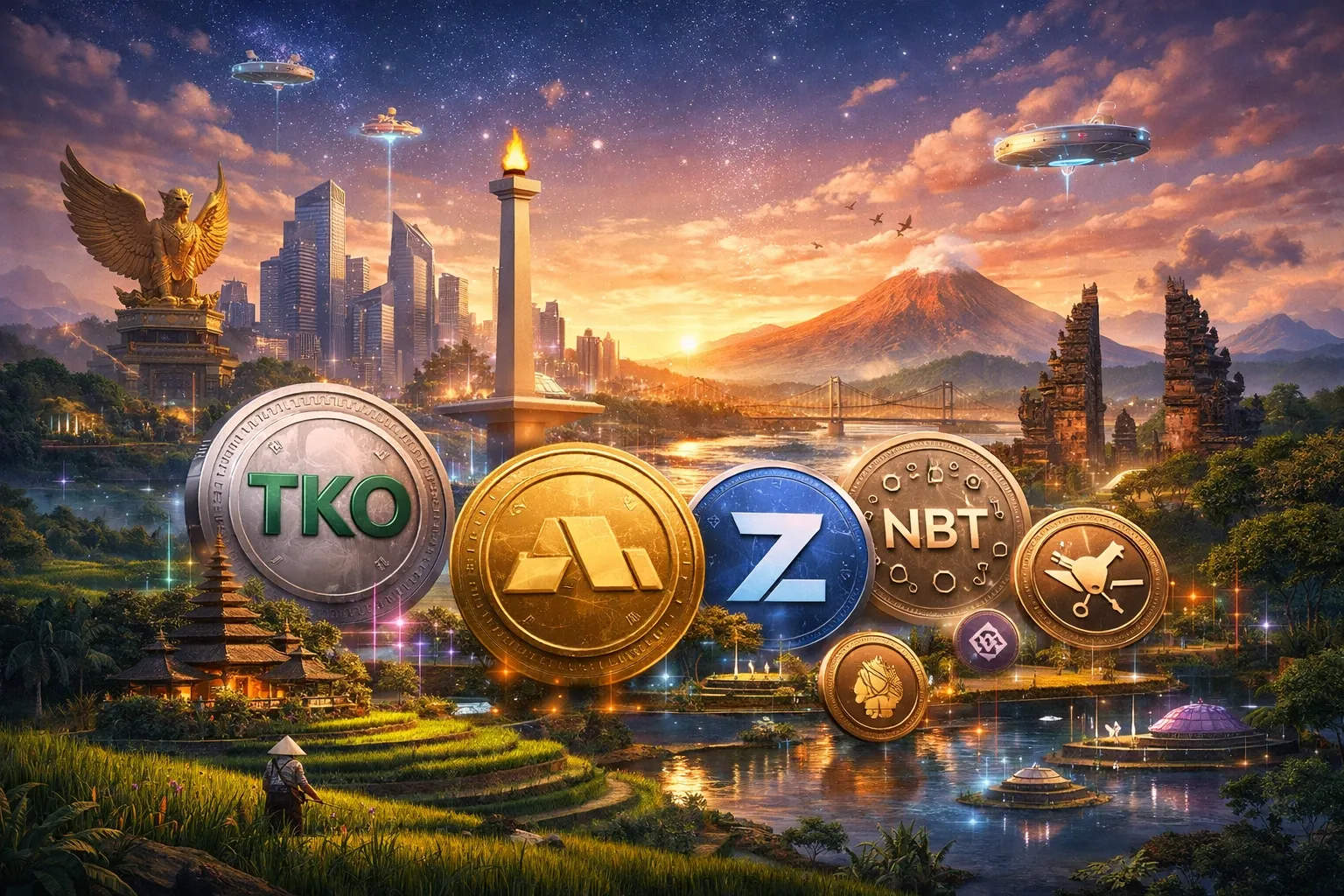
Tokens like ZMT, TKO, and even celebrity tokens like ASIX and LESLAR were born. Not all were successful; some were caught up in legal battles, while others disappeared from circulation.
However, this ecosystem continues to evolve, and by 2026, the supervisory framework will become stricter as authority is transferred from Bappebti to the Financial Services Authority (OJK).
List of 9 Local Cryptocurrencies Created by Indonesian Children
Here are nine local Indonesian cryptocurrencies that have been or are still active in the market, ranked by their ecosystem significance and the lessons each offers.
1. Toko Token (TKO) — A Local Hybrid Crypto Pioneer
Token Shop (TKO) is one of the first local cryptocurrencies to gain widespread recognition.
Developed by TokoCrypto, one of the largest crypto exchanges in Indonesia, TKO was launched in April 2021 on Binance Launchpad, a platform typically used by world-class crypto projects.
What sets TKO apart technically is its hybrid architecture: it combines CeFi (Centralized Finance) with DeFi (Decentralized Finance) in one Binance Smart Chain (BSC) based ecosystem.
This means users can enjoy the convenience of saving and borrowing while taking advantage of decentralized protocols.
TKO is an early benchmark for how local Indonesian crypto can compete in infrastructure, not just narrative.
2. Zipmex Token (ZMT) — Exchange Token with Real Utility
Zipmex Token (ZMT) was launched in December 2020 on the Ethereum network and is one of the first local Indonesian cryptocurrencies to have a clear utility foundation: transaction cashback through the Zip Pay feature and staking returns through Zip Up.
ZMT was built to encourage user loyalty among the Zipmex platform, a common concept in the token exchange world.
However, the journey has not been smooth. Zipmex, as a company, faced significant liquidity pressure in 2022, a situation that tested how strong the token's utility was in supporting its price as its parent platform faltered.
This serves as an important lesson about the risks of correlation between token exchanges and the health of their developer platforms.
3. NanoByte Token (NBT) — Conglomerate-Backed, BSC-Based
NanoByte Token (NBT) has a comparative advantage that other local cryptocurrencies rarely have: the support of two major institutions at once, Sinarmas Group and TokoCrypto.
This kind of corporate support sends a different signal of trust than tokens that rely solely on the retail community.
Technically, NBT is built on Binance Smart Chain with a fixed supply of 10 billion tokens and adopts a CeFi-DeFi hybrid architecture similar to TKO.
NBT's position in the Indonesian crypto ecosystem is as a bridge between conventional finance through Sinarmas and the growing blockchain infrastructure, a relevant proposition in a market like Indonesia that is still in the digital financial literacy stage.
4. XAU Token (Xaurius) — ANTAM Gold-Based Crypto
Among all Indonesian-made cryptocurrencies, the XAU Token has the most unique and arguably the most defensive value proposition: each token is backed by 1 gram of physical gold certified by ANTAM (Aneka Tambang), Indonesia's state-owned gold and mineral company.
This model, known as a commodity-backed token, provides stability that purely speculative cryptocurrencies lack. The price of the XAU token moves according to the price of ANTAM gold, not global crypto market sentiment.
For Indonesian investors familiar with physical gold investments but looking to enter the blockchain ecosystem, XAU offers a more scalable entry point.
Read Also: Gold Prediction 2026: XAU to Break $5,000
Token holders can even redeem the physical token, making XAU one of the local cryptocurrencies with the most concrete asset backing.
5. Tadpole (TAD) — Officially Licensed DeFi Token
Tadpole (TAD) is one of the local cryptocurrencies that has received official permission from Bappebti, an achievement that not many Indonesian tokens have achieved.
The name Tadpole, meaning tadpole, may sound unconventional for a financial instrument, but behind it lies a fairly robust DeFi ecosystem with saving and staking features.
During its inception, TAD's market capitalization exceeded IDR 17 billion, a significant figure for a local token. The Bappebti permit grants TAD legality, distinguishing it from many Indonesian tokens operating without a clear regulatory framework.
Its development roadmap includes expansion to various web platforms to extend the token's utility beyond its native ecosystem.
6. LDX (Litedex Protocol) — Purely Local Creation with Global Ambitions
LDX is the token that most vocally promotes the narrative of being purely made by the nation's children: its entire development process was carried out without the involvement of foreign IT personnel.
Developed by Litedex Protocol with the concept of Meta Finance, LDX adopts multi-blockchain — covering the Huobi and Ethereum —to build a broader ecosystem.
What makes LDX stand out symbolically is the official support from the Indonesian Deputy Minister of Trade, Jerry Sambuaga, which gives political legitimacy to the project.
The LDX ecosystem includes features that DeFi traders are interested in: farming, staking, liquidity pools, and swaps.
Its ambition to penetrate the global market makes LDX one of the most ambitious Indonesian-made cryptocurrencies in its expansion narrative.
7. Tokenomy (TEN) — From the Founders of Indodax, for the Crypto Economy Ecosystem
Tokenomy (TEN) has a no-nonsense background: it was initiated by the founder of Indodax, one of Indonesia's oldest and largest crypto exchanges.
The name TEN itself comes from a combination of the words Token and Economy, reflecting its vision as a token-based economic infrastructure.
Built on the Ethereum network, TEN develops a platform that enables a wide range of crypto financial activities: staking, crypto deposits, and futures trading.
The legitimacy that comes from the Indodax ecosystem gives TEN a distribution network and user base that doesn't need to be built from scratch, a significant structural advantage compared to standalone tokens.
8. Agri Coin and IDM Token — Crypto for the Real Sector
These two tokens are worth discussing together because they both have a mission rarely found in the crypto world: empowering the real economy, not just market speculation.
Agri Coin (AGCMN) is designed to connect Indonesian farmers with lenders through a P2P lending network. The capital invested can be used for seed purchases, planting, harvesting, and distribution.
IDM Token targets a different segment: MSMEs and cooperatives. Based on the DeFi Avax X Chain, IDM Token aims to become a digital financing infrastructure for small businesses that have struggled to access conventional capital.
Both represent an interesting direction in Indonesia's local crypto ecosystem, moving from mere speculative tools to instruments of economic empowerment.
9. BotXcoin (BOTX) — Lessons from Crypto Stumbles in Legal Cases
BotXcoin (BOTX) is an important case study of governance risks in Indonesia's local crypto ecosystem.
Launched on July 4, 2021, in Medan by BotX Technologi Indonesia, BOTX is based on Ethereum ERC20 and aims to build a multi-cryptocurrency platform integrated with trading bot technology.
However, the project faced major turbulence when its CEO, Indra Kenz, known as the Sultan of Medan, was caught up in an alleged money laundering case.
As of October 2024, the price of BOTX was recorded at around US$0.001 with a market capitalization of only US$1.68 million, and there was no clarity regarding the project's future.
Read Also: MrBeast Crypto Scandal: Allegedly Raised $10 Million
BotXcoin warns that in Indonesian local crypto, reputational risks for CEOs or founders can be just as destructive as technical risks.
The Future Prospects of Local Indonesian Crypto
Entering 2026, Indonesia's local crypto ecosystem faces two conflicting forces: increasingly stringent regulations on the one hand, and growing market potential on the other.
The transfer of crypto asset oversight from Bappebti to the OJK brings new standards, standards that are closer to the formal financial industry, not just commodities.
The Google Play Store policy requiring a Physical Crypto Asset Trader permit from Bappebti for exchange apps also makes it clear that the distribution of crypto products in Indonesia can no longer be done haphazardly.
This is a positive signal for industry consolidation: only players who are serious about regulatory compliance will survive.
The most promising trend for local Indonesian crypto is the tokenization of real assets, a model that has already been proven by Token XAU with ANTAM gold, and which has the potential to be applied to other assets such as property, agricultural commodities, and sharia financial instruments.
On the other hand, ecosystem-based tokens such as exchange tokens and loyalty tokens will continue to face pressure from the volatility of their parent platforms.
Final Notes
CryptoIndonesia's local cryptocurrency market is at the intersection of innovation and regulation, between global ambitions and local market realities. Of the nine cryptocurrencies discussed above, there's no single formula for success: TKO and ZMT focus on exchange infrastructure, XAU focuses on physical asset backing, LDX plays on the narrative of technological nationalism, while Agri Coin and IDM Token pursue a deeper socio-economic mission.
For investors, the right question is not just what Indonesian-made cryptos are available, but which business models have sustainable utility.
Bappebti or OJK permits are minimum requirements, not guarantees of success. Regulatory risk, founder reputation risk, and platform liquidity risk are three variables that must always be considered before entering any local crypto ecosystem.
Disclaimer: This article is for informational purposes only and does not constitute investment advice. Always conduct your own research before making any investment decisions in crypto assets.
FAQ
What are the most popular Indonesian-made cryptos?
Some popular Indonesian-made cryptocurrencies include TKO, ZMT, NBT, and Tokenomy (TEN), which are generally integrated with exchange ecosystems or supported by large institutions.
Is local Indonesian crypto safe for investment?
The security of local crypto depends on regulation, utility, and the credibility of the development team. Permits from Bappebti or the OJK are helpful, but not a guarantee of zero risk.
What is the difference between local crypto and global crypto?
Local cryptos typically focus on the Indonesian market, often linked to the real sector or domestic exchanges, while global cryptos have broader adoption and liquidity.
Are there any Indonesian cryptos backed by real assets?
Yes, one example is the XAU Token, which is backed by ANTAM physical gold, so its value tends to follow the gold price, not the volatility of the crypto market.
How to choose a trusted local crypto?
Choose crypto with clear utility, strong ecosystem support, team transparency, and regulatory compliance to minimize investment risk.
Disclaimer: The views expressed belong exclusively to the author and do not reflect the views of this platform. This platform and its affiliates disclaim any responsibility for the accuracy or suitability of the information provided. It is for informational purposes only and not intended as financial or investment advice.

.png)