Green Investment in Indonesia 2026 - Definition, Asset Examples, and Opportunities
2026-04-07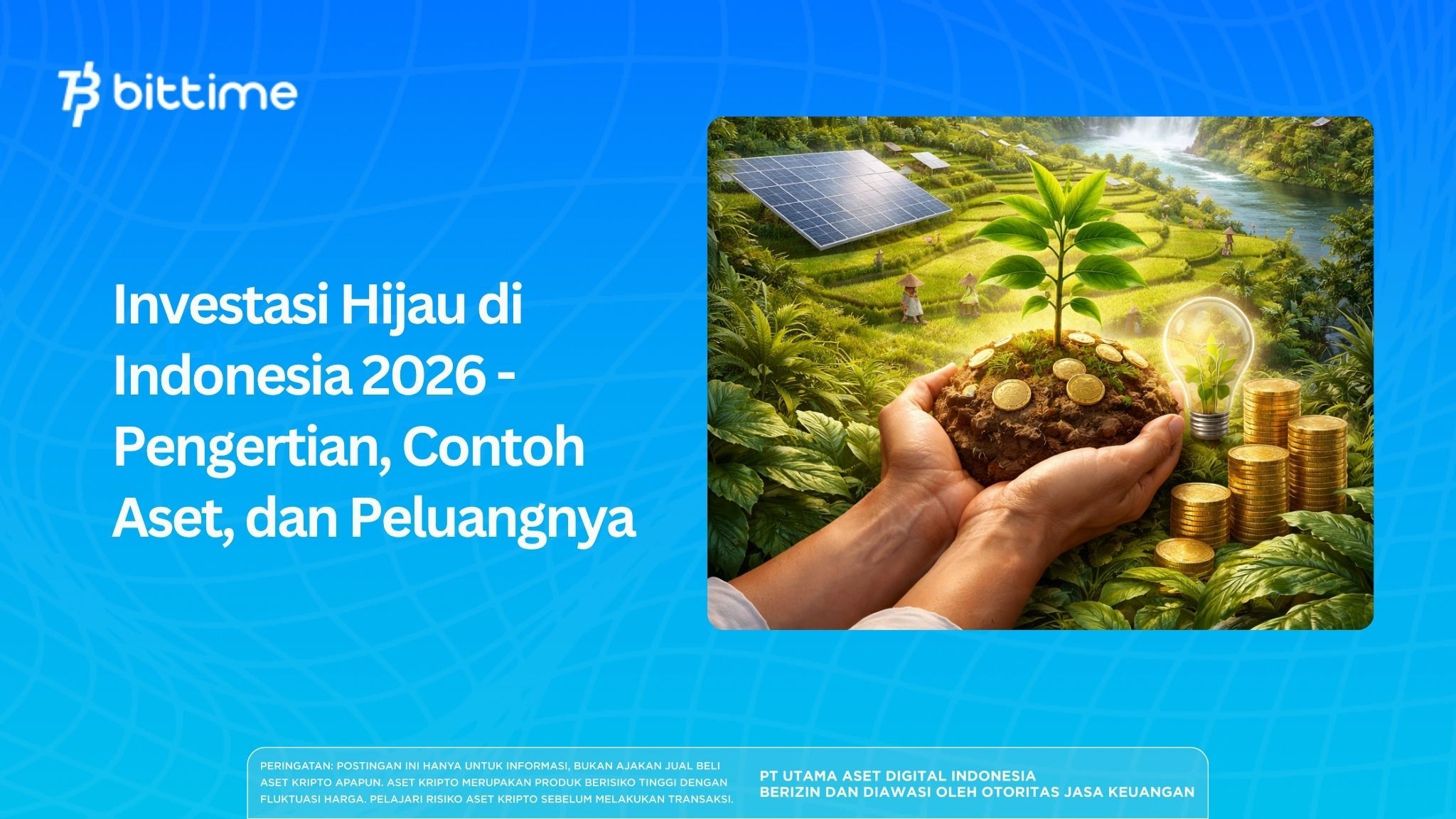
Over the past few years,investmentGreen is no longer just a topic of conversation in international forums. In Indonesia, this trend is moving at a measured yet tangible pace.
The government is targeting investment in new and renewable energy (EBT) worth IDR 1,650 trillion by 2035, with the ambition of building a capacity of 50,000 megawatts of clean energy.
These are not empty numbers; they signal that the transition from a fossil-fuel-based economy to a low-carbon economy has entered the execution phase.
For investors, both beginners and experienced, understandingwhat is investmentgreen is becoming more and more relevant.
Not only because of its moral values, but also because of its increasingly concrete growth potential amidst shifting global and local regulations.
Key Takeaways
- Green investment is not just a trend, but a structural shift in the economy. With Indonesia's ambitious renewable energy targets and the global push for ESG standards, green investment has entered the stage of real implementation, no longer just talk.
- The advantage of green investment lies in the combination of profit and sustainability. In addition to potential returns, green assets are considered more resilient to long-term risks because they align with increasingly stringent global regulations and policies regarding carbon emissions.
- Opportunities are vast, but caution is needed against greenwashing. Many instruments are available, from green sukuk to ESG stocks, but investors must still conduct due diligence to avoid being trapped by “green” claims that have no real impact.
What is Green Investment?
Green investing, or green investment, is a financial strategy that allocates capital to projects, companies, or instruments that actively support environmental sustainability.
More than just “eco-friendly”, a more precise definition of green investment includes the integration of three main factors in the decision-making process: environmental, social, and corporate governance factors, or better known as the ESG framework.
Under this framework, an investment is called “green” not just because of its label, but because of its measurable impact: whether the project reduces carbon emissions, manages waste responsibly, supports local communities, and is run with transparent governance.
The simplest example of what is meant by green investment is buying government bonds whose funds are used to build solar power plants, or investing in companies operating in the waste management sector.
Read Also:10% APY: Why You Should Stake XAUT on Bittime
The goal is dual: to generate financial returns while creating a positive impact on the environment.
Green Investment vs. Conventional Investment: What's the Difference?
The fundamental difference between green investment and conventional investment lies in the asset selection criteria.
Conventional investments generally only consider purely financial factors: return, risk, and liquidity. Green investing adds an extra layer of analysis, the environmental and social impact of the asset or company being funded.
This doesn't mean that green investment ignores profitability. Quite the contrary: as regulatory pressure on carbon emissions increases in various countries, companies that fail to adapt face real business risks.
Green assets, in the long term, are considered to have a lower risk profile because they are more aligned with global policy directions.
One thing to be wary of is greenwashing, a practice where companies or investment products claim to be “green” without any evidence of real impact.
This is why due diligence is crucial: independently reviewing ESG reports, tracking project certifications, and understanding the standards used before allocating funds.
Why Green Investments Are Attractive: Their Potential and Advantages

Indonesia is in a unique position. The country's solar energy potential is estimated at 3,934 gigawatts, far exceeding current electricity needs.
However, so far, most of this capacity has not been utilized due to the dominance of long-established fossil fuel-based infrastructure.
The biggest challenge is no longer the availability of resources, but rather the consistency of policies and the readiness of the transmission network to absorb the surge in new energy capacity.
This actually creates an opportunity: investors who enter this segment early can potentially gain a strategic position before the market fully matures.
Some of the advantages of green investment in Indonesia 2026 that you need to know:
- Increasingly strong regulatory support, including a commitment to energy transition in the latest Electricity Supply Business Plan (RUPTL).
- Access to special instruments such as Green Sukuk issued by the government since 2018, sharia-compliant bonds based on environmentally friendly projects.
- Foreign investor interest is increasing as ESG standards are starting to be implemented by global financial institutions.
- The potential for new job creation in the renewable energy sector strengthens the argument that the green transition is also socially beneficial.
Examples of Green Investment Assets
What assets fall under green investment? Here are the main categories relevant to investors in Indonesia:
1. Renewable energy
This is the backbone of green investment globally. In Indonesia, this segment includes solar power (PLTS), wind (PLTB), hydro (PLTA), and geothermal (PLTP) projects.
Investors can enter through shares of renewable energy companies listed on the IDX, or through thematic mutual funds that focus on this sector.
2. Green Sukuk and Green Bonds
The Indonesian government is one of the largest Green Sukuk issuers in the world for the developing country category.
Funds from this instrument are allocated to specific projects such as sustainable transport, land management, and resilience to climate change.
This instrument is relatively safe because it is issued by the government, and is suitable for investors who want green exposure with low risk.
3. ESG-Based Mutual Funds
Several investment managers in Indonesia now offer mutual funds that explicitly screen portfolios based on ESG criteria.
Read Also: 7 Best Investments in 2026 Worth Considering
This is the easiest way to start green investing without having to analyze assets one by one.
4. Stocks of Companies with High ESG Profiles
Several companies listed on the IDX have published sustainability reports and received ESG assessments from independent institutions.
Stocks. This is included in the IDX ESG Leaders index, which can be used as an initial reference for compiling a green portfolio.
5. Sustainable Property and Infrastructure
Buildings with green building certification, mass transportation infrastructure that reduces emissions, and clean water management projects also fall within the spectrum of green investment assets.
In Indonesia, this segment is still in its infancy, but is starting to attract attention from developers and institutional investors.
Is Crypto a Green Investment?
This question has come up more and more frequently as digital assets become more popular. The answer: it depends on the consensus mechanism used by the blockchain.
Bitcoin, which uses the Proof of Work (PoW) mechanism, requires a huge amount of computing power.
Network energy consumption: Bitcoin. Globally, it's often compared to the electricity consumption of mid-sized countries. With this energy profile, Bitcoin is difficult to categorize as a green asset.
In contrast, crypto assets that use the Proof of Stake (PoS) mechanism or its variants, such as Ethereum post-Merge, Cardano, or Algorand, consume much lower energy.
Some blockchain projects are even explicitly designed to support carbon trading, green supply chain tracking, or the tokenization of renewable energy assets.
So, crypto doesn't automatically fall into or out of the green investment category.
Assessments should be conducted on a project-by-project basis, taking into account energy consumption, stated ecological mission, and verifiable real impacts.
Final Notes
Green investment in Indonesia in 2026 is not a fleeting phenomenon driven solely by sentiment.
There are strong structural foundations behind it: ambitious national energy targets, increasingly stringent ESG regulations globally, and growing demand from institutional investors for sustainable assets.
For individual investors, starting out doesn't have to be with large sums. Government Green Sukuk, ESG mutual funds, or shares from the IDX ESG Leaders index can be measured entry points.
The most important thing is to build an understanding of what truly makes an asset “green,” and not to fall prey to increasingly sophisticated greenwashing claims.
Ultimately, the most responsible way to make green investments is to combine careful financial analysis with a concrete understanding of environmental impact.
These two are not contradictory choices, but rather they increasingly go hand in hand.
FAQ
What is green investment?
Green investing is a financial strategy that allocates capital to projects or assets that support environmental sustainability, such as renewable energy and waste management, by integrating ESG (Environmental, Social, Governance) factors into investment decisions.
What are some examples of green investments in Indonesia?
Examples of green investments in Indonesia include government Green Sukuk, ESG-based mutual funds, shares of companies in the IDX ESG Leaders index, and renewable energy projects such as solar power plants (PLTS) and hydropower plants (PLTA).
Is green investment profitable?
Yes. Beyond their environmental impact, green investments have the potential for competitive long-term returns, supported by increasingly stringent regulations on carbon emissions and growing global demand for sustainable assets.
What is the difference between green investment and conventional investment?
Conventional investments only consider financial factors such as return and risk. Green investments incorporate environmental and social impact criteria into the asset selection process, thus avoiding companies potentially impacted by future climate regulations.
Is crypto a green investment?
Not automatically. Proof-of-Work (PoW)-based cryptocurrencies like Bitcoin consume significant amounts of energy and are difficult to categorize as green. In contrast, Proof-of-Stake (PoS)-based cryptocurrencies like post-merge Ethereum are much more energy efficient and more likely to meet green investment criteria.
Disclaimer: The views expressed belong exclusively to the author and do not reflect the views of this platform. This platform and its affiliates disclaim any responsibility for the accuracy or suitability of the information provided. It is for informational purposes only and not intended as financial or investment advice.

.png)