Oil Prices Surge, Murban Crude Hits US$106 and Brent Approaches US$100
2026-07-24
The figure of US$106 per barrel is rarely seen on Murban crude trading screens, but on Thursday morning Gulf time, the Abu Dhabi benchmark jumped 19 percent in just one night.
Oil prices for Brent also rose, approaching US$100, triggered by Houthi claims of attacking two Saudi tankers in the Red Sea along with new retaliation threats from President Trump against Iran regarding the Strait of Hormuz.
This surge extends the volatility in world oil prices that has been ongoing since mid-year, when tensions between the United States and Iran escalated again.
Key Takeaways
- Murban crude rose 19 percent to US$106.60 per barrel, Brent rose to US$97.67, and WTI to US$89.36.
- The Houthis claimed to have attacked two Saudi tankers, Encelia and Layla, in the Red Sea, triggering new threats from Trump to Iran regarding the Strait of Hormuz.
- Three giant tankers still managed to cross the Strait of Hormuz carrying 6 million barrels of oil despite increased attack risks.
Oil Prices Record Extreme Gains in One Day
Market data as of Thursday (23/7) at 13:03 Gulf time showed sharp increases across all major benchmarks.
WTI rose to US$89.36 per barrel, up 2.91 percent. Brent jumped 3.83 percent to US$97.67, the highest level in about six weeks. However, the most extreme increase was recorded by Abu Dhabi’s Murban crude, which surged 19.13 percent to US$106.60 per barrel, according to Gulf News.
Natural gas prices also rose 0.79 percent to US$2.948. Analysts cited war risk insurance premiums and lengthened shipping routes as the main drivers of the price increase.
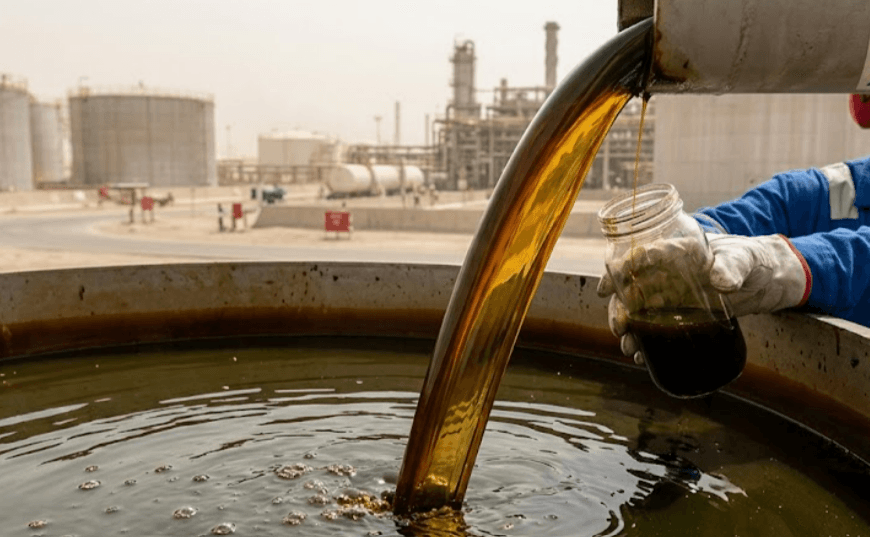
Illustration: Generated by AI
Register now at Bittime to trade crypto easily and securely!
Houthis Attack Two Saudi Tankers, Open New Front in the Red Sea
Iran-backed Houthi militants claimed to have struck two Saudi-flagged tankers named Encelia and Layla in the Red Sea, causing fires on both vessels, according to NBC News.
Saudi official media reported that a fire broke out at the bow of the Encelia. This attack is the first report since the Houthis announced a blockade on Saudi-affiliated vessels passing through the Bab el Mandeb Strait, in retaliation for the blockade of Yemen and attacks on their international airport.
With this new front, threats to global energy supplies no longer come only from the Strait of Hormuz but also from Red Sea shipping lanes.
Read Also: World Oil Prices Rise 10%, What Is the Impact on Indonesia?
Trump Threatens Retaliation for Every Iranian Attack in the Strait of Hormuz
President Donald Trump affirmed that the United States will hold Iran accountable for every future Houthi attack.
Via Truth Social, Trump wrote that every time Iran fires on ships in the Strait of Hormuz, the US will destroy one bridge or power plant, including those near or inside Tehran, according to CBS News.
The US military has already launched attacks for 12 consecutive nights on Iranian territory. In response, senior Iranian officials quoted by Tasnim news agency stated that Tehran would attack infrastructure and bridges across the region if the threats are carried out.
Read Also: What Is Digital Oil ($OIL)? A Memecoin Inspired by Peter Schiff’s Comments and How to Buy It
Giant Tankers Dare to Cross the Strait of Hormuz Amid Risks
Amid escalating threats, ship tracking data compiled by Bloomberg shows three very large crude carriers (VLCCs) successfully exited the Persian Gulf through the Strait of Hormuz in the past 24 hours.
All three were carrying a total of about 6 million barrels of crude oil and began transmitting automatic position signals upon entering the Gulf of Oman on Thursday morning. This fact shows that the physical flow of oil from the Persian Gulf has not completely stopped, even though risk premiums have risen sharply.
About 20 percent of the world’s oil supply passes through the Strait of Hormuz, while another 9 percent crosses Bab el Mandeb, so disruptions in both routes have wide-ranging impacts on the global market.
Read Also: What Is American Virtual Oil Fund (AVOF)? A US Oil Memecoin on Solana
Conclusion
The combination of Houthi attacks in the Red Sea and Trump’s retaliation threats against Iran has caused world oil prices to fluctuate again after easing mid-year.
Murban crude’s 19 percent surge is the clearest signal of how sensitive the Gulf energy market is to current geopolitical risks.
As long as the Strait of Hormuz and Bab el Mandeb remain high-risk, oil price volatility is likely to continue and will affect global logistics costs, including domestic fuel prices.
Market participants are advised to monitor developments in this conflict regularly before making investment or business decisions related to energy.

Monitor developments in leading RWA assets such as ONDO, LINK, and HBAR, before trading on Bittime.
Bittime is a licensed and supervised Digital Financial Asset Trader (PAKD) platform by the Financial Services Authority — where you can buy Bitcoin in Indonesia and hundreds of other crypto assets starting from Rp10,000. The registration process is fast, secure, and can be started today.
Monitor USDT to IDR conversion and the price movements of your favorite crypto assets in real time. All available in one crypto investment app that can be downloaded for free on the Play Store.
Ready to start? Register now at Bittime and execute your investment strategy on a platform trusted by millions of users in Indonesia.
FAQ
Why did Murban crude prices rise much higher than Brent and WTI?
Murban is highly sensitive to shipping risks in the Gulf because it is exported directly from Fujairah, near the Strait of Hormuz. Tensions in this route have caused a drastic surge in demand for Gulf crude.
What is the Strait of Hormuz and why is it important for world oil prices?
The Strait of Hormuz is a narrow waterway between Iran and Oman through which about 20 percent of the world’s oil supply passes. Disruptions in this route immediately trigger global supply concerns and drive oil prices higher.
Has global oil supply really stopped due to this conflict?
Not yet. Three giant tankers still managed to cross the Strait of Hormuz carrying 6 million barrels of oil, showing that the physical flow of oil has not completely stopped even though risks have increased.
What is the impact of this oil price increase on Indonesia?
The rise in global crude oil prices has the potential to increase the burden of energy import costs and pressure on domestic fuel subsidies. The impact on retail prices at gas stations usually becomes visible in the coming weeks.
Will oil prices continue to rise in the near term?
This depends heavily on developments in the Houthi, Iran, and US conflict in the Strait of Hormuz and the Red Sea. As long as tensions have not eased, the risk of further price increases remains open.
Disclaimer: The views expressed belong exclusively to the author and do not reflect the views of this platform. This platform and its affiliates disclaim any responsibility for the accuracy or suitability of the information provided. It is for informational purposes only and not intended as financial or investment advice.

.png)