Futures vs. Options Trading: Definition, Comparison
2026-08-05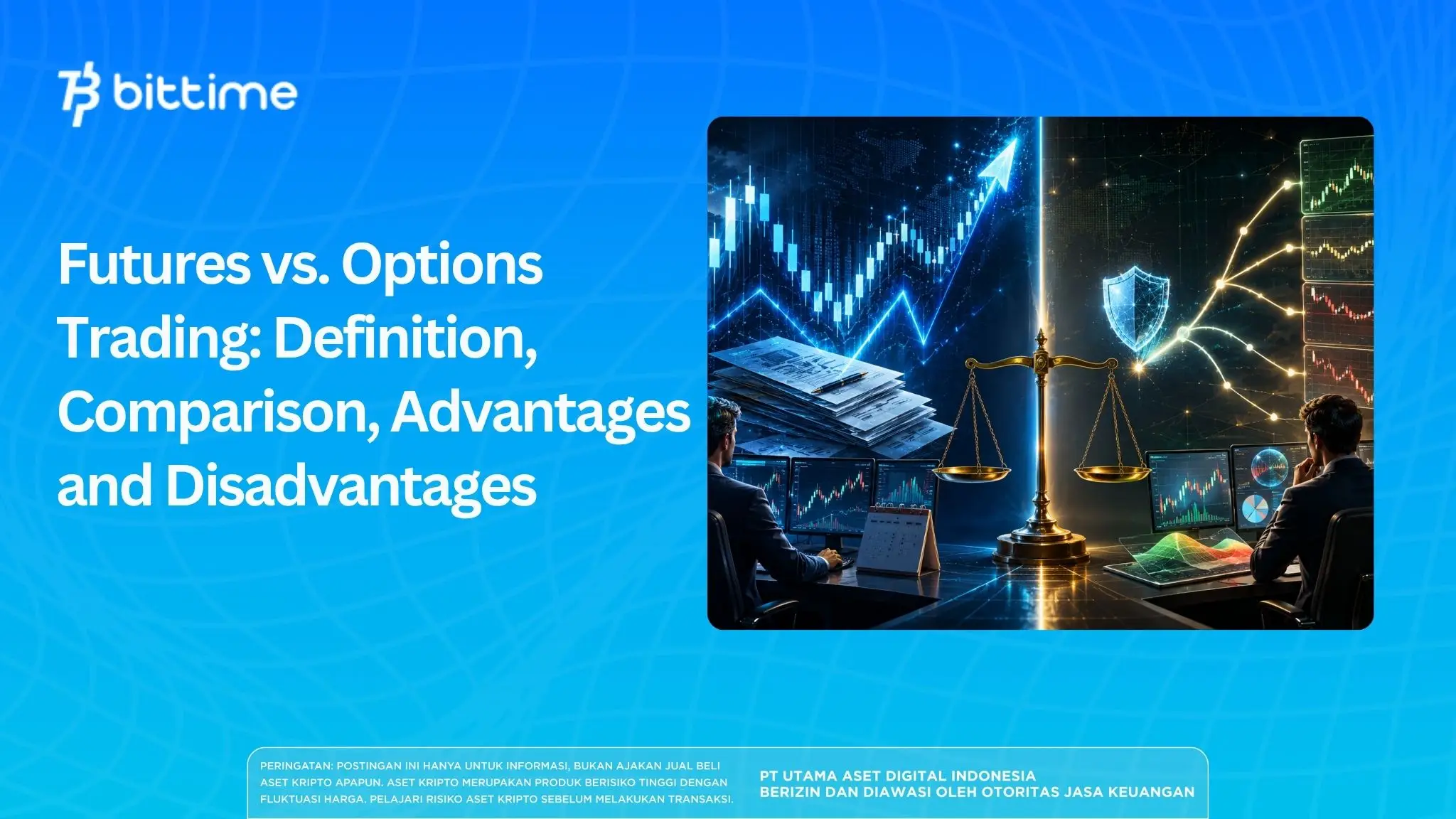
Futures and options are considered derivative instruments because their value follows the underlying asset, such as stocks, indices, commodities, currencies, or crypto assets.
Both can be used to profit from price changes or protect a portfolio from market risk.
Although they look similar, the mechanisms of the two contracts are different.
Futures create obligations for the parties, while options buyers obtain the right to transact without the obligation to execute.
These differences affect capital requirements, potential losses, costs, and position management strategies.
Key takeaways
Futures obligate buyers and sellers to fulfill the contract if the position is not closed before settlement.
The buyer of an option has the right, but not the obligation, to buy or sell an asset at a specified price.
Futures provide more direct price exposure, while options offer more flexible risk structures and strategies.
Definition of futures trading
Definition of futures tradingis the activity of trading commoditiesa contract to buy or sell an asset at an agreed price with settlement at a future date.
Futures contracts have a size, maturity date, settlement method, and underlying asset determined by the exchange.
Traders do not have to pay the full contract value when opening a position.
They put up an initial margin as collateral to meet financial obligations during the position.
The CFTC explains that futures margin is not a down payment on an asset purchase, but rather a performance bond to ensure a trader's ability to meet their obligations.
Read Also: A Complete Guide to Crypto Derivatives Trading in Indonesia
How margin works on futures
Futures positions are recalculated based on market prices daily through a mark-to-market mechanism. Profits are added to the account balance, while losses reduce the margin balance.
If the balance falls below the maintenance margin, the broker can issue a margin call.
Traders must add funds or close positions to meet these requirements. Because the contract value can be significantly greater than the initial capital, losses can exceed the initial margin deposit.
Read Also: How to Avoid Margin Calls in Futures Trading: 5 Risk Management Tips
Definition of options trading
Definition of options trading isA contract trade that gives the buyer the right to buy or sell an asset at a specified price before or at maturity. The agreed-upon price is called the strike price, while the cost of buying the contract is called the premium.
A call option gives the right to buy the underlying asset. A put option gives the right to sell the underlying asset. The buyer can exercise the contract, resell it, or let it expire.
Start your financial journey today. Sign up for Bittime and build your investment portfolio with ease.
Risks of buyers and sellers of options
The maximum loss to an options buyer is usually limited to the premium paid. If the price moves against their expectations, the buyer can let the contract expire worthless.
The position of an options seller carries different risks. The seller receives a premium but is obligated to fulfill the contract if the buyer exercises their option. Naked calls, or calls without ownership of the underlying asset, can even result in theoretically unlimited losses if the asset price continues to rise.
Comparison of futures and options trading

Source : AI
The main difference in futures vs options trading lies in the contractual obligations.Futures holders remain financially obligated as long as the position is not closed, while options buyers can choose not to exercise their rights.
In futures, profits and losses follow changes in the asset price relatively directly.
Options have a more complex value structure because the premium is influenced by the asset price, strike price, remaining time, volatility, and market conditions.
Read Also: Scalping vs. Swing Trading Futures: Which is Better for Beginners?
Differences in costs and capital requirements
Future traders must provide initial margin and maintain a balance above the minimum threshold. Other costs include commissions, exchange fees, and the need for additional funds in the event of a margin call.
In options trading, the buyer pays a premium when opening a position.
The premium value can decrease as the time to expiration gets shorter, even when the asset price hasn't moved much.
Options sellers may also be required to provide margin or collateral.
Difference in expiration time
Futures and options both have expiration dates. However, the consequences of expiration are not always the same.
Open futures contracts can be settled in cash or by delivery of the asset, depending on the product specifications. Many speculators close or roll over their positions before the settlement period.
Options can expire worthless if conditions favorable to the holder are not met. Options that still have value can be sold, exercised, or settled according to the terms of the contract and the exchange.
Read Also: How to Trade Futures on Bittime for Beginners
Advantages and disadvantages of futures trading
The advantages of futures lie in direct price exposure, liquidity in popular contracts, and efficient use of capital through margin.
This instrument is also often used by producers, companies, and investors to lock in commodity prices or protect portfolio value.
The downside is the risk of leverage and the need to maintain margin. Small movements in the underlying asset can result in large changes in the account value.
Traders also need to understand maturity, settlement, contract size, and potential margin calls.
Advantages and disadvantages of options trading
The advantage of options is the flexibility in developing strategies. Traders can structure positions to address increases, decreases, limited movement, or changes in volatility.
For buyers, the risk can be limited to the premium.
Options can also be used as portfolio protection, for example by buying a put when you are worried about an asset price falling.
The downside is more complex pricing. Correctly predicting price direction may not necessarily result in a profit if the movement is too small or occurs too slowly. Options sellers also face significant risk when positions are unhedged.
Read Also: 50 Futures Trading Terms That Beginners Must Understand
Simple examples of futures and options
Suppose an asset is trading at Rp1 million. A futures trader opens a buy position with a contract value of Rp10 million using a margin of Rp1 million.
If the contract value increases by 5%, the gross profit is Rp500,000. However, a 5% decrease also results in a loss of Rp500,000, or half the initial margin.
With options, a trader can buy a call with a strike price of Rp1 million and a premium of Rp100,000. If the price doesn't rise past the breakeven point before expiration, the buyer's loss is limited to the premium.
Which is more suitable for traders?
Futures are more suitable for traders who want direct exposure, understand margin, and are able to actively monitor positions. This instrument requires discipline, as losses can mount rapidly when the market moves against them.
Options can be considered when a trader needs a clear loss limit as a buyer or wants to develop a strategy with multiple market possibilities. However, traders must understand the impact of time and volatility on premiums.
In understanding futures and options trading, there is no instrument that is more automatic safer or more profitable. The choice depends on your goals, knowledge, capital, risk tolerance, and the strategy used.

Maximize your opportunities in both bull and bear markets with Bittime Futures. Sign up and start trading now!
Bittime is a licensed and regulated Digital Financial Asset Trader (PAKD) supervised by Indonesia’s Financial Services Authority (OJK) — where you can buy Bitcoin in Indonesia and hundreds of other crypto assets starting from just Rp10,000. The registration process is fast, secure, and you can get started today.
Track USDT to IDR conversions and monitor your favorite crypto assets in real time. Everything is available in one crypto investment app that you can download for free on the Play Store
Ready to start? Register now on Bittime and execute your investment strategy with a platform trusted by millions of users in Indonesia.
FAQ
What are the main differences between futures and options trading?
Futures create obligations for both buyers and sellers until the contract is closed. Options give the buyer the right, while the seller must fulfill the contract if the right is exercised.
Are futures riskier than options?
Futures can result in losses exceeding the initial margin due to leverage and mark-to-market. However, selling options without protection can also result in significant losses.
Are options losses always limited to the premium?
This limit applies to option buyers. Option sellers can incur losses that are much greater than the premium received.
Can futures and options be used for hedging?
Yes. Futures can be used to lock in a price, while options can hedge a position without requiring the holder to transact the underlying asset.
Are futures and options suitable for beginners?
Both are complex instruments with high risks. Beginners should understand leverage, margin, premiums, expiration, settlement, and loss scenarios before investing real capital.
Disclaimer: The views expressed belong exclusively to the author and do not reflect the views of this platform. This platform and its affiliates disclaim any responsibility for the accuracy or suitability of the information provided. It is for informational purposes only and not intended as financial or investment advice.

.png)