Is FPES Coin Legit or a Scam? Check Identity, Liquidity, and Risk Federal Private Equity System
2026-10-12
Is FPES coin legitimate? The available information is not sufficient to confirm its safety, especially because the address in the market link reviewed differs from the address shown in indexed information from the project's website. The relationship between these two addresses still needs to be clarified.
As of the review conducted on October 12, 2026, the latest liquidity data also could not be verified. Before assessing its prospects, you need to confirm which token is being discussed, understand its trading conditions, and examine the basis for the Federal Private Equity System's claims.
Key Takeaways
- The discrepancy between token addresses must be resolved before market information can be linked to the project's claims.
- FPES liquidity, holder distribution, and technical authorities have not been verified in this review.
- The project's name does not prove government backing, share ownership, or entitlement to dividends.
What Are FPES Coin and the Federal Private Equity System?
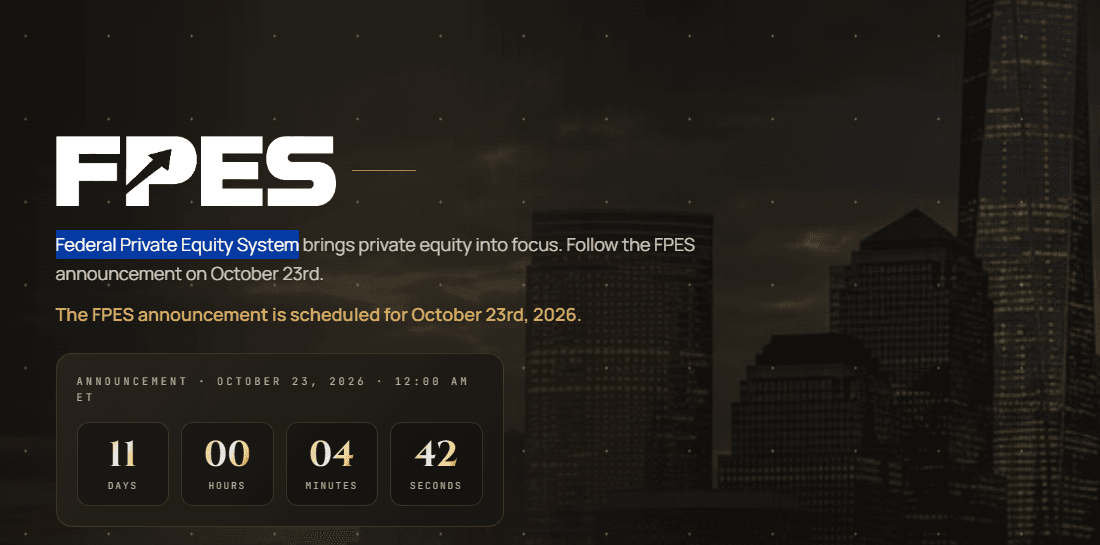
The Federal Private Equity System introduces a concept related to private equity. The website materials mention an announcement on October 23, 2026, while details about participation and distribution still await clarification.
This overview helps readers understand the direction the project operators intend to communicate. However, this review has not found sufficient evidence to confirm the funding structure, investment activities, or the token's relationship to any specific asset.
This matters because buying a token does not automatically give you ownership in a company. Any rights to income or assets must be explained in verifiable terms.
To understand FPES, start with a simple question: what do token holders actually receive? The answer should be based on established functions and rights, not merely on terminology used in promotional materials.
Read also: Is B22 Legit? Check Its Contract, Liquidity, and Risks
Why Does the FPES Token Address Need to Be Checked?
The market link discussed in this article points to the following address on the Solana network:
FLYm6hwvTdHCeiAeHLLdmZKU6kjmDTrwRdTvRvKwpump
Meanwhile, indexed website information displays a different address:
9U1TqP5HMmsBnKnHhjish9Q7gEYViQrgUJ567mB5pump

The difference is apparent from the character strings themselves. However, opening the website directly reveals only limited information, so the address in the search index cannot yet be confirmed as the latest content of the interactive page.
These findings do not establish whether the address changed, another token has a similar name, or some other explanation applies. Without confirmation, it would be premature to call this an official migration or a fake token.
The implication for readers is clear: data for one token does not necessarily apply to another. Price, holder count, and liquidity should always be checked against the same address.
How to Check the FPES Contract Address
On Solana, a token's identity is checked using its mint address, often called the contract address on market pages. The name and logo can help identify an asset, but the full address is the primary reference when comparing tokens.
Follow these steps:
- Copy the full address from the token page you want to check.
- Compare it with the address in the project's latest documentation.
- Open the address in a blockchain explorer.
- Make sure you are comparing the token address, not the pool address.
- Record the date of the check and save evidence of the page used.
This initial check does not require you to buy the token or connect a wallet. If the results do not match, look for a verifiable explanation before continuing your assessment.
Read also: Is USDP Legit or a Scam? Check the Facts About the United States Dividend Program
How to Read FPES Coin Liquidity
FPES liquidity figures for the target address could not be verified in this review. Therefore, this article cannot conclude whether the token's trading is supported by sufficient liquidity.
In general, liquidity indicates how easily an asset can be traded without sharply affecting its price. It should be assessed in relation to the transaction size and trading route being used.
Don't Look Only at the Price on the Chart
The price on a chart may look attractive, but it may not be the average price you receive when selling all your tokens. A transaction that is large relative to available liquidity can move the price during the swap.
This effect of a transaction on price is called price impact. The greater the impact, the more the swap result may differ from an estimate based only on the initial price.
When checking a swap estimate, review the amount of assets you will receive, the fees, and the price impact. Treat the estimate as a snapshot of conditions at the time of checking, not as a guarantee of the outcome of a future transaction.
Distinguish Liquidity, Volume, and Valuation
These three figures often appear together, but they serve different purposes:
- Liquidity indicates the assets available to support trading in a particular pool or route.
- Volume indicates the value of transactions over the observation period.
- Valuation is a calculation of a token's value based on the price and supply used.
High volume does not necessarily mean that large transactions can be executed easily. Likewise, a high valuation does not mean that enough funds are available to buy all the tokens a holder wants to sell.
For a meaningful comparison, record the pool address and the time of observation. Do not combine figures from different days or pools as though they describe the same conditions.
Read also: Is IOF Coin Legit or a Scam? Check the Institutional Oil Fund Data
What Can Holder Distribution Tell You?
Holder distribution shows how token balances are spread across addresses. This information helps assess whether most of the supply is held by a small number of accounts.
However, the address with the largest balance does not necessarily belong to a single investor. It may be associated with a pool, a service's custody account, or another mechanism that must first be identified.
Conversely, one owner may use several wallets. Therefore, the number of addresses does not always indicate the number of independent token holders.
In this review, FPES's largest ownership percentages have not been verified. There is insufficient evidence to claim that its distribution is broad or that it is controlled by particular parties.
Further analysis should explain which accounts are included and excluded. If links between wallets are only suspected, that status should also be stated.
Which Technical Controls Should Be Checked?
In addition to knowing who holds the token, you need to understand which authorities remain enabled for it. Two relevant items are mint authority and freeze authority.
Mint Authority
Mint authority concerns permission to create additional token units. If this authority is permanently revoked, no further tokens can be minted through that authority.
However, revoking this permission does not explain how the existing circulating supply is distributed. Balances held by particular parties still need to be checked separately.
Freeze Authority
Freeze authority allows an authorized party to freeze token accounts according to the program's mechanisms. To determine its status, the review must refer to token data for the correct address.
The status of both authorities for FPES has not been confirmed in this article. This explanation is a guide to reading the data, not a token audit.
Liquidity Locking
A claim that liquidity has been locked requires traceable evidence. The review should cover the relevant pool, the portion of liquidity locked, and the lock's duration.
A label or screenshot alone does not explain all these terms. In addition, locking some liquidity does not eliminate the risk of large token holders selling their holdings.
Read also: Is ATFS Coin Legit? An Analysis of the American Trust Fund System
Is FPES Connected to the U.S. Government or Does It Pay Dividends?
Indexed website materials state that the project is independent and not affiliated with the U.S. government. Therefore, the word “Federal” in its name cannot be taken as evidence that FPES is a government program.
The website also displays an amount of US$3,000 as an illustration and states that payment is not guaranteed. This figure does not prove that every token buyer has an entitlement to receive payment.
If you want to assess dividend claims, check who is obligated to pay and where the funds will come from. The documents should also explain who qualifies to receive payments, the applicable conditions, and how distributions are made.
The term private equity does not, by itself, establish such rights. Likewise, an announcement date is not automatically a payment date or proof that funding is available.
FPES Coin Risks You Should Understand
The first risk is incorrectly linking a token to project information. Readers may think they understand the asset when the data actually refers to a different address.
The next risk concerns limited trading data. Without knowing the pool conditions and balance distribution, it is difficult to assess the ability to sell tokens and the impact of transactions by large holders.
Expectations about the project's benefits also deserve scrutiny. Funding plans or payment illustrations may be mistaken for benefits to which buyers are already entitled.
To keep the assessment objective, separate verified information, statements made by the project operators, and unanswered questions. This ensures that conclusions do not depend on impressions created by the name, website design, or popularity of the discussion.
A lack of information does not automatically prove fraud. However, that same lack of information cannot be used to declare the token safe.
To learn about other crypto assets, you can register on Bittime and review the available asset information before making a decision.
Conclusion
Assessing FPES coin still requires clarity about its identity and verification of technical data. The available evidence does not support a definitive conclusion that the token is either safe or a scam.
Start by confirming the correct address, then check liquidity, holder distribution, and project documents. Use dated data so your decision is not based on information that may have changed.

Bittime is a licensed Digital Financial Asset Trader (PAKD) platform supervised by the Financial Services Authority (OJK) — where you can buy Bitcoin in Indonesia and hundreds of other crypto assets starting from IDR 10,000. Registration is quick and secure, and you can get started today.
Track the conversion rate for USDT to IDR and the real-time price movements of your favorite crypto assets. Everything is available in one crypto investment app that you can download for free from the Play Store.
Ready to get started? Sign up on Bittime now and put your investment strategy into action with a platform trusted by millions of users in Indonesia.
FAQ
Is FPES coin legitimate or a scam?
The information reviewed is not sufficient to reach a definitive conclusion. The address discrepancy still needs to be explained, while checks of market conditions and token controls remain incomplete.
How do I check the FPES contract address?
Compare the full address on the token page, in the project documentation, and in a blockchain explorer. Do not rely on matching names, tickers, or logos.
Has FPES liquidity been locked?
The liquidity-lock status has not been verified in this review. Evidence is needed regarding the pool, the amount or portion locked, and the lock conditions.
Is the Federal Private Equity System connected to the U.S. government?
The website materials state that the project is not affiliated with the U.S. government. Using the word “Federal” does not prove government backing or management.
Does buying FPES grant dividend rights?
Dividend rights have not been established by the documents reviewed. Buying a token does not automatically confer share ownership or guarantee profit distributions.
Disclaimer: The views expressed belong exclusively to the author and do not reflect the views of this platform. This platform and its affiliates disclaim any responsibility for the accuracy or suitability of the information provided. It is for informational purposes only and not intended as financial or investment advice.

.png)