FOMC Split: The Fed's Hawkish Impact on the Rupiah
2026-07-30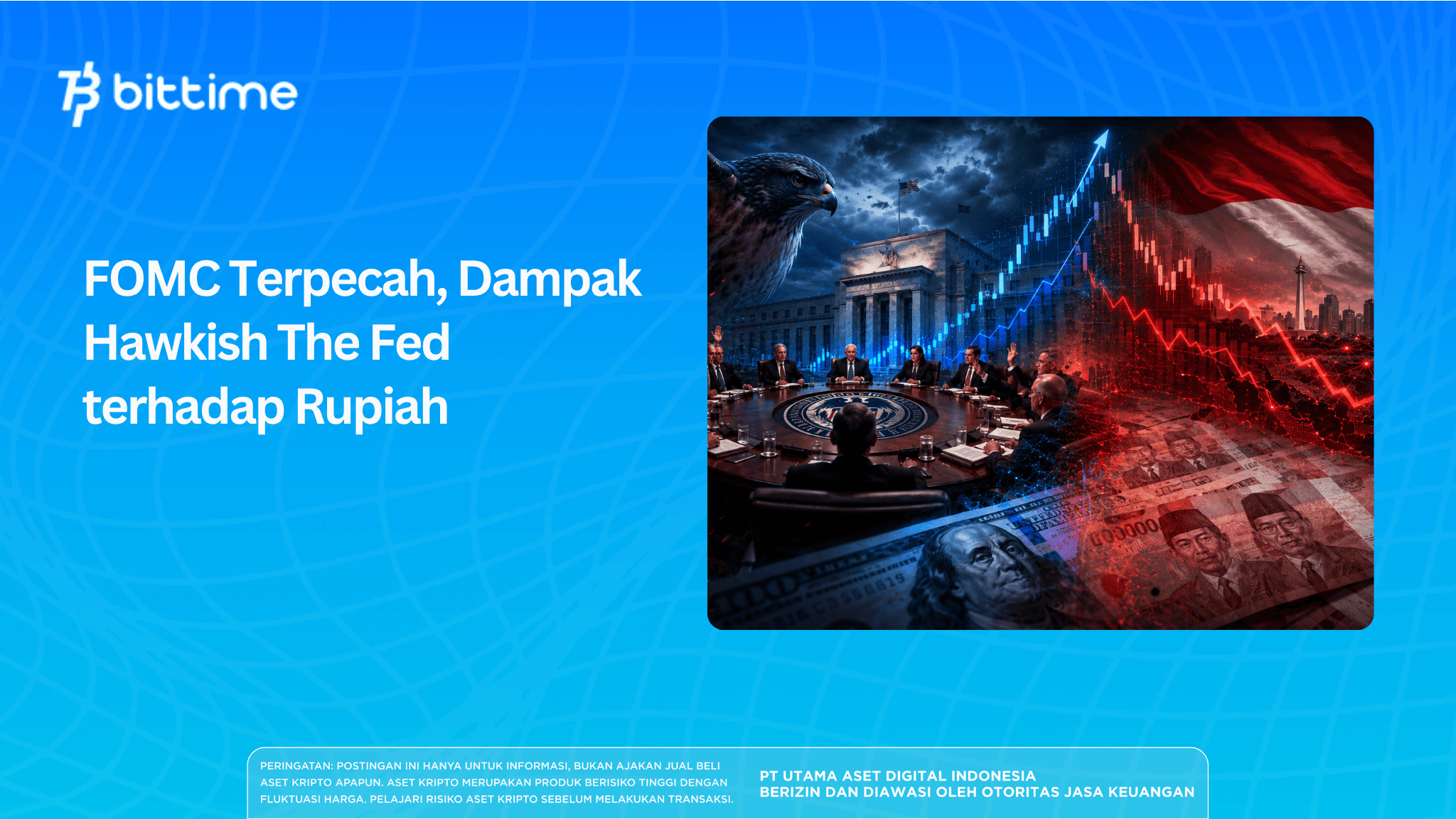
The Federal Reserve again kept its benchmark interest rate unchanged, but the decision did not receive unanimous support. Three officials voted for a 25-basis-point increase because inflation remains above the target.
This split vote has reinforced concerns that the effects of Federal Reserve interest rates on the rupiah and financial markets will not ease anytime soon.
Key Takeaways
- The Fed kept interest rates within the 3.50%–3.75% range, but three FOMC officials favored a 25-basis-point increase.
- The split vote reflects concerns about inflation, particularly after energy price pressures and supply disruptions intensified.
- The rupiah may receive temporary support from a weaker U.S. dollar, but it remains vulnerable if expectations of another rate increase strengthen.
Why Were FOMC Officials Divided?
The Federal Open Market Committee decided to keep interest rates unchanged in a 9–3 vote. Most officials favored maintaining the current policy, while Beth Hammack, Neel Kashkari, and Lorie Logan supported a 25-basis-point increase.
The disagreement arose because Fed officials do not assess economic risks from exactly the same perspective. Officials who voted to hold rates believe that the current policy is already sufficiently restrictive.
Rising government bond yields have also tightened financial conditions without requiring an increase in the benchmark interest rate.
Officials who supported an increase placed greater emphasis on inflation risks. U.S. economic activity continues to expand at a solid pace, capital investment remains strong, and the labor market has not shown a sharp deterioration. Under these conditions, price pressures may persist for longer.
Higher energy prices resulting from the Middle East conflict have compounded the problem. Energy affects transportation, production, logistics, and consumer goods costs. If these pressures spread, inflation may find it increasingly difficult to return to the 2% target.
What Does a Hawkish Federal Reserve Policy Mean?
A hawkish policy indicates that a central bank is prioritizing inflation control. This stance may take the form of rate increases, delayed cuts, or statements that rates need to remain higher for longer.
The Fed did not raise interest rates at its latest meeting. However, the three votes in favor of an increase show that further tightening has not been ruled out. The market therefore needs to consider the possibility that rates will remain high or be raised again if inflation worsens.
Source: AI-Generated Image
Hawkish signals generally affect markets through several channels:
- U.S. bond yields increase;
- dollar-denominated assets become more attractive;
- borrowing costs for companies and consumers rise;
- liquidity available to risk assets declines;
- emerging-market currencies come under pressure.
Even so, market reactions are not always straightforward. The U.S. dollar weakened after the latest decision because market participants reduced their bets on a rate increase at the next meeting.
To follow developments involving the Fed and their impact on digital asset markets, you can register with Bittime and read the latest economic and crypto news updates. Use this information as part of your analysis, not as the sole basis for a trading decision.
Why Did the U.S. Dollar Weaken Despite Hawkish Fed Signals?
At first glance, this movement appears contradictory. Three officials favored a rate increase, yet the U.S. dollar fell by around 0.3% after the decision was announced.
The market does not assess the vote alone. Investors also consider the press conference, changes in bond yields, and the likelihood of decisions at the next meeting. The Fed chair highlighted the rise in Treasury yields, which has already tightened financial conditions.
When long-term yields rise, mortgage, corporate, and government financing costs also increase. These conditions can perform part of the function of a rate hike. Investors may therefore conclude that the Fed does not need to raise rates again immediately.
The dollar weakened because expectations of a September rate increase declined. However, the weakness may not be sustained. Inflation data, employment figures, energy prices, and developments in the conflict could change the market’s direction again.
Read also: USDT Price Against the Rupiah After a Fed Rate Cut: Its Impact on the Crypto Market
The Impact of Federal Reserve Rate Increases on the Rupiah
Federal Reserve policy affects the rupiah through capital flows and the appeal of the U.S. dollar. When U.S. interest rates or yields rise, global investors may shift funds into U.S. bonds that offer higher returns with relatively low risk.
Demand for the dollar then increases, while emerging-market currencies face selling pressure. For Indonesia, these conditions can affect the rupiah exchange rate through several mechanisms.
Foreign Capital Inflows May Decline
Investors may reduce their holdings of Indonesian stocks or bonds when the yield differential with the United States narrows. Capital outflows create additional demand for dollars in the domestic market.
Import Costs May Rise
A weaker rupiah makes imported goods more expensive. The impact can be seen in industrial raw materials, machinery, food, energy, and certain consumer goods.
Bank Indonesia’s Policy Space Narrows
Bank Indonesia needs to balance rupiah stability, inflation, and economic growth. When the Fed remains hawkish, the scope for lowering the BI Rate becomes more limited because cutting too quickly could intensify pressure on the exchange rate.
On July 29, 2026, JISDOR stood at around Rp18,087 per U.S. dollar. After the dollar weakened following the Fed’s decision, the rupiah briefly gained room to strengthen in the offshore market. However, geopolitical pressure and oil prices continued to limit its appreciation.
Indonesia is an oil-importing country. Higher oil prices can increase demand for foreign currency and raise energy import costs. Therefore, a weaker dollar may not be sufficient to support a sustained appreciation of the rupiah.
Read also: The Impact of a Fed Rate Cut on Bitcoin Prices in 2026: What You Need to Know
How U.S. Interest Rates Affect the Stock Market
High interest rates can put pressure on stock valuations because investors use a higher discount rate to calculate the value of a company’s future earnings. Technology stocks and companies with long-term growth projections are generally more sensitive.
Companies with substantial debt also face higher interest expenses. These costs can reduce profits, delay expansion, or put pressure on cash flow.
However, the impact varies across sectors. Banks may benefit from interest margins, but credit quality can deteriorate if borrowers struggle to make repayments. Export-oriented companies may benefit from a stronger dollar, while businesses that depend on imported raw materials face higher costs.
The Impact of a Hawkish Fed on Gold Prices
A hawkish stance generally puts pressure on gold. The precious metal does not pay interest, so its appeal may decline when bonds offer higher yields.
A stronger U.S. dollar also makes gold more expensive for buyers using other currencies. However, interest rates are not the only factor influencing gold prices.
Geopolitical conflict, inflation concerns, central bank purchases, and demand for safe-haven assets can support gold. As a result, gold may still rise despite a hawkish Fed if global uncertainty increases sharply.
Read also: FOMC Meeting: What It Is, the Latest Developments, and Its Impact on Crypto
Its Impact on Bitcoin and the Crypto Market
Crypto assets are sensitive to changes in global liquidity. When interest rates are high, investors tend to become more selective about taking risk. Funds may shift toward instruments that offer stable returns.
Bitcoin and other crypto assets may face volatility when expectations of rate increases strengthen. Conversely, a weaker dollar and the possibility of policy easing can improve sentiment.
Investor Strategies for Navigating Federal Reserve Interest Rates
Investors do not need to overhaul their entire portfolio based on a single FOMC meeting. The main focus should be on changes in policy trends and economic data.
Several steps may be considered:
- Monitor inflation, employment, Treasury yields, and the dollar index.
- Maintain diversification across stocks, bonds, gold, cash, and risk assets.
- Reduce the use of leverage when volatility increases.
- Select companies with healthy cash flow and manageable debt levels.
- Avoid impulsive decisions following short-term market movements.
- Adjust position sizes to match risk tolerance and the investment horizon.
Investors also need to monitor Bank Indonesia’s policies. Interest rate differentials, foreign exchange intervention, foreign reserves, domestic inflation, and the trade balance will all help determine the rupiah’s resilience.
Read also: Updated FOMC Meeting Schedule from January to December 2026
Conclusion
The divided FOMC vote shows that inflationary pressure remains a serious concern. Although the majority kept rates within the 3.50%–3.75% range, the three officials who favored a 25-basis-point increase strengthened the Fed’s hawkish signal.
The impact on the rupiah is not always immediate. The dollar’s weakness after the latest decision may provide short-term support. However, the rupiah still faces risks from high Treasury yields, capital flows, oil prices, and geopolitical uncertainty.
Investors should not focus solely on the interest rate decision. Consider the direction of inflation, statements from Fed officials, dollar movements, Bank Indonesia’s response, and global liquidity conditions before making a decision.

Let’s start trading crypto with the largest assets, such as BTC/IDR and ETH/IDR, right in the Bittime app.
Bittime is a licensed Digital Financial Asset Trader (PAKD) platform supervised by Indonesia’s Financial Services Authority (OJK) — where you can buy Bitcoin in Indonesia and hundreds of other crypto assets starting from Rp10,000. Registration is fast and secure, and you can get started today.
Monitor the USDT-to-IDR conversion and track the price movements of your favorite crypto assets in real time. Everything is available in one crypto investment app that can be downloaded for free from the Play Store.
Ready to get started? Register with Bittime now and execute your investment strategy on a platform trusted by millions of users in Indonesia.
FAQ
Why Did the Fed Keep Interest Rates Unchanged?
Most officials believe the current policy is already sufficiently restrictive and that rising bond yields have further tightened financial conditions. They will continue monitoring inflation and the labor market before making the next decision.
Why Did Three FOMC Officials Want to Raise Rates?
They believe inflation remains too high and economic activity is still strong. Higher energy prices also increase the risk that price pressures will persist for longer.
Does a Hawkish Policy Always Weaken the Rupiah?
Not always. The impact depends on market expectations, Bank Indonesia’s policies, capital flows, commodity prices, and domestic conditions. However, a hawkish stance generally increases pressure on emerging-market currencies.
How Do Federal Reserve Interest Rates Affect Gold?
High interest rates and yields can put pressure on gold because the precious metal does not generate interest. However, geopolitical conflict and demand for safe-haven assets can limit the decline.
What Should Investors Monitor After an FOMC Meeting?
Investors should monitor U.S. inflation, labor market data, Treasury yields, the dollar index, oil prices, and comments from Fed officials. Domestically, watch the BI Rate, JISDOR, inflation, and foreign capital flows.
Disclaimer: The views expressed belong exclusively to the author and do not reflect the views of this platform. This platform and its affiliates disclaim any responsibility for the accuracy or suitability of the information provided. It is for informational purposes only and not intended as financial or investment advice.

.png)