Finance Is: Definition, Functions, Types, Goals, and How to Manage It
2026-08-11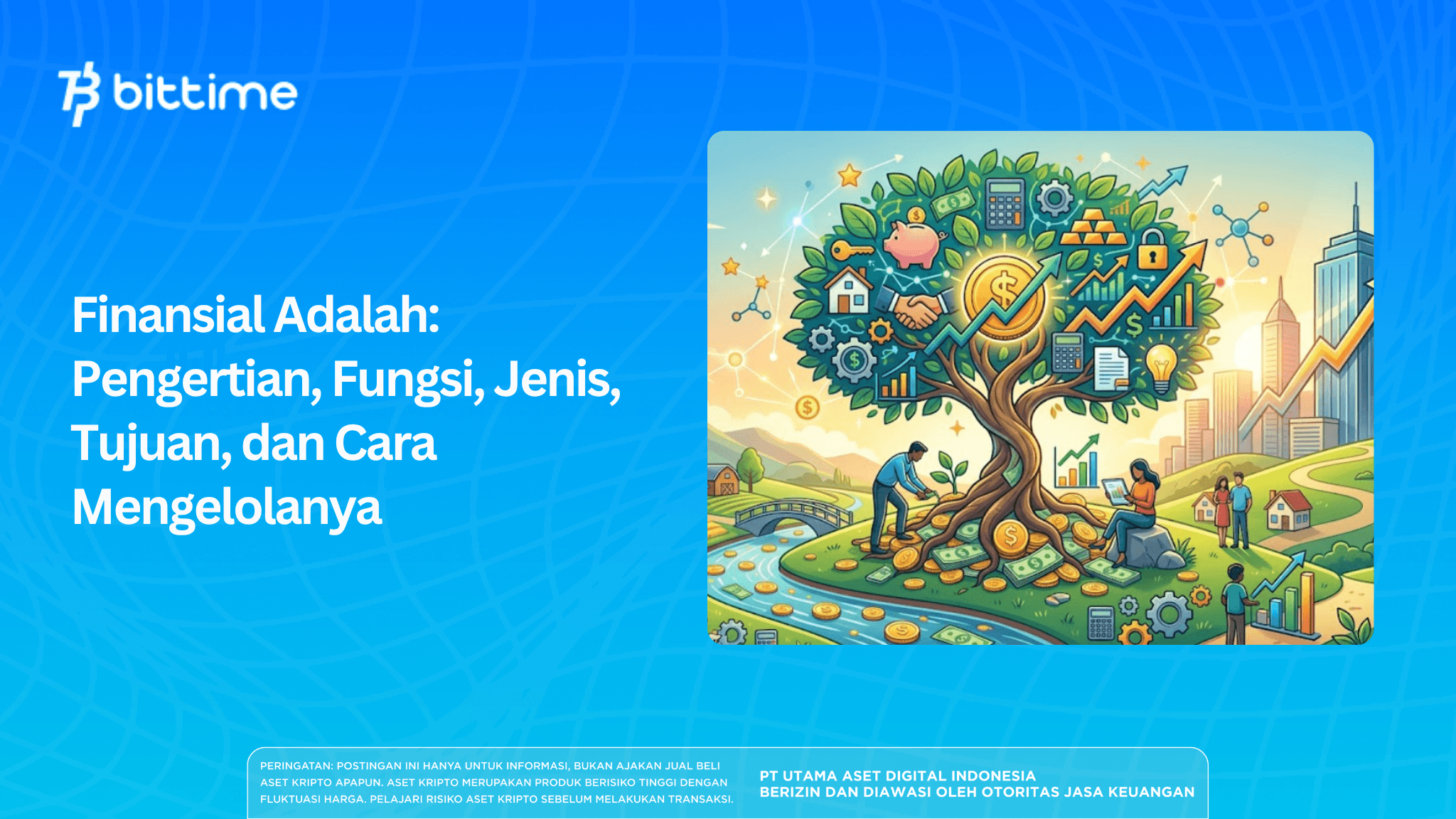
As many as 22.69 million Indonesians were recorded as crypto asset investors as of June 2026, according to data from the Financial Services Authority (OJK). This figure jumped from 14.16 million in the same period the previous year.
This level of growth reveals one simple reality: more and more people are putting their money into various investment instruments, but not everyone truly understands what finance is as a whole.
Yet strong financial literacy is the main foundation so that decisions about money — whether saving, trading stocks, or entering crypto assets — do not end in losses. This article thoroughly discusses the definition of finance, its important aspects, types, and how to manage it realistically.
Key Takeaways
- Finance covers the management of income, investment, risk, and debt — not just about "having a lot of money".
- There are four types of finance: individual, business, government, and international, each with different levels of complexity.
- Good financial literacy helps in choosing investment instruments correctly, including crypto assets that are increasingly popular among Indonesians.
Finance Is: Definition and Its Difference from Money Management
According to the Indonesian Dictionary (KBBI), finance refers to everything related to money. But that definition is only the surface.
In practice, finance covers a much broader field than daily transactions — from how a person, company, or even a country manages monetary resources over time, including investment decisions, debt, and risk protection.
The difference from "money management" is subtle, but important to understand. Money management leans more toward the daily activity of handling money, such as receiving salary, shopping, and paying bills. Finance includes all of that plus long-term planning: investment, retirement funds, and strategies for facing market risks.
Why does this topic feel sensitive to many people? Because money touches almost every aspect of life, from a sense of security to social status. If finance is mismanaged, the impact is not only on oneself, but also on family and people closest to them.
If you are starting to take finance management seriously, the most realistic step is to choose instruments that match your risk profile. For those interested in including digital assets in their portfolio, registering at Bittime can be a safe starting point because the platform is licensed and supervised by the OJK.
Important Aspects and Types of Finance You Need to Understand
Six Aspects That Shape Financial Condition
A person’s financial condition is not determined by a single factor alone. There are six interrelated aspects:
- Income and expenses — the foundation of all financial calculations. If expenses exceed income, that is a danger signal.
- Investment — different from saving. Money in savings tends to stagnate, while investments (stocks, mutual funds, crypto assets) have growth potential even though the risks are also higher.
- Emergency fund — serves as a buffer before starting to invest, so you are not forced to liquidate assets when prices are falling.
- Risk management — through insurance or portfolio diversification, to anticipate market fluctuations and credit risk.
- Retirement planning — often neglected even though it is crucial, because no one can work productively forever.
- Financial literacy — the ability to understand financial products before using them. OJK defines financial literacy as a series of processes to improve the knowledge, skills, and confidence of the public so they can manage personal finances better.
Read Also: 7 Reasons You Should Start Investing in Tokenized Stocks
Four Types of Finance Based on Scope
Finance is not only about individuals. There are four types based on scale and complexity:
- Individual finance — management of personal salary and expenses, from monthly planning to long-term planning.
- Business finance — company financial planning, covering cash flow, receivables, and working capital.
- Government finance — management of public funds, monetary and fiscal policies for the welfare of the nation.
- International finance — involving two or more countries, such as cross-border trade and inter-country economic policies.
Read also: Futures Open Interest: How to Read Market Trends and Sentiment
How to Manage Finance Healthily in the Digital Asset Era
Managing finance does not require a large salary, but it does require consistent habits. Here are realistic steps that can start being applied:
- Create a priority-based budget. Separate basic needs, savings, and investment allocation from the beginning of the month, not from leftover money at the end of the month.
- Build an emergency fund before aggressive investing. Ideally equivalent to 3-6 times monthly expenses, so emergencies do not force you to sell assets at a loss.
- Diversify investment instruments. Do not put all your money in one basket — combine conventional instruments such as mutual funds or stocks with digital assets that are increasingly recognized as a distinct asset class.
This trend is not mere speculation. Cointelegraph notes that momentum from crypto ETFs, stablecoins, and asset tokenization is expected to strengthen further throughout 2026, driving digital assets to become more integrated into the mainstream financial system.
In Indonesia itself, a similar trend is reflected in the number of crypto asset investors that continues to rise every month according to OJK records. - Monitor and evaluate regularly. Recheck financial allocation every few months, adjust to changes in income, life goals, or market conditions.
- Improve literacy before adding risk. Understand first how an instrument works and its risks before placing a large amount of funds into it.
Read Also: How to Invest in Global Stocks with a Small Amount of Capital Through Tokenized Stocks
Conclusion
Finance is more than just the amount of money in a bank account. This concept covers how to manage income, investment, risk, and preparation for the future comprehensively, whether for individuals, businesses, or countries.
Understanding this concept becomes important capital amid the increasingly diverse choices of financial instruments today, including digital assets that are increasingly popular among Indonesians.
The earlier healthy financial habits are built, the greater the chance of achieving stable financial conditions in the future.

Check the price of Bitcoin (BTC), Ethereum (ETH), XRP, Solana (SOL), GRAM, and BNB as well as leading memecoins DOGE. You can trade directly on Bittime!
Bittime is a Digital Financial Asset Trader (PAKD) platform licensed and supervised by the Financial Services Authority — a place where you can buy Bitcoin in Indonesia and hundreds of other crypto assets starting from Rp10,000. The registration process is fast, secure, and can be started today.
Monitor the conversion of USDT to IDR and the price movements of your favorite crypto assets in real-time. Everything is available in one crypto investment app that can be downloaded for free on the Play Store.
Ready to start? Register now at Bittime and execute your investment strategy with a platform already trusted by millions of users in Indonesia.
FAQ
What is the difference between finance and money management?
Money management refers to the activity of handling daily money, while finance covers a broader scope such as investment planning, risk management, and long-term asset development.
Why is financial literacy important?
Financial literacy helps a person make more mature money decisions and avoid losses due to products that are not understood. Research published in the Journal of Behavioral and Experimental Finance even notes that good crypto literacy can reduce the risk of financial losses by up to 19 percent.
Are crypto assets part of financial planning?
Crypto assets can be one of the instruments in a financial portfolio, as long as the allocation is adjusted to the risk profile and traded through an OJK-licensed platform such as Bittime.
How to start financial planning from zero?
Start by recording income and expenses, building an emergency fund, then gradually entering investment instruments according to each person’s risk tolerance.
Disclaimer: The views expressed belong exclusively to the author and do not reflect the views of this platform. This platform and its affiliates disclaim any responsibility for the accuracy or suitability of the information provided. It is for informational purposes only and not intended as financial or investment advice.

.png)