CLARITY Act and DTCC: Crypto's Decisive Week July 14–16?
2026-07-13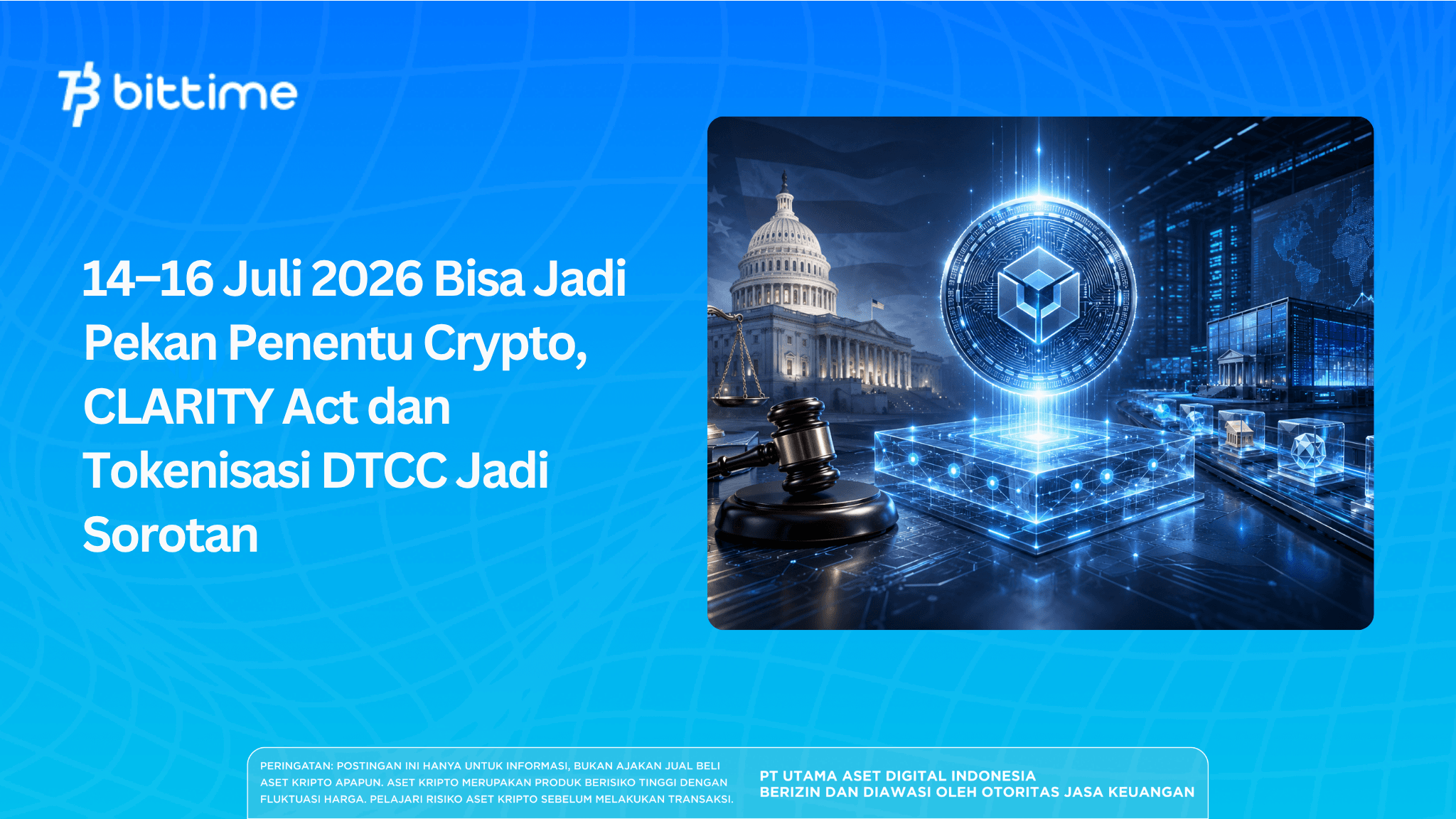
The period from July 14–16, 2026, has the potential to be one of the most important windows for the digital asset market this year.
Investors are focusing on developments regarding the CLARITY Act in the U.S. Senate and the DTCC’s asset tokenization production test, scheduled for July 15.
Key Takeaways
- The CLARITY Act has passed the U.S. House and Senate Banking Committees, but has not yet received final approval from the full Senate.
- DTCC is targeting a limited production test of asset tokenization on July 15, 2026, before a broader service launch in October.
- These two developments may strengthen the legitimacy of the crypto industry, but they will not automatically increase the price of Bitcoin or other real-world asset tokens.
Why is July 14–16, 2026 Considered Important for Crypto?
There are two major catalysts close together in mid-July 2026.
First, the United States Senate is back in session, with the CLARITY Act approaching a more decisive stage. The bill has been placed on the Senate legislative calendar after being approved by the Banking Committee in May 2026.
Second, DTCC is targeting a soft launch of its tokenization service on July 15. This phase is designed to test digitally represented traditional assets in a limited production environment.
This combination of regulation and infrastructure explains why market participants consider this week potentially crucial. The CLARITY Act addresses legal certainty, while the DTCC demonstrates that tokenization is moving from experimentation to institutional use.
However, the term “decisive week” doesn’t mean the final outcome is certain. There is no guarantee that the final vote on the CLARITY Act will take place on July 14–16. The legislative schedule is still subject to change due to negotiations, amendments, and other political priorities.
Read also: AI Predicts XRP Price If Clarity Act Fails: Sideways or Crash?
What is the CLARITY Act Crypto?
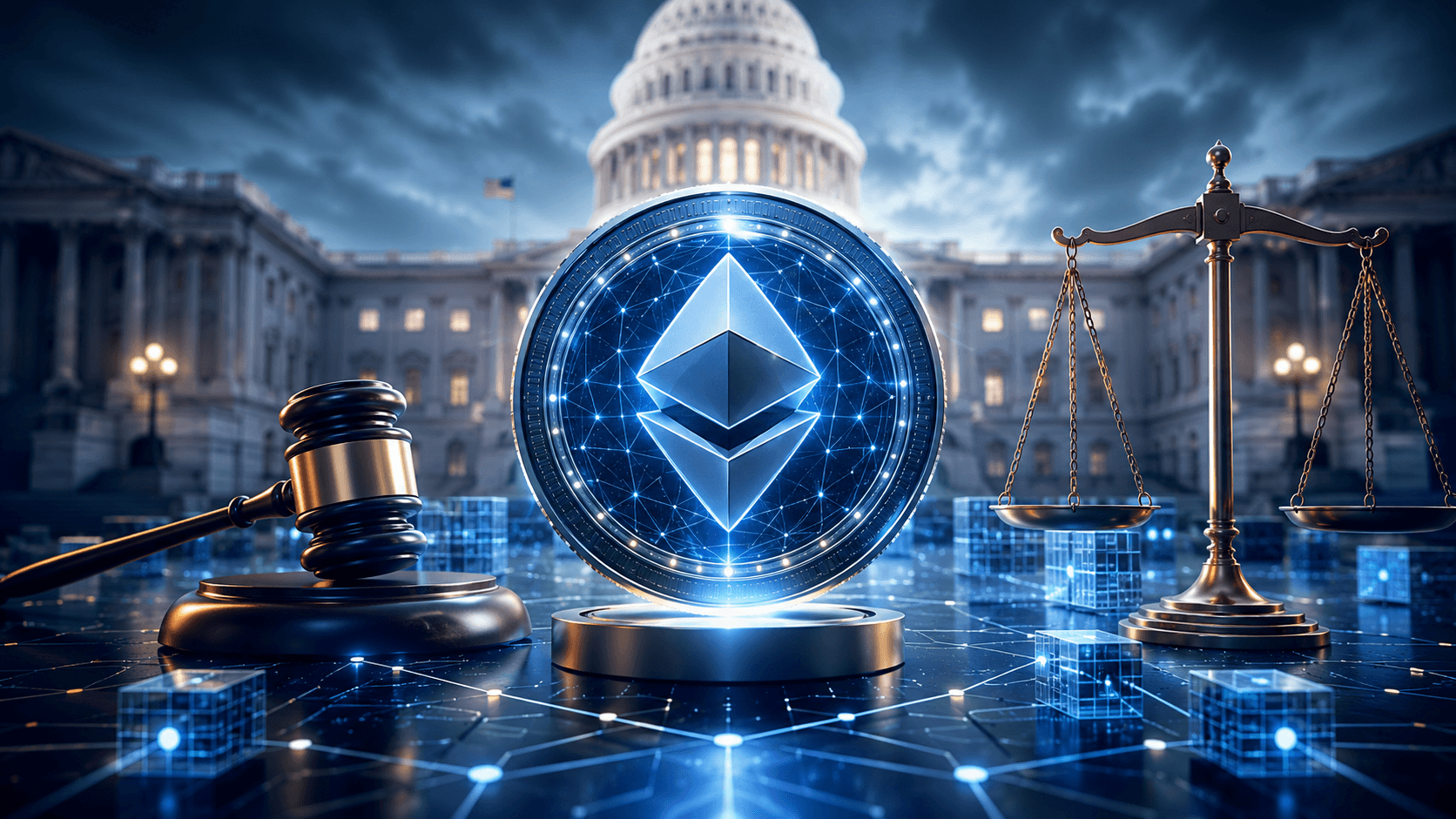
The CLARITY Act is a draft framework for the digital asset market structure in the United States. Its purpose is to clarify who oversees crypto assets and activities, specifically between the Securities and Exchange Commission (SEC) and the Commodity Futures Trading Commission (CFTC).
Sumber AI Generated Image
One of the biggest challenges facing the US crypto industry has been the lack of clarity regarding classification. A token might be viewed as a security by one regulator, but treated as a commodity or other type of digital asset by another market participant.
This uncertainty affects:
- The process of listing tokens on the exchange.
- Company registration obligations.
- Consumer protection.
- Spot trading supervision.
- Token issuer activities.
- Decentralized finance protocol operations.
- Tokenization of stocks, bonds, and other assets.
The CLARITY Act seeks to establish clearer jurisdictional boundaries while establishing rules for companies offering digital asset trading, custody, brokerage, and services.
To stay up to date on US regulatory developments, asset tokenization, and crypto market news, you can register at Bittime and check for relevant updates.
Use the latest information as research material and avoid taking positions based solely on schedule speculation.
What are the key elements of the CLARITY Act?
1. Division of Authority between the SEC and the CFTC
This bill seeks to define when digital assets are securities and when they can be treated as digital commodities.
This clarity is crucial because the SEC and CFTC have different rules, authorities, and supervisory approaches. Without clear definitions, companies could face legal action even if they previously believed they were following the correct interpretation of the regulations.
2. Rules for Stablecoin Rewards
One of the most controversial parts relates to stablecoin yields.
The version under discussion limits yield payments to users holding stablecoins passively. However, incentive programs tied to specific transaction activity could still be permitted.
Traditional banks believe stablecoin yields could attract deposits away from banks. The crypto industry argues that overly broad bans could stifle competition and innovation in digital payments.
3. Anti-Money Laundering
Digital commodity exchanges, brokers, and dealers may be treated as financial institutions under the Bank Secrecy Act.
Consequently, companies must carry out customer identification processes, transaction monitoring, suspicious activity reporting, and money laundering risk checks.
4. Definition of Decentralized Finance
The CLARITY Act also attempts to determine when a platform is truly decentralized.
Protocols that can still be controlled by certain parties—for example, through special access, the ability to block users, or hidden administrative rights—can still be treated as financial institutions that are required to comply with certain rules.
5. Treatment of Asset Tokenization
Placing stocks or bonds on the blockchain does not make those instruments exempt from securities laws.
Tokenized securities essentially remain subject to the same protections and regulations as their underlying assets. This approach is important because tokenization changes the recording and settlement technology, not the legal character of the instrument.
Read also: Understanding the CLARITY Act and Its Impact on DeFi Developers in the United States
What is the Current Status of the CLARITY Act?
The CLARITY Act was approved by the United States House of Representatives on July 17, 2025, by a vote of 294 to 134. The Senate Banking Committee then advanced the bill on May 14, 2026, by a vote of 15 to 9.
The bill is then placed on the Senate legislative calendar so that it is eligible for consideration by the full membership.
However, the CLARITY Act is not yet law. The bill still requires full Senate approval, alignment of legislative versions if there are differences, and presidential approval.
A number of issues have not yet been fully resolved, including:
- Stablecoin yields.
- Anti-money laundering obligations.
- Treatment of DeFi.
- Conflict of interest of government officials.
- The limits of the authority of the SEC and CFTC.
- Retail investor protection.
Bipartisan support at the committee level is a positive sign, but the two Democratic senators who supported the committee stage have not guaranteed they will vote the same way in a full session without additional changes.
Recent reports suggest a new version of the bill could emerge as early as the week of mid-July, while Senate floor debate could potentially begin as early as the week of July 20. This means that the July 14–16 period is more accurately described as a negotiation and expectation-building phase, rather than a final, confirmed vote.
New to crypto investing? Bitcoin (BTC) and Ethereum (ETH) are among the most popular starter cryptocurrencies to explore and trade on Bittime.
What is DTCC Tokenization?
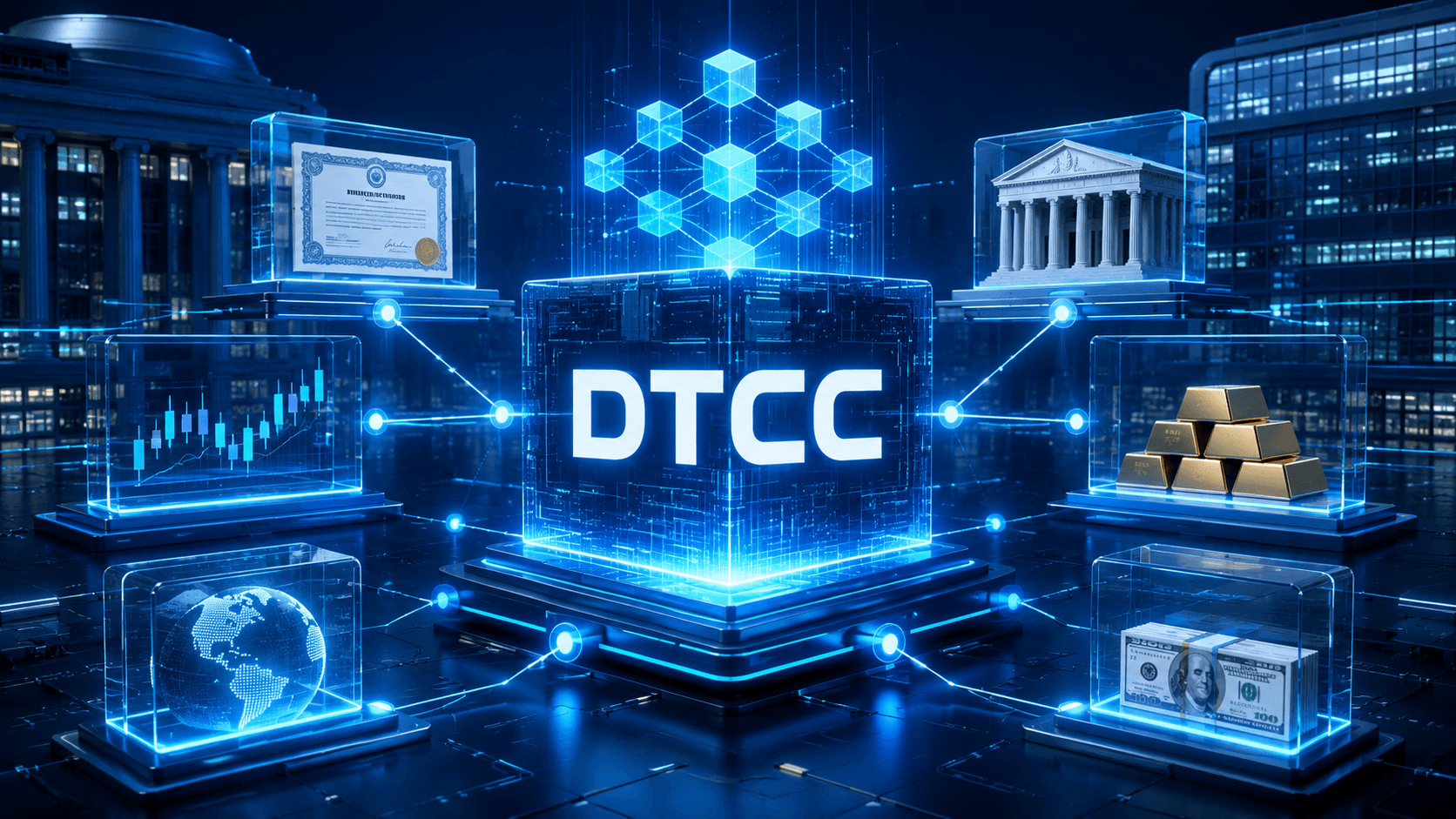
The DTCC or Depository Trust & Clearing Corporation is a vital part of the post-trade infrastructure of the United States financial markets.
Through its subsidiary, DTC, the organization provides custody and asset servicing for over US$114 trillion in securities. By 2025, all DTCC subsidiaries will process approximately US$4.7 quadrillion in securities transactions.
Sumber AI Generated Image
DTCC tokenization is a service that allows assets stored in DTC to be represented in the form of digital tokens.
These tokens still represent the same ownership rights, investor protections, and economic benefits as traditional assets. The difference lies in the infrastructure for recording, transferring, and managing the assets.
The types of assets included in the initial scope include:
- The company's shares are in the Russell 1000 index.
- Exchange-traded funds that track major indexes.
- United States government debt securities.
- Treasury bills, notes, and bonds.
This coverage is supported by a no-action letter from the SEC that gives DTCs three years to operate tokenization services under control.
Read also: Will the Clarity Act Have a Major Impact on the Crypto Market in 2026?
What Will Happen on July 15, 2026?
DTCC has scheduled a soft launch for tokenization on July 15, 2026. This phase will not be a mass launch for all retail investors.
Initial testing focused on limited production transactions to demonstrate that real-world assets can be tokenized, moved, and managed through digital infrastructure without eliminating the certainty of ownership or protection of traditional markets.
DTCC previously stated that limited production transactions would begin in July, with a more comprehensive service targeted for launch in October 2026.
More than 50 companies are involved in the service development working group. Participants include asset managers, banks, custodians, exchanges, blockchain technology providers, trading firms, and digital asset platforms.
The involvement of major institutions demonstrates that this project isn't just a blockchain company experiment. Traditional financial infrastructure is testing how to integrate distributed ledger technology into systems that already handle large-scale transactions.
Read also:Global AI Sell-Off Impact: Netweb & E2E Shares Plunge Sharply
How Does DTCC Tokenization Affect Crypto?
1. Strengthening the Narrative of Real World Assets
Tokenization allows traditional assets such as stocks, bonds, and debentures to be represented on a blockchain-based system.
DTCC's move could strengthen confidence that real world assets It's not just a speculative narrative. The largest market institutions are starting to test the use of tokens in production environments.
2. Increasing the Legitimacy of Blockchain Technology
DTCC's involvement demonstrates that blockchain technology can be used for capital market needs, not just cryptocurrency trading.
Benefits sought include:
- More efficient transaction settlement.
- Simpler data reconciliation.
- Ownership transparency.
- Corporate actions programming.
- Faster collateral mobility.
- Potential for interoperability between systems.
3. Opening Opportunities for Multi-Chain Infrastructure
DTCC targets services that can operate in a multi-chain environment. This creates opportunities for blockchains, oracles, custodians, and interoperability providers.
However, investors should not immediately conclude that all blockchains or RWA-related tokens will generate economic benefits. The network selection, fee model, revenue sharing, and usage of the native token still determine the actual value.
4. Connecting TradFi and DeFi
Tokenized assets can open up wider use opportunities, for example as collateral, settlement instruments, or assets in digital markets.
This integration must still maintain legal compliance, ownership verification, cybersecurity, privacy, and risk management. Institutional infrastructure will not sacrifice certainty of settlement for the sake of decentralization.
Could the CLARITY Act and DTCC Trigger a Crypto Rally?
Both can improve sentiment, but do not guarantee a price increase.
The CLARITY Act has the potential to reduce legal uncertainty. Regulatory clarity could encourage companies to launch products, allocate capital, and expand crypto services in the United States.
The DTCC tokenization demonstrates progress on the institutional adoption front. If the production test is successful, the market could see it as validation of RWA's growth.
However, the prices of Bitcoin, Ethereum, and altcoins are still influenced by:
- Global liquidity conditions.
- Interest rate policy.
- ETF cash flow.
- The strength of the US dollar.
- Derivatives market leverage.
- Geopolitical tensions.
- Realization of investor profits.
- Expectations that have gone into the price.
Markets can also experience patterns, buy the rumor, sell the news. Prices rise before the event due to speculation, then fall when the official announcement produces no additional surprises.
Read also: $10,000 Investment in Intel Early 2026: How Much Will It Be in July 2026?
What Tokens Have the Potential to Gain Attention?
The tokenization narrative can increase interest in several project categories:
- Blockchain that supports institutional asset issuance.
- Protokol real world assets.
- Oracle infrastructure.
- Interoperability services.
- Digital asset custodian.
- Stablecoin for transaction settlement.
- On-chain identity and compliance platform.
Market attention doesn't equate to actual adoption. Investors need to assess whether a project truly has integration, revenue, users, or a technical role in the tokenization ecosystem.
Using an institutional logo, sharing a vague partnership narrative, or simply using the term RWA is not enough to demonstrate fundamental value.
Why Is Crypto Regulation Important for Investors?
Clear regulations can help investors understand their rights, risks, and who is responsible when problems arise.
A good legal framework can strengthen:
- Customer asset storage standards.
- Transparency of reserves and financial reports.
- Prevention of market manipulation.
- Handling conflicts of interest.
- Consumer protection obligations.
- Procedures when a platform goes bankrupt.
- Monitoring insider trading activities.
- Asset classification certainty.
Legal clarity can also reduce the risk of companies abruptly halting services due to regulatory action.
However, regulation doesn't eliminate all risks. Investors can still experience losses due to volatility, mismanagement, technological failures, or poor investment decisions.
Indicators to Watch on July 14–16
Investors should not just follow social media posts. Monitor verifiable developments, including:
- Publication of the latest text of the CLARITY Act.
- Announcement of the official Senate schedule.
- Support or rejection of key senators.
- Changes to stablecoin rewards terms.
- Technical details of the DTCC production test.
- Type of assets and networks used.
- Statement by DTCC working group participants.
- Respons Bitcoin, Ethereum, dan token RWA.
- Trading volume and open interest.
- Crypto ETF inflows or outflows.
Read also: Can Ethereum Beat Bitcoin in Q3 2026?
Conclusion
The period from July 14–16, 2026, is worth noting as it brings together two major developments: continued negotiations on the CLARITY Act for crypto and the soft launch of DTCC’s tokenization on July 15.
The CLARITY Act could establish a division of regulatory authority, set rules for platforms, and provide clearer protections for investors. However, the bill has not yet become law, and the schedule for the final vote is still subject to change.
Meanwhile, the DTCC’s production test represents a more concrete development. This institution, which manages massive financial market infrastructure, is beginning to bring traditional assets into a tokenized environment in a controlled manner.
Their impact on prices will depend on the content of the policies, the results of technical tests, macroeconomic conditions, and the extent to which expectations have already been priced into the market.

The success of both initiatives could strengthen the legitimacy of crypto and real-world assets.
Bittime is a licensed and regulated Digital Financial Asset Trader (PAKD) supervised by Indonesia’s Financial Services Authority (OJK) — where you can buy Bitcoin in Indonesia and hundreds of other crypto assets starting from just Rp10,000. The registration process is fast, secure, and you can get started today.
Track USDT to IDR conversions and monitor your favorite crypto assets in real time. Everything is available in one crypto investment app that you can download for free on the Play Store
Ready to start? Register now on Bittime and execute your investment strategy with a platform trusted by millions of users in Indonesia.
FAQ
What is the CLARITY Act?
The CLARITY Act is a proposed United States digital asset market structure bill. This legislation aims to clarify the authority of the SEC and CFTC and establish protections for market participants.
Has the CLARITY Act been passed?
Not yet. The bill has passed the House and Senate Banking Committees, but still requires full Senate approval and further legislative action.
What happened on July 15, 2026?
DTCC is targeting a soft launch of its tokenization service with limited production transactions. A broader rollout is planned for October 2026.
Will DTCC put all its assets on the blockchain?
Not all at once. The initial phase only covers specific assets and a controlled environment, with a focus on technology testing, operations, and legal certainty.
Will DTCC tokenization increase the price of RWA tokens?
There are no guarantees. RWA sentiment may strengthen, but the value of each token remains dependent on actual usage, economic model, integration, and market conditions.
Disclaimer: The views expressed belong exclusively to the author and do not reflect the views of this platform. This platform and its affiliates disclaim any responsibility for the accuracy or suitability of the information provided. It is for informational purposes only and not intended as financial or investment advice.

.png)