Circle Pays Millions to Binance—What Does This Mean for USDC?
2026-09-23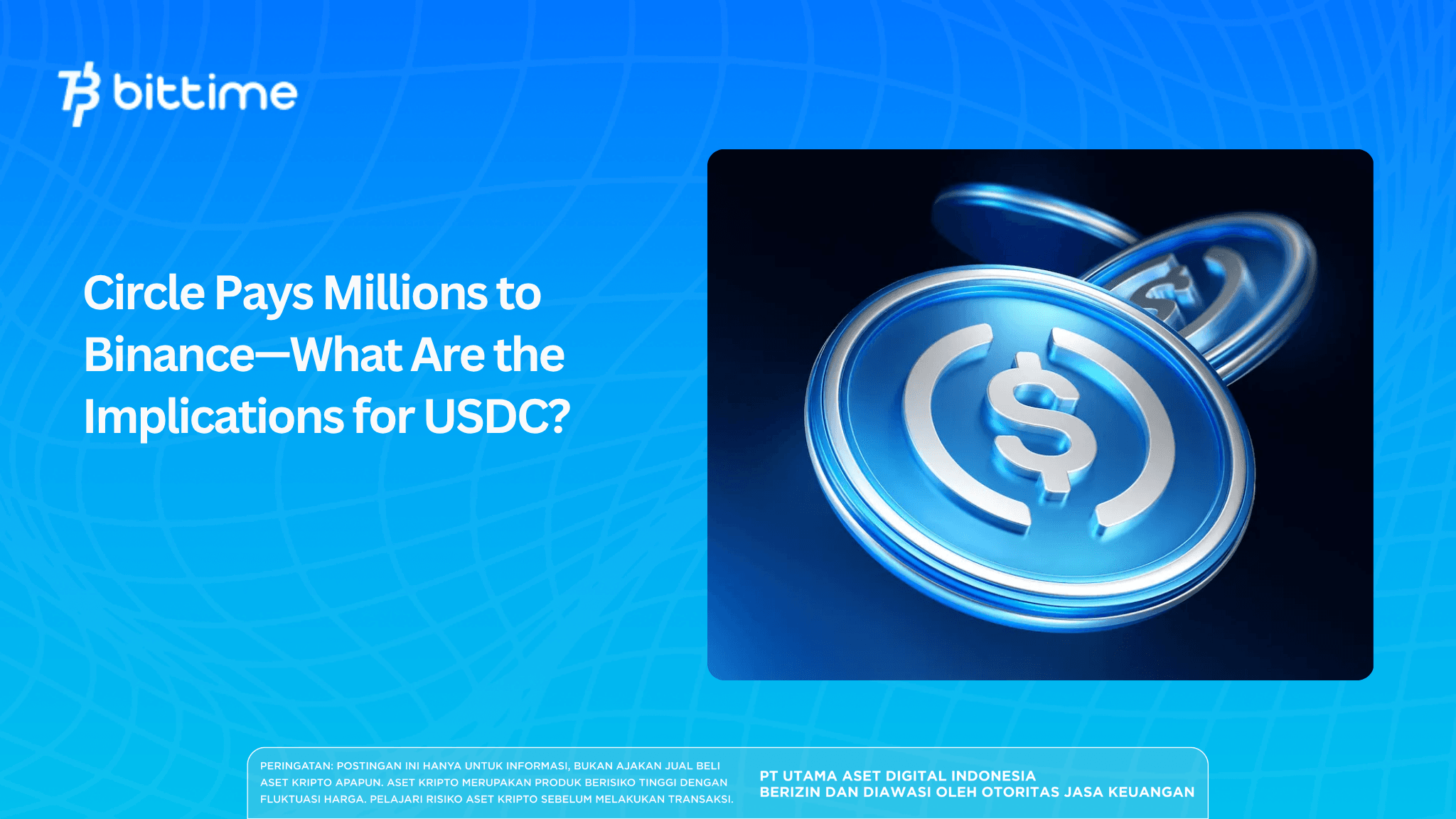
Circle Binance is once again drawing attention in the crypto market after Binance purchased around US$100 million worth of Circle shares and the two companies extended their commercial partnership for another five years.
The agreement is designed to expand the use of USDC on Binance, particularly in international and emerging markets.
However, there is another interesting aspect. Circle will pay Binance a monthly incentive fee linked to certain USDC balances, while Binance is now also a shareholder of Circle.
This means Binance is not only one of the distribution channels for USDC but also has a financial interest in Circle's growth.
For the stablecoin market, this agreement is important because USDC is still working to narrow the gap with USDT, including through one of the world's largest crypto exchanges.
Key Takeaways
- Binance purchased around US$100 million worth of Circle shares while extending its USDC promotional partnership for another five years.
- Binance user USDC balances increased rapidly during the previous partnership period, highlighting Binance's importance for USDC adoption.
- For Circle, USDC growth means an opportunity to expand its business, but distribution costs and incentives paid to partners are also important factors affecting profitability.
What Is Included in the Circle and Binance Agreement?
On September 17, 2026, Circle issued around 1.24 million Class A shares to Binance at US$80.84 per share. The transaction was worth around US$100 million. The shares are subject to a two-year sale restriction with several exceptions.
At the same time, Circle and Binance signed a new five-year commercial agreement. Binance will help expand the promotion, access, and integration of USDC on its platform, particularly in emerging markets.
As part of the relationship, Circle will pay Binance a monthly incentive fee linked to certain USDC balances. The new fee rate has not been publicly disclosed.
This structure further connects the interests of both companies: Binance receives a stake in Circle while also receiving incentives based on USDC activity, while Circle gains access to Binance's large user base.
Read Also: 10 Stablecoins with the Largest Trading Volume in the World
Why Is Binance Important for USDC?
Binance has become an important distribution channel in USDC's adoption strategy.
Data cited by CryptoSlate shows that Binance customer USDC balances increased from around US$1.5 billion in October 2024 to around US$7.1 billion in September 2026.
This growth was significantly faster than the growth in total USDC supply over the same period.
This indicates that Binance helped increase USDC usage among exchange users. However, USDT still has a larger balance on Binance, so the new partnership does not mean that USDC has taken over USDT's position.
In other words, Binance's impact on USDC is more visible in the expansion of distribution and usage than in a direct change to USDC's position as the largest stablecoin.
Monitor developments related to Circle and other crypto assets by registering on Bittime and follow the latest market updates.
How Does Circle Make Money?
The question of how Circle makes money has become increasingly relevant as distribution costs rise.
Circle's primary business model comes from the reserves backing USDC. USDC is designed to be redeemable 1:1 for U.S. dollars, and Circle states that its reserves consist of liquid assets such as cash, short-term U.S. Treasuries, and reverse repos. As of September 21, 2026, circulating USDC had reached around US$74.6 billion.
As the amount of USDC in circulation increases, the value of the reserve assets managed by Circle also increases. Income from these reserves is an important part of the Circle stablecoin business model.
However, USDC growth also comes with costs. Circle pays various distributors and partners to expand USDC usage. Therefore, an increase in supply does not automatically mean a proportional increase in profits.
Read Also: How to Buy USDC (USDC): Complete Guide for Beginners in Indonesia
Is the Stablecoin Business Profitable?
Whether the stablecoin business is profitable depends on the balance between reserve income, distribution costs, technology, compliance, and ecosystem development.
The larger the USDC supply, the larger the reserve asset base that can generate income. But if Circle has to provide significant incentives to exchanges and distributors, some of that income becomes a cost again.
The partnership with Binance demonstrates this dilemma. Circle gains broader distribution, but it must pay costs to maintain and expand that channel.
Therefore, the metrics to watch are not only USDC's market cap, but also distribution costs per unit of USDC growth and how much that usage generates sustainable economic activity.
Start trading USDC/IDR with Bittime here!
Circle vs Tether USDT: The Competition Continues
The competition between Circle and Tether USDT remains one of the main stories in the stablecoin market.
USDT continues to have a larger supply, while USDC is pursuing a different strategy by emphasizing regulation, reserve transparency, payments, and institutional integration.
Circle states that USDC is now available in more than 185 countries and natively supported on 38 blockchain networks. The company also publishes monthly reserve reports with assurance from a Big Four accounting firm.
On the other hand, USDT has a strong usage base in global crypto trading. Therefore, the competition is not only about the number of tokens in circulation, but also about exchanges, payments, DeFi, and institutional use.
Read Also: USDT/IDR vs USDC/IDR Comparison for Local Arbitrage Strategies
Why Is USDC Popular?
There are several factors that help explain why USDC is popular.
First, USDC provides access to a digital asset designed to maintain a value of around US$1. Second, Circle places reserve transparency and regulatory compliance at the center of its strategy. Third, USDC continues to expand across various blockchains and payment networks.
Circle is also expanding its ecosystem. In September 2026, the company launched Arc, a Layer-1 blockchain designed for payments, financial markets, and internet-based economic activity.
This means Circle does not only want USDC to be a stablecoin for trading, but also to become part of the digital payment infrastructure.
Convert 1 USDC to IDR - Circle to Indonesian Rupiah Rate
Does USDC Still Have Potential?
To answer whether USDC still has potential, adoption growth is an important factor.
The five-year partnership with Binance gives USDC access to a large distribution network, while Binance's investment makes the economic relationship between the two companies more closely connected. However, USDC continues to face competition from USDT and other stablecoins.
The stablecoin outlook for 2026 is also not determined solely by market cap. Usage for payments, cross-border transfers, DeFi, trading, and financial applications will determine how extensively stablecoins are actually used beyond trading activity.
Read Also: USAT vs USDT vs USDC: Which Stablecoin Is More Competitive?
Conclusion
The Circle-Binance agreement shows that stablecoin competition is increasingly shifting from simply competing for market cap toward competing for distribution and usage.
Binance gains an ownership stake in Circle and USDC-related incentives, while Circle gains long-term access to one of the largest crypto platforms. For USDC, this partnership could expand international distribution while strengthening its position in the stablecoin market.
However, distribution costs remain a factor to consider. USDC growth will be more meaningful for Circle if increased usage can generate sustainable economics, rather than simply a larger stablecoin balance.
Start trading crypto with major assets such as BTC/IDR and ETH/IDR directly on the Bittime app.
Bittime is a licensed Digital Financial Asset Trader (PAKD) platform supervised by the Financial Services Authority (OJK) — where you can buy Bitcoin in Indonesia and hundreds of other crypto assets starting from IDR 10,000. The registration process is fast and secure, and you can get started today.
Monitor the conversion of USDT to IDR and real-time price movements of your favorite crypto assets. Everything is available in a single crypto investment app that can be downloaded for free from the Play Store.
Ready to get started? Register now on Bittime and execute your investment strategy with a platform trusted by millions of users in Indonesia.
FAQ
What Is the Relationship Between Circle and Binance?
Circle and Binance have a commercial partnership to expand the use of USDC. In September 2026, Binance also purchased around US$100 million worth of Circle shares and extended the partnership for five years.
Why Does Circle Pay Binance?
Circle pays Binance a monthly incentive fee related to certain USDC balances as part of the commercial agreement to support the distribution and use of USDC.
What Is the Impact of Binance on USDC?
Binance has become an important distribution channel for USDC. Customer USDC balances on Binance have increased significantly since the first partnership began, although USDT still has a larger balance.
How Does Circle Make Money From USDC?
Circle generates revenue primarily from the reserve assets backing USDC. The more USDC in circulation, the larger the reserve base that can generate income, although Circle also has distribution and operating costs.
Does USDC Still Have Potential?
USDC still has room to expand through exchanges, payments, DeFi, and international markets. However, its outlook continues to depend on usage growth, distribution costs, regulation, and competition with USDT.
Disclaimer: The views expressed belong exclusively to the author and do not reflect the views of this platform. This platform and its affiliates disclaim any responsibility for the accuracy or suitability of the information provided. It is for informational purposes only and not intended as financial or investment advice.
.png)