Chainlink and Cyberport Launch Asset Tokenization in Hong Kong
2026-08-06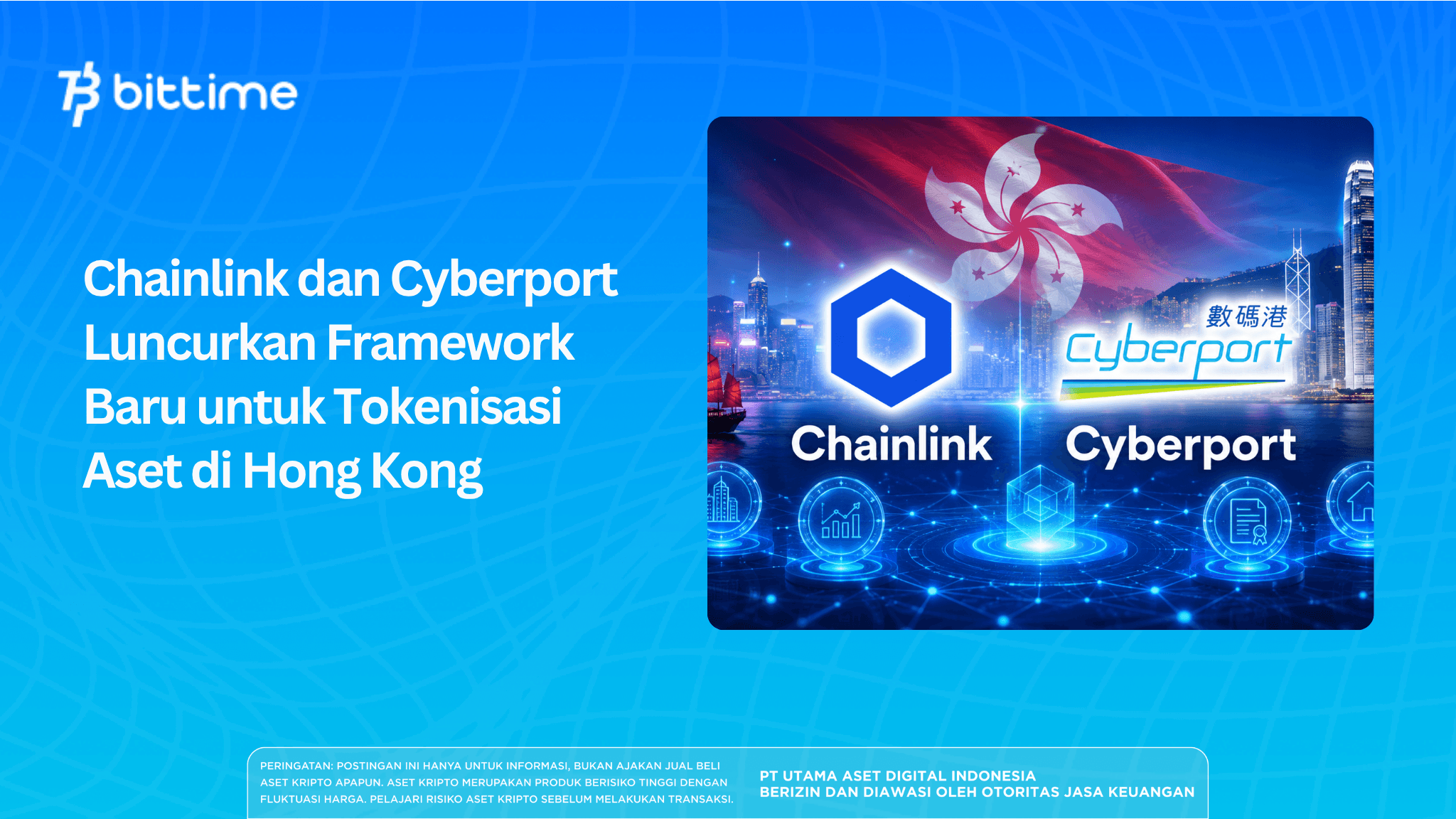
Chainlink and Cyberport are advancing asset tokenization in Hong Kong through the launch of a digital securities framework designed to help institutions bring capital market instruments onto blockchain infrastructure.
This collaboration also involves Forms HK, Apex, CSPro, and other industry participants, focusing on the issuance, distribution, management, and settlement of tokenized assets.
Key Takeaways
- The new framework is intended to support the issuance and management of tokenized securities in a more structured manner.
- Chainlink could support data connectivity, interoperability, and communication between blockchain systems and financial infrastructure.
- The project's success will still depend on compliance, institutional participation, liquidity, and integration with Hong Kong's capital market systems.
What Is Hong Kong's Asset Tokenization Framework?
Hong Kong's asset tokenization framework is a structure that helps institutions convert economic rights to assets or securities into digital tokens. These tokens can represent ownership, claims, income, or specific rights that are recorded and processed through blockchain.
In practice, tokenization does not mean that physical assets or traditional securities disappear. Blockchain is used as a technology layer to record ownership, automate processes, connect data, and improve transaction efficiency.
Source: AI-Generated Image
A framework of this kind typically covers:
- Legal issuance structure
- Investor identity and verification
- Compliance with distribution restrictions
- Ownership recordkeeping
- Payment and transaction settlement
- Reporting to issuers and investors
- Integration with custodians and administrators
- Pricing data and asset information
- Corporate action management
With a more standardized framework, institutions do not need to build an entire tokenization system from scratch for every product.
Read also: GOOG Stock Rises 4.16%: Is AI Monetization Starting to Pay Off?
Chainlink's Role in the Digital Securities Framework
Chainlink is known as infrastructure that connects smart contracts with data and systems outside the blockchain. In a digital securities framework, this type of technology is important because tokenized assets still require real-world information.
The required data may include asset prices, interest rates, exchange rates, payment status, ownership information, and compliance verification results. Smart contracts cannot obtain this information on their own without a secure connectivity layer.
Chainlink can also play a role in interoperability. Digital securities may be issued on one network while investors, custodians, or liquidity providers operate on different systems. Cross-chain infrastructure can help transfer data and instructions without requiring a separate integration for every blockchain.
However, technical capabilities alone are not enough. The technology must be used in accordance with securities issuance rules, investor protection requirements, and the operating standards of financial institutions.
Read also: Tokenized Stock Volume Rises 288%: Why Is the QQQ Token Dominating?
Why Is Cyberport Important for Hong Kong Blockchain Projects?
Cyberport holds an important position in Hong Kong's technology and innovation ecosystem. Its involvement can help bring together blockchain developers, fintech companies, professional service providers, and financial institutions.
For blockchain projects in Hong Kong, a collaborative ecosystem is essential because tokenization requires more than a single technology provider. Issuers need legal support, fund administration, custody, digital identity, payment systems, and blockchain connectivity.
The framework involving Forms HK, Chainlink, Apex, CSPro, and Cyberport Blockchain Valley demonstrates that tokenization requires a combination of expertise. Each participant can support a different part of the digital asset lifecycle.
To follow developments in tokenization, institutional blockchain, and the digital asset market, you can register with Bittime and read the latest news before making a decision. Always review the regulatory considerations and risks of each product.
How Are Tokenized Securities Issued?
Tokenized securities issuance generally begins when a company or asset manager determines the instrument it wants to issue. The instrument may be a bond, fund unit, private share, or claim on a specific asset.
The process may include the following steps:
- The issuer defines the asset structure and investor rights.
- Legal documents and compliance requirements are prepared.
- Investors undergo identity and eligibility verification.
- Tokens are issued through a smart contract.
- Ownership data is recorded on the blockchain.
- Investors receive tokens in proportion to their investment.
- Payments, income distributions, and corporate actions are processed.
- Tokens may be transferred in accordance with established rules.
Smart contracts can automate part of the process, but they do not replace legal obligations. Token transfers, for example, can be restricted so they only occur between wallets that meet the requirements.
Read also: bStocks vs. xStocks: Which Tokenized Stock Platform Is Better?
Benefits of Asset Tokenization for Capital Markets
Tokenization could improve capital market efficiency by reducing manual processes and accelerating transaction settlement. Issuers can also obtain ownership records that are easier to audit.
Other potential benefits include:
- Faster transaction settlement
- Automated coupon or dividend payments
- Reduced reconciliation between intermediaries
- Greater transparency of ownership data
- More flexible investor access
- The possibility of ownership in smaller units
- Longer market operating hours
- Integration with digital asset services
However, these efficiencies can only be realized if blockchain systems can connect with existing banks, custodians, administrators, and financial infrastructure.
Read also: AI Stocks That Surged in 2026 and Their Future Prospects
Impact on Institutional Blockchain Adoption
A digital securities framework could encourage institutional blockchain adoption by offering a clearer implementation model. Institutions are usually reluctant to use new technology when responsibilities, compliance processes, and integrations are not yet defined.
A framework can help financial institutions understand:
- Who is responsible for the asset
- How investors are verified
- How tokens are transferred
- Where data is stored
- How payments are settled
- What happens when a transaction fails
- How technology risks are managed
Hong Kong could also strengthen its position as an institutional digital asset hub in Asia if tokenization projects generate real-world use rather than remaining limited pilots.
Read also: Invesco Tokenized Stock Trends: The Role of QQQ in the DTCC Pilot
Risks and Challenges of the Digital Securities Framework
Tokenization does not eliminate market or legal risk. An asset that has been tokenized can still lose value, default, or suffer from low liquidity.
Key challenges include:
- Differences in regulation across jurisdictions
- Protection of investor data
- Smart contract risk
- Dependence on oracles
- Limited secondary-market liquidity
- Integration with legacy systems
- Governance and dispute resolution
- Private key management
- Cross-network interoperability
Investors should also understand that tokenization does not automatically make an asset high quality. A token's value still depends on the quality of the issuer, the holder's legal rights, the underlying assets, and market conditions.
Keep tracking other stock tokens such as AMZON, AMDON, and NFLXON as well as MSFTON, then you can start trading on the trusted exchange, only on Bittime.
The Outlook for Asset Tokenization in Hong Kong
The outlook for asset tokenization in Hong Kong is compelling because the region has strong capital markets, fintech companies, and institutional investor networks. The new framework could accelerate product development if it is applied to real-world issuances.
Indicators to monitor include:
- Number of issuers using the framework
- Value of securities issued
- Custodian and bank support
- Secondary-market activity
- Institutional investor participation
- Regulatory clarity
- Cross-chain integration
- Cost efficiency compared with traditional systems
Success is measured not only by the number of tokens created, but by the system's ability to settle transactions securely, compliantly, and efficiently.
Conclusion
The collaboration among Chainlink, Cyberport, Forms HK, Apex, CSPro, and other participants shows that asset tokenization is increasingly moving toward institutional use. A digital securities framework can help bring together blockchain technology, compliance, data, administration, and capital market processes.
Chainlink can support data connectivity and interoperability, while the Cyberport ecosystem helps bring technology providers and industry participants together. However, its long-term impact depends on real-world issuance, institutional participation, liquidity, and legal clarity.
This framework is an important step for Hong Kong's digital asset infrastructure, but its ultimate results must still be assessed through implementation.

Monitor pilot projects, issuance volumes, and financial institution participation before judging its level of success.
Bittime is a licensed Digital Financial Asset Trader (PAKD) platform regulated and supervised by Indonesia's Financial Services Authority — where you can buy Bitcoin in Indonesia and hundreds of other crypto assets starting from Rp10,000. Registration is fast and secure, and you can get started today.
Track the conversion USDT to IDR and the real-time price movements of your favorite crypto assets. Everything is available in one crypto investment app that can be downloaded for free from the Play Store.
Ready to get started? Register with Bittime now and execute your investment strategy on a platform trusted by millions of users in Indonesia.
FAQ
What is a tokenized securities framework?
A tokenized securities framework is a structure for issuing, distributing, and managing securities through blockchain. It also covers compliance, investor identity, and transaction settlement.
What is Chainlink's role in asset tokenization?
Chainlink can connect smart contracts with data, financial systems, and other blockchain networks. This infrastructure helps tokenized assets access real-world information.
Why is Hong Kong developing asset tokenization?
Tokenization could improve efficiency, transparency, and access in capital markets. Hong Kong also aims to strengthen its fintech and institutional digital asset ecosystem.
Are tokenized securities the same as cryptocurrency?
Not necessarily. Tokenized securities represent rights to financial instruments that are subject to securities regulations, while cryptocurrencies may have different functions and legal structures.
What are the risks of tokenized securities?
Risks include issuer default, low liquidity, smart contract bugs, data errors, custody issues, and regulatory uncertainty.
Disclaimer: The views expressed belong exclusively to the author and do not reflect the views of this platform. This platform and its affiliates disclaim any responsibility for the accuracy or suitability of the information provided. It is for informational purposes only and not intended as financial or investment advice.

.png)