How to Mine DOGE and LTC Simultaneously with Merged Mining
2026-11-04
You can now mine DOGE and LTC simultaneously using a single ASIC device thanks to merged mining technology. This method allows you to mine Litecoin (LTC) while also having the opportunity to earn Dogecoin (DOGE) rewards, without having to buy a separate machine for each coin.
Interestingly, both coins use the same computational work. But does mining two coins automatically mean higher profits? Before trying it, you need to understand how merged mining works, which equipment is suitable, and how much electricity it consumes.
Key Takeaways
- Merged mining allows a single Scrypt ASIC to earn Litecoin and Dogecoin rewards.
- DOGE and LTC can be mined through a mining pool that supports Auxiliary Proof of Work (AuxPoW) technology.
- Mining profitability depends on the device’s hashrate, DOGE and LTC prices, electricity costs, and network conditions.
What Is DOGE and LTC Merged Mining?
Merged mining is a method that allows one mining process to help secure two blockchains at the same time. In this case, Litecoin serves as the parent chain, while Dogecoin uses the same computational proof through the Auxiliary Proof of Work (AuxPoW) mechanism.
Both networks can use this method because they rely on the Scrypt algorithm. However, using the same algorithm is not enough. Blockchain networks participating as auxiliary chains must also support AuxPoW to accept computational proof from the parent chain.
Dogecoin began implementing merged mining in 2014 as part of an effort to strengthen its network security. As a result, the computational power of Litecoin miners can also contribute to the Dogecoin network.
How Does Merged Mining Work?
Imagine you have a machine continuously performing calculations to find a Litecoin block. With merged mining, those calculations can also be checked to determine whether they meet the requirements for a Dogecoin block.
Technically, the mining pool prepares work that links the two blockchains. The ASIC then performs hashing, while the pool checks the results and distributes rewards.
Here is how the process works:
- The ASIC miner connects to a Litecoin mining pool that supports DOGE.
- The device performs hashing using the Scrypt algorithm.
- The computation results are submitted to the pool as shares or proof of mining contribution.
- The pool checks whether the results meet the Litecoin or Dogecoin network target.
- Rewards from discovered blocks are distributed to miners according to the pool’s rules.
Because each blockchain has its own difficulty level, DOGE and LTC mining rewards do not necessarily arrive at the same time.
Read also: Crypto Mining in 2026: Is It Still Profitable?
Equipment Needed to Mine DOGE and LTC
Before getting started, make sure your equipment supports the Scrypt algorithm. For example, Bitcoin ASICs that use SHA-256 cannot be used directly to mine Litecoin and Dogecoin.
Scrypt ASICs are a more practical choice for mining today. Ordinary computers and laptops can technically perform hashing, but their computing power falls far behind that of dedicated machines.
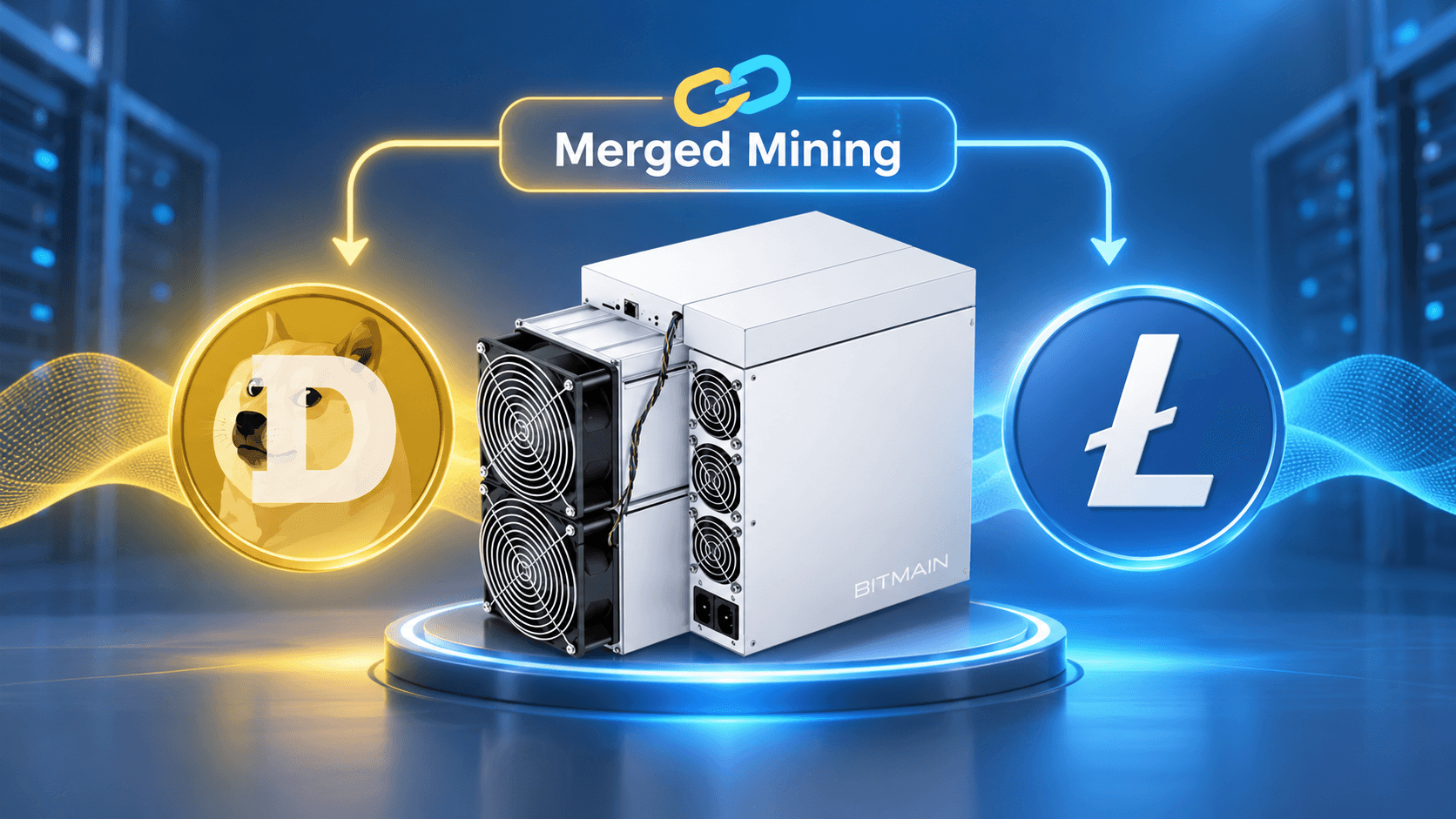
ASIC Miner Options for DOGE and LTC
Many Scrypt mining devices are available on the market. Two examples are the Fluminer L1 Pro and Bitmain Antminer L11.
Note: These specifications refer to the standard Fluminer L1 Pro and Antminer L11 models, not the Pro or Hydro variants. Figures vary between sections of the L1 Pro documentation, so the specifications of the actual unit should still be confirmed.
The Fluminer L1 Pro has lower rated power requirements. The Antminer L11, meanwhile, offers greater hashing capacity but also consumes more electricity.
Do not assume that a higher hashrate always means more profit. A fast but power-hungry device may not deliver the best margins, especially where electricity rates are relatively high.
In addition to an ASIC, prepare a stable internet connection, sufficient electrical capacity, and a location with good airflow. Mining machines generate heat during operation, so cooling systems and electrical installation safety should not be overlooked.
Read also: How to Mine ORX on Your Phone: A Beginner’s Guide to Orex Network
How to Mine DOGE and LTC Simultaneously: A Beginner’s Guide
Once your hardware is ready, the next step is to connect the ASIC to a mining pool. This tutorial uses ViaBTC as an example, since it is one of the services that supports Litecoin and Dogecoin merged mining.
1. Create a Mining Pool Account
Visit the official ViaBTC website and register an account using an active email address. After logging in, enable two-factor authentication to help protect your account and asset withdrawal settings.
Next, look for the Litecoin or LTC option on the mining pool page.
You do not need to create two separate accounts to merge mine DOGE and LTC through this service. Rewards for both assets are recorded based on your mining contribution and the applicable payout rules.
2. Choose a Mining Payout Method
ViaBTC offers PPS+ and PPLNS payout methods for Litecoin mining that qualifies for DOGE rewards.
The two methods use different payout mechanisms:
- PPS+: The LTC block subsidy component is calculated from valid shares, while the transaction fee component is calculated using PPLNS.
- PPLNS: Payouts are calculated based on the blocks found by the pool and the shares contributed over a specified period.
For DOGE rewards, ViaBTC uses PPLNS under both options. In other words, choosing PPS+ for Litecoin does not make your Dogecoin income fixed.
3. Set Up a Worker on Your ASIC Miner
A worker is the device identifier a mining pool uses to track a machine’s contribution. Its name usually consists of an account ID and a device name.
For example:
minercrypto.worker01
In this format, minercrypto is an example account ID, while worker01 is the name of the machine you want to register.
If you use multiple ASICs, assign each one a different worker name so you can monitor the performance of individual devices.
4. Connect the ASIC to a Litecoin Mining Pool
Access the ASIC control panel through your local network. Each brand has a different interface, but mining settings are usually available under Miner Configuration or Pool Settings.
For ViaBTC’s Litecoin pool, an example configuration is shown below:
Use your own ViaBTC account ID in the worker field. The worker password is not your account login password, and you do not need to enter sensitive information.
If your ASIC supports a backup pool configuration, use the alternative address to reduce the risk of mining interruptions when the primary connection fails.
Once all fields are filled in, save the configuration and start the device. Make sure the URL and port still match the pool’s latest instructions.
5. Check Whether Mining Is Running
Open the ViaBTC dashboard and check the Workers section. If the connection is successful, your device name will appear along with its mining activity information.
Pay attention to these three indicators:
- Hashrate: Shows the measured hashing performance.
- Accepted shares: Mining contributions successfully accepted by the pool.
- Rejected shares: Shares rejected because they did not meet the requirements or encountered a problem during submission.
Do not worry if the hashrate shown by the pool differs slightly from the figure displayed on your ASIC. Pool dashboards estimate performance from shares received over a given period, so the value can fluctuate.
Recheck the connection if the worker remains offline or the number of rejected shares increases abnormally.
6. Receive DOGE and LTC Rewards
Once mining is running, you can track your income through the Earnings or My Assets menu.
On ViaBTC, DOGE merged mining rewards are scheduled to be credited to your account balance every two hours. However, the amount may vary depending on the blocks found and your mining contribution.
It is important to distinguish rewards credited to your pool account from assets transferred to your personal wallet. These are two separate processes.
To withdraw assets, select DOGE or LTC and follow the available withdrawal settings. Verify that the destination wallet address and network are correct before sending funds.
Read also: How to Mine Zcash (ZEC) on Zmine: Complete 2026 Guide
Why Are DOGE Rewards Not Showing Up? Check These 4 Issues
An ASIC that is powered on does not necessarily generate the rewards you expect. If your DOGE balance is not increasing, do not immediately assume the device or mining pool is malfunctioning.
There are several possible causes to investigate.
For DOGE rewards in particular, avoid judging your earnings based on one short period. PPLNS can produce varying payouts even when your device maintains a relatively stable hashrate.
Is Merged Mining More Profitable?
The advantage of merged mining is the opportunity to earn rewards from two blockchains without performing separate hashing work. However, this additional earning potential does not guarantee higher net income under all conditions.
There are three reasons why this approach appeals to miners:
- Potential additional income: DOGE rewards can increase the total returns from LTC mining.
- Better hashrate utilization: The same hashing work is used to support two networks.
- More convenient management: Mining activity and reward records can be monitored through a single pool service.
On the other hand, merged mining does not eliminate operating costs. Hardware, electricity, cooling, and maintenance still have to be paid for, regardless of how many coins you successfully mine.
That is why the most important profitability metric is not the number of cryptocurrencies you receive, but how much revenue remains after all costs are deducted.
Read also: List of Crypto Cloud Mining Services for Beginners in 2026
DOGE and LTC Mining Electricity Cost Simulation
Electricity is one of the main expenses in operating an ASIC miner. A machine running 24 hours a day can consume substantial energy, even if its power rating looks modest compared with industrial equipment.
The formula is:
Electricity cost = (Power in watts ÷ 1,000) × Operating hours × Rate per kWh
As an example, assume an electricity rate of Rp1,650 per kWh and continuous operation for 24 hours.
The figures above are illustrative estimates based on an assumed electricity rate, rated power, and continuous operation. Actual costs may differ and do not include cooling or other requirements.
Based on this calculation, the Antminer L11 has higher monthly electricity costs. However, its higher hashrate also provides greater computing capacity.
To determine which device is more efficient, compare actual mining returns with the total cost of operating each machine.
How to Calculate Net Mining Profit
A simple calculation can be made using the following formula:
Operating profit = DOGE revenue + LTC revenue − Electricity cost − Pool fees − Other operating costs
For example, if you have obtained an estimated daily reward from a mining pool, convert each reward into Indonesian rupiah at the market rate and then subtract all expenses incurred during the same period.
Remember that operating profit does not yet account for recovering the purchase cost of the ASIC. The equipment also carries risks of failure and depreciation as newer technologies emerge.
Read also: What Is Bitcoin Mining and How Does It Work? A Beginner’s Guide
5 Things to Consider Before Buying an ASIC Miner
Before investing, there are several factors that beginners often overlook.
1. DOGE and LTC Prices Can Change
The value of your rewards does not always move in line with the number of coins received. You could receive the same amount of DOGE, but its value in rupiah may fall if the market price declines.
2. Mining Difficulty Is Not Constant
As the network becomes more difficult to mine, expected rewards decrease for a given amount of hashing power. This means a device’s earnings can change even without configuration changes.
3. The ASIC Price Is Not Your Only Upfront Cost
Besides the machine, you may need additional electrical installations, ventilation, internet access, and supporting equipment. Account for all these expenses from the outset.
4. Mining Pool Terms May Vary
Each pool has its own payout methods, service fees, and withdrawal rules. A pool with low fees is not necessarily the best fit if its payout system does not meet your needs.
5. Recovering Your Investment Takes Time
Daily operating profits do not mean your initial investment has already been recovered. You need to estimate how long cumulative margins will take to cover the machine’s purchase price while accounting for the risk of changing revenues.
Consider calculating several scenarios, including a drop in asset prices or an increase in mining difficulty. This helps you avoid buying an ASIC based solely on a single day’s estimated profit.
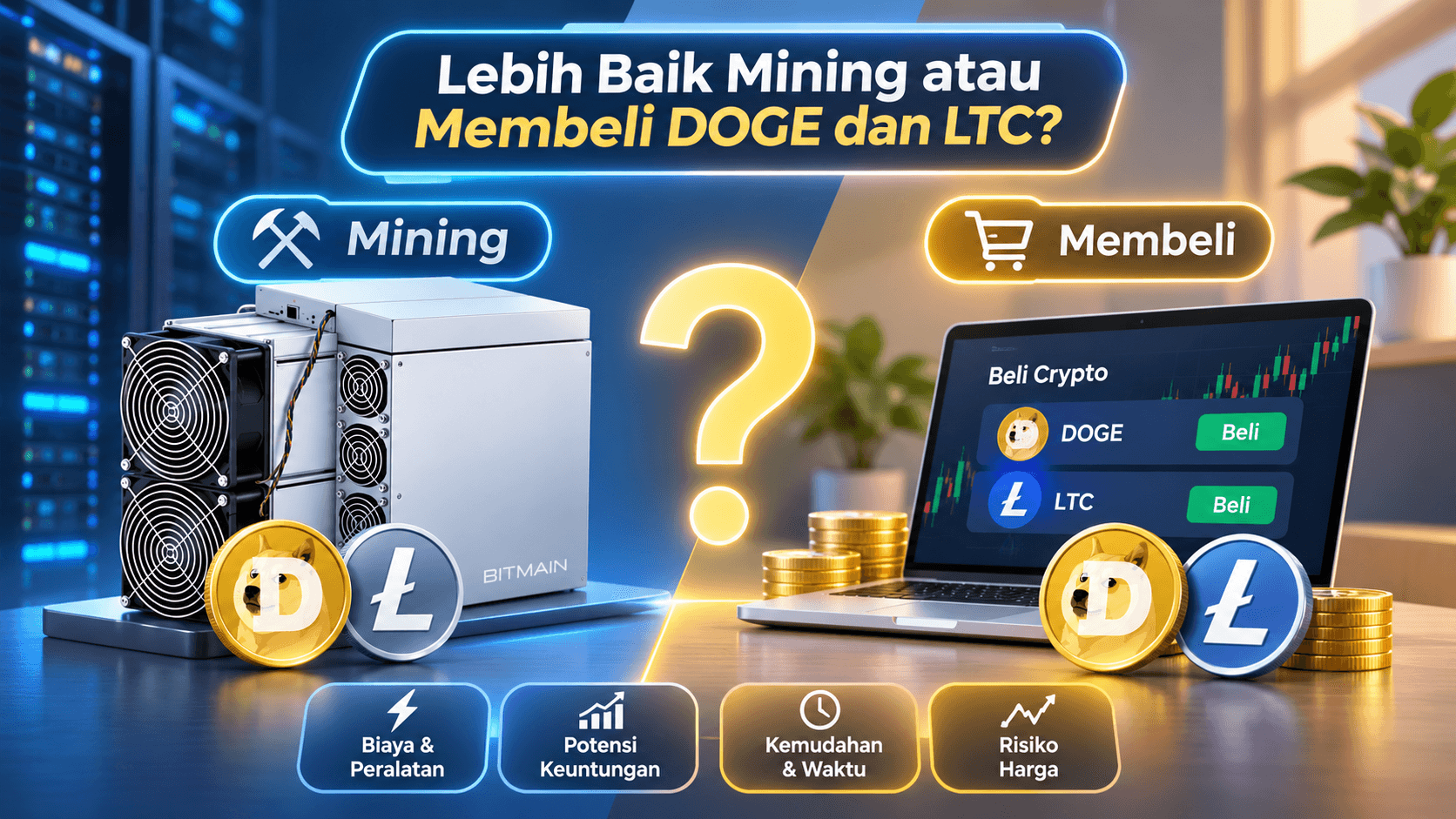
Is It Better to Mine or Buy DOGE and LTC?
The answer depends on your goals.
If you want to operate a mining setup and have access to competitively priced electricity, merged mining is worth exploring. However, you will still need capital, technical knowledge, and time to manage your equipment.
If your only goal is to own DOGE or LTC, buying the assets through a crypto trading platform is much simpler operationally. You do not need to install ASICs, configure mining pools, or manage equipment maintenance costs.
Both options still involve financial risks. Mining is exposed to operational and profitability risks, while direct asset ownership is exposed to market price fluctuations.
To track Dogecoin and Litecoin prices, you can sign up for Bittime and follow market developments before deciding on your next step.
Conclusion
To mine DOGE and LTC simultaneously, prepare a Scrypt ASIC, choose a pool that supports merged mining, and connect the device using the Litecoin configuration. Once active, the pool manages hashing contributions and calculates rewards according to its payout method.
Although merged mining offers the opportunity to earn rewards from two coins, it still requires careful cost calculations. Focus on device efficiency, operational stability, and profit after expenses rather than just the amount of DOGE or LTC mined.
Bittime is a licensed Digital Financial Asset Trader (PAKD) platform regulated and supervised by Indonesia’s Financial Services Authority (OJK) — where you can buy Bitcoin in Indonesia and hundreds of other crypto assets starting from Rp10,000. Registration is fast and secure, and you can get started today.
Track the USDT to IDR conversion rate and the real-time prices of your favorite crypto assets. Everything is available in one crypto investment app that you can download for free from the Play Store.
Ready to get started? Register with Bittime now and put your investment strategy into action on a platform trusted by millions of users in Indonesia.
FAQ
Can DOGE and LTC Be Mined at the Same Time?
Yes. Litecoin and Dogecoin support merged mining through the Scrypt algorithm and AuxPoW technology. You can use one compatible ASIC and a mining pool that supports both networks.
Does Mining Litecoin Automatically Earn DOGE?
Not with every mining pool. You can only earn DOGE if the pool supports Dogecoin merged mining and your account settings meet the service’s requirements. The reward amount depends on mining results and the payout scheme.
Can You Mine Dogecoin and Litecoin Using a Laptop?
Technically, ordinary devices can perform Scrypt computations. However, laptops are not competitive for modern DOGE and LTC mining because their hashrates are far lower than those of dedicated ASICs, so the returns generally do not justify the electricity costs.
Which Mining Pools Support DOGE and LTC Merged Mining?
ViaBTC is one of the services that supports DOGE and LTC merged mining. Through its Litecoin pool, users who select an eligible payout method can receive DOGE rewards. Check the latest fees and terms before using the service.
How Much Does It Cost to Start Mining DOGE and LTC?
The required investment depends on the ASIC price, electrical capacity, supporting equipment, and installation needs. In addition to initial costs, you need a budget for electricity and routine maintenance. Estimate net earnings and the payback period before purchasing equipment.
Disclaimer: The views expressed belong exclusively to the author and do not reflect the views of this platform. This platform and its affiliates disclaim any responsibility for the accuracy or suitability of the information provided. It is for informational purposes only and not intended as financial or investment advice.

.png)