Indonesia Gold Reserves 2026: Total, Storage, Outlook
2026-04-22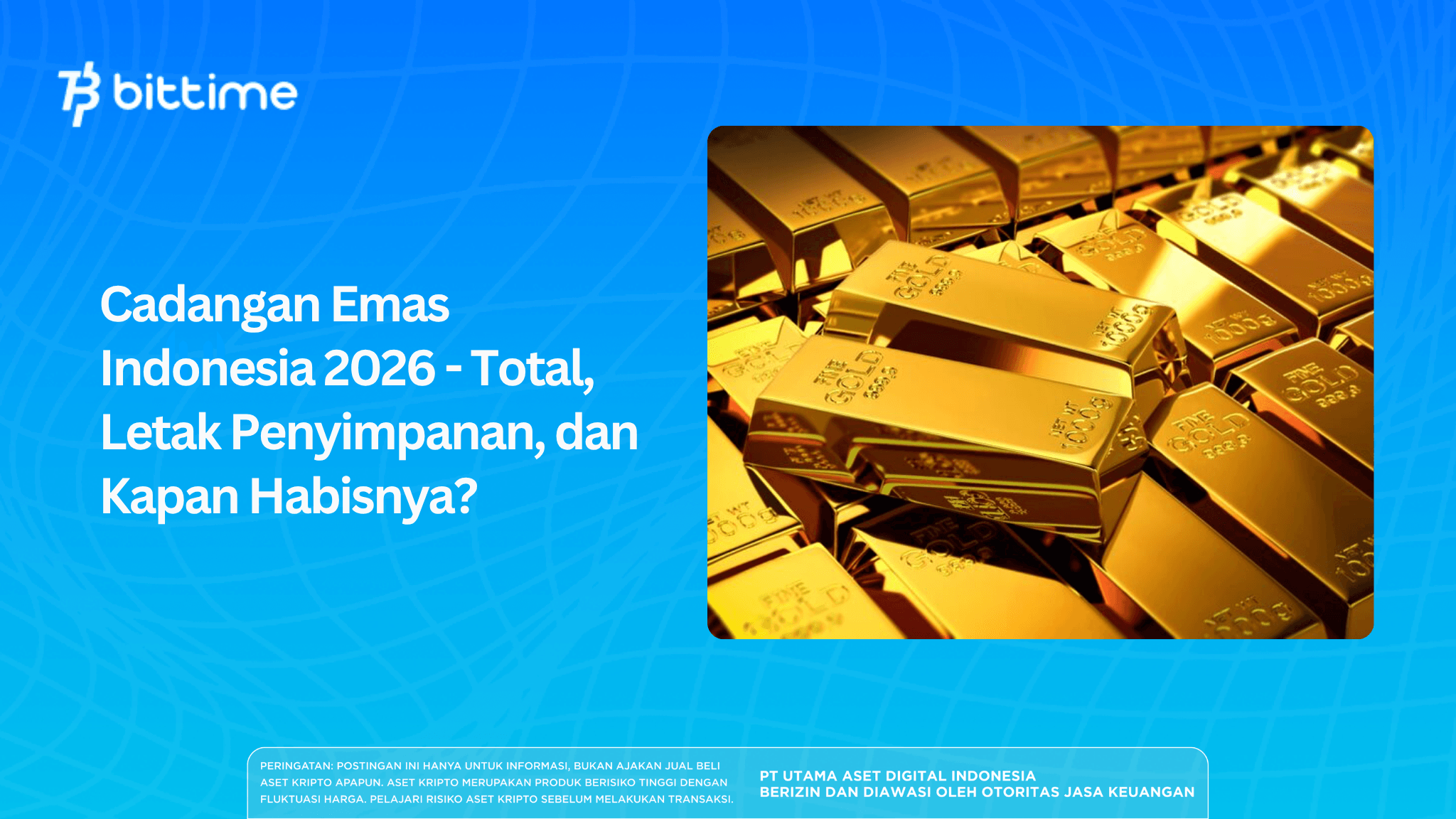
Indonesia's gold reserves in 2026 remain an important topic, especially when the global economy is still unstable. The latest data shows gold reserves at 85.53 tons in Q4 2025, unchanged from the previous period. This stability shows gold's role as a strong safe-haven asset, even amid the development of digital assets such as crypto.
In the digital era, gold and crypto are increasingly compared. Both are used to preserve asset value, especially when inflation or uncertainty rises. So, what is the current condition of Indonesia's gold reserves and could they ever run out?
Key Takeaways
- Indonesia's gold reserves have been relatively stable at 85.53 tons in recent quarters.
- The total potential gold resources are much larger than the central bank's official reserves.
- Gold and crypto have similar roles as hedges amid economic uncertainty.

Total Indonesia Gold Reserves and Their Development
Indonesia's official gold reserves were recorded at 85.53 tons as of the end of 2025. This figure represents gold stored by the central bank as part of foreign exchange reserves. In the long term, Indonesia's average gold reserves since 2000 have been around 81.83 tons, with a high of 96.45 tons and a low of 73.09 tons.
However, this figure does not reflect the country's total gold potential. Based on mining sector data, Indonesia has total gold reserves of around 3,420 tons. This shows that official reserves are only a small portion of the country's total gold wealth.
The distribution of gold in Indonesia is also quite widespread. In addition to Bank Indonesia, gold is stored in institutions such as Pegadaian and Bank Syariah Indonesia, as well as in private ownership by individuals. In fact, estimates show that Indonesians hold up to 1,800 tons of physical gold.
In the context of crypto, this condition is similar to decentralized asset distribution. Not all value is stored in one institution, but is spread across various parties. This strengthens the overall system resilience.
Read Also: How to Buy Digital Gold Safely, Cheaply, and Easily on Bittime
Storage Locations and the Role of Gold Reserves
National gold reserves are generally stored in bar form with high-security systems. In Indonesia, most are held at Bank Indonesia as the monetary authority. Meanwhile, Pegadaian and Bank Syariah Indonesia also store significant amounts of gold as part of gold-based financial services.
The main function of gold reserves is to maintain economic stability, especially when currency values come under pressure. In times of crisis, gold can be used as a stabilizing asset. This role makes gold often referred to as a safe haven asset.
As technology develops, crypto is increasingly seen as a digital alternative to this function. Although different in form, both share the same goal, which is to preserve asset value in the long term.
New trends such as gold tokenization are also emerging, where physical gold is represented digitally on the blockchain. This opens broader access for investors without having to store gold directly.
Read Also: Crypto-Based Gold Investment Strategy for Retirement Funds
Can Indonesia's Gold Reserves Run Out?
Questions about running out of gold reserves often arise, especially when demand increases. In theory, gold is a finite resource. However, in practice, the possibility of running out in the near future is very small.
This is because mining technology continues to advance, enabling exploration of new reserves. In addition, not all gold resources are mined immediately, so there is still a lot of untapped potential.
Panic buying phenomena also often trigger concerns. However, demand spikes usually only affect short-term prices and distribution, not the total availability of gold.
In the crypto world, this condition is similar to limited supply mechanisms such as Bitcoin. Although the supply is limited, distribution occurs gradually and does not run out immediately.
Read Also: 9 Advantages of Profitable Digital Gold Investment in 2026
Conclusion
Indonesia's gold reserves in 2026 show fairly strong stability with official figures around 85.53 tons. Beyond that, the country's gold potential is much larger when considering resources that have not been fully utilized.
Amid the development of crypto, gold remains relevant as a store of value. Both are now better seen as complementary in modern investment strategies. By understanding each role, investors can build a more balanced portfolio that is adaptable to global economic changes.
How to Buy Crypto on Bittime

Want to trade, buy Bitcoin and invest in crypto easily? Bittime is here to help! As an officially registered crypto exchange in Indonesia under OJK, Bittime ensures every transaction is safe and fast.
Start by registering and verifying your identity, then make a minimum deposit of Rp10,000. After that, you can immediately buy your favorite digital assets!
Check the BTC to IDR, ETH to IDR, SOL to IDR and other crypto assets to see today’s crypto market trends in real time on Bittime.
Also visit Bittime Blog to get various interesting updates and educational information about the crypto world. Find trusted articles about Web3, blockchain technology, and digital asset investment tips designed to enrich your knowledge in the crypto space.
FAQ
What is national gold reserve?
Gold reserves are gold owned and stored by the central bank as part of national assets.
What is Indonesia's current gold reserve?
Around 85.53 tons based on the latest data up to the end of 2025.
Can gold reserves run out?
The possibility is very small in the near future because there is still exploration and new technology.
What is the difference between gold and crypto?
Gold is physical and stable, while crypto is digital with higher volatility.
Is gold still relevant today?
Yes, gold is still used as a hedge even though crypto continues to grow.
Disclaimer: The views expressed belong exclusively to the author and do not reflect the views of this platform. This platform and its affiliates disclaim any responsibility for the accuracy or suitability of the information provided. It is for informational purposes only and not intended as financial or investment advice.

.png)