Brazil Bans Stablecoins: Here’s What You Need to Know
2026-05-02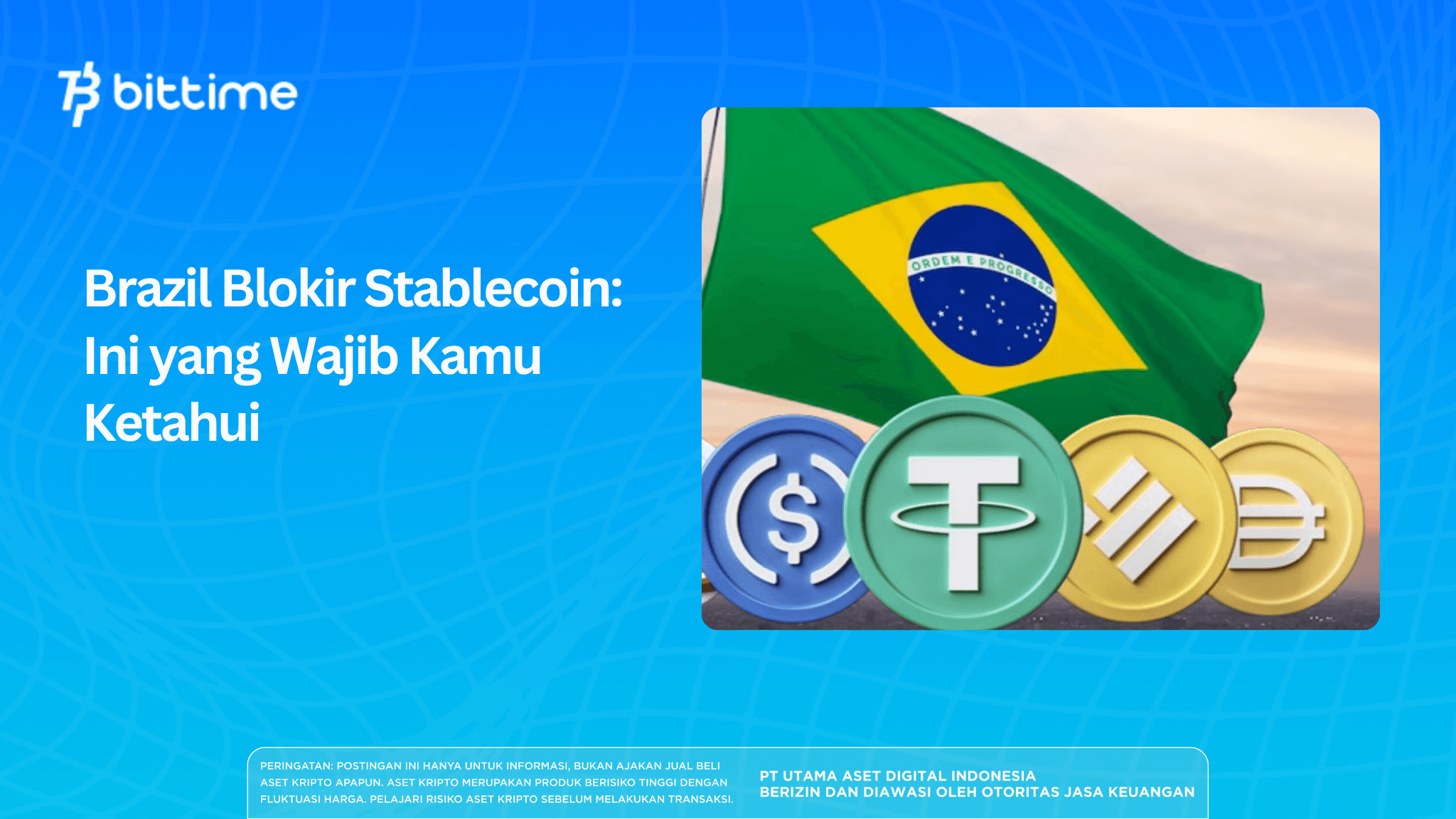
Brazil's central bank, Banco Central do Brasil (BCB), has officially barred stablecoins and other crypto assets from being used as settlement instruments inside the country's regulated cross-border payment system.
The rule, published under Resolution BCB No. 561 on April 30, 2026, directly affects how international payment companies operate in one of Latin America's largest economies.
Brazil ranked fifth globally in crypto adoption in 2025, up from tenth in 2024. That rapid growth — particularly in stablecoin use — is precisely what prompted regulators to draw a harder line around the country's official payment rails.
Key Takeaways
- Resolution BCB No. 561 prohibits stablecoins and crypto assets from being used as settlement tools inside Brazil's regulated eFX payment system, effective October 1, 2026.
- This is not a blanket crypto ban — personal holdings, trading, and peer-to-peer transfers remain untouched; only the regulated cross-border payment channel is affected.
- Unlicensed payment providers may continue operating temporarily but must apply for central bank authorization by May 31, 2027, under the same settlement restrictions.
What Is eFX and Why Are Stablecoins Being Excluded?
eFX is Brazil's government-regulated digital international payment framework. It covers cross-border transactions such as international money transfers, purchases, and withdrawals — all operating under Brazil's foreign exchange legal structure.
Resolution 561 establishes that payments or receipts between an eFX provider and its foreign counterparty must occur exclusively through traditional foreign exchange operations or through Brazilian real accounts held by non-residents, with virtual assets prohibited in that flow.
In practice, this means payment companies can no longer use USDT, USDC, Bitcoin, or any other digital asset to settle international transactions through this official channel.
Why Did Brazil Take This Step?
The decision is rooted in data, not just regulatory caution. BCB Governor Gabriel Galipolo stated that crypto use had surged in the country over the previous two to three years, with about 90% of those flows linked to stablecoins. That figure raised serious concerns about the state's ability to monitor capital movement.
Policy documents highlighted risks associated with stablecoins pegged to the Brazilian real but issued offshore, including challenges to regulatory consistency and monetary sovereignty. Authorities also flagged concerns around foreign-currency stablecoins, citing issues related to jurisdiction, capital movement oversight, and the potential fragmentation of the national payments system.
The core concern: money moving in and out of Brazil through privately issued stablecoins is difficult to track, tax, and regulate — especially when those tokens are issued outside Brazil's legal reach.
What Changes for Payment Companies?
Authorized eFX providers have until October 30, 2026 to update their registration in the central bank's Unicad system.
The new rules also require segregated accounts for eFX-related client funds, monthly reporting through the central bank's foreign exchange system, and transaction record-keeping for 10 years.
For companies not yet on the approved eFX registry, a transition period applies — but authorization requests must be submitted to the central bank by May 31, 2027. During that window, the ban on virtual asset settlement still applies in full.
Transaction scope also gets refined: Resolution 561 allows transfers related to investments in financial and capital markets, capped at the equivalent of $10,000 per transaction.
Does This Mean Brazil Is Anti-Crypto?
Not quite. Brazil has developed additional reporting requirements for exchanges, implemented a licensing system for virtual asset service providers, and placed stablecoin transfers under foreign exchange regulations in recent years — all part of a larger effort to keep cryptocurrency activity transparent and connected to conventional banking monitoring.
The eFX ruling fits that same pattern. Affected companies may still offer crypto services outside the eFX channel — what changes is solely how settlement works within the official cross-border payment rails.
Brazil is not shutting the door on crypto. It is clarifying exactly where crypto is — and is not — allowed inside its regulated financial infrastructure.
Conclusion
Resolution BCB No. 561 sends a clear signal: crypto integration into Brazil's formal payment system must happen on the state's terms. Stablecoins that once dominated cross-border settlement flows are now pushed out of the official eFX channel.
The policy takes effect October 1, 2026, giving the industry several months to adjust. Brazil is not turning its back on digital assets — but it is firmly separating free-market crypto use from government-supervised payment infrastructure.
FAQ
What is Resolution BCB No. 561?
Resolution BCB No. 561 is a new regulation from Brazil's central bank that prohibits the use of crypto assets, including stablecoins, as settlement instruments within the country's regulated cross-border payment system known as eFX. It was published on April 30, 2026, and takes effect on October 1, 2026.
Does Brazil's new rule ban all crypto activity?
No. The ban is limited to crypto settlement inside the regulated eFX channel. Personal crypto holdings, trading on exchanges, and peer-to-peer transfers are not affected by this rule.
What is a stablecoin and why is it central to this policy?
A stablecoin is a type of crypto asset pegged to a fiat currency — most commonly the US dollar — such as USDT or USDC. In Brazil, stablecoins account for roughly 90% of crypto cross-border flows, making them the primary focus of regulatory concern around tax compliance and money laundering risks.
What must unlicensed payment providers do under the new rules?
Providers not yet listed as authorized eFX operators must apply for central bank authorization by May 31, 2027. They may continue operating during the transition period but must comply with the same restrictions on virtual asset settlement immediately.
Could this influence crypto regulation in other countries?
Possibly. Brazil is one of the world's largest and fastest-growing crypto markets. Its approach — licensing service providers, placing stablecoin transfers under foreign exchange rules, and restricting crypto from official payment rails — could serve as a regulatory blueprint for other emerging markets, including those in Southeast Asia.
How to Buy Crypto on Bittime?

Want to trade sell buy Bitcoins and crypto investment easily? Bittime is here to help! As an Indonesian crypto exchange officially registered with Bappebti, Bittime ensures every transaction is safe and fast.
Start with registration and identity verification, then make a minimum deposit of IDR 10,000. After that, you can immediately buy your favorite digital assets!
Check the exchange rate BTC to IDR, ETH to IDR, SOL to IDR and other crypto assets to find out today's crypto market trends in real-time on Bittime.
Also, visit the Bittime Blog for interesting updates and educational information about the crypto world. Find reliable articles about Web3, blockchain technology, and digital asset investment tips designed to enrich your crypto knowledge.
Disclaimer: The views expressed belong exclusively to the author and do not reflect the views of this platform. This platform and its affiliates disclaim any responsibility for the accuracy or suitability of the information provided. It is for informational purposes only and not intended as financial or investment advice.

.png)