Bitcoin Monetization Program Strategy: Michael Saylor's New Strategy
2026-06-30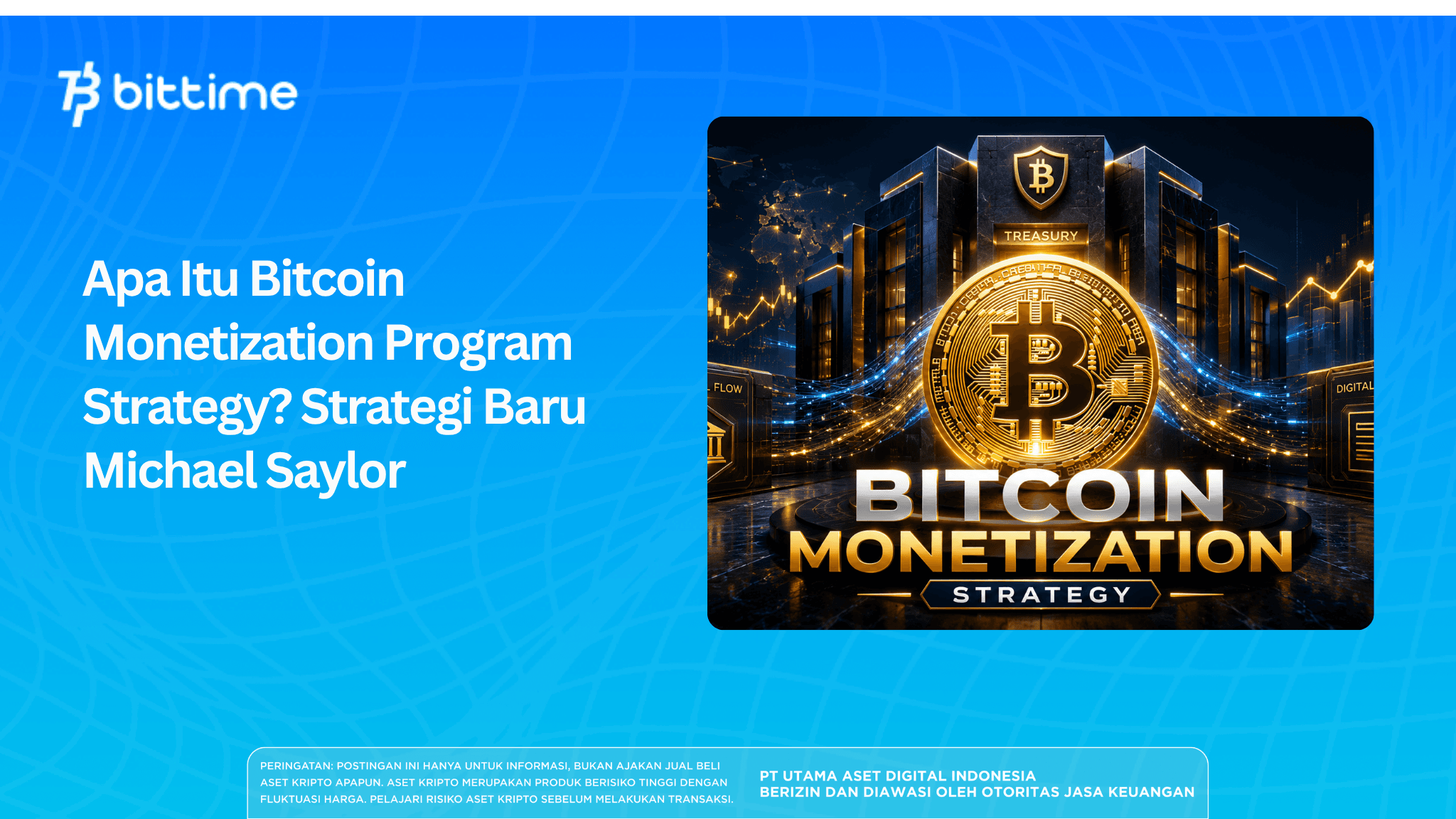
On June 29, 2026, Strategy (formerly known as MicroStrategy) announced the Strategy Bitcoin Monetization Program as part of its new Digital Credit Capital Framework.
The Strategy Bitcoin Monetization Program allows Strategy to sell a limited amount of Bitcoin for specific purposes only.
This is not an open-ended sale, but rather an active capital management tool designed to strengthen liquidity, support dividend payments, and maintain a long-term commitment to Bitcoin as a primary treasury asset.
This marks a significant evolution from the “never sell” philosophy that has long been a hallmark of Saylor.
Key Takeaways
- The Bitcoin Monetization Program gives Strategy greater cash management flexibility while preserving its long-term BTC holdings.
- It is part of the broader Digital Credit Capital Framework to strengthen capital management.
- The move reflects a shift toward active capital management, with Bitcoin remaining the company's core asset.
Register at Bittime now and start trading crypto with a fast, safe, and easy process in the app.
Background: Michael Saylor and the Philosophy of Bitcoin Strategy
Michael Saylor has built a Strategy to become the largest Bitcoin holder among public companies, with holdings of over 847,000 BTC at the time of the announcement. The initial strategy was simple yet revolutionary: make Bitcoin the primary treasury reserve asset, similar to digital gold, and is very long-term.
For years, Saylor consistently rejected the idea of selling Bitcoin. He frequently stated that selling BTC was tantamount to selling the company's future.
This strategy has allowed MSTR (Strategy's stock) to frequently move in line with or even outperform Bitcoin's own performance due to the leverage used to purchase more BTC.

(Image source: AI-generated image)
However, the world of corporate finance is not static. Strategy now has a significant preferred stock dividend obligation—approximately $1.76 billion per year in dividends and interest.
This is where Bitcoin Monetization Program Strategy born: as a solution to manage liquidity without having to constantly issue new shares which could potentially dilute shareholders.
Read Also: What Is STRC? Strategy's Stretch Preferred Stock for Bitcoin Investment
What is the Digital Credit Capital Framework?
On June 29, 2026, Strategy officially adopted Digital Credit Capital Framework. This framework consists of five main interrelated components:
- USD Reserve Policy— Maintain a minimum dollar reserve equivalent to 12 months of dividend and interest obligations (currently ~17 months, and with BTC monetization could reach ~26 months).
- STRC Dividend Policy— Increased the Variable Rate Series A Perpetual Stretch Preferred Stock (STRC) dividend to 12% per annum effective July 2026.
- Digital Credit Securities Repurchase Program— Authorizes buyback of up to $1 billion of preferred stock securities (STRC, STRF, STRD, STRK).
- MSTR Class A Common Stock Repurchase Program— Buyback of up to $1 billion of Class A common stock.
- BTC Monetization Program— The program that is the main focus of this article.
This framework marks a shift in Strategy from “simply issuing securities” to “actively managing capital” — buying back when cheap and using BTC selectively when profitable.
Read Also:How to Buy MicroStrategy Stock Through Crypto Using the MSTR Token
Bitcoin Monetization Program Strategy: A Complete Explanation
Bitcoin Monetization Program Strategy is a program approved by Strategy's board of directors to sell BTC from time to time with three main objectives:
- Produce up to$1.25 billion to fund the USD Reserve.
- Fund preferred stock dividend payments and debt interest, or replenish the USD Reserve after such payments — if management deems this preferable to issuing new shares.
- Funding the Digital Credit Securities or Class A common stock repurchase program (including taxes and transaction fees).
Important to note: This program, not mandatory Strategy, sells BTC. There is no expiration date, and sales beyond the above target require further board approval. If the entire $1.25 billion is used, Strategy will only sell approximately20.800 BTC— or just about2,5%of total holdings of 847,363 BTC.
Michael Saylor himself confirmed in his official statement:
“Strategy remains committed to Bitcoin as its primary treasury reserve asset. At the same time, Digital Credit requires liquidity, discipline, and active capital management. This framework is designed to strengthen credit quality and enable the Company to reduce expected preferred stock dividend payments when accretive.”
Read Also:MicroStrategy Tokenized Stock (MSTRon) Price Prediction 2026 - 2030
How the Bitcoin Monetization Program Strategy Works
Here's how this program works in practice:
- Step 1: The board sets specific authorization limits ($1.25 billion for reserves + additional for dividends and buybacks).
- Step 2: Management evaluates market conditions — BTC price, credit spreads, and whether issuing new shares is more expensive or not.
- Step 3: If decided to sell, BTC will be sold in stages and transparently (will be reported via Form 8-K).
- Step 4: Sales proceeds are used for authorized purposes, and reserves are replenished as needed.
- Step 5: Any sales outside the limits or purposes require new board approval.
This approach is very different from panic selling or day-to-day operations. Everything is measured and aimed at strengthening the long-term capital structure.
Read Also:MicroStrategy Analysis: Reasons to Choose Cash Funds over Bitcoin Add
The Impact of This New Strategy on the Bitcoin Market and Investors
The immediate market reaction was quite positive: Strategy shares rose about 3% following the announcement, while Bitcoin traded below $60,000. Some on social media saw this as a “shift from never sell,” but many analysts emphasized that the sales volume was very small and Strategy is likely to remain a net buyer Bitcoin as a whole.
For Indonesian retail investors, the key lesson is the importance of liquidity management even for the most bullish Bitcoin holders, the strategy shows that holding large amounts of Bitcoin still requires tools to manage financial obligations without having to constantly liquidate assets aggressively.
Read also:The Strategy and Michael Saylor Case: The Impact on Stocks and Bitcoin
Is This the End of the “Never Sell” Philosophy?
Not really. This program is very limited and is actually designed to protect Bitcoin’s long-term position. By having controlled monetization options, Strategy can avoid excessive dilution from issuing new shares every time it needs funds.
As a result, common stockholders stand to benefit because credit quality improves and preferred stock dividends can be reduced when buybacks are conducted in an accretive manner.
Important Lessons for Bitcoin Investors
- Diversification of risk management tools— Even Saylor now uses multiple tools (reserve USD, buyback, and selective monetization).
- Focus on long-term value creation— Not just blind HODL, but smart HODL.
- Transparency is key— Strategy is committed to reporting every material activity.
Conclusion
The Bitcoin Monetization Program Strategy is not a sign that Michael Saylor is giving up on Bitcoin. Quite the opposite—it is a mature move to manage this giant Bitcoin-holding company more professionally.
With the Digital Credit Capital Framework, Strategy now has a comprehensive toolkit to balance its long-term commitment to Bitcoin with its short-term liquidity needs.
For investors, this serves as a reminder that even the most iconic strategies must adapt to a company’s financial realities. Keep an eye on Strategy’s developments, as their moves often serve as a barometer of institutional sentiment toward Bitcoin.
Bittime is a licensed and regulated Digital Financial Asset Trader (PAKD) supervised by Indonesia’s Financial Services Authority (OJK) — where you can buy Bitcoin in Indonesia and hundreds of other crypto assets starting from just Rp10,000. The registration process is fast, secure, and you can get started today.
Track USDT to IDR conversions and monitor your favorite crypto assets in real time. Everything is available in one crypto investment app that you can download for free on the Play Store
Ready to start? Register now on Bittime and execute your investment strategy with a platform trusted by millions of users in Indonesia.
FAQ
What is Bitcoin Monetization Program Strategy?
The Bitcoin Monetization Program Strategy is an official program that allows for limited Bitcoin sales for specific purposes, such as funding USD reserves, paying preferred stock dividends, and supporting securities buyback programs. This program is part of the Digital Credit Capital Framework announced on June 29, 2026.
Will Strategy sell Bitcoin in a big way?
No. If the entire $1.25 billion authorization were used, only about 20,800 BTC (approximately 2.5% of total holdings) could potentially be sold. Strategy remains committed to making Bitcoin its primary treasury asset and is likely to remain a net buyer.
How will this program impact the price of Bitcoin?
The impact is expected to be minimal due to the small volume and non-mandatory nature of the action. Many market participants view this as a sound risk management measure, not a major bearish signal.
How is it different from Michael Saylor's previous “never sell” strategy?
Saylor previously rejected any form of sales. Now, there's a quantifiable and limited mechanism designed to protect long-term Bitcoin positions while managing the company's financial obligations more flexibly.
Are retail investors need to follow a similar strategy?
Retail investors can learn from the importance of liquidity planning and risk management. However, investment decisions should still be tailored to each individual's risk profile and financial goals. Bitcoin remains a volatile asset.
Disclaimer: The views expressed belong exclusively to the author and do not reflect the views of this platform. This platform and its affiliates disclaim any responsibility for the accuracy or suitability of the information provided. It is for informational purposes only and not intended as financial or investment advice.

.png)