Why Was BitBank Iran Hit with U.S. Sanctions? Here’s What’s Believed to Have Happened
2026-09-18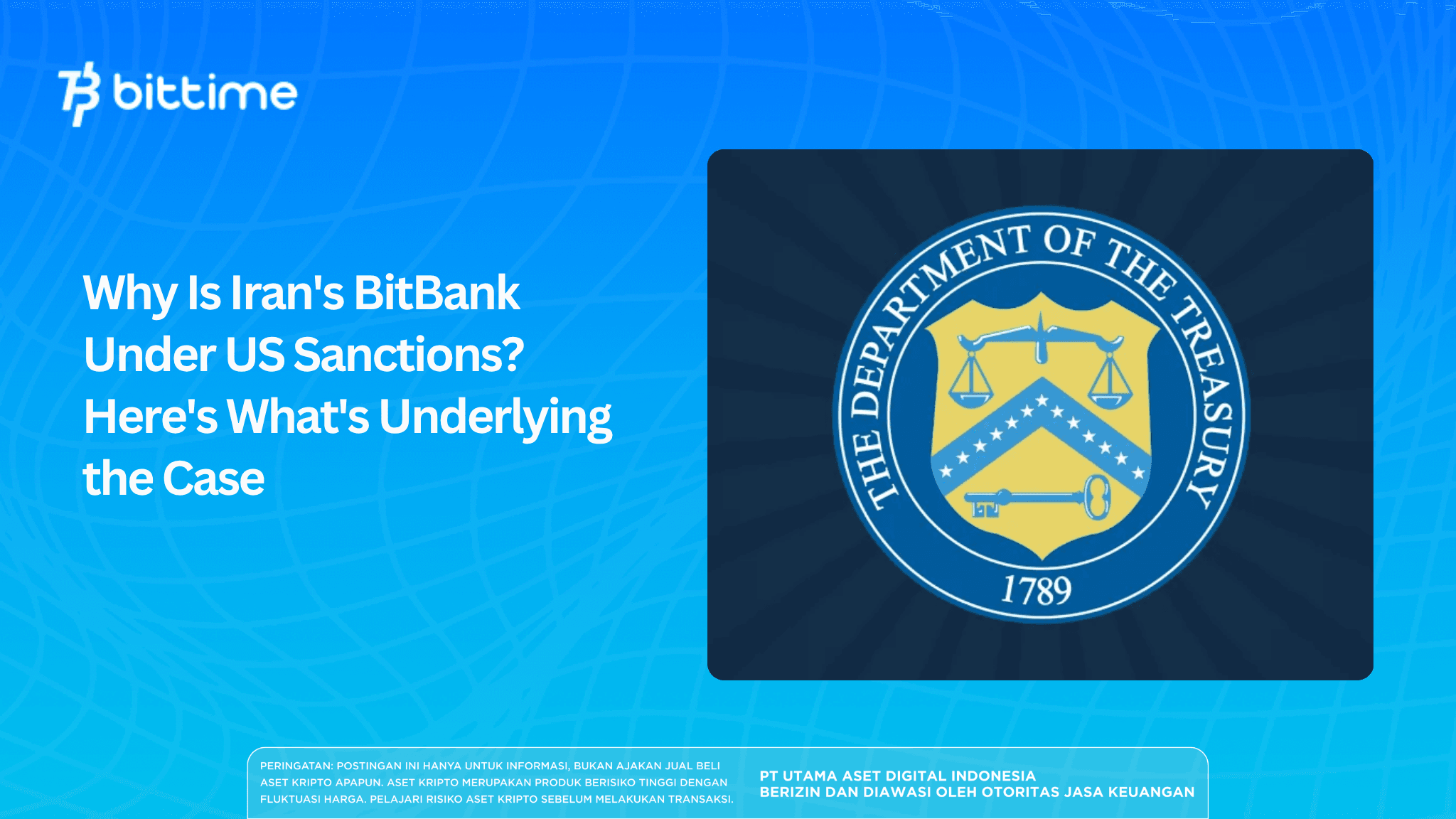
News of Iran's BitBank being sanctioned by the United States has drawn attention from the crypto market after Office of Foreign Assets Control (OFAC) added BitBank to the Specially Designated Nationals (SDN) list on September 17, 2026.
According to the US Treasury Department, the move is related to the alleged use of BitBank in Bitcoin-based fund flows connected to the Islamic Revolutionary Guard Corps (IRGC) and Iran's financial network. Bitcoin
OFAC also targeted the developers of BitBank, as well as several individuals linked to Iranian businessman Babak Zanjani.
Key Takeaways
- The US sanctioning of Iran's BitBank came after the Treasury accused the platform of facilitating Bitcoin transfers worth hundreds of millions of dollars linked to the IRGC.
- OFAC also added BitBank's developer, Pishtaz Simorgh Electronic Trade Company, and three individuals linked to the Babak Zanjani network to the sanctions list.
- The case shows that the US is increasingly targeting Iran's crypto infrastructure, rather than only specific wallets or digital asset transactions.
Why Was Iran's BitBank Sanctioned by the US?
The question of why Iran's BitBank was sanctioned is related to the platform's alleged role in a financial network targeted by the US government.
The Treasury stated that BitBank is an Iranian digital asset company controlled by Babak Zanjani, an Iranian businessman who had previously been sanctioned by the US.
According to the Treasury, between June and July 2026, Zanjani used BitBank to facilitate Bitcoin transfers worth hundreds of millions of dollars to the IRGC.
In its OFAC designation, BitBank is listed as an entity established in 2024 and based in Tehran. The designation was made under Executive Order 13902, which the US uses, among other purposes, to target Iran's financial sector.
It is important to note that the claims regarding fund flows and the involvement of these parties are allegations made by the US government as the basis for the sanctions designation, not a court ruling establishing BitBank's wrongdoing.
Read Also: NU Congress Move: Bitcoin Recognized as a Digital Asset
BitBank's Connection to Hormuz Payments
The Iran BitBank sanctions case is also connected to the Hormuz Safe Marine Services Authority. The Treasury had previously targeted the organization and stated that the service was used in a payment scheme related to shipping activities in the Strait of Hormuz.
According to the Treasury, Hormuz Safe received payments in Bitcoin and other digital assets. In the latest development, the US stated that since June, Hormuz Safe had used BitBank to transfer payments that were subsequently linked to the IRGC.
This connection is one of the main reasons why the Iranian crypto exchange BitBank was included in US sanctions enforcement action.
In other words, regulators' attention is not solely because BitBank is an Iranian crypto exchange, but because of its alleged role as part of a payment and digital asset transfer network that the Treasury says is connected to sanctioned entities.
Turn today's opportunity into the first step toward investing. Register on Bittime and start building your portfolio.
OFAC Also Targets BitBank's Developer
The US sanctions on Iran's BitBank do not stop at its trading platform. OFAC also designated Pishtaz Simorgh Electronic Trade Company, which the Treasury identified as the developer of BitBank's software.
In addition, three individuals—Hossein Ali Zaker Hossein, Mohammad Mahdi Zaker Hossein, and Seyed Adel Heidari—were also added to the SDN List.
OFAC linked them to Babak Zanjani's business network and Dot One Value Creation Group.
This pattern indicates a broader US approach toward alleged digital financial networks. Sanctions targets may include exchanges, technology companies, operators, and other parties that OFAC says play a role in such networks.
Read Also: Bitcoin Is More Than Digital Gold: Its Geopolitical Value According to Bitwise
Iran's BitBank Sanctions and OFAC Rules
After being added to the SDN List, BitBank's assets and interests in property located in the United States or in the possession or control of US persons are generally blocked.
US persons are also generally prohibited from conducting transactions with parties on the list without applicable authorization or an exception.
OFAC also lists BitBank as having secondary sanctions exposure, meaning the consequences are not only relevant to US companies or citizens. Non-US parties may also face sanctions risks under certain circumstances based on US rules.
The measure is part of a broader US policy to restrict Iran's access to the international financial system.
Looking for more flexible gold investment options? Check the latest PAXG price and XAUT price latest directly on the Bittime market.
Not an Isolated Case in Iran's Crypto Industry
The BitBank case comes after the US previously targeted several Iranian crypto exchanges. In June 2026, OFAC designated Nobitex and several other Iranian digital asset exchanges, alleging links to IRGC financing and sanctions evasion.
In January 2026, the Treasury had also previously designated Zedcex and Zedxion, two digital asset exchanges linked to Babak Zanjani.
This series of actions shows that the Iran BitBank sanctions are part of a broader targeting effort against Iran's financial and digital asset networks.
Read Also: Could the US Dollar Change? Investors Eye the American Reserve Modernization Act
What Are the Implications for the Crypto Market?
Sanctions against BitBank could increase attention to compliance and transaction risks involving Iranian crypto exchanges.
For international digital asset companies, identifying sanctioned wallet addresses, entities, and counterparties is becoming increasingly important.
The case also shows that crypto assets are not beyond the reach of sanctions policies. The US government is increasingly using financial network analysis to target parties accused of helping evade sanctions through digital assets.
For the market overall, the impact is more related to regulation, compliance, and counterparty risk than to any direct change in Bitcoin's fundamentals.
Start trading crypto with major assets such as BTC/IDR and ETH/IDR directly on the Bittime app.
Bittime is a licensed and OJK-supervised Digital Financial Asset Trader (PAKD) platform — where you can buy Bitcoin in Indonesia and hundreds of other crypto assets starting from Rp10,000. The registration process is fast, secure, and can be started today.
Monitor USDT to IDR conversion rates and your favorite crypto asset price movements in real time. Everything is available in one crypto investment app that can be downloaded for free from the Play Store.
Ready to get started? Register now on Bittime and execute your investment strategy with a platform trusted by millions of users in Indonesia.
FAQ
What Is Iran's BitBank?
BitBank is a digital asset platform based in Tehran and, according to OFAC data, was established in 2024. The platform became a target of US sanctions on September 17, 2026.
Why Was Iran's BitBank Sanctioned?
According to the US Treasury, BitBank was allegedly used to facilitate Bitcoin transfers worth hundreds of millions of dollars linked to the IRGC and Babak Zanjani's financial network.
What Is BitBank's Relationship with the IRGC?
The US Treasury accused BitBank of being part of a payment flow ultimately connected to the IRGC. The allegation formed the basis for OFAC's sanctions action.
Who Else Was Sanctioned Besides BitBank?
OFAC also designated BitBank's developer, Pishtaz Simorgh Electronic Trade Company, as well as three individuals linked to Babak Zanjani's network.
Does the Iran BitBank Sanctions Mean Bitcoin Is Also Sanctioned?
No. The sanctions target BitBank and specific parties designated by OFAC, not Bitcoin as a network or asset as a whole.
Disclaimer: The views expressed belong exclusively to the author and do not reflect the views of this platform. This platform and its affiliates disclaim any responsibility for the accuracy or suitability of the information provided. It is for informational purposes only and not intended as financial or investment advice.

.png)