BI Rate Rises to 6%: Impact on Mortgage Installments, Rupiah, and Savings
2026-11-19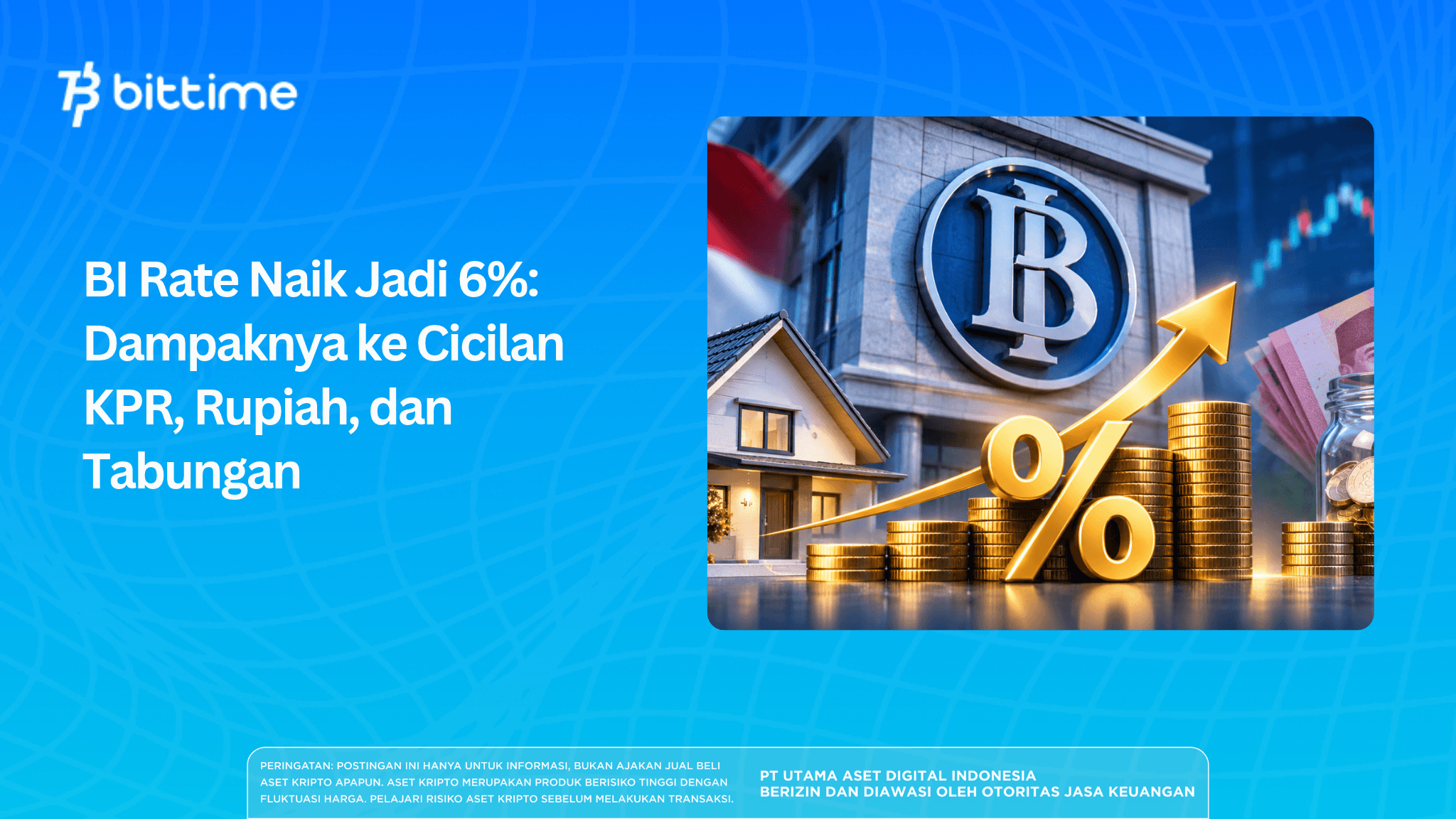
The BI Rate rose to 6% after Bank Indonesia (BI) raised its benchmark interest rate by 25 basis points from 5.75% on November 18, 2026. The decision was made to maintain rupiah stability and anticipate inflationary pressures amid global economic uncertainty.
For the public, higher interest rates bring mixed implications. Homeowners with mortgages may need to prepare for higher monthly payments, while time-deposit customers could benefit from higher interest rates. But will these changes have an immediate impact on everyday finances?
Key Takeaways
- Bank Indonesia raised the BI Rate by 25 basis points to 6% in November 2026.
- Borrowers with floating-rate mortgages may face higher monthly payments, while fixed-rate mortgages are generally not affected immediately.
- Higher interest rates could support rupiah stability and create opportunities for increased time-deposit rates.
BI Rate Officially Rises to 6% in November 2026
After keeping its benchmark interest rate at 5.75% for several months, Bank Indonesia made another adjustment at its Board of Governors Meeting (RDG) on November 17–18, 2026.
The increase also applies to two other monetary policy instruments: the Deposit Facility and the Lending Facility.
BI Rate is the benchmark interest rate used by Bank Indonesia to influence monetary conditions and financial markets.
The Deposit Facility allows banks to place funds with BI, while the Lending Facility provides liquidity loans from the central bank to commercial banks.
Changes to these three instruments can affect banks' funding costs. However, each bank still sets its own policies for lending, savings, and time-deposit interest rates.
Read also: US Restricts AI Chip Exports to Indonesia: What Does It Mean for the Technology Industry?
Why Did Bank Indonesia Raise Interest Rates?
Bank Indonesia Governor Destry Damayanti explained that the interest rate increase was a precautionary measure in response to growing global uncertainty.
At least three considerations underlie the decision.
1. Strengthening Rupiah Stability
When domestic interest rates rise, rupiah-denominated financial instruments may become more attractive to investors.
BI hopes this measure will help sustain capital inflows while reducing pressure on the rupiah's exchange rate.
2. Anticipating Inflationary Pressures
Bank Indonesia aims to keep inflation within its 2.5% ± 1% target range throughout 2026 and 2027.
Higher lending rates can help moderate consumption growth and demand for credit. Over time, this mechanism is expected to ease upward pressure on prices.
3. Addressing Global Economic Uncertainty
Movements in the US dollar, monetary policy changes in advanced economies, and global investor sentiment pose challenges to the stability of Indonesia's financial markets.
Despite tightening monetary policy, BI continues to pursue macroprudential measures that support lending so that economic growth does not lose momentum.
Read also: US Bank Outage 2026: JPMorgan Chase Bug Disrupts Transactions at Other Banks
Will a Higher BI Rate Make Mortgage Payments More Expensive?
If you are still making mortgage payments, this may be your main concern.
The good news is that an increase in the BI Rate does not automatically raise every mortgage payment. Its impact depends on the type of interest rate, the loan agreement, and each bank's decisions.
Borrowers who have entered the floating-rate period are more likely to be affected than those still benefiting from a fixed rate.

Differences Between Fixed and Floating Mortgage Interest Rates
A floating interest rate is a loan rate that may change over time according to bank policy and the terms of the loan agreement.
A fixed interest rate, meanwhile, remains unchanged for an agreed period.
If your mortgage's fixed-rate period is about to end, it is worth checking the floating rate your bank will apply. This information can help you prepare your budget before your monthly payments change.
Mortgage Payment Simulation After an Interest Rate Increase
An interest rate increase of 0.25 percentage points may seem small. However, its impact on monthly expenses will be more noticeable if a substantial loan balance remains.
For example, consider the following mortgage assumptions:
- Outstanding loan principal: IDR 500 million.
- Remaining loan term: 15 years, or 180 months.
- Initial interest rate: 10% per year.
- Repayment method: monthly annuity payments.
If the bank raises your mortgage rate from 10% to 10.25%, you would need to set aside approximately IDR 76,729 more each month, or IDR 920,748 per year.
If the interest rate adjustment reaches one percentage point, additional expenses could amount to approximately IDR 3.72 million over 12 months.
This simulation does not represent a guaranteed increase in mortgage payments at every bank. It uses the annuity method and excludes administrative fees, insurance, and any additional terms in the loan agreement.
Read also: FBI Asks Police to Investigate Megaspeed: Where Did the NVIDIA H100 GPUs Go?
How a BI Rate Increase Affects the Rupiah Exchange Rate
The foreign exchange market is particularly sensitive to Bank Indonesia's interest rate decisions.
More attractive yields on domestic financial instruments may encourage foreign investors to invest in Indonesia. These capital inflows could increase demand for the rupiah.
A positive reaction was briefly seen after the BI Rate announcement on November 18, 2026. At 2:20 p.m. WIB, the rupiah strengthened to IDR 18,200 per US dollar, compared with the previous closing level of IDR 18,240.
The domestic currency later closed trading at around IDR 18,220 per US dollar, slightly weaker than its best level following the announcement.
These movements illustrate how higher interest rates can help support the rupiah. Nevertheless, the exchange rate's future direction will still be influenced by the strength of the US dollar, Federal Reserve policy, and global economic developments.
To understand how changes in the rupiah exchange rate affect digital assets, you can also monitor the latest USDT to IDR conversion rate directly on Bittime.
Will Savings and Time-Deposit Interest Rates Also Rise?
While higher interest rates may concern borrowers, the situation can be different for customers who keep their money in banks.
Banks may offer higher time-deposit rates to attract deposits from the public. However, these adjustments usually take time and depend on each bank's funding needs.
For customers who already hold time deposits, the interest rate generally follows the existing agreement until maturity. An opportunity to earn a new rate usually arises when opening or renewing a deposit.
Regular savings account rates, meanwhile, may not increase because these products have different characteristics from time deposits.
Simulation of Time-Deposit Returns After an Interest Rate Increase
Suppose you place IDR 100 million in a 12-month time deposit.
Assuming a 20% tax on deposit interest, here is a comparison of the income you could earn at different interest rates.
In this simulation, an increase in the deposit rate from 4% to 4.25% generates an additional IDR 200,000 in net annual income.
These figures can serve as a reference when comparing deposit offers, rather than as guaranteed rates that banks will provide after the BI Rate increase.
Are High-Interest Time Deposits Covered by LPS?
High deposit interest rates may be attractive, but another important consideration is the coverage rules of the Indonesia Deposit Insurance Corporation (LPS).
The following are the LPS deposit insurance interest rate limits for the period from October 1, 2026, through January 31, 2027:
LPS insures deposits of up to IDR 2 billion per depositor per bank, provided the applicable conditions are met.
Based on these limits, all the deposit interest rates in the preceding simulation exceed the insurance interest rate limit for rupiah deposits at commercial banks.
Therefore, do not compare potential returns alone. Make sure you understand whether your funds are eligible for deposit insurance before choosing a high-interest deposit product.
Read also: Bitcoin Price Drops to $62,000: Is the AI Stock Market to Blame?
How a BI Rate Increase Affects Stocks, Bitcoin, and Crypto
Changes in interest rates can also influence investors' decisions about where to allocate their money. When deposit yields rise, some investors may reconsider how their portfolios are allocated.
Impact on Stocks and Bonds
Companies with floating-rate debt may face higher financing costs. Rising interest expenses can, in turn, affect corporate profits.
Meanwhile, rising yields in the bond market can put downward pressure on the prices of existing fixed-rate bonds.
Nevertheless, not all stocks will experience the same pressure because companies have different financing structures and business conditions.
How the BI Rate Affects Bitcoin and Cryptocurrency Prices
Higher interest rates may make some Indonesian investors more selective when buying risky assets, including cryptocurrencies.
The impact of BI policy on the crypto market is mainly related to domestic liquidity, investors' financial capacity, and changes in the rupiah exchange rate.
For global Bitcoin prices, US monetary policy, institutional demand, and developments in the crypto industry remain more influential factors.
How the Rupiah Affects Bitcoin Prices in IDR
Another important consideration for Indonesian investors is the rupiah exchange rate. Bitcoin's price in US dollars may stay the same while its value in rupiah changes.
As an illustration, the following comparison assumes that Bitcoin remains priced at US$65,000.
In this example, a stronger rupiah lowers Bitcoin's estimated price by IDR 2.6 million, even though BTC's price in US dollars has not declined.
This is why Indonesian investors need to monitor both BTC/USD movements and the rupiah exchange rate when evaluating the value of their assets.
Amid changes in monetary policy and the rupiah exchange rate, you can also monitor the latest Bitcoin (BTC) price on Bittime for an up-to-date view of crypto market conditions.
Who Benefits and Who Loses When the BI Rate Rises?
The effects of higher interest rates are not the same for everyone. Financial circumstances, employment type, and the size of financial obligations all help determine the impact.
Customers with idle funds may earn more attractive returns on their deposits. In contrast, households and businesses that rely on floating-rate credit may need to adjust their spending.
For importers, a stronger rupiah could reduce the cost of purchasing goods from abroad. However, those savings may be offset if they also face higher borrowing costs to run their businesses.
Read also: Warning! OJK Shuts Down 16 Illegal Investment Entities, Including AI and Crypto Scams
Strategies for Managing Your Finances When the BI Rate Rises
An interest rate increase does not mean you need to change all your financial plans immediately. Start by reviewing your regular expenses, debt obligations, and existing investment goals.
Some steps worth considering include:
- Check when your mortgage's fixed-rate period ends.
- Set aside emergency funds to prepare for possible changes in monthly repayments.
- Compare time-deposit rates based on net income after tax.
- Make sure your deposits meet LPS insurance requirements.
- Adjust your investment allocation to your financial goals and risk tolerance.
- Avoid using borrowed money to finance speculative investments.
For crypto investors, interest rate and rupiah exchange rate movements are also important when evaluating a portfolio. You can sign up for Bittime to follow developments in the crypto market and better understand how economic conditions affect different digital assets.
Conclusion
The increase in the BI Rate to 6% brings changes worth watching, especially for people with long-term loans or funds deposited in banks.
Although floating-rate mortgage borrowers may face higher payments and time-deposit customers could earn higher interest, the actual adjustments will depend on each bank's policies.
Rather than rushing to change your financial strategy, first understand how interest rate movements affect your cash flow, monthly obligations, and the value of your investments.

FAQ
What Is the Latest BI Rate for November 2026?
The latest BI Rate stands at 6% after Bank Indonesia raised its benchmark interest rate by 25 basis points on November 18, 2026. Previously, the BI Rate was 5.75%.
Will Mortgage Payments Increase if the BI Rate Rises?
Floating-rate mortgage payments may increase if banks adjust their lending rates. For fixed-rate mortgages, the rate generally remains unchanged during the period specified in the contract.
What Is the Difference Between Fixed and Floating Interest Rates?
A fixed interest rate remains unchanged for a specified period. A floating interest rate, meanwhile, may change according to bank policy and the terms of the loan agreement.
Will Deposit Interest Rates Rise After the BI Rate Reaches 6%?
Banks may offer higher time-deposit rates, but increases are not automatic. Existing deposits generally continue to earn interest at the contractual rate until maturity.
Does an Increase in the BI Rate Strengthen the Rupiah?
A higher BI Rate can make domestic financial instruments more attractive, potentially supporting a stronger rupiah. However, exchange rate movements are also influenced by the US dollar, foreign capital flows, and global economic conditions.
Disclaimer: The views expressed belong exclusively to the author and do not reflect the views of this platform. This platform and its affiliates disclaim any responsibility for the accuracy or suitability of the information provided. It is for informational purposes only and not intended as financial or investment advice.

.png)