Central Banks Around the World Are Beginning to Move Away from the US Dollar and Towards Gold
2026-07-01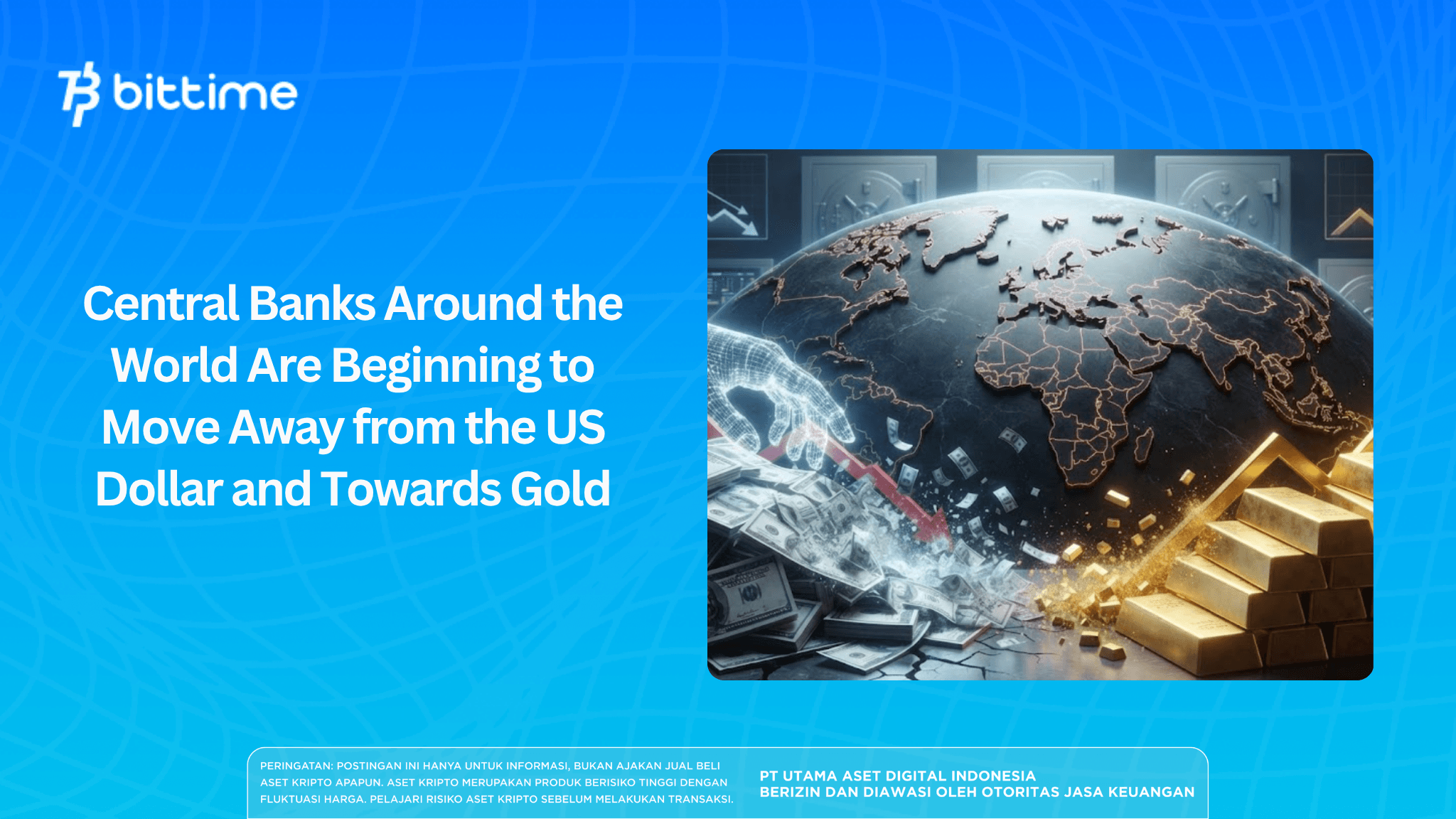
De-dollarization is gaining momentum as more central banks reduce their exposure to the US dollar while increasing holdings of gold and alternative currencies.
A recent OMFIF survey found that, for the first time in a decade, more central banks plan to cut their US dollar allocations than increase them. Although the US dollar remains the world's primary reserve currency, the trend reinforces the global de-dollarization narrative.
Key Takeaways
- The OMFIF survey shows that more central banks plan to reduce their US dollar holdings than increase them — the first time this has happened since the survey began.
- Gold has become the most sought-after asset as a hedge against geopolitical risks, while the euro and yuan are gaining attention as diversification alternatives.
- Although the de-dollarization trend continues to develop, the US dollar still accounts for around 58% of global foreign exchange reserves, so the shift is expected to occur gradually.
Register at Bittime now and start trading crypto with a fast, secure, and easy process in the app.
Why Are Central Banks Starting to Reduce Their US Dollar Holdings?
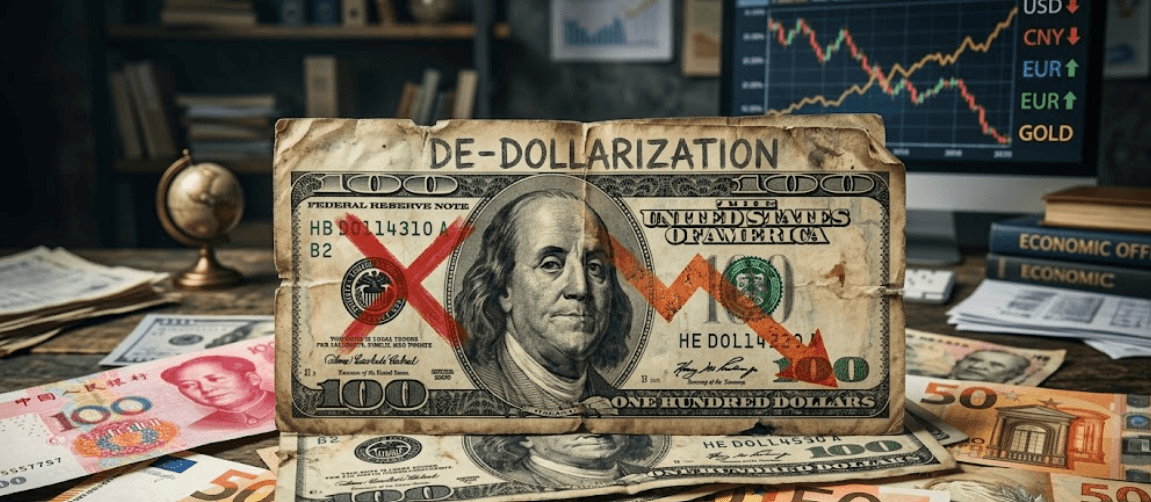
Illustration: AI-generated image
The OMFIF survey of dozens of central banks shows a change in perception regarding the risks of investing in dollar-based assets.
The main factors are not solely economic conditions, but also rising geopolitical uncertainty and US policy.
International conflicts, trade tensions, and shifts in foreign policy have prompted some central banks to consider diversifying their reserve assets.
As a result, there is a growing tendency for central banks to gradually move away from the US dollar by allocating part of their portfolios to other assets considered more stable in the long term.
However, it is important to understand that this is not a massive simultaneous sell-off of dollars. What is happening is better described as a gradual adjustment of foreign exchange reserve composition.
Read Also: Foreign Banks Start Withdrawing Liquidity from Indonesia, What’s Happening?
What is Global De-Dollarization?
De-dollarization is the process of reducing dependence on the US dollar in international trade, investment, and foreign exchange reserves.
For decades, almost all strategic commodity transactions, such as oil, were conducted in dollars. Additionally, most countries’ foreign assets are held in US government bonds or dollar-based instruments.
Now, several countries are expanding the use of other currencies such as:
- Euro
- Chinese Yuan (Renminbi)
- British Pound Sterling
- Norwegian Krone
- New Zealand Dollar
These steps are part of global de-dollarization — an effort to create a more diversified international financial system that does not depend on a single currency.
However, de-dollarization does not mean completely replacing the dollar, but rather reducing risk concentration.
New to crypto investing? Bitcoin (BTC) and Ethereum (ETH) are popular starting options to watch and trade on Bittime.

Source: Pixabay
Why Has Gold Become the Top Choice?
In addition to currency diversification, the most prominent trend is the increasing interest in gold reserves.
In the OMFIF survey, around 82% of central banks stated they already hold gold as part of their foreign exchange reserves, while about 30% plan to increase their gold holdings in the next two years.
There are several reasons why central banks are buying gold more aggressively.
First, gold is not tied to the economic policy of any single country, making it a hedge against geopolitical uncertainty.
Second, gold has a long track record as a store of value during high inflation and financial market turmoil.
Third, unlike fiat currencies, gold carries no issuer default risk, making it a strategic asset for maintaining reserve stability.
For these reasons, gold has once again become an important component in central banks’ asset management strategies.
Read Also: Diversification When the Rupiah Weakens: Gold, Dollar, or Crypto?
Is the US Dollar Losing Its Status as the World’s Reserve Currency?
The answer is still no.
Although there is a gradual trend of central banks selling dollars for diversification, the dollar’s position as the US dollar reserve currency remains very strong.
According to various market reports, around 58% of global foreign exchange reserves are still held in US dollars. This figure is indeed at its lowest level in about two decades, but still far exceeds other currencies.
Moreover, most global trade, international bond markets, and cross-border financial transactions still use the dollar as the primary currency.
This means the changes taking place are more of an evolution of the global monetary system rather than a sudden shift in dominance.
Read Also: 20+ Weakest Currencies in the World 2026, Is the Rupiah Included?
Euro and Yuan Are Gaining Momentum
Besides gold, the two assets receiving the most attention are the euro and the yuan.
The euro is becoming more attractive due to the continued development of the European bond market, while euro-denominated green bond issuance has reached new records in recent years.
On the other hand, the yuan is increasingly used in international trade, especially in Asia and among China’s trading partners.
Many central banks see these two currencies as diversification instruments that can reduce dependence on the dollar.
Nevertheless, the liquidity, market depth, and global acceptance of the dollar are still far greater than these alternative currencies.
Convert 1 BTC to IDR - Bitcoin to Rupiah Exchange Rate
Impact on Global Financial Markets
Changes in central bank strategies worldwide have the potential to bring several impacts on the international financial system.
In the long term, demand for gold is likely to remain high if geopolitical uncertainty continues to rise.
Additionally, increased use of alternative currencies can make the global foreign exchange reserve system more diverse than before.
However, investors also need to understand that adjustments in reserve composition happen very slowly. Central banks typically make gradual changes to avoid disrupting financial market stability.
Therefore, even though the de-dollarization narrative is growing stronger, dollar dominance is likely to persist for many years to come.
Read Also: Bittime and Nobu Bank Collaboration Bridges Traditional Finance Toward Global Asset Tokenization
What Does This Mean for Investors?
For investors, this trend shows that geopolitical factors now have an increasingly large influence on global investment strategies.
Gold has the potential to remain a defensive asset when uncertainty rises, while alternative currencies may play a larger role in international transactions.
On the other hand, the US dollar remains a highly liquid asset and still dominates bond markets, international trade, and the global payment system.
In other words, the world is not abandoning the dollar entirely, but is starting to build a more balanced and diversified reserve system.
Want more flexible gold investment? Check the latest PAXG price and XAUT price movements directly on the Bittime market.
Conclusion
The latest OMFIF survey reveals an important shift in central banks’ foreign exchange reserve management strategies.
For the first time, more institutions plan to reduce their US dollar allocations than increase them, while gold has become the most sought-after asset as a hedge against geopolitical risks.
Nevertheless, the global de-dollarization process is still progressing gradually. The US dollar continues to hold a dominant role as the world’s reserve currency, but the diversification trend toward gold, the euro, and the yuan indicates that the international monetary system is undergoing a transformation toward a more diverse structure.

Seeing the direction of central bank movements — is it safe to start investing in gold? On Bittime, you can also access digital gold assets such as XAUT and PAXG for hassle-free gold investment!
Bittime is a licensed and supervised Digital Financial Asset Trader (PAKD) platform by the Financial Services Authority — the place where you can buy Bitcoin in Indonesia and hundreds of other crypto assets starting from Rp10,000. The registration process is fast, secure, and can be started today.
Monitor the conversion USDT to IDR and the price movements of your favorite crypto assets in real-time. All available in one crypto investment app that can be downloaded for free on the Play Store.
Ready to start?Register now at Bittime and execute your investment strategy with a platform trusted by millions of users in Indonesia.
FAQ
What is de-dollarization?
De-dollarization is the process of reducing the use of the US dollar in international trade, financial transactions, and a country’s foreign exchange reserves.
Why are central banks buying gold?
Gold is considered a hedge against inflation, geopolitical uncertainty, and risks originating from the global financial system.
Are central banks really selling off all their US dollars?
No. Most central banks are only diversifying their foreign exchange reserve portfolios by gradually reducing the dollar portion.
Will the US dollar lose its status as the world’s reserve currency?
In the near term, this is unlikely. The dollar still accounts for around 58% of global foreign exchange reserves and remains the main currency in international trade.
What is the impact of de-dollarization on investors?
De-dollarization can increase the role of gold and alternative currencies in the global financial system, but the US dollar remains an important asset due to its high liquidity and wide acceptance.
Disclaimer: The views expressed belong exclusively to the author and do not reflect the views of this platform. This platform and its affiliates disclaim any responsibility for the accuracy or suitability of the information provided. It is for informational purposes only and not intended as financial or investment advice.

.png)