3 Best Assets to Hold During War — Even With the Iran-Israel Ceasefire
2026-03-03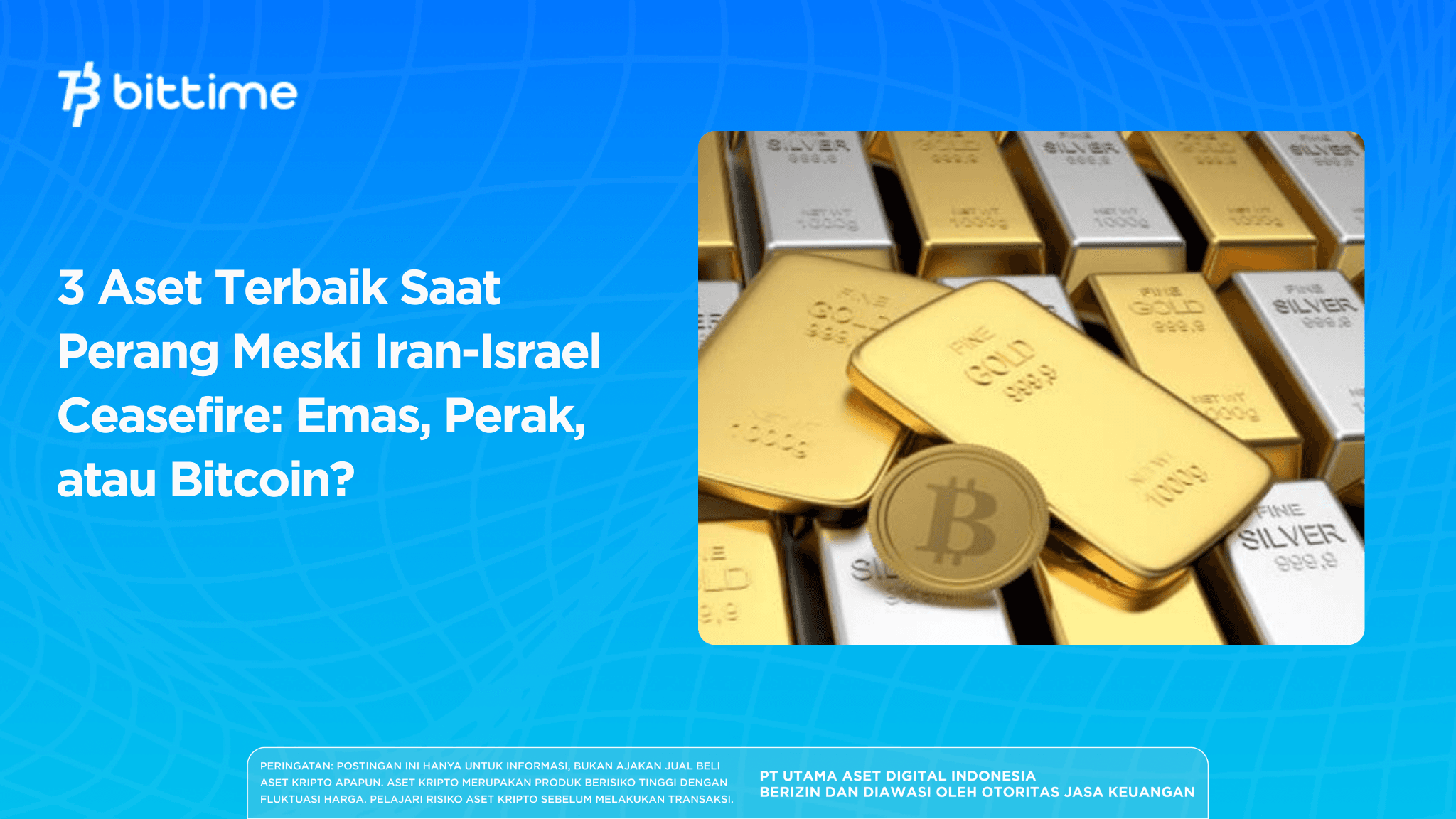
A ceasefire quiets the guns. It doesn't eliminate the risk. While Iran and Israel have pulled back from open conflict for now, analysts across the board are treating this pause with caution — not relief.
Ceasefire agreements in the Middle East have a well-documented history of breaking down, sometimes with little warning, and global financial markets have proven time and again just how quickly they reprice when tensions flare back up.
That's precisely why the current lull may be the most strategically valuable window investors have: safe haven assets are still reasonably priced, and the underlying geopolitical risk hasn't gone anywhere.
Key Takeaways
- Gold remains the most trusted store of value during geopolitical crises, backed by centuries of precedent and ongoing accumulation by central banks worldwide.
- Silver offers a dual advantage — functioning as both a safe haven and an industrial commodity — making it a compelling lower-cost alternative to gold.
- Bitcoin provides modern portfolio diversification outside the traditional financial system, though its extreme price volatility demands careful position sizing and risk awareness.
Gold: The Timeless Safe Haven That Wars Can't Shake
When geopolitical risk spikes, gold moves first. This isn't sentiment or superstition — it reflects a rational allocation to an asset that has no counterparty risk, isn't issued by any single government, and has held its purchasing power through centuries of wars, currency collapses, and economic crises.
The Iran-Israel situation reinforces this logic. Even under a ceasefire, market anxiety about regional stability remains elevated. A single retaliatory strike, an intercepted drone, or a failed diplomatic meeting can be enough to send gold sharply higher within hours.
And if the conflict escalates into something larger — disrupting oil flows, triggering sanctions, or destabilizing regional currencies — gold's role as the ultimate financial anchor becomes even more pronounced.
What's telling is that this conviction isn't limited to retail investors. Central banks across the globe have been actively building their gold reserves in recent years, specifically as a hedge against geopolitical and macroeconomic uncertainty. When the institutions responsible for managing national wealth are quietly accumulating gold, it signals something more durable than a short-term trade.
For individual investors, accessing gold has never been more straightforward. Digital gold platforms now allow you to buy, hold, and liquidate positions instantly — removing the traditional friction of storage, insurance, and physical security that came with owning gold bars or coins.
The core benefit remains unchanged: as currencies weaken and inflation rises in the wake of conflict, gold preserves what your money is actually worth.
Silver and Bitcoin: Two Very Different Alternatives Worth Understanding
Not every investor wants 100% of their defensive allocation in gold — and there's a reasonable case for diversifying that protection across assets with different characteristics. Silver and Bitcoin occupy this space, each offering something gold doesn't, alongside risks that need to be understood clearly before investing.
Silver tends to fly under the radar in conversations about war-time investing, but it deserves more attention than it typically gets.
Like gold, silver benefits from safe haven demand when global uncertainty rises — prices moved solidly during the most intense phases of the Iran-Israel conflict, even as equity markets wobbled.
But silver has a second engine that gold lacks: industrial demand. The metal is a critical input for solar panels, semiconductors, electric vehicles, and advanced electronics — sectors that aren't going away regardless of geopolitical conditions. This structural demand gives silver a price floor that purely speculative assets simply don't have.
Add to that the fact that silver trades at a significant discount to gold on a per-ounce basis, and it becomes an accessible entry point for investors who want precious metal exposure without committing to gold's price tag.
Bitcoin is a more complex case — and intellectually honesty demands treating it that way. Its core appeal in a crisis context is genuine: Bitcoin operates outside any government's monetary system, can be transferred across borders without institutional permission, and maintains liquidity even when traditional banking systems come under stress.
During periods of capital controls or restricted fund movement — scenarios that become more plausible as regional conflicts deepen — these properties have real practical value. Transaction volumes during the Iran-Israel conflict remained notably high, reflecting continued conviction from a segment of the market.
That said, Bitcoin's volatility is not a footnote — it's a central feature of the asset. Values can swing 20–30% within days, in either direction. Unlike gold, which carries near-universal acceptance as a store of value, Bitcoin still faces unresolved regulatory questions in numerous jurisdictions that can affect both liquidity and access.
Treating Bitcoin as a core defensive position would be a mistake; treating it as a measured tactical allocation within a broader portfolio is a defensible strategy for investors who understand what they're holding.
Conclusion
The Iran-Israel ceasefire is a reprieve, not a resolution. The structural tensions between the two — nuclear ambitions, proxy conflicts, ideological opposition — remain entirely intact. History suggests these pauses tend to be temporary, and the financial markets that got caught off-guard by the initial escalation don't want to be caught twice.
The three assets worth considering — gold, silver, and Bitcoin — each serve a distinct function. Gold is the foundation: stable, globally accepted, and battle-tested across every major conflict of the modern era.
Silver is the strategic complement: offering similar defensive qualities with additional upside from industrial demand, at a more accessible price point. Bitcoin is the modern diversifier: genuinely useful for investors seeking exposure outside the conventional financial system, provided they're honest with themselves about the volatility involved.
The ideal allocation across these three depends on your individual risk tolerance, investment horizon, and existing portfolio composition. But the broader principle holds regardless: a portfolio with no defensive layer is a portfolio that isn't ready for what geopolitical uncertainty can do to asset prices.
The window to build that protection at reasonable prices tends to close faster than most investors expect. A ceasefire is often as calm as it gets — and calm is exactly when preparation pays off most.
This article is for informational purposes only and does not constitute financial or investment advice. Always conduct independent research and consult a qualified financial advisor before making investment decisions.
FAQ
What is a safe haven asset and why does it matter during war?
A safe haven asset is an investment that tends to retain or increase in value during periods of market stress — including armed conflicts, economic crises, or sharp political instability. They matter during war because conventional assets like equities and corporate bonds often decline as uncertainty rises, making defensive allocations essential for capital preservation.
Is the Iran-Israel ceasefire enough to eliminate geopolitical risk?
Most analysts say no. Ceasefire agreements in the region have historically been fragile, and the core disputes driving the conflict — Iran's nuclear program, proxy warfare, and decades of strategic rivalry — remain unresolved. Financial markets continue to price in elevated regional risk even during ceasefire periods.
Why is gold still relevant when Bitcoin exists?
Gold and Bitcoin aren't competing for the same role. Gold has thousands of years of precedent as a store of value, near-universal acceptance, and no regulatory uncertainty. Bitcoin is newer, more volatile, and still navigating a complex global regulatory environment. Many investors hold both — not as substitutes, but as complementary positions with different risk-return profiles.
What's a reasonable allocation to safe haven assets in a crisis portfolio?
There's no universal answer, but a common framework among financial planners suggests allocating 10–20% of a portfolio to defensive assets like gold and silver during periods of elevated geopolitical risk. Bitcoin allocations, given its volatility, are typically kept smaller and calibrated to personal risk tolerance.
When is the best time to buy safe haven assets?
Counterintuitively, during periods of relative calm — like the current ceasefire. Buying safe haven assets after a crisis has already dominated headlines typically means paying a significant premium. Investors who position themselves during quieter windows tend to achieve far better entry prices and stronger long-term returns.
How does silver differ from gold as a crisis investment?
While both are precious metals with safe haven characteristics, silver has an additional demand driver: industrial applications in renewable energy, electronics, and automotive manufacturing. This gives silver a structural price floor beyond pure sentiment. Silver also trades at a lower absolute price per ounce, making it more accessible for investors starting with smaller capital amounts.
How to Buy Crypto on Bittime?

Want to trade sell buy Bitcoins and crypto investment easily? Bittime is here to help! As an Indonesian crypto exchange officially registered with Bappebti, Bittime ensures every transaction is safe and fast.
Start with registration and identity verification, then make a minimum deposit of IDR 10,000. After that, you can immediately buy your favorite digital assets!
Check the exchange rate BTC to IDR, ETH to IDR, SOL to IDR and other crypto assets to find out today's crypto market trends in real-time on Bittime.
Also, visit the Bittime Blog for interesting updates and educational information about the crypto world. Find reliable articles about Web3, blockchain technology, and digital asset investment tips designed to enrich your crypto knowledge.
Disclaimer: The views expressed belong exclusively to the author and do not reflect the views of this platform. This platform and its affiliates disclaim any responsibility for the accuracy or suitability of the information provided. It is for informational purposes only and not intended as financial or investment advice.

.png)


