Is the Global Digital Nuclear Reserve (GDNR) Legit? Here's a Risk Analysis
2026-06-04
Bittime - Global Digital Nuclear Reserve (GDNR) become one of the memecoins Solana Whichhas attracted the attention of traders in recent days after recording a market capitalization surge of millions of dollars in a short period of time.
The narrative behind this token is quite unique, combining the theme of the United States' nuclear reserves with the meme culture popular in the crypto market.
But like many other memecoin projects, the most frequently asked question is: is GDNR legit or does it have high risks that need to be watched out for?
To answer this, investors need to look at several important aspects starting from team transparency, token distribution, liquidity, on-chain activity, to security indicators smart contract.
Key Takeaways
There is no strong evidence that GDNR is a scam or rug pull.
Liquidity of around US$242 thousand is still relatively small compared to the market cap.
Smart contract audits and team transparency remain key risk factors.
Register at Bittime now and start trading crypto with a fast, safe, and easy process in the app.
GDNR Team Transparency Remains Limited
One of the first factors in crypto due diligence is knowing who the developers behind the project are.
As of the time of writing, no clear public information has been found regarding the identity of the GDNR core team or the company managing the project.
Situations like this are actually quite common in the memecoin world, especially for tokens that were born from community trends and not long-term utility projects.
While anonymity is not proof of a scam, investors need to understand that a lack of transparency makes accountability more difficult if problems arise later.
Read also:USNS Token: Scam or Legit? Complete Information on the United States Nuclear Supply
What is the Liquidity Condition of GDNR?
Liquidity is one aspect that is often overlooked by novice investors.
Token with market cap Smaller stocks can experience rapid price increases, but can also experience sharp declines when liquidity is insufficient to absorb selling pressure.
When conducting an analysis of GDNR, investors need to examine:
The amount of liquidity in the trading pool
What is locked liquidity?
Liquidity ratio to market cap
Daily trading activity
The greater the liquidity available, the lower the risk of slippage and price manipulation.
Read also:Is BlackRock Digital Gas Asset (BDGA) Coin Legit?
Current GDNR Liquidity Data
Based on DexScreener data, GDNR has:
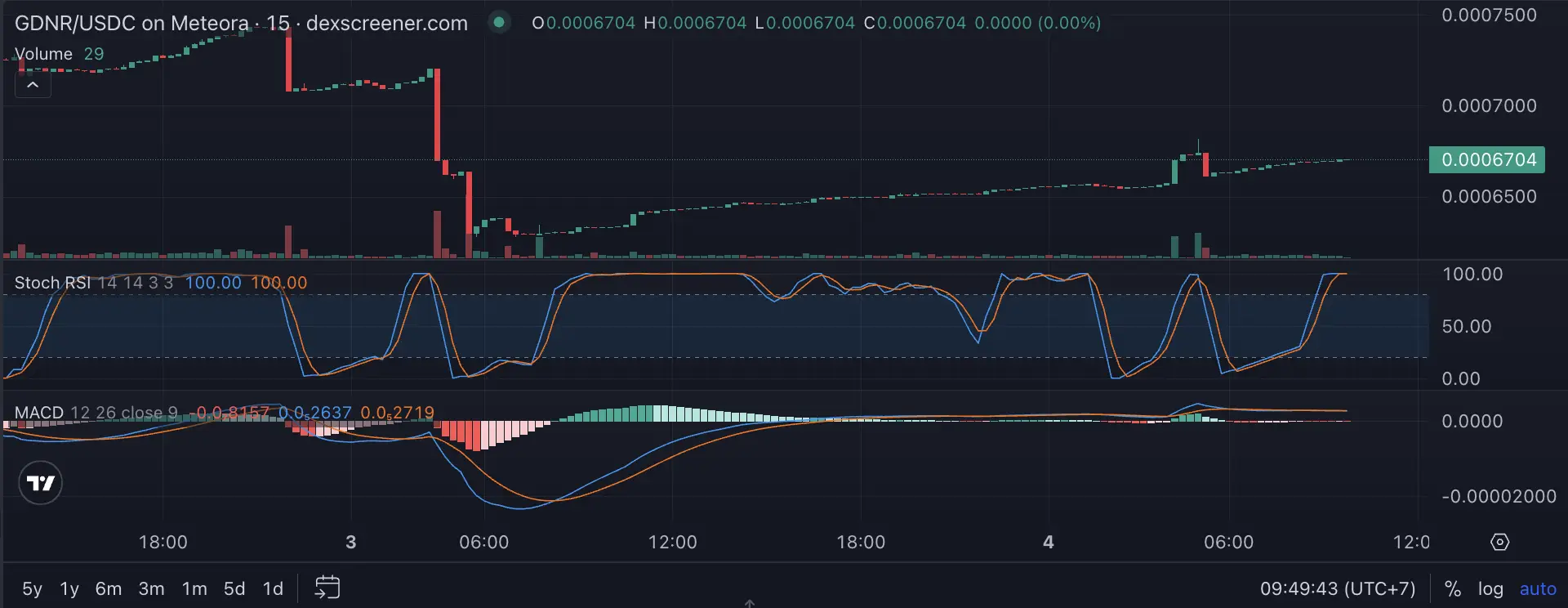
Market Cap:approximately US$7.3 million
FDV:approximately US$7.3 million
Liquidity:around US$242 thousand
Volume 24 Jam:around US$21 thousand
Holder: around 224 wallets
Pool Age:about 1 day
GeckoTerminal Security Score: 33/100
When compared to market capitalization, the liquidity to market cap ratio is in the range3,3%This figure is relatively small and indicates that prices still have the potential for highly volatile movements if selling occurs among large holders.
In addition, the daily trading volume is much smaller than the market cap, indicating that market liquidity is still not very deep.
Read also:What is $GDP (Global Data Protocol)? Why is its price soaring?
Token Distribution and Whale Wallet Risk
The next factor to consider is token distribution.
In new memecoin projects, the biggest risk often comes from the concentration of ownership in a few large wallets.
If a large portion of the token supply is held in the hands of a few addresses, then a sell-off from just one or two whales could trigger a significant price correction.
Therefore, investors are advised to check the holder distribution through a Solana explorer or on-chain analytics platform before making an investment decision.
The more evenly distributed the tokens, the lower the risk of price manipulation by certain groups.
Read also:Will BDGA Token Reach $1?
Has GDNR Been Audited?
Smart contract audits are an important indicator in assessing the security of crypto projects.
To date, there has been no independent audit information from major blockchain security firms such as Halborn, CertiK, Hacken, or Quantstamp that specifically audits GDNR smart contracts.
The absence of audits doesn't necessarily mean smart contracts are dangerous. However, this situation requires investors to be more cautious because there's no third party to thoroughly verify the security of the code.
Keep an eye on price movements for other popular coins such as Solana (SOL) exclusively on the Bittime market!
On-Chain Activity Is Still Very Young
Based on available trading data, the GDNR pool is still about a day old.
The project's very young age means many fundamental metrics cannot yet be comprehensively evaluated. Investors don't yet have sufficient data to assess:
Trading volume consistency
Growth in the number of holders
Liquidity stability
Big wallet behavior
Long-term community activities
In other words, most of GDNR's current valuation is still driven by market sentiment and speculation.
Check out how to buy Solana (SOL) on Bittime!
Are There Any Red Flags on GDNR?
Based on the data currently available, there is no strong evidence that directly indicates that GDNR is a scam or rug pull.
However, there are several risk factors worth paying attention to:
The development team is not transparent.
There are no publicly known smart contract audits yet.
The project is still very new.
Liquidity is relatively small compared to market capitalization.
Token distribution needs to be monitored further.
The security score is still relatively low.
These factors do not automatically make this project dangerous, but they are enough to place GDNR in the high-risk speculative asset category.
Start trading SOL/IDR with Bittime here!
Conclusion: Is GDNR legit?
Based on currently available data, GDNR shows no clear indications of a scam. This token is actively traded in the Solana ecosystem, has real liquidity, trading volume, and a growing community of holders.
However, investors cannot consider it a project with strong fundamentals because team transparency is still limited, security audits are not yet available, and the project is still very young.
For investors interested in GDNR, the best approach is to conduct thorough crypto due diligence, monitoring token distribution, on-chain activity, and liquidity developments before taking any significant exposure.
Some crypto credibility can indeed cause investors to worry. That’s why it’s important to choose a secure and reliable platform to make trading more comfortable.
Bittime is a licensed and regulated Digital Financial Asset Trader (PAKD) supervised by Indonesia’s Financial Services Authority (OJK) — where you can buy Bitcoin in Indonesia and hundreds of other crypto assets starting from just Rp10,000. The registration process is fast, secure, and you can get started today.
Track USDT to IDR conversions and monitor your favorite crypto assets in real time. Everything is available in one crypto investment app that you can download for free on the Play Store
Ready to start? Register now on Bittime and execute your investment strategy with a platform trusted by millions of users in Indonesia.
FAQ
Is GDNR legit or scam?
There is currently no evidence to suggest GDNR is a scam, but the risk is still relatively high because the project is still very new.
Is the GDNR team transparent?
There is no clear public information regarding the identity of the project's core team.
Has the GDNR smart contract been audited?
There has yet to be a widely publicized independent audit of a major blockchain security firm.
What is GDNR's current liquidity?
GDNR's liquidity was around US$242,000 based on DexScreener data at the time of the analysis.
What are the biggest risks of investing in GDNR?
The main risks include whale wallet concentration, limited liquidity, the absence of audits, and the very young age of the project.
Disclaimer: The views expressed belong exclusively to the author and do not reflect the views of this platform. This platform and its affiliates disclaim any responsibility for the accuracy or suitability of the information provided. It is for informational purposes only and not intended as financial or investment advice.
.png)