Has Bitcoin Been “Hijacked” Since 2015? Here’s How Its Narrative Shifted from Digital Money to an Institutional Asset
2026-03-03
Questions about Bitcoin being hijacked have increasingly surfaced as many people notice a significant shift in its narrative. Bitcoin was once known as a fast, open digital payment tool that didn’t rely on financial institutions.
Now, Bitcoin is more commonly discussed as a store of value, a large investment instrument, and part of institutional strategies. This change has made many curious: is Bitcoin's development natural, or has it shifted too far?
To understand this issue, we need to look at Bitcoin since 2015, read the changes in its role, and then assess with a clear mind whether this transformation has undermined its original mission or made Bitcoin endure longer.
Key Takeaways
- Bitcoin as a digital currency gradually shifted to Bitcoin as digital gold in the public and market narrative.
- Since 2015, developer funding, scalability debates, and institutional involvement have shaped the shift in Bitcoin's narrative.
- The term Bitcoin hijacked is better discussed as an opinion or criticism, not as a final conclusion.
How Has Bitcoin's Narrative Changed Since 2015?

When looking at Bitcoin's modern history, 2015 marks a significant point often discussed, as from this period, discussions about Bitcoin's primary function began to split. Some still wanted Bitcoin to be used as a digital currency for everyday transactions.
Others began to emphasize Bitcoin as a scarce asset that is better saved than spent. This is where the narrative conflict began and has continued to develop to this day.
This change didn’t happen overnight. Initially, many users saw Bitcoin as a payment solution without intermediaries. But as the network grew busier, transaction fees rose, and scalability debates heated up, the more practical narrative began to shift.
Bitcoin then became more frequently sold as a hedge, anti-inflation asset, and store of digital wealth. For some, this was a natural step. For others, it felt like a deviation from its original mission.
Read Also: Join Bittime Futures Public Beta Waitlist and Get Trial Funds Up to 1500 USDT
From Payment Tool to Store of Value
The most apparent change is seen in how people talk about Bitcoin. Previously, discussions were about direct transactions, merchant adoption, and peer-to-peer payments.
Now, discussions are more about ETFs, corporate treasuries, institutional flows, and long-term price targets. This shift has strengthened the term 'institutional asset' for Bitcoin.
This new narrative has indeed helped Bitcoin gain wider acceptance in traditional markets. However, on the other hand, there is concern that Bitcoin’s original identity as a medium of exchange is gradually fading. This is why the topic of Bitcoin’s shifting narrative continues to capture attention.
Why Has Bitcoin Been Associated with Institutions Since 2015?
One of the main reasons why the question of Bitcoin and institutions arose is the significant change in the funding, development, and adoption ecosystem. As open-source projects grew larger, long-term funding for developers became crucial.
At the same time, more and more big players began to see Bitcoin not as an experiment, but as an asset that could be integrated into the existing financial system.
This change has made Bitcoin’s development seem more structured. However, it is at this point that criticism began to emerge. Some view this development as healthy because it brings stability.
Others are concerned because the narrative’s power and economic influence are beginning to concentrate on larger, more established groups.
Read Also: 7 Crypto Trading Strategies for Beginners, Complete with Tips and Tricks
The Role of Developers, Funding, and Big Interests
As the community grew, the development of Bitcoin could no longer rely solely on volunteer enthusiasm. A focused team, full-time commitment, and clear funding support were necessary. From a practical standpoint, this makes sense.
However, from an ideological standpoint, some people see this as the beginning of a shift in power within the ecosystem.
The entry of institutions also brings a different logic. Institutions tend to favor assets with a stable narrative, easy to position for large investors, and suitable for financial products.
In this context, the digital gold narrative of Bitcoin is much easier to market than Bitcoin as a daily payment tool. Therefore, the direction of Bitcoin’s story has also shifted.
Has Bitcoin Really Been 'Hijacked'?
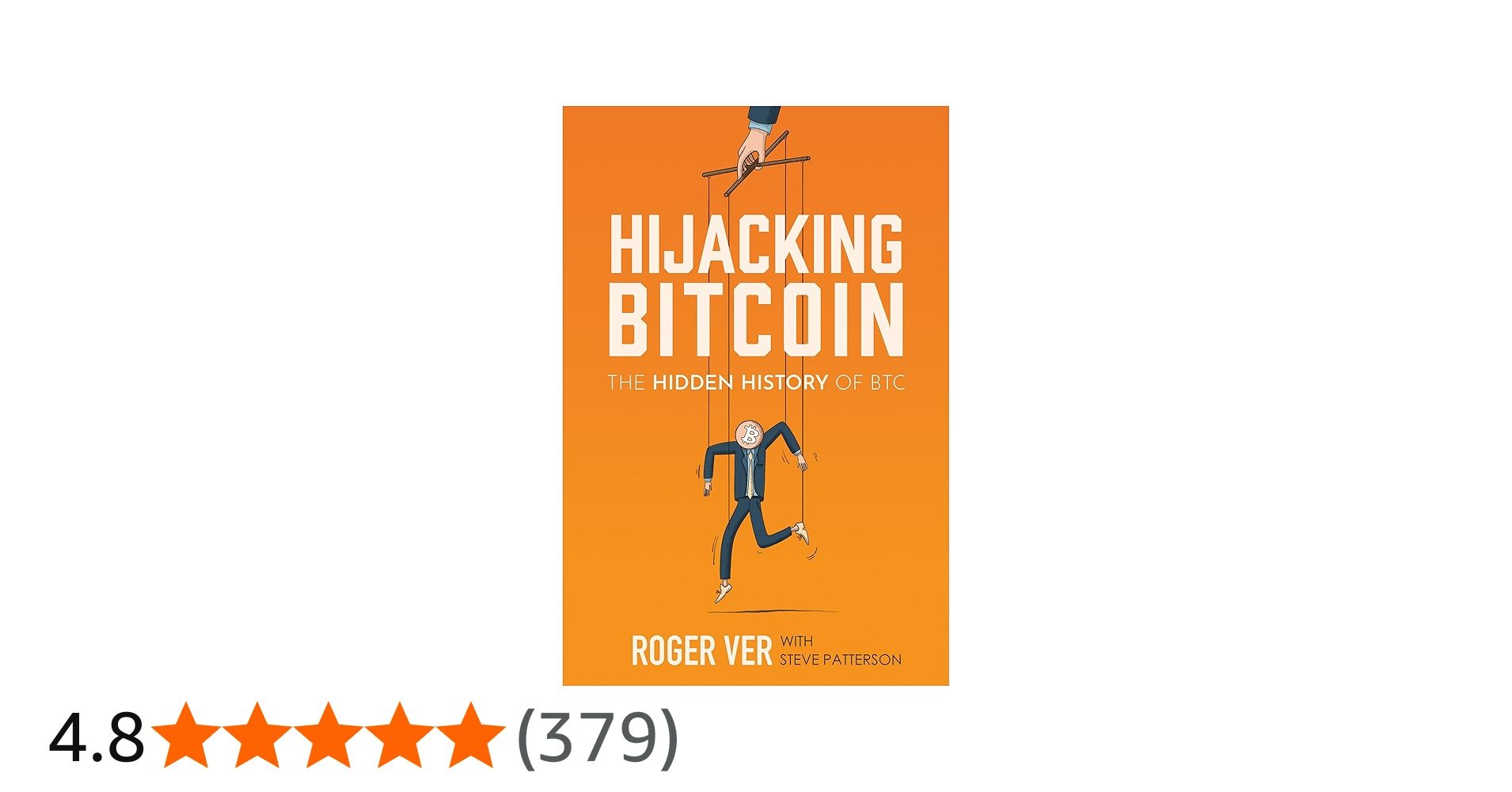
This is the most sensitive question. The honest answer is that there is no simple proof that can make us say “yes” or “no” definitively. The term Bitcoin hijacked is better understood as criticism of the shift in direction, rather than a final verdict.
Many are disappointed because Bitcoin’s original function feels like it has shifted. But on the other hand, many believe that this change has helped Bitcoin survive and grow.
If viewed neutrally, Bitcoin has not lost all of its original properties. Its network is still open, anyone can still use it, and its censorship-resistant nature remains a significant attraction.
What has mainly changed is how the market, media, and institutions frame Bitcoin. So, perhaps the most accurate statement is not that Bitcoin has been hijacked, but rather that its narrative has been broadened, contested, and redirected toward different functions.
Read Also: Crypto Trading Strategies for Beginners, Don't Do This!
What Are the Most Common Criticisms?
Here are some common criticisms that arise when this topic is discussed:
- Bitcoin is considered too far removed from its original function as a daily payment method.
- The narrative of Bitcoin as digital money has weakened, being replaced by the image of Bitcoin as a store of value asset.
- The entry of institutions has brought Bitcoin closer to traditional finance.
- The original community feels the initial enthusiasm for financial sovereignty has become less dominant.
These criticisms are understandable. However, it is also important to see the other side. Without a shift in narrative, Bitcoin might not have gained the market legitimacy it holds now.
Bitcoin as Digital Money or Bitcoin as Digital Gold?
This debate is really the core of everything. If one views Bitcoin from the perspective of the original whitepaper, the focus would be on direct transactions between users.
But if one looks at Bitcoin from the perspective of the modern market, what stands out more is its scarcity, durability, and its role as a store of value. This is where the clash between Bitcoin as digital money and Bitcoin as digital gold continues to live on.
Interestingly, these two narratives don’t always have to negate each other. Bitcoin can still be understood as a payment technology, while also being an asset that is stored.
However, in market practice, one narrative usually dominates. In recent years, the digital gold and institutional asset narrative has clearly prevailed.
What Does This Mean for Retail Investors?
For retail investors, this shift in narrative has two effects. The positive effect is that Bitcoin is easier to understand as a long-term investment asset. The negative effect is that many newcomers enter Bitcoin just because of the price story, without fully understanding its philosophy and history. As a result, discussions about Bitcoin’s original function have become narrower.
Therefore, understanding the latest direction of Bitcoin is crucial. Not only to know where the price is heading, but also to understand how Bitcoin’s position will evolve in the future.
The Latest Bitcoin Direction and What to Watch Out For
Currently, Bitcoin appears to be moving in two directions simultaneously. The first is the institutional route. Here, Bitcoin is positioned as a serious asset in global portfolios. The second is the ideological route.
Here, Bitcoin remains defended as a symbol of financial freedom and an open system. These two paths don’t always collide, but they often give rise to different perspectives.
For general readers, the most important thing is not to view this change in black and white. Bitcoin does not have to be considered a complete failure as digital money just because it is now popular as an institutional asset.
On the contrary, we also don’t need to ignore that the shift in narrative is real and has a significant impact on how the market perceives Bitcoin.
The Healthiest Way to Read the Narrative Shift?
The healthiest way is to see Bitcoin as a project that continues to evolve. Its technology remains important. Its narrative is also important. But the market will always help shape its meaning.
So, rather than getting stuck on whether Bitcoin has been hijacked or not, it is more useful to ask: where is Bitcoin being directed, who stands to benefit the most, and what does this mean for ordinary users?

Conclusion
The topic of whether Bitcoin has been hijacked since 2015 is indeed intriguing, but the answer is not as simple as yes or no. What is clearer is the change in Bitcoin’s narrative from a digital payment tool to an institutional asset and digital gold.
This change was influenced by market developments, technical debates, the entry of institutions, and how the media has framed Bitcoin over time.
If you want to keep up with the latest Bitcoin trends, you can check market movements at Bittime Exchange or read the latest crypto reviews and news at Bittime Blog. That way, you can view Bitcoin not only from a price perspective but also from the broader story behind its transformation.
FAQ
Has Bitcoin Really Been Hijacked Since 2015?
This term is better understood as criticism or an opinion. What is clear is that Bitcoin’s narrative has indeed shifted significantly since 2015.
Why Has Bitcoin's Narrative Changed?
Because of technical debates, changing market needs, and the growing role of institutions in the Bitcoin ecosystem.
What's the Difference Between Bitcoin as Digital Money and Bitcoin as Digital Gold?
Bitcoin as digital money emphasizes its use for payments. Bitcoin as digital gold emphasizes its role as a store of value and scarce asset.
Is the Entry of Institutions Bad for Bitcoin?
Not always. The entry of institutions can provide market legitimacy, but it can also change how Bitcoin is positioned.
What Should New Investors Understand About Bitcoin?
New investors should understand Bitcoin's history, function, and the shift in its narrative, not just focus on its price.
How to Buy Crypto on Bittime?

Want to trade buy Bitcoin and invest in crypto easily? Bittime is here to help! As an officially registered Indonesian crypto exchange with Bappebti, Bittime ensures that all transactions are safe and fast.
Start by registering and verifying your identity, then make a minimum deposit of Rp10,000. After that, you can immediately buy your favorite digital assets!
Check the rate BTC to IDR, ETH to IDR, SOL to IDR and other crypto assets to see the current crypto market trends in real-time on Bittime.
Additionally, visit Bittime Blog to get more exciting updates and educational information about the world of crypto. Find reliable articles on Web3, blockchain technology, and digital asset investment tips designed to enrich your knowledge of crypto.
Disclaimer: The views expressed belong exclusively to the author and do not reflect the views of this platform. This platform and its affiliates disclaim any responsibility for the accuracy or suitability of the information provided. It is for informational purposes only and not intended as financial or investment advice.

.png)