What Is USHS? Getting to Know United States Heat Supply in Solana
2026-10-21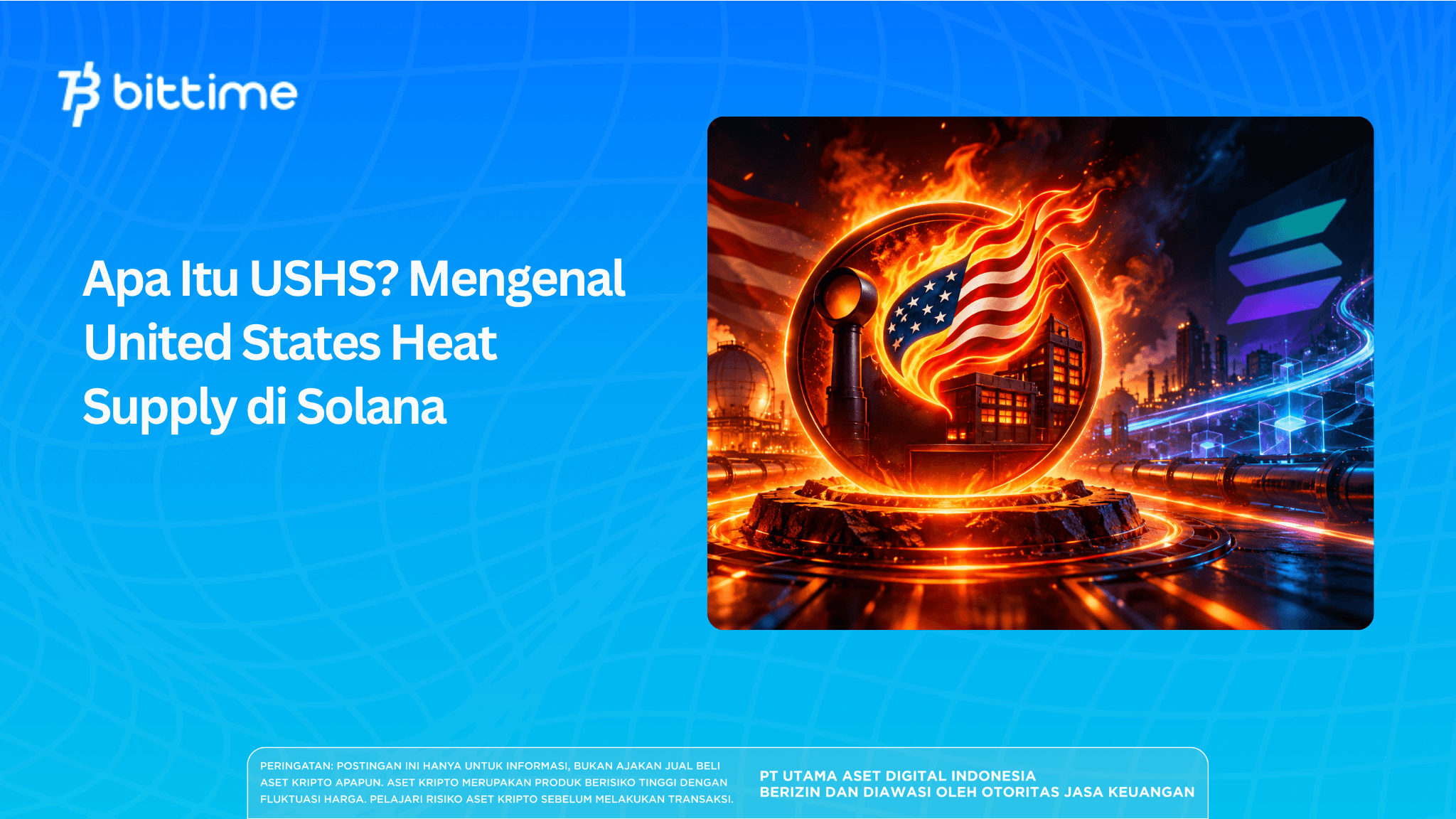
What is USHS? United States Heat Supply, or USHS, is a crypto token identified within the Solana ecosystem. Its name and token address appear on market-tracking pages, but trading information alone is not enough to explain the project’s purpose or establish its quality.
What should you check before evaluating this token? Start with its identity, the clarity of its utility, and market conditions so that your decision is not based solely on its name or price movements.
Key Takeaways
- USHS is a token on Solana that should be identified by its mint address, not just its name and ticker.
- Utility, token allocation, and development plans require evidence separate from trading data.
- Liquidity, ownership distribution, and token authorities are important parts of a risk assessment.
What Is USHS or United States Heat Supply?
United States Heat Supply is the name of a token with the ticker USHS. The terms USHS crypto, USHS coin, and USHS token refer to the same asset in this discussion, provided the token address matches.
Market listings associate USHS with a trading pair against Wrapped SOL on the Solana network. This pair represents the assets exchanged in a pool, not a business relationship with the network’s developers.
The name “United States Heat Supply” does not automatically indicate an affiliation with the United States government or an energy supplier. No such relationship was verified in the materials reviewed.
Understanding the project requires documentation explaining its purpose, developers, and token use. Without such evidence, claims about its business sector or the benefits of USHS should remain limited.
Read also: What Is JPM Coin? JPMorgan’s Deposit Token on Ethereum
USHS Token Identity and How to Verify It
The Mint Address as a Token Identifier
Tokens on Solana have a mint address that uniquely identifies each asset. The mint account also stores information such as supply, decimals, and the authorities responsible for minting and freezing tokens.
The USHS address referenced in this discussion is:
5kjgBzB6nvhEohT9mfJwNGaBBNFAZLYYn5zEhAPpump
This address matches the United States Heat Supply listing in the market-tracking results reviewed. Use the entire string when searching to avoid confusing it with another asset.
In everyday searches, this is often called the USHS contract address. For Solana tokens, however, “mint address” is the more accurate term for identifying a specific token.
Distinguish Between a Token Address and a Pool Address
A token address identifies the asset, while a pool address identifies where a particular asset pair is exchanged. A single token may trade through multiple pools with different liquidity conditions.
Therefore, do not copy an address from a trading-page link and immediately assume it is the token address. First check whether the page displays token details or trading-pair details.
You can follow these verification steps:
- Copy the full mint address from the reference you are checking.
- Search for the address on a Solana explorer.
- Compare the token information with other market pages.
- Make sure the token in the trading pair uses the same mint address.
- Recheck the asset’s identity before approving a transaction.
This cross-check helps confirm that the asset being examined is consistent across sources. It is not, by itself, a comprehensive assessment of the project’s safety or viability.
Read also: What Is Mint (MNTD)? Utility, Tokenomics, and Airdrop Status
USHS Utility and Tokenomics: What Is Known So Far?
Utility Requires Evidence of Use
A tradable token does not necessarily have documented product use. Claims involving payments, service access, governance, or returns should be checked against clearly defined mechanisms.
For USHS, these specific functions could not be confirmed from the materials accessible during this review. Therefore, this article does not classify it as a utility token, an energy-backed asset, or any particular project category without additional evidence.
If new documentation becomes available, check whether the token is actually required to use the product. Distinguish features that are already operational from plans that have only been announced.
Tokenomics Goes Beyond Supply Figures
USHS tokenomics should be assessed by examining supply, distribution, allocation, and potential changes in token quantity. Supply figures alone do not show how many tokens developers control or when particular tokens may be sold.
The information to collect includes:
- Total supply: the number of tokens that have been issued.
- Circulating supply: the number of tokens considered to be circulating according to the data provider’s methodology.
- Alokasi: the distribution of tokens among the team, community, liquidity, or other purposes.
- Vesting: the schedule for releasing previously restricted tokens.
- Distribusi holder: the distribution of holdings across addresses that hold the token.
Large ownership percentages also require context. An address may belong to a liquidity pool or service account, so it does not necessarily represent a single individual investor.
The absence of allocation data does not mean all tokens are freely circulating. Conversely, a large number of holders does not prove that ownership is independently distributed.
Read also: What Is NeoSoul (DNA)? Token Utility and Tokenomics
How to Read USHS Price, Volume, and Liquidity
Price Reflects Trading Value on a Particular Market
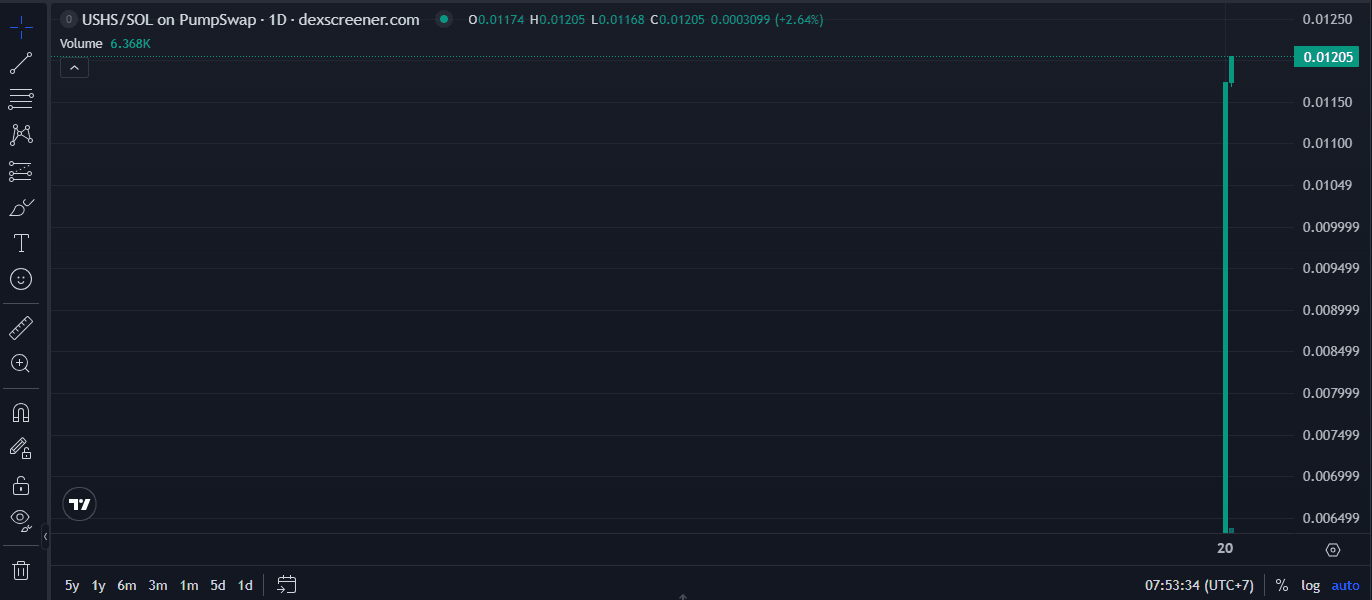
When checking the USHS price today, review the trading pair, update time, and denomination used. Prices quoted in SOL and in dollars should be read using consistent units.
Percentage changes should also specify a clear time frame. The price may rise over one hour while still being down compared with its level the previous day.
A low price per token does not automatically mean the asset is cheaply valued. To assess its valuation, you need to consider the supply figure used in the calculation.
Market Cap Is Different from FDV
Market capitalization, or market cap, is generally calculated by multiplying the price by the circulating supply. Fully diluted valuation (FDV) uses a diluted-supply basis according to the data provider’s methodology.
Check the labels before comparing USHS with other assets. If circulating-supply information is unclear, the market-cap figure should also be treated with caution.
Neither figure represents cash held to pay all token holders. Selling a holding still depends on market conditions at the time of the transaction.
Volume and Liquidity Answer Different Questions
Volume represents the value traded over a specific period. Liquidity relates to the availability of assets to support exchanges in that market.
High volume does not guarantee that large orders can be executed close to the displayed price. In a shallow pool, transaction size can cause significant price changes.
As a general illustration, purchases worth IDR 100,000 and IDR 10 million in the same pool could result in different average prices. This example explains the impact of transaction size and is not a simulation of USHS market conditions.
This article does not include the latest market figures because snapshots from the two main references could not be verified. When updating it, record the price, volume, liquidity, and data timestamp in the same review.
Read also: What Is American Dividend Protocol (ADP)? Understanding the Token and Its Risks
USHS Token Risks to Understand
1. Price Volatility and Difficulty Exiting a Position
In general, token prices can change when buying and selling pressure is imbalanced. Price movements may also be affected by changes in liquidity, large-holder transactions, and market attention.
Do not assume that a previous rise will continue. Being able to buy a token easily does not guarantee that you can sell the same amount at your desired price.
2. Lack of Clarity About Project Information
Limited documentation makes it harder to assess the project’s purpose and the developers’ responsibilities. This adds uncertainty when attempting to connect the price with product development.
Separate verifiable information from marketing claims. For example, partnership announcements should be confirmed by the parties involved before being treated as facts.
3. Ownership Concentration
Concentrated ownership can increase the influence that a few parties’ transactions have on the market. However, assessing this requires examining relationships between addresses and the function of each account.
This article has not established the level of USHS holder concentration. Specific percentages must be verified before being used as the basis for a conclusion.
4. Token Authorities and Technical Controls
In Solana’s token system, the mint authority is associated with issuing new units, while the freeze authority can freeze certain token accounts. These authority settings must be checked for the token being analyzed.
This is general technical context, not a claim that USHS has any particular active authority. Revoking authorities also does not eliminate trading or other project risks.
5. Transaction Approval Errors
In addition to verifying the asset’s identity, check the website and requests displayed in your wallet. Do not assume a link is safe simply because it shows a token name and logo you recognize.
Review the asset amount, transaction destination, and fees before approving. Never disclose your seed phrase or private key as part of a token verification process.
Read also: What Is Fables (FABLES)? Token Utility and Tokenomics
Checklist Before Considering USHS
Use the following checklist to organize your findings:
- Verify the asset’s identity. Save the full mint address after cross-checking it.
- Flag information that is not yet available. Record any project documents, allocation details, or technical data that still require confirmation.
- Check the transaction estimate. Review the number of tokens to be received, fees, and price impact.
- Set a risk limit. Choose an amount you can afford to lose.
- Keep a record of your checks. Include the date so old data is not mistaken for current conditions.
- Review everything again before acting. Pool conditions and project information may change after the initial review.
If you want to use a crypto platform, you can sign up for Bittime and check the available assets and services. USHS availability on Bittime has not been verified in this discussion.
For future monitoring, prioritize published documentation, changes in ownership distribution, and verifiable product developments. This information helps update the assessment on a clearer basis than price movements alone.
Conclusion
Understanding USHS starts with identifying United States Heat Supply as a token on Solana and confirming the correct mint address. Further assessment requires clarity about its utility, token distribution, and trading conditions.
Use verifiable data before making a decision. If you proceed through Bittime, first check its asset listings and service terms.
Bittime is a licensed Digital Financial Asset Trader (PAKD) platform supervised by Indonesia’s Financial Services Authority (OJK) — where you can buy Bitcoin in Indonesia and hundreds of other crypto assets starting from IDR 10,000. Registration is quick and secure, and you can get started today.
Track the conversion rate for USDT to IDR and the real-time price movements of your favorite crypto assets. It is all available in one crypto investment app that you can download for free from the Play Store.
Ready to get started? Sign up for Bittime now and put your investment strategy into action with a platform trusted by millions of users in Indonesia.
FAQ
What is United States Heat Supply, or USHS?
USHS is the ticker for the United States Heat Supply token identified on the Solana network. More verifiable documentation is needed about the project’s purpose and specific utility.
Which network does the USHS token use?
The USHS discussed in this article is on the Solana network. Make sure the mint address matches, as the name and ticker alone are not enough to identify an asset.
What is the utility of the USHS token?
The specific utility of USHS could not be established from the materials reviewed. A token’s tradability does not automatically prove that holders have access to a product, service, or particular rights.
How can you verify the USHS contract address?
Search for the full mint address on a Solana explorer, then compare it with the token information on a trading page. Make sure you are checking the token address, not a pool address or user wallet.
Is the USHS token safe?
USHS cannot be deemed safe simply because it appears on a market page. An assessment should cover technical authorities, ownership distribution, liquidity conditions, and project transparency.
Disclaimer: The views expressed belong exclusively to the author and do not reflect the views of this platform. This platform and its affiliates disclaim any responsibility for the accuracy or suitability of the information provided. It is for informational purposes only and not intended as financial or investment advice.
.png)