What is an RDPU? Definition, Benefits, Risks and How It Works
2026-07-23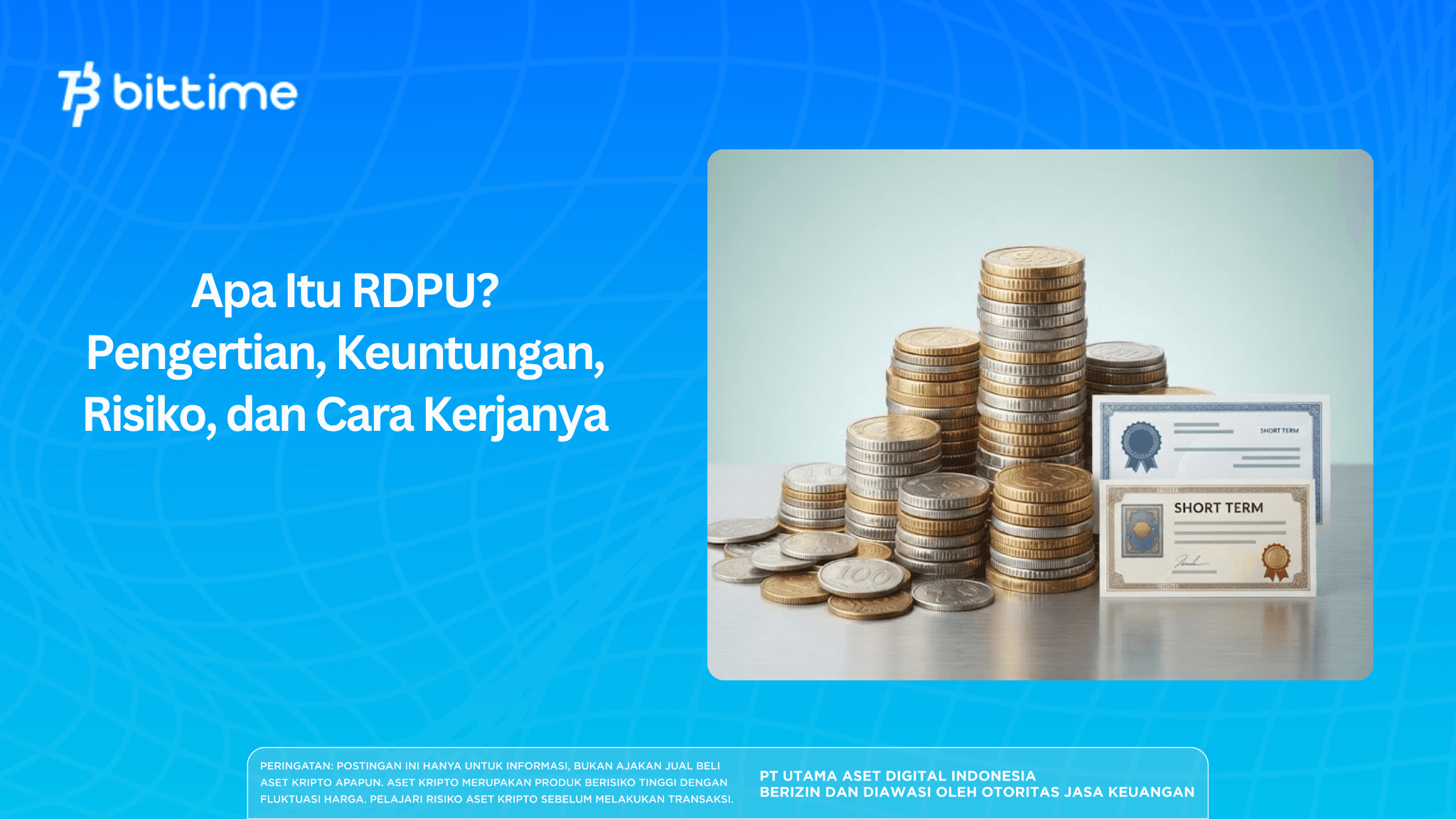
Investing does not always have to start with large capital or carry high risk to generate profits.
For investors looking for instruments with a lower level of risk but still offering potential returns, Money Market Mutual Funds (RDPU) are one of the widely considered options.
RDPU is known as the type of mutual fund with the lowest risk compared to equity mutual funds or fixed-income mutual funds.
Its characteristics—being stable, easy to liquidate, and accessible with small capital—make this instrument a frequent choice for beginner investors as well as those looking to store short-term funds.
However, before you start investing, it is important to understand how RDPU works, which instruments are utilized, potential returns, and the risks that still need to be considered.
Key Takeaways
- RDPU is a type of mutual fund that allocates investors' funds into short-term money market instruments with relatively low risk.
- The main advantages of RDPU are high liquidity, affordable initial capital, and management by professional investment managers.
- Although more stable than other investment instruments, RDPU still carries risks such as asset value fluctuations, inflation, and issuer default risk.
What Is RDPU?
RDPU or Money Market Mutual Fund (Reksa Dana Pasar Uang) is a mutual fund investment product that allocates 100% of investor funds to money market instruments or investment instruments with maturities of less than one year.
Under Indonesian capital market regulations, a mutual fund serves as a vehicle to pool funds from the public, which are then managed by investment managers across various securities portfolios.
In an RDPU, investors do not buy money market instruments directly. Collected funds are managed by an investment manager to be placed in assets that align with the product's investment policy.
The primary objective of an RDPU is not to chase aggressive growth, but rather to maintain capital stability while offering better potential returns compared to keeping money in a standard savings account.
Read Also: Differences Between Mutual Funds and Stocks: Which One Is Better suited for Beginners?
Which Instruments Are Included in RDPU?
In line with its nature, RDPU can only invest in short-term money market instruments. Some of the common instruments used in RDPU portfolios include:
- Time deposits.
- Bank Indonesia Certificates (SBI) or government-issued money market instruments.
- Debt securities or bonds with maturities of less than one year.
The investment manager will select a combination of these instruments based on market conditions, interest rate levels, and fund management strategies.
Through diversification, RDPU investors do not rely on a single instrument, allowing risks to be spread out effectively.
Start your financial journey now. Register on Bittime and build your investment portfolio with ease.
How Does RDPU Work?

The mechanics of RDPU are quite simple. Investors purchase mutual fund participation units through an investment management company or a mutual fund distribution platform.
Capital from many investors is aggregated and managed by the investment manager. Afterwards, these funds are allocated into various money market instruments according to the investment policy.
Returns generated from these instruments will be reflected in the mutual fund's Net Asset Value (NAV). When investors redeem their participation units, the amount of funds received corresponds to the latest NAV per unit.
Unlike time deposits that offer fixed interest rates based on an initial agreement, the value of RDPU fluctuates according to the performance of assets within its portfolio.
Read also : Can Mutual Funds Lose Money? Causes and Ways to Avoid Losses
Why Is RDPU Considered Low Risk?
RDPU is labeled a low-risk investment because the majority of its underlying assets have short terms and lower volatility compared to stocks or long-term bonds.
Key reasons why RDPU carries lower risk include:
- Funds are allocated into instruments with short maturities.
- Less sensitive to market price fluctuations compared to long-term instruments.
- Managed professionally by investment managers.
However, low risk does not mean risk-free. The value of an RDPU investment can still change due to economic conditions, interest rate movements, or default risks from issuing institutions.
Investors must understand that every investment product carries both potential returns and inherent risks.
What Is the Potential Return on RDPU?
Potential returns on RDPU tend to be more stable than other types of mutual funds, though not as high as equity mutual funds which carry higher risk.
Generally, RDPU returns range between 4% to 6% per year, depending on interest rate conditions, investment manager strategies, and underlying asset performance within the portfolio.
Even though it may seem lower compared to high-risk investments, RDPU stands out due to its stability and redemption flexibility.
Because of this, RDPU is commonly utilized for:
- Emergency funds.
- Short-term capital storage.
- Holding funds prior to entering other investment markets.
Read also : 7 Best Investments in 2026 Worth Considering Now
What Is the Difference Between RDPU and Bank Deposits?
RDPU and bank deposits are frequently compared due to their shared low-risk profiles. However, they differ in several key aspects.
A bank deposit is a banking product providing a fixed interest rate tied to a specific lock-up period. Meanwhile, RDPU is an investment product professionally managed by an investment manager.
Key differences between RDPU and bank deposits include:
- Liquidity: RDPU units can generally be liquidated at any time without penalties, whereas bank deposits usually have fixed tenors.
- Management: Deposits are managed by commercial banks, whereas RDPUs are managed by licensed investment managers.
- Potential Return: RDPU offers the potential for higher returns than fixed deposit rates, though its values are not guaranteed.
Given these traits, RDPU serves as an attractive alternative for investors seeking greater flexibility.
Is RDPU Suitable for Beginners?
RDPU is one of the most popular choices for novice investors because its mechanism is simple to grasp and its overall risk level is relatively low.
Investors do not need complex market analysis skills since all portfolio management tasks are handled directly by professional investment managers.
In addition, Money Market Mutual Funds (RDPU) can be started with affordable capital. Many money market mutual fund products are available with initial purchases starting from a small amount, making them suitable for building investment habits.
However, investors still need to read the prospectus and understand their investment goals before purchasing an RDPU product.
Read Also: ETF vs Mutual Funds: Which One Is Better for Your Investment Portfolio?
How to Buy RDPU?
Currently, buying RDPU can be done online through officially licensed investment platforms.
In general, the steps to buy RDPU are:
- Choose a trusted investment platform or mutual fund selling agent.
- Open an account and complete the identity verification process.
- Select an RDPU product according to your investment goals.
- Read the prospectus and fund fact sheet.
- Purchase participation units.
Before selecting a product, investors should pay attention to several factors such as the reputation of the investment manager, historical performance, management fees, and asset composition in the portfolio.
In addition to investing in RDPU to maintain portfolio stability, you can also diversify into global assets through tokenized stocks such as Apple (AAPLX), Microsoft (MSFTON), and Nvidia (NVDAX) available on Bittime.
Risks to Understand Before Investing in RDPU
Although classified as a low-risk investment, RDPU still carries several risks that need to be understood.
First, there is a risk of a decline in investment value due to changes in market conditions or interest rates. Second, there is liquidity risk if certain conditions cause fund redemptions to take longer.
Additionally, investors must also consider default risk if the issuer of the money market instrument fails to make payments.
Another often-considered risk is inflation. If the inflation rate is higher than the investment return, the purchasing power of the profits earned may decrease.
Conclusion: Is RDPU the Right Choice?
Money Market Mutual Funds (RDPU) are an attractive investment choice for investors who prioritize stability, liquidity, and lower risk.
Managed by professional investment managers and offering easy access, RDPU can serve as a initial step for beginners to get acquainted with the world of investing.
However, RDPU is not a risk-free instrument. Investors still need to understand how it works, read product information, and align their investments with their respective financial goals.
For investors who need a place to park short-term funds with better potential returns than regular savings accounts, RDPU can be a option worth considering.

Diversification is one of the key elements of long-term investing. In addition to investing in RDPU, you can also expand your portfolio into tokenized stocks available on Bittime!
Bittime is a licensed Digital Financial Asset Trader (PAKD) platform supervised by the Financial Services Authority (OJK) — a place where you can buy Bitcoin in Indonesia and hundreds of other crypto assets starting from IDR 10,000. The registration process is fast, secure, and can be started today.
Monitor conversions for USDT to IDR and price movements of your favorite crypto assets in real-time. Everything is available in one crypto investment app that can be downloaded for free on the Play Store.
Ready to get started? Register now on Bittime and execute your investment strategy on a platform trusted by millions of users in Indonesia.
FAQ
What Is RDPU?
RDPU or Money Market Mutual Funds are investment products that allocate investor funds into money market instruments with maturities of less than one year.
What Instruments Are Included in RDPU?
RDPUs typically invest in time deposits, Bank Indonesia Certificates (SBI), and short-term debt securities.
Why Is RDPU Considered Low Risk?
RDPU carries low risk because it invests in short-term instruments that tend to be stable and are managed by professional investment managers.
What Is the Potential Return of RDPU?
The potential return of RDPU generally ranges from 4% to 6% per year, depending on market conditions and product performance.
What Is the Difference Between RDPU and Time Deposits?
RDPU offers higher redemption flexibility and is managed by an investment manager, whereas time deposits are bank savings with a fixed term.
Is RDPU Suitable for Beginners?
Yes, RDPU is suitable for beginners because it is easy to use, can be started with a small amount of capital, and has a relatively low level of risk.
How to Buy RDPU?
RDPU can be purchased through official investment platforms by opening an account, selecting a product, reading investment information, and buying participation units.
Disclaimer: The views expressed belong exclusively to the author and do not reflect the views of this platform. This platform and its affiliates disclaim any responsibility for the accuracy or suitability of the information provided. It is for informational purposes only and not intended as financial or investment advice.

.png)