What Is OpenUSD (OUSD)? A New Stablecoin Supported by Visa, Mastercard, and Circle
2026-07-01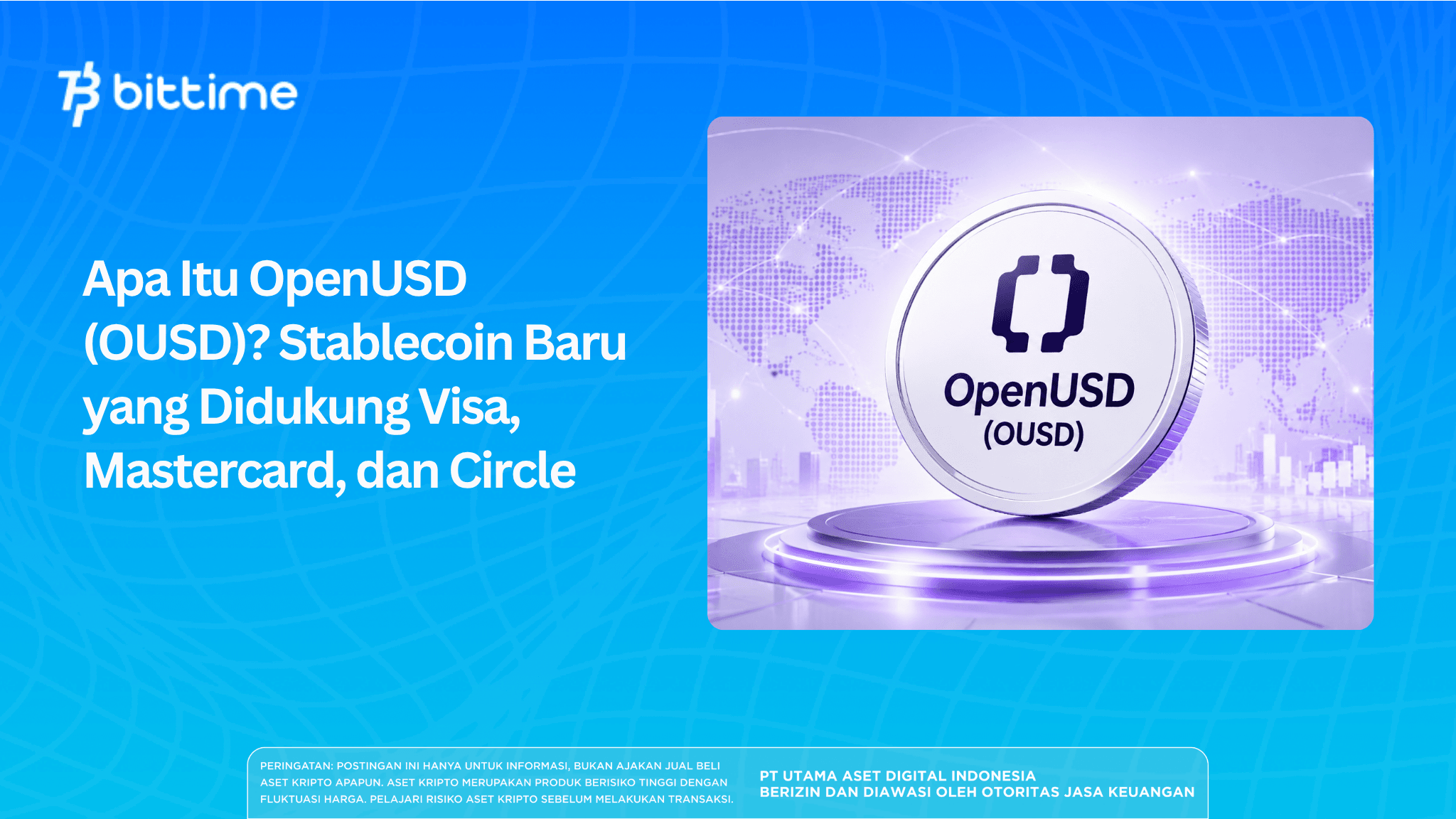
The stablecoin ecosystem continues to evolve as the demand for fast, low-cost, and reliable digital payments grows.
After years of the market being dominated by USDT and USDC , OpenUSD (OUSD) has now emerged—a new stablecoin developed by the Open Standard consortium with support from major companies, including Visa, Mastercard, Coinbase, Stripe, BlackRock,
Google, and a number of other financial institutions. OpenUSD is designed to address various barriers to stablecoin adoption at the enterprise level, such as high costs, centralized governance, and limited incentives for businesses.
Key Takeaways
- OpenUSD (OUSD)is a US dollar-backed stablecoin developed by the Open Standard consortium.
- Unlike traditional stablecoins, OpenUSD offers more open governance, zero minting and redemption fees, and a revenue-sharing model for partners.
- The support of major companies like Visa, Mastercard, Coinbase, Stripe, BlackRock, and Google makes OpenUSD a potential major player in the global digital payments ecosystem.
Register at Bittime now and start trading crypto with a fast, safe, and easy process in the app.
What is OpenUSD (OUSD)?
OpenUSD (OUSD) is a stablecoin pegged to the United States dollar (USD) at a 1:1 ratio. It was developed by Open Standard, a consortium of over 140 companies from the payments, technology, banking, and blockchain sectors.
OpenUSD's primary goal is to create a more open stablecoin standard so companies can integrate blockchain-based payments without relying on a single issuer.
(Ilustrasi: AI Image Generated)
Unlike conventional stablecoins where the issuer enjoys all the profits from the asset reserve, OpenUSD introduces a shared economics model, where a large portion of the revenue from the stablecoin reserve is shared with ecosystem partners.
Read also: Tether (USDT) is in danger of disappearing from European exchanges. What's the reason?
Who are the OpenUSD Developers?
OpenUSD was developed by Open Standard, an independent organization established to build a neutral global stablecoin infrastructure.
Its members include large companies such as:
- Visa
- Mastercard
- Coinbase
- Stripe
- BlackRock
- Shopify
- Ripple
- BNY Mellon
- Standard Chartered
The presence of these large companies demonstrates that OpenUSD is not controlled by a single company, but rather uses a consortium-based governance model.
Read Also:MiCA vs. Indonesia: Which Is Better Prepared to Regulate Crypto?
How Does OpenUSD Stablecoin Work?
In general, the OpenUSD mechanism is almost the same as other stablecoins.
1. Pegged to the US Dollar
Each 1 OUSD represents approximately 1 USD in value backed by a reserve of high-quality assets.
2. Free Mint and Redemption
Open Standard claims that companies can print and exchange OpenUSD without additional fees and without volume limits.
This differentiates it from other stablecoins that have certain fees or capacity restrictions.
3. Shared Economics
The profits generated from the asset reserves are not only received by the issuer, but are also distributed to the consortium members after deducting operational costs.
This model is expected to increase incentives for companies to use OpenUSD in various payment services.
Read Also: USDT Trades 8.5% Higher in India, What's the Reason?
Why Do Visa and Mastercard Support OpenUSD?
Over the past few years, global payment companies have begun to view stablecoins as the payment infrastructure of the future.
Some of the reasons for their support include:
- faster cross-border transactions;
- lower transfer fees;
- almost instant transaction settlement;
- easy to integrate into various blockchains;
- improve the efficiency of international payments.
OpenUSD exists as a neutral infrastructure that allows various companies to use stablecoins without having to rely on a specific issuer.
Read also:3 Benefits of Saving USDT - Potential and Long-Term
What is the Difference Between OpenUSD and USDC and USDT?
Although both are stablecoins pegged to the US dollar, OpenUSD has several characteristics that differentiate it from USDC and USDT.
OpenUSD (OUSD)
- Pegged to the US dollar (1 OUSD ≈ 1 USD).
- Developed by the Open Standard consortium, not by a single company.
- Offers a free minting and redemption process for qualified partners.
- Using the modelshared economics, namely a portion of the income from the asset reserves is distributed to ecosystem members.
- Focused on global digital payments, cross-border transactions, and integration with fintech companies.
USDC
- Pegged to the US dollar at a 1:1 ratio.
- Published by Circle.
- Widely used in the DeFi ecosystem, digital payments, and blockchain applications.
- Income from reserve assets is part of the issuer's business model.
- Has a high reputation for transparency and regulatory compliance.
USDT
- Also pegged to the US dollar.
- Published by Tether.
- Becoming the stablecoin with the largest trading volume in the crypto market.
- It is very popular as a trading pair on various digital asset exchanges.
- More focused on market liquidity than corporate payments.
In short
When compared as a whole:
- OpenUSDfocused on global payments with consortium-based governance and revenue sharing to partners.
- USDC better known for its transparency and use in the institutional and DeFi sectors.
- USDT the OneGul is liquid in terms of liquidity and remains the most widely used stablecoin for trading activities.
The biggest differences lie in governance and the economic model. OpenUSD seeks to build a more open ecosystem than stablecoins issued by a single company.
Read also:World Central Banks Begin to Abandon the US Dollar and Turn to Gold
What are the uses of OpenUSD?
Some potential uses of OpenUSD include:
- cross-border payments;
- settlement merchant;
- international transfers;
- B2B payments;
- fintech integration;
- digital asset trading;
- DeFi applications;
- remittances.
Backed by a global payments company, OpenUSD is projected to focus more on real-world use cases than just being a crypto trading tool.
Is OpenUSD Safe?
OpenUSD security depends on several factors:
- asset reserve quality;
- audit transparency;
- consortium governance;
- compliance with stablecoin regulations.
The consortium model is considered capable of reducing the risk of centralization, although investors still need to pay attention to the transparency of reserve reports and fund management mechanisms.
Read Also: Is it Safe to Exchange Rupiah to USDT Now? Consider the Benefits and Risks
What are the risks of OpenUSD?
Although promising, there are some risks:
- fierce competition with USDT and USDC ;
- evolving stablecoin regulations;
- company adoption rate;
- blockchain technical risks;
- consortium policy changes.
As a new stablecoin, OpenUSD still has to prove its ability to gain liquidity and market trust.
OpenUSD Crypto Prospects
Many analysts believe OpenUSD has great potential because it has the support of more than 140 companies across industries.
If successfully integrated into the payment networks of Visa, Mastercard, Stripe, Coinbase, and other financial institutions, OpenUSD has the potential to become one of the largest stablecoins in the coming years.
However, this success still depends on user adoption, regulatory certainty, and the ability of Open Standard to maintain a neutral and transparent governance model.
Conclusion
OpenUSD (OUSD) is a new-generation stablecoin that offers a different approach compared to traditional stablecoins. With a consortium-based governance model, fee-free minting and redemption, and revenue sharing with partners, OpenUSD aims to set a new standard in global digital payments.
Support from major companies such as Visa, Mastercard, Coinbase, Stripe, BlackRock, and Google is a strong signal that the payments industry is moving toward broader adoption of stablecoins.
However, OpenUSD still needs to prove its ability to compete with established players like USDT and USDC. For investors and industry players alike, following OpenUSD’s progress can be an important step toward understanding the direction of the evolution of blockchain-based payment systems.

Bittime is a licensed and regulated Digital Financial Asset Trader (PAKD) supervised by Indonesia’s Financial Services Authority (OJK) — where you can buy Bitcoin in Indonesia and hundreds of other crypto assets starting from just Rp10,000. The registration process is fast, secure, and you can get started today.
Track USDT to IDR conversions and monitor your favorite crypto assets in real time. Everything is available in one crypto investment app that you can download for free on the Play Store
Ready to start? Register now on Bittime and execute your investment strategy with a platform trusted by millions of users in Indonesia.
FAQ
What is OpenUSD (OUSD)?
OpenUSD is a stablecoin pegged to the US dollar and developed by the Open Standard consortium to support global digital payments.
Is OpenUSD the same as USDC ?
No. OpenUSD uses a consortium governance model and shared economics, while USDC is issued by Circle.
Who supports OpenUSD?
OpenUSD is supported by over 140 companies, including Visa, Mastercard, Coinbase, Stripe, BlackRock, Google, and many other financial institutions.
What is the main function of OpenUSD?
Its main functions are cross-border payments, business settlements, remittances, and integration with fintech and blockchain services.
Is OpenUSD safe?
Its security depends on asset backup, auditing, governance, and regulatory compliance. Users should always follow official Open Standard updates.
Disclaimer: The views expressed belong exclusively to the author and do not reflect the views of this platform. This platform and its affiliates disclaim any responsibility for the accuracy or suitability of the information provided. It is for informational purposes only and not intended as financial or investment advice.

.png)