What is Moonbeam GLMR and How Does It Work on the Polkadot Network?
2025-12-08
Bittime - Moonbeam GLMR is one of the projects that integrates Ethereum compatibility directly into the Polkadot ecosystem. GLMR is a token used for gas, staking, and governance, while Moonbeam serves as a parachain, enabling Solidity smart contracts to run without rewriting.
By bridging two different blockchain technologies, Moonbeam provides a familiar experience for Ethereum developers while also providing access to Polkadot's cross-chain interoperability.
This combination makes the project relevant for developers looking to expand the reach of their applications while maintaining their existing smart contract tools and languages.
What are Moonbeam and GLMR?
Moonbeam is a parachain designed to run EVM-based smart contracts, allowing Ethereum applications to be ported to the Polkadot ecosystem under nearly identical conditions. The GLMR, or Glimmer, token is the network's core operation.
GLMR is used to pay gas fees, incentivize those who maintain network stability through staking, and provide voting rights in governance decisions.
Unlike standalone blockchains, Moonbeam is secured by Polkadot's Relay Chain. With this model, Moonbeam focuses on application execution, while Polkadot validators handle transaction finality and security.
This structure is the reason Moonbeam is able to operate stably and is compatible with the Ethereum environment.
How Moonbeam Operates on the Polkadot Network
Moonbeam functions as a parachain running on top of the Polkadot Relay Chain. The main network doesn't finalize transactions itself, but instead relies on Polkadot validators to ensure the finality of each block.
Moonbeam uses a collator system to collect transactions and construct parachain blocks. Collators then submit proofs of these blocks to Polkadot validators for approval. This division of roles allows for efficient distribution of network workload.
Moonbeam still provides Web3 APIs, EVM RPC, and full compatibility with Ethereum tooling like Metamask, Hardhat, and Truffle. This integration provides a familiar working experience for developers looking to run applications in the Polkadot ecosystem without starting from scratch.
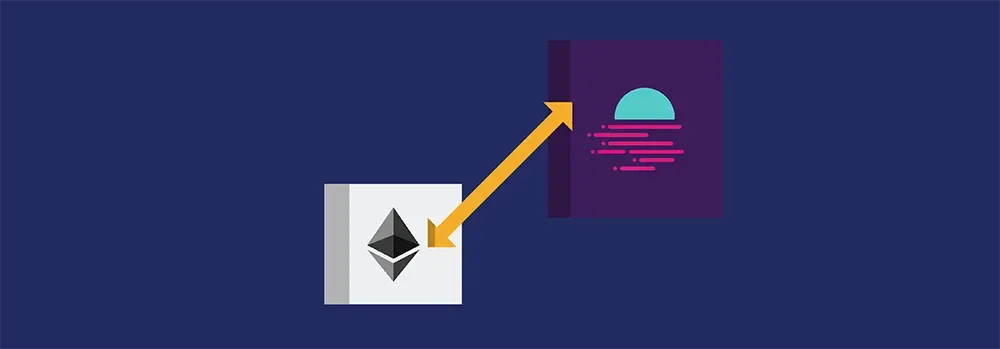
Ethereum Ecosystem and Compatibility
Moonbeam's primary strength stems from its full support for the Ethereum development environment. Solidity smart contracts can be run without significant modification, and Ethereum dApps can be migrated directly.
Moonbeam also supports cross-chain communication through technology provided by Polkadot, allowing assets, tokens, and messages to move between parachains. This opens up opportunities for the integration of DeFi, payment services, and stake-based protocols within a single multi-chain ecosystem.
The available infrastructure includes asset bridges, developer libraries, oracle services, and middleware modules designed to simplify integration. With this support, Moonbeam is one of the most accessible parachain options for projects looking to combine EVM capabilities with Polkadot's interoperability.
GLMR Tokenomics: Role and Mechanism
GLMR has three main functions: payment of transaction fees, incentivization of staking participants, and voting in network governance. The GLMR supply is distributed among the network, developers, community, and incentive mechanisms.
GLMR inflation is dynamic and allocated between collators and the protocol treasury. The higher the network activity, the greater the use of GLMR for gas, making the dynamics of token supply and demand a significant factor in price movements.
Furthermore, decisions regarding network parameters, technical changes, or treasury allocation are made through a GLMR-based voting system involving the community.

Staking, Security, and the Role of Collators
Moonbeam doesn't use validators like most layer-1 networks. Instead, the network relies on collators to create blocks and Polkadot validators for finality. GLMR holders can delegate their tokens to their chosen collators.
Collators who successfully produce blocks receive rewards, which are then distributed back to the delegators. This staking mechanism ensures the network remains secure and stable without burdening each user with validation responsibilities.
The quality of collators, the size of stakes collected, and network governance decisions significantly impact the health of the Moonbeam ecosystem.
Conclusion
Moonbeam GLMR combines Ethereum compatibility with the Polkadot ecosystem, creating a flexible and user-friendly environment for developers running smart contracts on a multi-chain network.
GLMR is a key component that ensures the network operates smoothly, including gas, staking, and governance.
For developers and users seeking a deeper understanding, it's important to follow the technical documentation and community updates to see the development of new features, cross-chain bridges, and network performance improvements.
FAQ
What is GLMR?
GLMR is the native token of the Moonbeam network. Its functions include gas payments, staking, and voting rights in protocol governance.
How to stake GLMR?
Users can delegate GLMR tokens to their chosen collators. Collators who successfully produce blocks will receive rewards, which are distributed to the delegators.
Is Moonbeam the same as Ethereum?
Moonbeam is not Ethereum, but it is fully compatible with EVM so Ethereum smart contracts can run on Moonbeam with minimal changes.
How does Moonbeam connect with other parachains?
Moonbeam uses Polkadot's built-in mechanisms for asset transfers and cross-chain messaging, enabling integration with other parachains.
Where can I check GLMR prices?
GLMR prices and market data can be found on crypto exchanges that list GLMR trading pairs as well as digital asset price tracking platforms without the need to open specific links.
How to Buy Crypto on Bittime
Want to trade sell buy Bitcoins and crypto investment easily? Bittime is here to help! As an Indonesian crypto exchange officially registered with Bappebti, Bittime ensures every transaction is safe and fast.
Start with registration and identity verification, then make a minimum deposit of IDR 10,000. After that, you can immediately buy your favorite digital assets!
Check the exchange rate BTC to IDR, ETH to IDR, SOL to IDR and other crypto assets to find out today's crypto market trends in real-time on Bittime.
Also, visit the Bittime Blog for interesting updates and educational information about the crypto world. Find reliable articles about Web3, blockchain technology, and digital asset investment tips designed to enrich your crypto knowledge.
Disclaimer: The views expressed belong exclusively to the author and do not reflect the views of this platform. This platform and its affiliates disclaim any responsibility for the accuracy or suitability of the information provided. It is for informational purposes only and not intended as financial or investment advice.

.png)