What is FOCIL in Ethereum? The Anti-Censorship Solution Backed by Vitalik Buterin
2026-03-03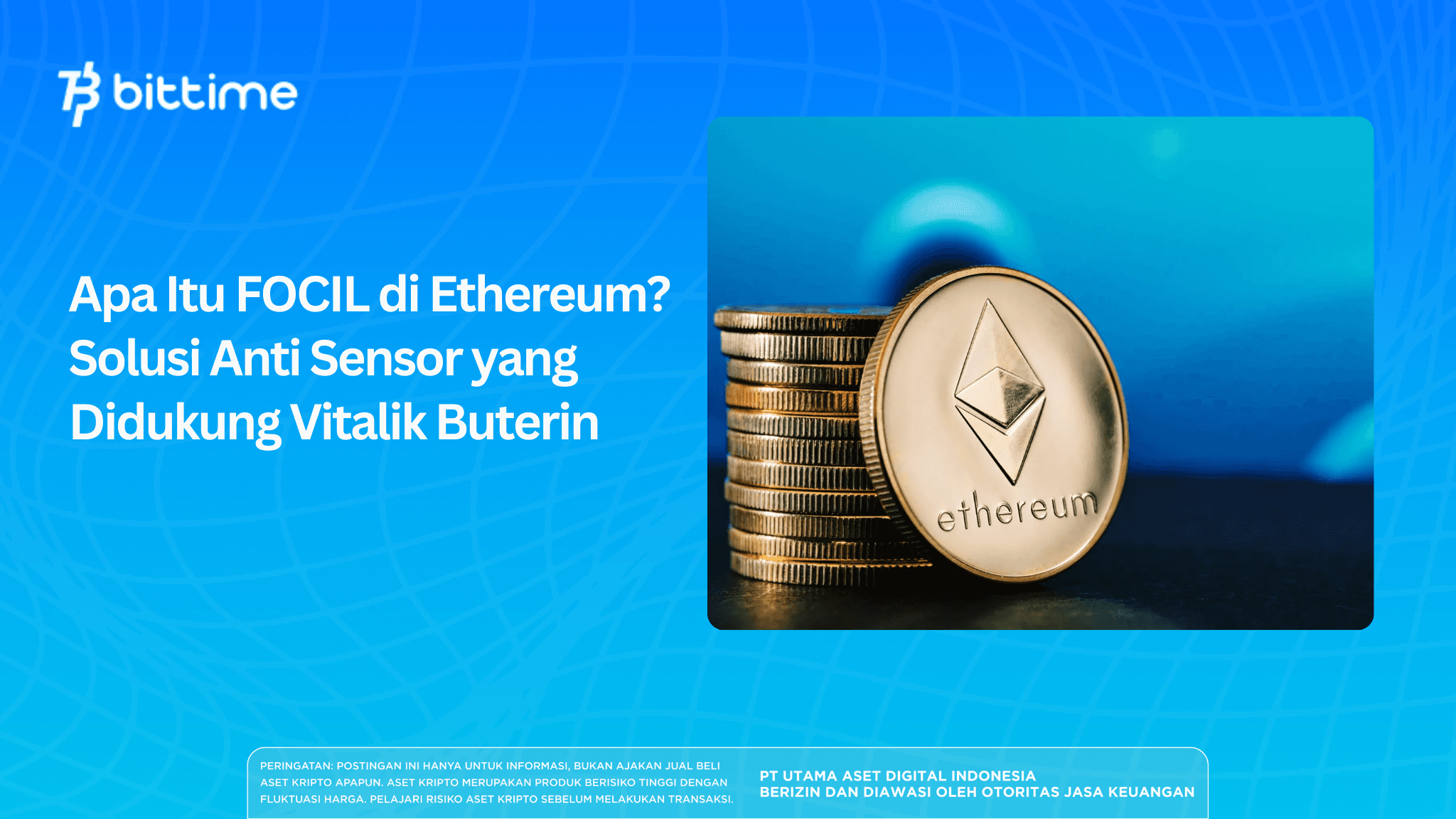
In the rapidly evolving landscape of blockchain technology, the core principle of decentralization is frequently tested by complex technical hurdles. Currently, one of the most debated issues within the Ethereum community is the risk of transaction censorship by a small group of entities that dominate block building.
To address this, Vitalik Buterin and Ethereum’s core researchers have introduced a concept called FOCIL through the EIP-7805 proposal.
FOCIL serves as a new "fortress" designed to ensure Ethereum remains a neutral, open network where no single party can block valid transactions from entering the blockchain. But what exactly is the mechanism behind this technology, and why is Vitalik Buterin such a vocal supporter? Let’s break it down.
Key Takeaways
FOCIL (Fork-Choice Enforced Inclusion Lists) is a mechanism that mandates block builders to include specific transactions for their blocks to be considered valid by the network.
EIP-7805 is the technical proposal integrating FOCIL into the Ethereum protocol to dilute the centralized power of large-scale block builders.
- Vitalik Buterin views FOCIL as a cornerstone of "The Scourge" phase, aimed at securing long-term censorship resistance and credible neutrality for Ethereum.
Understanding the Centralization Trap: Why Does Ethereum Need FOCIL?
To understand what FOCIL is, we must look at how Ethereum blocks are currently constructed. Since its transition to Proof of Stake, Ethereum has utilized a structure known as Proposer-Builder Separation (PBS).
In this system, roles are split: Builders assemble transactions into the most profitable blocks (maximizing MEV), while Proposers (validators) choose and publish those blocks.
The problem arises when a handful of massive builders dominate the market. Recent data suggests that the vast majority of Ethereum blocks are produced by only a few entities.
If these builders decide to exclude certain transactions—whether due to regulatory pressure or economic incentives—those transactions could be delayed or ignored indefinitely. This is the "censorship risk."
Vitalik Buterin has recently emphasized that relying on centralized builders is a structural vulnerability. FOCIL aims to shift control back to the broader validator set, ensuring no single entity holds "veto power" over user transactions.

How FOCIL and EIP-7805 Fight Censorship
FOCIL stands for Fork-Choice Enforced Inclusion Lists. Technically codified in EIP-7805, the mechanism is elegant yet revolutionary. Instead of allowing builders to decide 100% of a block's content, the protocol permits one or more validators to create an "Inclusion List"—a set of transactions that must be included.
Here is the simplified workflow of how FOCIL operates:
List Creation: Before a block is built, a designated validator releases a list of transactions they believe should be in the next block.
Builder Obligation: Any builder wishing for their block to be accepted by the network must include the transactions from that list (provided there is available space).
- Fork-Choice Enforcement: This is the critical upgrade. If a builder intentionally ignores the inclusion list, the network's fork-choice rule will automatically deem that block invalid.
With EIP-7805, Ethereum no longer simply "hopes" builders act honestly. The network actively enforces compliance through its core code. This provides a guarantee that as long as there is at least one honest validator to put your transaction on a list, it has a guaranteed path into the blockchain.
The Future of Ethereum: Toward an Unstoppable Network
The move toward FOCIL is a major part of Ethereum’s broader roadmap known as "The Scourge." The ultimate goal is to ensure decentralization is not just a marketing buzzword but a technical reality. In various discussions on the Ethereum Magicians forum and official blogs, FOCIL is regarded as a more robust solution than previous inclusion list models because it is binding at the fork-choice level.
For the average user, FOCIL might not be visible in a wallet interface. However, its impact is monumental. It ensures your assets cannot be frozen and your transactions cannot be "blacklisted" by third parties at the protocol level. For investors, this solidifies Ethereum’s narrative as a "credibly neutral" global financial infrastructure.
Conclusion
FOCIL (EIP-7805) is more than just a technical patch; it is a digital manifesto to preserve Ethereum’s core values. By curbing builder dominance and empowering validators to maintain censorship resistance, Ethereum ensures it remains resilient against external pressures.
Vitalik Buterin’s full-throated support indicates that the future of the network lies in the balance between high-performance efficiency and unyielding decentralized integrity.
FAQ (Frequently Asked Questions)
1. Will FOCIL make transaction fees (Gas) more expensive?
Theoretically, no. FOCIL is designed to manage which transactions are prioritized for inclusion without fundamentally changing the base gas fee market (EIP-1559).
2. What is the main difference between FOCIL and a standard Inclusion List?
The difference is in the enforcement. In a standard list, builders might find loopholes to bypass it. With FOCIL, the rule is enforced at the fork-choice level, meaning non-compliant blocks are simply rejected by the network's consensus.
3. Who gets to create the Inclusion List in the FOCIL system?
Under EIP-7805, the validator(s) assigned to a specific slot are responsible for creating the list, ensuring that power remains distributed among the thousands of global validators.
4. When will FOCIL be officially implemented on Ethereum?
It is currently in the proposal and research stage (EIP-7805). It is expected to be part of a future major Ethereum upgrade, likely following extensive testing on various testnets.
5. Why is Vitalik Buterin so focused on FOCIL?
Vitalik believes that censorship resistance is a "sacred property" of blockchains. Without it, a blockchain is no different from a traditional banking system that can unilaterally cut off a user's access.
How to Buy Crypto on Bittime?

Want to trade sell buy Bitcoins and crypto investment easily? Bittime is here to help! As an Indonesian crypto exchange officially registered with Bappebti, Bittime ensures every transaction is safe and fast.
Start with registration and identity verification, then make a minimum deposit of IDR 10,000. After that, you can immediately buy your favorite digital assets!
Check the exchange rate BTC to IDR, ETH to IDR, SOL to IDR and other crypto assets to find out today's crypto market trends in real-time on Bittime.
Also, visit the Bittime Blog for interesting updates and educational information about the crypto world. Find reliable articles about Web3, blockchain technology, and digital asset investment tips designed to enrich your crypto knowledge.
Disclaimer: The views expressed belong exclusively to the author and do not reflect the views of this platform. This platform and its affiliates disclaim any responsibility for the accuracy or suitability of the information provided. It is for informational purposes only and not intended as financial or investment advice.

.png)