ANSEM Coin Plunges 40%: Bullpen Admits Incident, Wallet Hacked?
2026-11-25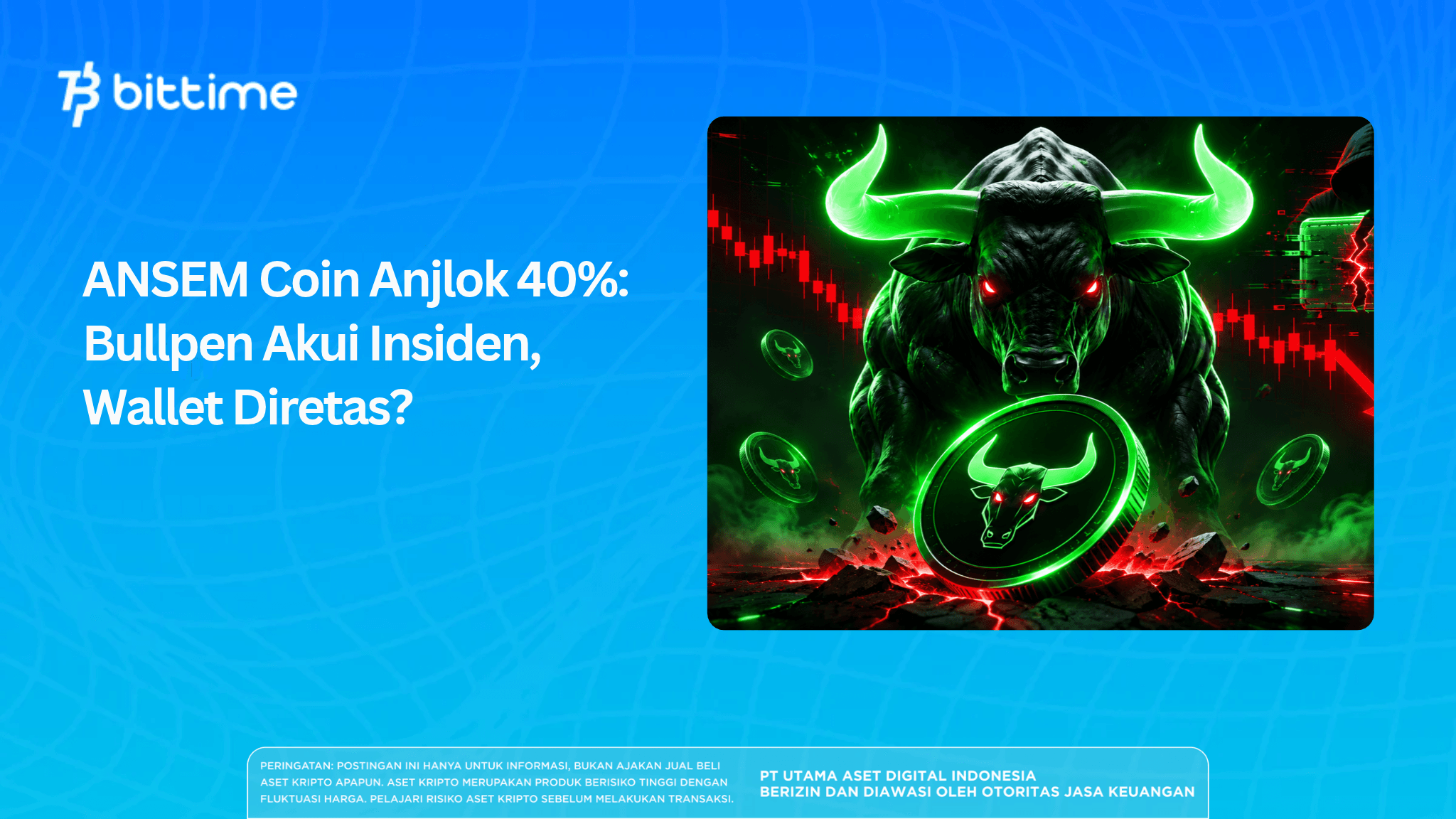
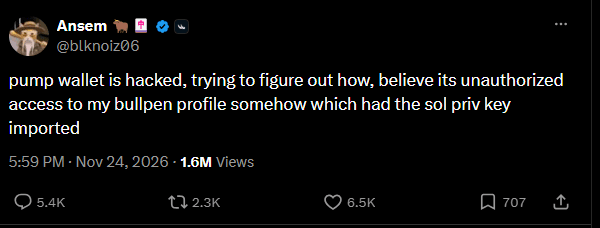
ANSEM coin plunged by around 40% on November 24, 2026, following a massive sell-off from a wallet linked to crypto trader Ansem. Shortly after the transactions were detected, Ansem said his Solana wallet had been hacked and suspected that someone had accessed his Bullpen account, where his private key was stored.
The suspected breach became clearer when Bullpen confirmed unauthorized transfers affecting several accounts, including Ansem's. However, the technical cause of the incident remains unknown. This raises an important question: were all the ANSEM sales really the result of a hack?
Key Takeaways
- ANSEM coin plunged by around 40% after a wallet linked to Ansem sold 87.5 million tokens.
- Bullpen confirmed unauthorized transfers involving approximately 18–19 accounts, including Ansem's.
- On-chain transactions show millions of dollars in fund movements, but the mechanism behind the breach is still under investigation.
Why Did ANSEM Coin's Price Plunge 40%?
ANSEM's price decline began with heavy selling pressure on The Black Bull, a Solana-based meme coin associated with Ansem.
On November 24, 2026, a wallet linked to him reportedly sold approximately 87.5 million ANSEM tokens worth US$1.5 million.
The sales took place when market liquidity was relatively limited. As a result, ANSEM fell by around 39% over 24 hours to approximately US$0.024, with a market capitalization of around US$10.8 million when the report was published.
Some observations even recorded a drop of as much as 57% over a shorter period. These differing figures reflect different measurement times, not two separate incidents.
Because ANSEM is part of the Solana ecosystem, its performance can also be compared with broader market conditions. You can track Solana (SOL) prices on Bittime to see whether the decline is affecting the broader ecosystem or is more concentrated in specific tokens.
Read also: Hyperliquid Added to Hong Kong SFC Warning List: What Does It Mean for HYPE?
Timeline of the ANSEM Wallet Sell-Off on November 24, 2026
The case initially drew attention because of unusual selling activity. After Ansem issued a statement, the focus shifted from price movements to a possible wallet security compromise.
Here is the reported timeline:
- Large-scale sales detected. Activity from a wallet linked to Ansem showed sales of several meme coins on the Solana network.
- ANSEM comes under selling pressure. A large number of tokens sold within a short period caused the price to fall sharply.
- Ansem says his wallet was hacked. Through his X account, he stated that he had lost control of the wallet and suspected unauthorized access through Bullpen.
- Researchers trace fund movements. Several transactions were found to have moved funds to other addresses, including via the Arbitrum.
- Bullpen confirms the incident. The platform acknowledged unauthorized transfers involving user accounts from its early testing period.
Bullpen's confirmation was an important development because blockchain researchers had previously disagreed about the cause of the transactions.
Was Ansem's Wallet Really Hacked?
Bullpen has confirmed unauthorized transfer activity but has not yet explained exactly how the unauthorized access was obtained.
This provides grounds to conclude that a security incident did occur. However, further investigation is still needed to establish who was responsible and how each transaction was connected to the incident.
Why Did Ansem Suspect Bullpen?
Ansem revealed that he had previously imported his Solana wallet's private key into his Bullpen account, a trading platform he co-founded. He suspected that someone had gained access to the account and then used the wallet to execute transactions without his consent.
A private key is a credential that enables its holder to sign blockchain transactions. If it falls into someone else's hands, assets in the wallet can potentially be transferred without the owner's knowledge.
However, the suspicion that access was gained through Bullpen is not the same as a technical investigation confirming the cause of the compromise.
What Has Bullpen Confirmed?
On November 24, 2026, Bullpen said it had identified unauthorized transfers involving user accounts from its early beta period between April and June 2024.
The company estimated that around 18–19 accounts were affected, including Ansem's account.
Bullpen also disabled the related testing services during its investigation. However, the company has not disclosed the attack method or the final findings of its investigation.
Read also: Rupiah Weakens to Rp18,279 Today: Is the BTC/IDR Price Affected?
Tracing the Sale of 87.5 Million ANSEM Tokens and the Movement of Funds
The wallet activity under scrutiny involved more than one meme coin. According to reported transaction analysis, there were approximately 877 sales involving 124 different tokens, with a combined value estimated at close to US$2 million.
Here are the main transaction details:
These figures indicate that approximately US$1.5 million came from ANSEM, while the remainder involved other assets.
Where Were the Funds from Ansem's Wallet Transferred?
Blockchain tracing identified asset movements from Solana to an address on the Arbitrum network through a cross-chain service.
Lookonchain reported a transfer of approximately US$2.15 million in USDC. A separate investigation later estimated that the total funds accumulated at the related address reached US$2.57 million.
The two figures come from analyses with different scopes and should not automatically be treated as identical loss estimates. Likewise, not all of the US$2.57 million came from ANSEM sales.
To better understand dollar-denominated stablecoins used in crypto transactions, you can also check Tether (USDT) prices on Bittime for comparison. Note that USDT is not USDC, the stablecoin mentioned in the fund-tracing reports for this case.
Why Was the ANSEM Wallet Hack Disputed?
Before Bullpen confirmed the security incident, some analysts questioned Ansem's claim that his wallet had been hacked.
Doubts arose after activity was discovered at other addresses previously thought to be associated with him. This led to speculation that the transactions might have been deliberate sales.
However, links between several blockchain addresses are not enough to establish who controlled the transactions.
On-chain records reveal asset movements, timestamps, and destination addresses. However, those records do not directly identify who held the private key when the transactions were executed.
Therefore, allegations that Ansem intentionally sold his tokens cannot yet be treated as established fact.
Read also: Can Hajj and Umrah Be Paid for with Stablecoins? Here's How It Works
What Is ANSEM Meme Coin, Also Known as The Black Bull?
ANSEM is a Solana-based meme coin known as The Black Bull. The token was launched through Pump.fun in June 2026 and is associated with Ansem's popularity in the crypto community.
In July 2026, Ansem stated that he controlled around 58% of ANSEM's total supply. This is historical information and does not necessarily reflect his holdings when the incident occurred.
Such concentrated ownership is a concern because transactions from a single large wallet can significantly affect prices, particularly for tokens with limited liquidity.
This is one of the characteristic risks of meme coins. For comparison, you can review the price history of Dogecoin (DOGE) and Pepe (PEPE) on Bittime to see how volatility and trading characteristics differ between tokens.
What Risks Does ANSEM Coin Pose to Investors?
ANSEM's sharp decline demonstrates that meme coin risks are not limited to market sentiment. Wallet security and ownership distribution can also significantly affect prices.
There are several risks to consider:
- Limited liquidity: Large sell orders can cause prices to collapse when there are not enough buyers at previous price levels.
- Concentrated ownership: Activity from a single wallet can put significant pressure on the market.
- Wallet security: A compromised private key can result in unauthorized asset transfers.
- Incomplete information: Rumors can influence traders' decisions before investigation results are released.
- Extreme volatility: A token that has already fallen sharply can still decline further.
For investors, distinguishing confirmed transaction facts from speculation is essential before making decisions.
A 40% price drop does not automatically make a token cheap or give it a high probability of recovery.
Read also: Binance Offers 100% USDC Refund for Anthropic IPO, US$1 Million ANTB Airdrop
What Should Investors Watch Next?
The next major development will be the findings of Bullpen's investigation, particularly the cause of unauthorized access and the final number of affected accounts.
The status of the transferred funds also warrants attention, including whether recovery efforts or further actions involving the affected accounts are undertaken.
From a market perspective, investors can monitor ANSEM's trading volume, liquidity, and price changes following the major sell-off.
Until more detailed explanations are available, conclusions about the hacking method and the responsibilities of the parties involved must remain limited to verified information.
Conclusion
ANSEM coin plunged by around 40% after major sales from a wallet linked to Ansem. Bullpen subsequently confirmed unauthorized transfer activity, but neither the technical cause of the incident nor the identity of those responsible has been established.
The case illustrates how wallet security issues can amplify meme coin volatility, especially when token ownership is concentrated. Investors should consider official information, on-chain data, and liquidity conditions before reacting to price movements.
If you want to keep up with cryptocurrency market developments and learn about the risks of different digital assets, you can sign up with Bittime to access market information and explore crypto assets that suit your risk profile.
Bittime is a licensed Digital Financial Asset Trader (PAKD) platform supervised by Indonesia's Financial Services Authority (OJK) — where you can buy Bitcoin in Indonesia and hundreds of other crypto assets starting from Rp10,000. Registration is fast and secure, and you can get started today.
Track the conversion of USDT to IDR and real-time price movements of your favorite crypto assets. Everything is available in one crypto investment app that you can download for free from the Play Store.
Ready to get started? Sign up for Bittime now and put your investment strategy into action on a platform trusted by millions of users in Indonesia.
FAQ
Why Did ANSEM Coin Plunge 40%?
ANSEM came under selling pressure after a wallet linked to Ansem sold approximately 87.5 million tokens. The large sell-off triggered a sharp price decline on November 24, 2026.
Was Ansem's Wallet Really Hacked?
Bullpen has confirmed unauthorized transfers involving Ansem's account. However, neither the hacking method nor the responsible parties have been established in a final investigation report.
Did Bullpen Confirm a Security Incident?
Yes. Bullpen said that approximately 18–19 accounts from its early beta period were affected by unauthorized transfers, including Ansem's account. The company also disabled the related testing services during its investigation.
How Many ANSEM Tokens Were Sold?
Approximately 87.5 million ANSEM tokens were reportedly sold for around US$1.5 million. The related wallet also sold other tokens, bringing its total sales close to US$2 million.
Is ANSEM Coin Still Safe for Investors?
ANSEM carries substantial risks due to meme coin volatility, concentrated ownership, and uncertainty surrounding the wallet incident. Investors should review official updates, trading volume, and liquidity before making decisions.
Disclaimer: The views expressed belong exclusively to the author and do not reflect the views of this platform. This platform and its affiliates disclaim any responsibility for the accuracy or suitability of the information provided. It is for informational purposes only and not intended as financial or investment advice.
.png)