10 Elysium Chain Tokens to Watch After Mainnet
2026-11-10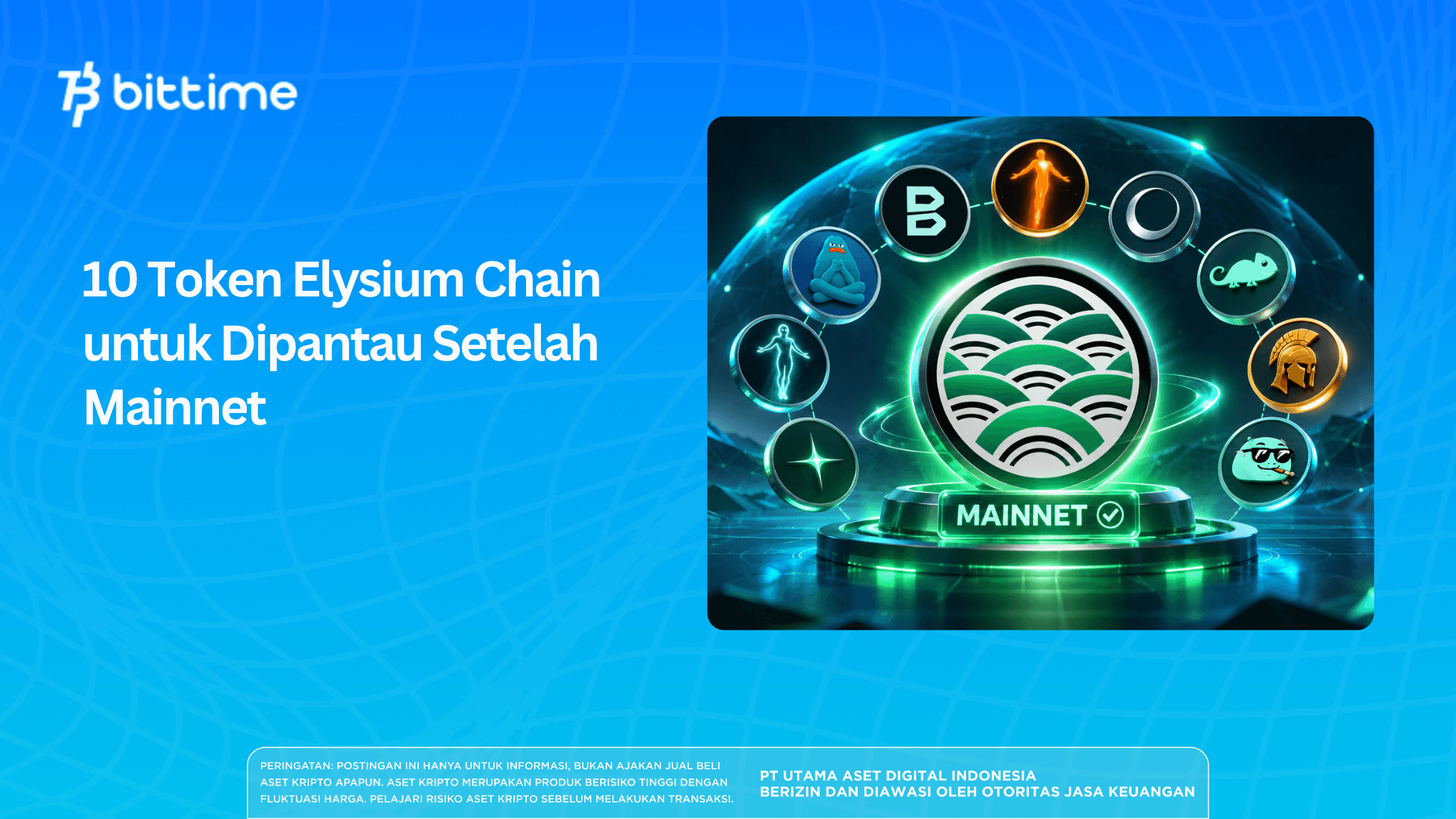
The launch of the Elysium mainnet on November 9, 2026, immediately brought new activity to the Hyperliquid ecosystem. Various Elysium Chain tokens began trading, with some recording millions of dollars in volume within a short period. However, heavy trading on a newly launched network does not necessarily mean that every token is an attractive investment.
Among the many emerging assets, 10 Elysium tokens are worth adding to traders' watchlists, ranging from KNTQ and BOXA to community tokens such as BLOB and HYPEPE. This list considers trading activity, holder counts, market capitalization, and contract identities. Its purpose is not to identify tokens guaranteed to rise, but to help you recognize active assets and understand the risks behind them.
Key Takeaways
- The Elysium mainnet officially launched on November 9, 2026, attracting tokens from both the Kinetiq ecosystem and the community.
- KNTQ, BOXA, VOLTA, and several community tokens made the watchlist based on trading activity, holder data, and contract identities.
- High volume and rising prices do not guarantee safety, so liquidity, ownership distribution, and contract addresses still need to be checked.
What Are Elysium Chain Tokens?
Elysium is a Layer 2 blockchain developed by Kinetiq to expand transaction capabilities within the Hyperliquid ecosystem. The network is designed to support decentralized finance (DeFi) applications, digital asset trading, and token launches that require high transaction throughput.
Elysium uses HYPE as its gas token to pay network fees. Meanwhile, other projects can issue ERC-20 tokens with their own functions and characteristics.
This means there is a distinction between HYPE, the asset used to pay transaction fees; KNTQ, a token in the Kinetiq ecosystem; and community tokens launched through various platforms on Elysium.
This distinction matters because tokens traded on the same network are not necessarily directly affiliated with the blockchain's developers.
If you are not yet familiar with the network, also read What Is Elysium? Hyperliquid Layer 2 to understand its technology and how it works.
Read also: How to Trade on Elysium Chain: A Guide to Wallets, Bridges, and Swaps
Why Are Elysium Tokens Attracting Traders' Attention?
After the mainnet went live, several token launch platforms began bringing activity to Elysium. Names such as Boxa, Ascend, ElysPump, and Montra emerged during the ecosystem's early activity.
Platforms like these make it easier for developers and communities to issue tokens and provide trading access through decentralized exchanges (DEXs).
For traders who like to monitor new assets, this activity creates many options. Previously unknown tokens can attract market attention within just a few hours.
However, early momentum is often difficult to sustain.
High volume can result from bot activity, speculative trades, or repeated movement of funds. Meanwhile, rapidly rising prices may not be supported by enough liquidity to absorb large sell orders.
That is why looking at trending lists alone is not enough. Several other indicators should be checked before adding a token to a watchlist.
Read also: What Is the Difference Between SNXXB and SNDKB? Understanding Their Risks and Potential
How Were These 10 Elysium Chain Tokens Selected?
The selection of these 10 tokens is based on market activity recorded after the Elysium mainnet launch.
Five indicators were considered:
- Contract identity: A token's address must be traceable to avoid confusing it with other assets using similar names.
- Trading volume: Transaction activity indicates how actively a token is traded.
- Liquidity: Pool depth helps assess potential slippage when buying or selling.
- Holder count: Token holder data can be a starting point for examining ownership distribution.
- Ecosystem relevance: Connections to applications, launchpads, or network developments provide additional research value.
This list is not ranked by projected returns. Each token has a different reason to be monitored, including some that stand out precisely because of speculative activity or market risk.
All market data used is a snapshot from the morning of November 10, 2026, Western Indonesian Time (WIB). Because the Elysium ecosystem is still very new, these figures can change rapidly.
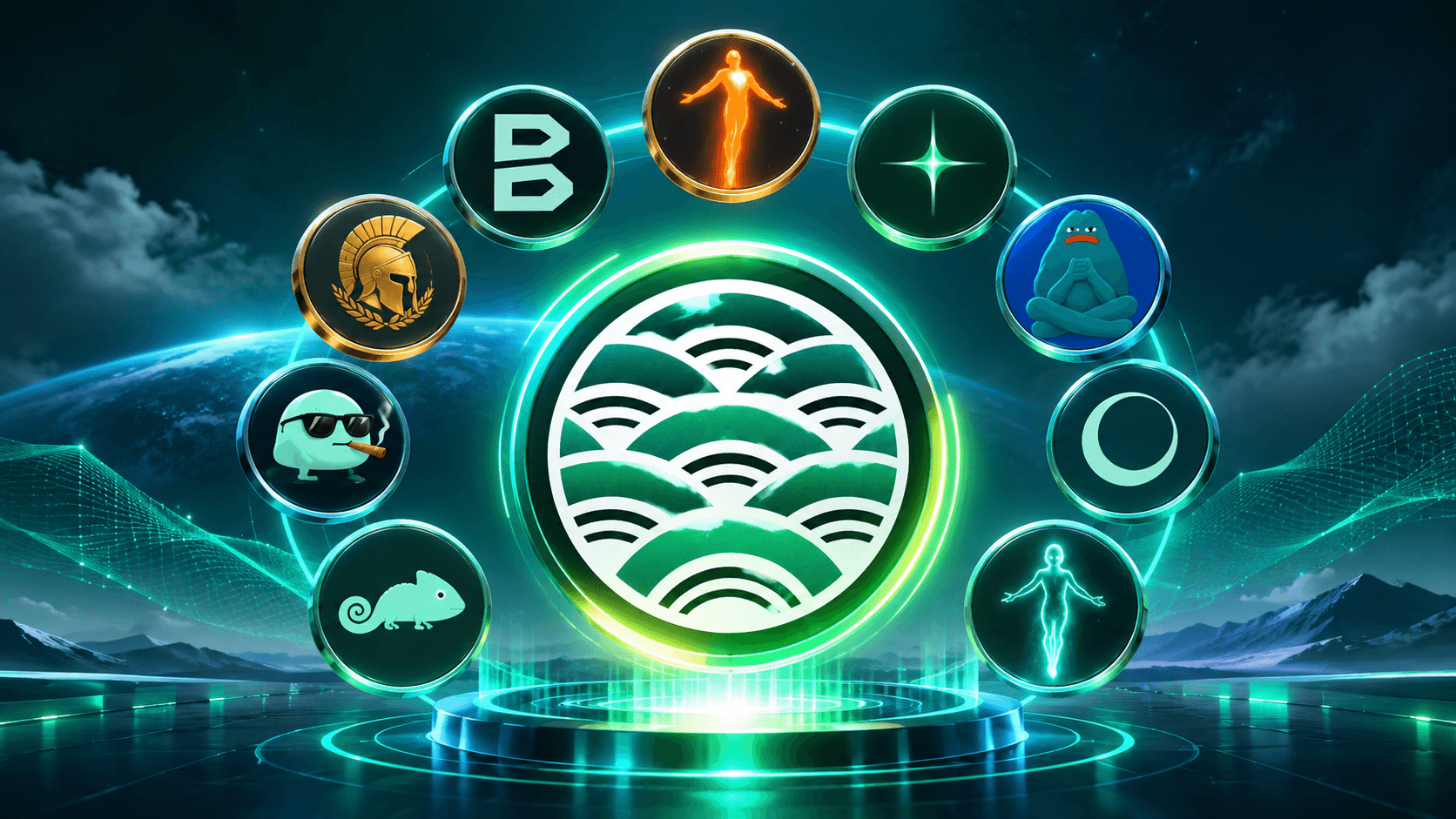
10 Elysium Chain Tokens for Traders' Watchlists
1. Kinetiq Governance Token (KNTQ) — A Token Linked to Elysium's Economy
Of all the tokens on this list, KNTQ has the clearest connection to Elysium's developer.
KNTQ is a token in the Kinetiq ecosystem, whose team built this Layer 2 network. This connection makes Elysium's adoption worth monitoring alongside KNTQ's activity.
Kinetiq has outlined a plan to allocate 50% of Elysium sequencer revenue to a KNTQ buyback mechanism.
This arrangement links the token to the network's economic activity, although the actual benefit depends on the revenue generated and whether the mechanism is implemented as planned.
In the November 10 snapshot, KNTQ recorded approximately US$6.60 million in 24-hour trading volume and more than 4,800 holders.
This made it one of the most active assets in the early Elysium observations.
Contract address:
0xe45a355d9e9cAd2aD85F2d03E3eE3102A036acF0
KNTQ is worth monitoring to see whether increasing Elysium activity is accompanied by growth in Kinetiq's economy. However, a buyback mechanism does not guarantee that its price will rise, especially when the broader crypto market is weakening.
2. e/acc — One of the Highest-Valued Tokens
e/acc has attracted attention as one of the tokens with a relatively large market capitalization during Elysium's early trading phase.
The token is listed in the Ascend launchpad ecosystem, with a displayed market capitalization of approximately US$6.87 million.
Its holder count has reached around 2,180 addresses, while 24-hour trading volume stood at approximately US$1.84 million.
This combination of valuation and activity makes e/acc worth watching, particularly for traders interested in how market attention develops around new community tokens.
However, market capitalization is not the same as the amount of money available to purchase tokens from their holders.
Other assets also use the name e/acc, so verifying the contract identity is essential.
Contract address:
0x8df4f39d592de2aAee15838B265C2392d19A4128
The key question for e/acc is whether its trading volume can be sustained once the initial mainnet excitement subsides. If activity declines while liquidity remains limited, price movements may become even more sensitive.
3. Boxa (BOXA) — A Token Associated with Launchpad Activity
BOXA stands out not only for its trading activity but also because its name is linked to one of Elysium's token launch platforms.
Launchpads such as Boxa play an important role in the early stages of a new network. They allow community tokens to be introduced and begin attracting a market.
In the November 10 observation, BOXA recorded approximately US$3.20 million in 24-hour volume and more than 3,500 holders.
These figures indicate considerable activity over a short period. However, a high number of transactions does not automatically reflect sustainable user growth.
Contract address:
0xa3C1d6a8648dF3978A38ce1478fbC284c75D95D7
For BOXA, the most interesting development to watch is whether launchpad activity remains strong after the initial wave of new tokens slows.
Its main risk lies in changes in volume and liquidity. When traders shift their attention to another platform or token, market conditions can change much faster than historical charts might suggest.
4. Volta (VOLTA) — Notable for Its Buyback-and-Burn Narrative
VOLTA offers a different angle from ordinary community tokens.
The project introduces a token launch platform with a plan to use part of its protocol fees for token buybacks and burns.
In principle, buyback and burn can reduce token supply if actually implemented. However, its effect on price still depends on the size of the buybacks, platform activity, and market conditions.
VOLTA recorded approximately US$1.91 million in 24-hour trading volume, with a displayed market capitalization of around US$3.70 million.
The holder count was approximately 1,900 addresses.
Contract address:
0x0f79931689Af199e7CF868ed1107bBA2C83c68f7
To assess VOLTA's progress, traders need to look beyond volume alone. Platform activity and evidence of completed buybacks are much more useful for understanding whether its economic model is operating as planned.
Read also: What Is USAR? Solana Token, Contract Address, and Risks
5. Blob (BLOB) — High Activity, but Token Names Require Verification
BLOB has one characteristic that sets it apart from several other tokens on this list: its name is used by more than one contract.
This can confuse users who search for tokens based only on their ticker or logo.
The BLOB discussed here is the token listed in connection with the ElysPump launchpad.
In the November 10 snapshot, that contract recorded approximately US$1.06 million in 24-hour trading volume and more than 2,100 holders.
This is considerable activity for a community token on a newly launched network.
However, data from other BLOB contracts should not be combined to make its market appear larger.
Contract address:
0x9a9815Af521149E8D982791703A31bca2F95f534
BLOB is worth monitoring as one of Elysium's active community tokens. Nevertheless, before making a swap, verify that the contract matches the asset you intend to purchase.
6. Aether (AETHER) — High Volume for a Newly Launched Token
One figure that makes AETHER stand out is its trading volume.
In an early Elysium snapshot, this token associated with the Ascend launchpad recorded approximately US$1.89 million in 24-hour trading volume.
Meanwhile, its market capitalization was approximately US$1.14 million.
Trading volume that exceeds market capitalization may indicate high turnover. However, the situation warrants closer examination because repeated transactions and bot activity can also inflate volume figures.
AETHER had approximately 1,423 holders during the observation period.
Contract address:
0xf31BceD2eA8F160052D54c8a3fD03381FEDD8E0D
AETHER belongs on a watchlist to see whether strong early trading activity can develop into a more stable market.
The challenge is its short trading history. There is not yet much historical data to assess how the token responds when market enthusiasm declines.
7. Elysium Pepe Acceleration (ep/acc) — A Community Token with Rapid Momentum
ep/acc stands for Elysium Pepe Acceleration, a name closely associated with meme coin culture and crypto communities.
This characteristic means its price movements are more likely to be influenced by public attention, community activity, and short-term speculation than by measurable business performance.
In the November 10 snapshot, ep/acc traded at approximately US$0.001784, with 24-hour volume of around US$857,000.
The recorded holder count reached approximately 800 addresses.
Contract address:
0x524759e01f7c04e0Df9CfD124842156cd74c8202
ep/acc may interest traders who want to observe how community narratives influence market activity on a new network.
However, tokens that rely heavily on sentiment can lose momentum quickly. A price surge over a few hours does not necessarily indicate demand that will last for the following days.
8. CHAMELEON — A Community Token from the Montra Ecosystem
CHAMELEON is one of the tokens that emerged through Montra launchpad activity on Elysium.
Unlike KNTQ, which is connected to Kinetiq's economic model, CHAMELEON is more relevant for observing the development of community tokens issued through launch platforms.
The displayed market capitalization in the early observation reached approximately US$1.26 million.
Meanwhile, 24-hour trading volume was around US$421,000, with approximately 855 holders.
These figures indicate an active market, although its scale is smaller than that of several other tokens on this list.
Contract address:
0xd662D66eC991A3eae4EcBdA34327264c53d4cF38
The key question for CHAMELEON is whether its community can sustain activity after the launch period ends.
Traders should also pay attention to the fee structure of the associated launchpad. Some platforms apply dynamic fees during early trading that can significantly affect transaction outcomes.
9. Hypepe (HYPEPE) — High Volume Amid the Meme Coin Narrative
The name HYPEPE combines HYPE with Pepe, one of the characters popular in meme coin culture.
Although its name includes HYPE, this does not automatically mean the token is officially affiliated with the issuer of HYPE or the developers of Hyperliquid.
HYPEPE attracted attention after recording approximately US$3.47 million in 24-hour trading volume.
That figure was relatively high compared with its displayed market capitalization of around US$787,000.
This contrast warrants closer examination of how much activity comes from different traders and whether the pool has sufficient liquidity.
Contract address:
0xB0d7b8Af5aA7daB007F79e0Ae7133c8a3E022593
For traders, HYPEPE offers an example of how a meme coin can attract substantial activity in a short time.
However, high volume does not guarantee that its price can be sustained. When market interest fades, highly speculative tokens like this can experience sharp corrections.
10. Kleos (KLEOS) — Notable for Its Holder Count
KLEOS rounds out the list with somewhat different characteristics.
In the early observation, KLEOS had around 1,958 holders, a relatively large number compared with its displayed market capitalization of approximately US$455,000.
Its 24-hour trading volume was approximately US$352,000.
These figures make KLEOS interesting for examining the relationship between token holder counts, trading activity, and ownership distribution.
However, a large number of holders does not always mean healthy token distribution. A project may have thousands of addresses while most of its supply remains concentrated in a handful of wallets.
The contract discussed in this watchlist was listed in connection with a launch through Flux.
Contract address:
0x51C343Ed5131F17895991849860B61C2cb0E7e7a
KLEOS is worth watching for changes in holder growth and market activity.
Before associating this token with another service or project using the Kleos name, ensure that the contract identity and project affiliation have been verified.
Read also: What Is SMHB? VanEck Semiconductor ETF Token and Its Risks
Price and Volume Comparison of 10 Elysium Chain Tokens
For a clearer overview of the market, here is a comparison of the ten tokens discussed above.
The figures are based on observations made on the morning of November 10, 2026, WIB, and do not represent real-time prices.
Market capitalization follows the figures displayed by the explorer at the time of observation. These values may not reflect an audited circulating supply.
What Can We Learn from These Figures?
Several interesting points emerge when all the figures are compared in one table.
KNTQ recorded the highest trading volume among the ten selected tokens, while e/acc had the highest market capitalization in the same snapshot.
HYPEPE also stands out because its daily volume was far larger than its displayed market capitalization.
However, none of these three conditions automatically translates into better opportunities for profit.
Volume represents the value of transactions over a given period, while market capitalization is an estimate of a token's valuation.
Liquidity is a particularly important indicator when assessing how large a trade can be executed without significantly moving the price.
For illustration, in a separate DEX observation, estimated liquidity was around US348 thousand for KNTQ, US152 thousand for e/acc, US107 thousand for VOLTA, and US19 thousand for BOXA.
These figures were collected at times that do not fully match the main table. Therefore, they should not be used to calculate precise volume-to-liquidity ratios.
The key point is that a token with millions of dollars in trading volume does not necessarily have a deep enough pool to absorb large transactions.
Before trading, check the actual conditions of the pool you intend to use.
Read also: What Is STXB? Seagate Stock Token, Price, and Risks
How to Find Trending Tokens on Elysium Chain
Trending token lists can change within hours, especially when a new network begins attracting users.
Therefore, traders should not rely solely on one article or a token list compiled on a particular day.
To find currently active assets, follow these steps:
- Open the Elysium token explorer. Review listed assets, including their prices, volumes, and holder counts.
- Use a market screener. Select the Elysium network and review trending rankings for a particular time period.
- Verify contract addresses. Make sure the token shown on the screener matches the contract you are researching.
- Check volume and liquidity. Compare transaction activity with the funds available in the pool.
- Check the age of the trading pair. A token that has traded for only a few hours has a very limited market history.
- Examine ownership distribution. Check whether a large share of tokens is held by a small number of addresses.
- Review trading conditions. Verify that fees, slippage, and the amount of tokens you will receive are acceptable.
Trending rankings can help identify assets drawing attention, but they do not indicate whether a token has strong fundamentals.
The newer the market, the more important it is to assess risks before making a decision.
Five Risks of Trading New Tokens on Elysium
Elysium makes it easier to trade and launch new assets. However, this accessibility also means tokens with limited information can emerge and begin trading within a short time.
There are five risks to understand.
1. Fake Tokens and Duplicate Names
Tickers are not always unique on a blockchain.
A token name can be used by several different contracts, including imitation tokens designed to resemble popular projects.
Therefore, the contract address should be the primary reference when verifying an asset.
2. Low Liquidity
The price shown on a chart is market information, not a guarantee that all tokens can be sold at that price.
When liquidity is low, large transactions can cause significant price movements.
The difference between the estimated price and the execution price is known as slippage.
3. Rug Pulls and Concentrated Ownership
Risks arise when developers or a small number of wallets have substantial control over liquidity or token supply.
Under certain circumstances, a lack of transparency in managing these assets can lead to substantial losses for holders.
Examining holder distribution and liquidity ownership helps identify some of these risks.
4. Unexpected Trading Fees
Some token launch platforms implement anti-sniping mechanisms to limit bot activity during the early phase.
These mechanisms may involve high buy fees or fees that change over time.
Traders who fail to review the terms risk receiving far fewer tokens than expected.
5. Market Activity That Is Not Always Organic
High trading volume may look attractive, but not all activity comes from different buyers and sellers.
Bots, repeated transactions, or artificial trading activity can make a token appear more active than its underlying demand would suggest.
That is why volume should be assessed alongside liquidity, trader counts, and transaction history.
Read also: Is Public American Dividend (PAD) Legit or a Scam? Check the Risks
How to Buy Elysium Tokens Through a DEX
Elysium tokens can be traded through DEXs that offer trading pairs for the relevant contracts.
However, a token's availability on a DEX does not mean it has undergone a comprehensive security review.
Here are the general steps to understand:
- Prepare a wallet that supports EVM networks.
- Make sure your Elysium mainnet configuration matches the official network information.
- Have HYPE available to pay transaction fees.
- If needed, transfer assets through a verified bridge.
- Choose a DEX that supports the intended token pair.
- Search for the token using its full contract address.
- Check the pool, trading fees, and estimated slippage.
- Review the amount of assets you will receive before confirming the transaction.
For newly launched tokens, do not rush into a swap simply because the price appears to be rising.
Also check whether selling is possible, whether the contract imposes any restrictions, and whether sufficient liquidity is available.
Are Elysium Tokens Available on Bittime?
Tokens actively traded on Elysium DEXs may not be available on centralized trading platforms.
Therefore, the availability of KNTQ, BOXA, VOLTA, or any other tokens on this list should be checked against trading pairs that are actually active.
Do not assume that every Elysium token can already be purchased on Bittime just because it appears in explorer data.
If you want to follow developments involving Hyperliquid, Elysium, and various new crypto tokens, you can sign up for Bittime to access market information and the latest educational articles.
What Should You Monitor After the Elysium Mainnet Launch?
The mainnet launch marks the beginning of real network activity.
Over the following weeks, ecosystem development will be easier to assess through usage data rather than excitement on the first day alone.
Several indicators are worth monitoring.
Sustained liquidity. Tokens with pools that remain active and sufficiently deep tend to offer better trading conditions than assets with very thin liquidity.
Consistent volume. Trading activity over several days can provide a more useful picture than a single spike lasting only a few hours.
Holder growth. An increasing holder count should be assessed together with ownership concentration, rather than viewed as a standalone figure.
Application development. New feature launches, rising DEX user counts, and launchpad activity can show how the network is beginning to be used.
Ecosystem security. Smart contract disruptions, bridge problems, or fee changes can affect user experience and market confidence.
By monitoring these indicators, traders can update their watchlists based on developments that actually take place.
Conclusion
The ten Elysium Chain tokens on this list illustrate the range of activity that began emerging after the mainnet launched on November 9, 2026.
KNTQ is connected to the economics of the Kinetiq network, while BOXA and VOLTA are notable for their launchpad activity. Meanwhile, e/acc, BLOB, AETHER, ep/acc, CHAMELEON, HYPEPE, and KLEOS illustrate the active trading of community tokens.
Although some have recorded millions of dollars in volume, there is no guarantee that this activity will persist or drive token prices higher.
Traders should use this list as a starting point for research. Check contract addresses, liquidity conditions, holder distribution, and each token's risks before deciding to trade.
Bittime is a licensed Digital Financial Asset Trader (PAKD) platform regulated and supervised by Indonesia's Financial Services Authority (OJK) — where you can buy Bitcoin in Indonesia and hundreds of other crypto assets starting from IDR 10,000. Registration is quick and secure, and you can get started today.
Monitor the USDT to IDR conversion rate and real-time price movements of your favorite crypto assets. Everything is available in a single crypto investment app that you can download for free from the Play Store.
Ready to get started? Sign up for Bittime now and put your investment strategy into action on a platform trusted by millions of users in Indonesia.
FAQ
Which Elysium Chain Tokens Are Worth Watching?
Tokens that showed trading activity shortly after the Elysium mainnet launch include KNTQ, e/acc, BOXA, VOLTA, BLOB, AETHER, ep/acc, CHAMELEON, HYPEPE, and KLEOS. Each has different market characteristics and risks. This list is a watchlist based on observed data, not a recommendation to buy.
How Can You Find Trending Tokens on Elysium?
You can use token explorers and market screeners that support the Elysium network. Consider trading volume, liquidity, transaction counts, and pool age before selecting an asset for further research. A trending position reflects activity over a particular period, not a guarantee of investment quality.
What Is the Difference Between HYPE, KNTQ, and New Elysium Tokens?
HYPE is used as the gas token to pay transaction fees on Elysium. KNTQ is part of the Kinetiq ecosystem and is connected to the network's economic mechanisms. Meanwhile, tokens such as BLOB and HYPEPE are issued by other projects, each with its own characteristics and risks.
How Can You Check an Elysium Token's Contract Address?
Find the token's contract address through an Elysium explorer, then cross-check it against the project's identity and the trading pair you intend to use. Also review transaction activity and holder distribution. Do not select a token based only on its name or logo, as multiple assets may share the same ticker.
Is It Safe to Buy Elysium Tokens Through a DEX?
A DEX allows users to trade tokens directly through smart contracts, but it does not guarantee that every available asset is safe. Risks such as rug pulls, low liquidity, slippage, and high transaction fees still need to be considered. Before buying, make sure you have checked the token's identity and trading conditions.
Disclaimer: The views expressed belong exclusively to the author and do not reflect the views of this platform. This platform and its affiliates disclaim any responsibility for the accuracy or suitability of the information provided. It is for informational purposes only and not intended as financial or investment advice.
.png)