BLBI Debt of Rp21.83 Trillion Paid Off, What Will Be the Impact After 30 Years?
2026-09-24
The BLBI debt finally became a public concern after the government completed payment of bonds BLBI bonds worth Rp21.83 trillion. However, the biggest question is not only when the BLBI debt was fully repaid, but what the settlement of this obligation means for state finances after nearly three decades have passed.
This repayment marks an important milestone in the long process of settling a state obligation that originated from the 1998 economic crisis. Nevertheless, many people still ask: has the BLBI case been fully resolved, and what does it mean for Indonesia’s national debt?
So, how did the BLBI debt actually arise, why did it take nearly 30 years to resolve, and what are the implications after the government repaid it? This article will discuss the full context.
Key Takeaways
- The government completed its BLBI bond obligation of Rp21.83 trillion after nearly 30 years.
- BLBI originated from a policy to rescue the banking sector during the 1998 economic crisis.
- Repaying the debt does not automatically mean that all legal issues related to BLBI have been resolved.
What Is BLBI Debt?
BLBI, or Bank Indonesia Liquidity Assistance, is liquidity assistance provided Bank Indonesia to banks when Indonesia faced the 1997–1998 economic crisis.
At that time, Indonesia’s financial system came under severe pressure due to the currency crisis and the weakening banking sector.
To maintain economic stability, the government provided liquidity assistance to several banks experiencing difficulties.
However, issues subsequently emerged regarding the repayment of BLBI funds and the settlement of obligations that later became a burden on the state.
This was where the term BLBI debt emerged, referring to the government’s obligation related to the settlement of the liquidity assistance.
History of BLBI: How Did This Debt Arise?
The Asian economic crisis of 1997–1998 was one of the most difficult economic periods in Indonesia’s history.
the rupiah exchange rate came under severe pressure, many banks faced liquidity problems, and the government implemented various policies to maintain the financial system. One of the measures taken was to provide assistance through the BLBI mechanism.
In the subsequent process, some BLBI obligations were transferred through the issuance of government bonds.
These instruments then became state obligations that had to be settled gradually.
Government Repays Rp21.83 Trillion in BLBI Debt
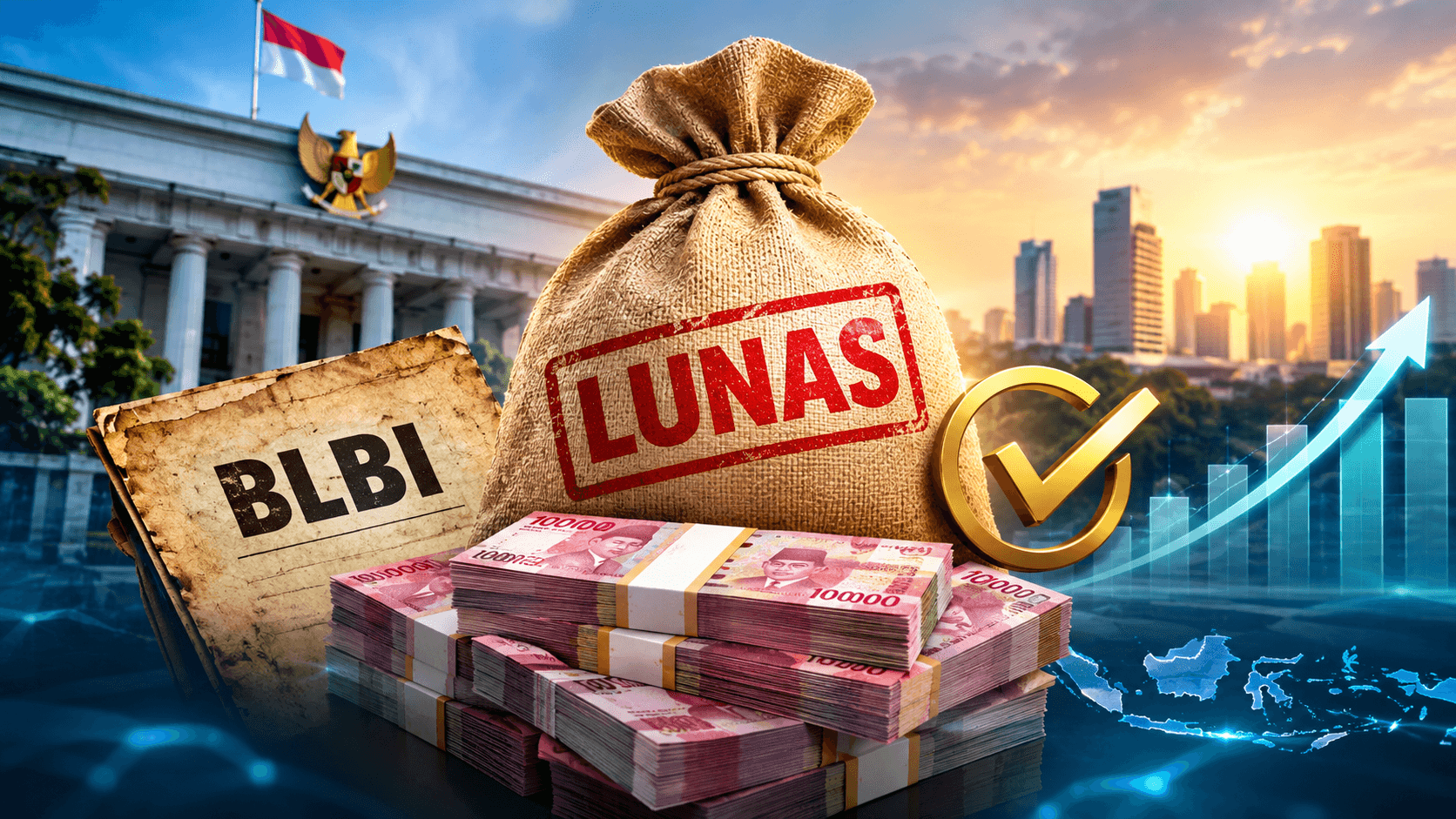
The government finally completed payment of Rp21.83 trillion in BLBI bonds, which formed part of the state’s obligations. The repayment marked the end of payments on BLBI bond instruments that had continued for nearly three decades.
Simply put, repaying the BLBI debt means that the government has fulfilled its payment obligation on BLBI-related bonds. However, it is important to understand that settling a financial obligation is different from resolving all aspects of the BLBI case.
Legal matters, asset recovery, and the settlement processes involving related parties each follow their own paths.
Why Did BLBI Debt Last for 30 Years?
There are several reasons why BLBI debt took a long time to resolve.
1. The Obligation Was Very Large
The 1998 crisis caused the need to rescue the banking sector to reach a very large amount.
It could not be settled all at once and therefore required a long-term mechanism.
2. Using Government Bond Instruments
Some BLBI obligations were settled through the issuance of government bonds.
This means payments were made in accordance with the structure and capacity of the state’s fiscal management.
3. A Complex Settlement Process
BLBI was not only related to financial aspects, but also involved administrative, asset, and legal processes.
Therefore, its settlement required a long time.
Have All BLBI Issues Been Resolved?
The question “has the BLBI case been resolved?” needs to be viewed from several perspectives.
From the perspective of financial obligations, the government has completed payment of Rp21.83 trillion in BLBI bonds that formed part of the state’s obligations.
However, settling the debt does not necessarily mean that all issues related to BLBI have come to an end.
The BLBI case has broader dimensions, including:
- Settlement of BLBI-related assets.
- Collection of obligations from certain parties.
- Legal processes that have taken place.
- Government efforts to recover state losses.
Therefore, the repayment of BLBI debt represents the settlement of the bond obligation, but it cannot be understood as the end of every aspect related to BLBI’s history.
Impact of BLBI Debt Repayment on State Finances
Settling BLBI obligations has several impacts on the management of state finances.
1. Reducing the Government’s Obligations
One of the main impacts is a reduction in bond payment obligations that had been part of Indonesia’s national debt management for many years.
With these payments completed, the government no longer has a payment burden for the BLBI bond instruments that have been repaid.
2. Increasing Fiscal Certainty
Settling long-term obligations provides greater certainty in state financial planning.
The government can focus more on allocating fiscal resources to other needs, such as:
- Infrastructure.
- Education.
- Healthcare.
- National development programs.
3. Becoming Part of the History of Crisis Management
BLBI is part of the history of Indonesia’s economic policy when the country faced a major crisis.
This repayment shows how a state obligation arising from an economic emergency can be settled gradually through fiscal mechanisms.
5 Things to Understand After BLBI Debt Is Fully Repaid
For the public, there are several important points to understand regarding the repayment of BLBI.
1. BLBI Originated from the 1998 Economic Crisis
BLBI debt did not arise under normal conditions, but from efforts to maintain financial system stability during the crisis.
2. Repayment Was Carried Out Gradually
Because the amount was large, the settlement was carried out through a long-term mechanism using government bond instruments.
3. National Debt Does Not Come Only from BLBI
Although BLBI is one of the cases most widely known to the public, Indonesia’s national debt structure consists of various instruments and government financing needs.
4. Repayment Does Not Erase the Historical Record
The BLBI case remains an important part of Indonesia’s economic journey.
The lessons from the case relate to:
- Financial sector supervision.
- Banking governance.
- Crisis risk management.
5. Transparency Remains an Important Factor
The settlement of state obligations needs to be accompanied by transparency so that the public understands how the process works.
Who Pays the BLBI Debt?
The question “who pays the BLBI debt?” often arises because BLBI was related to assistance to the banking sector.
Under the mechanism, BLBI bond payments are made by the government through state financial management. This means the obligation becomes part of the government’s fiscal responsibility.
The funds used for payment come from state budget management in accordance with the applicable mechanism. Therefore, the public often associates BLBI with the state’s financial burden that emerged after the 1998 crisis.
How Much Is the Total BLBI Debt?
The amount currently drawing attention is the settlement of Rp21.83 trillion in BLBI through the repayment of BLBI-related bonds.
However, the overall BLBI figure has a long history because it involves various components of obligations, assets, and settlement processes that took place over many years.
Therefore, when discussing the total BLBI debt, it is important to distinguish between:
- The value of the bond obligations that were repaid.
- The total BLBI issues dating back to the beginning of the crisis.
- The value of assets or claims that were once related to the program.
What Does BLBI Debt Repayment Mean for the Public?
For the general public, BLBI repayment does not mean that the government immediately has an additional Rp21.83 trillion in cash.
Its impact is more closely related to the management of state obligations.
Its key implications include:
- A reduction in the government’s payment obligations.
- The end of one debt instrument originating from an earlier crisis.
- An evaluation of economic risk management for the future.
However, the direct impact on everyday life still depends on how the government manages fiscal space afterward.
What Happens After the BLBI Debt Is Fully Repaid?
After the government repays the BLBI debt, the next focus is how the state maintains economic stability and strengthens financial governance.
Several things need to be considered going forward:
1. Strengthening the Financial System
The BLBI experience provides an important lesson about the importance of banking sector supervision.
2. Transparency in Government Debt Management
The public increasingly needs clear information about:
- The structure of government debt.
- Financing objectives.
- The impact on the state budget.
3. Preventing Similar Crises
Economic policy needs to ensure that financial system risks can be managed better than during the 1998 crisis period.
If you want to follow the latest information on the economy, financial markets, and digital asset developments, you can register with Bittime to get the latest news, market insights, and analysis on a regular basis.
Conclusion
The fully repaid BLBI debt through the settlement of Rp21.83 trillion in BLBI bonds is an important milestone in Indonesia’s long economic journey.
However, understanding the repayment of BLBI requires more than simply looking at the payment figure. This event is connected to the history of the 1998 crisis, banking rescue policies, and how the state manages long-term obligations.
The repayment of BLBI debt marks the completion of one of the government’s financial obligations, but lessons about governance, transparency, and risk management remain an important part of BLBI’s history.
To understand the latest economic developments and financial policies, it is important to follow information from trusted sources and view the issue comprehensively.

Bittime is a licensed Digital Financial Asset Trader (PAKD) platform authorized and supervised by the Financial Services Authority (OJK) — where you can buy Bitcoin in Indonesia and hundreds of other crypto assets starting from Rp10,000. Registration is fast and secure, and you can get started today.
Monitor USDT to IDR conversion and your favorite crypto asset prices in real time. Everything is available in one crypto investment app that can be downloaded for free from the Play Store.
Ready to get started? Register now with Bittime and execute your investment strategy with a platform trusted by millions of users in Indonesia.
FAQ
What is BLBI debt?
BLBI debt is an obligation related to the Bank Indonesia Liquidity Assistance (BLBI) program, which provided liquidity assistance during the 1997–1998 economic crisis to maintain banking sector stability.
When was the BLBI debt fully repaid?
The government completed payment of Rp21.83 trillion in BLBI bonds after the obligation had remained outstanding for nearly 30 years since the 1998 economic crisis period.
Has the BLBI case been resolved?
The repayment of BLBI bonds resolves certain financial obligations. However, other aspects, such as asset settlement and legal processes, are addressed separately.
Who pays the BLBI debt?
BLBI obligations are paid by the government through state financial management. Therefore, BLBI bonds form part of the government’s fiscal obligations.
What is the impact of BLBI debt repayment?
The impact is a reduction in one of the government’s payment obligations and greater certainty in fiscal management. However, the broader economic impact depends on subsequent government policies.
Disclaimer: The views expressed belong exclusively to the author and do not reflect the views of this platform. This platform and its affiliates disclaim any responsibility for the accuracy or suitability of the information provided. It is for informational purposes only and not intended as financial or investment advice.

.png)