The Importance of Understanding the Functions of Stablecoins and Asset Tokenization
2026-10-16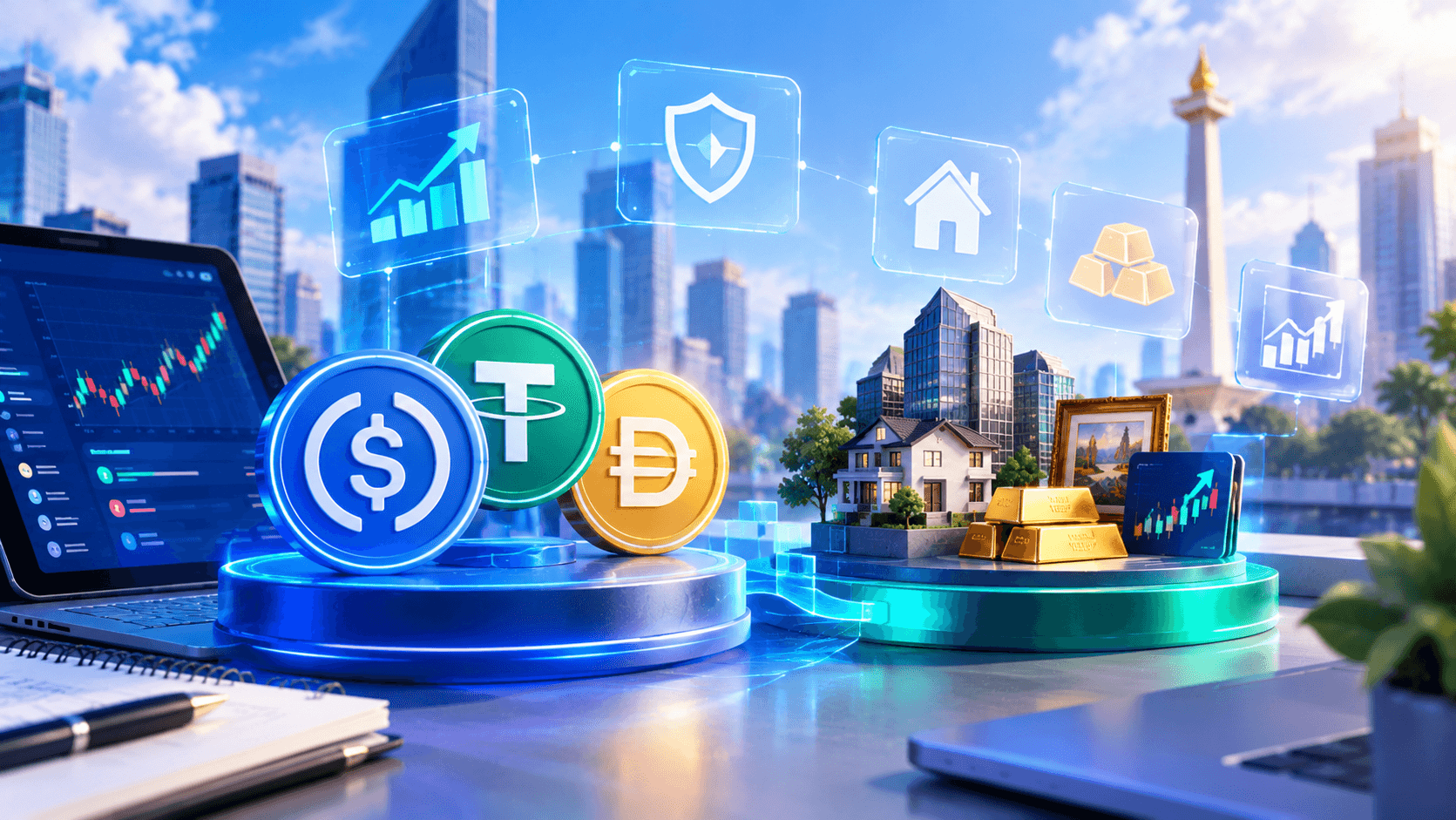
Jakarta, October 16, 2026 — Blockchain technology continues to introduce various forms of digital assets with increasingly specialized functions. Stablecoins are designed to maintain a relatively stable value against an underlying asset, while tokenization enables certain rights or values to be represented as digital tokens.
These differences make it increasingly important to understand product mechanisms, user rights, and risks as Indonesia's digital financial ecosystem continues to develop.
Bittime, a digital asset platform offering Spot, Staking, and Futures services, believes that product innovation needs to go hand in hand with greater transparency and consumer understanding. Each instrument has its own characteristics, meaning it cannot be evaluated solely based on its name, the technology it uses, or its price movements.
Bittime Operations Director Ryan Lymn believes that a clear regulatory framework is an important element in supporting the development of the digital asset ecosystem.
“Stablecoins are an interesting development in the digital financial ecosystem because they serve a different purpose from crypto assets, whose prices tend to be more volatile. However, their use needs to be supported by regulatory clarity, transparency, and consumer protection. This is important to ensure that innovation can develop alongside public understanding of the characteristics and risks of digital assets,” Ryan said.
Stablecoins Are More Than Just Assets with Stable Prices
Unlike crypto assets, which can experience significant price fluctuations, stablecoins are designed to maintain a relatively stable value against an underlying asset, such as a fiat currency.
This characteristic gives stablecoins potential uses that differ from other digital financial instruments, including transferring value and settling transactions, depending on the design and backing of each product.
However, a targeted price stability does not mean stablecoins are risk-free. Their ability to maintain value can be affected by the adequacy and management of reserves, the issuer's credibility, liquidity, and the mechanisms for exchanging or redeeming the tokens.
These considerations are particularly relevant as Indonesia prepares to regulate stablecoins. According to ANTARA's report on a discussion between the Financial Services Authority (OJK) Board of Commissioners and the media on October 8, 2026, the regulator discussed stablecoins' potential as programmable money and preparations for a regulatory framework, with initial direction targeted for January 2027.
The concept of programmable money refers to the possibility of integrating specific rules or conditions into the use of digital money. Although this approach may offer efficiency benefits, its implementation still depends on technological design, the legal framework, governance, and user protection.
Ryan emphasized that understanding how a product works should be part of consumer decision-making.
“Market growth needs to be accompanied by a sound understanding of how each instrument works. Stablecoins are designed to maintain a stable value relative to their underlying assets, but that does not mean they are risk-free. Consumers still need to consider the issuer, redemption mechanisms, liquidity, and applicable terms before using stablecoins in digital asset trading,” Ryan explained.
Tokenization Introduces Different Ownership Structures and Risks
In addition to stablecoins, tokenization is another approach used in the development of blockchain-based products.
Through this mechanism, certain rights or values are represented as digital tokens. However, the rights held by users are not always the same and depend on the product's legal structure and terms.
In this context, it is important to distinguish between the digital representation of an asset and direct ownership of the underlying asset. A token linked to a stock, for example, does not necessarily provide the same rights as owning that stock through a conventional capital market.
Factors to consider include the issuer's identity and obligations, the underlying asset, token holder rights, transaction settlement mechanisms, liquidity, and any applicable exchange or redemption terms.
The ongoing development of a draft OJK regulation (RPOJK) concerning the offering of tokenized assets is one relevant regulatory development for this product category.
A regulatory framework that accounts for the characteristics of each instrument can help clarify governance, transparency, and consumer protection requirements.
Ryan believes that differences in product structures should be considered when developing policies and improving user understanding.
“Stablecoins and tokenization serve different purposes and have distinct characteristics, so their regulatory approaches also need to account for the structure and risks of each product. Clarity regarding holder rights, governance, transparency, and consumer protection will be important in supporting the responsible development of the digital financial ecosystem,” Ryan said.
Exposure to Global Assets Requires an Understanding of Product Structures
The development of tokenization is also reflected in the availability of tokenized US stocks on Bittime.
These products are designed to provide exposure to the price movements of US companies' stocks through digital tokens, subject to the structure and terms of each instrument.
Their availability illustrates how blockchain technology can be used to offer alternative forms of access to global assets. However, users need to understand that exposure to stock prices does not automatically mean direct ownership of the relevant company's shares.
Before using tokenized products, consumers should review documentation explaining the underlying asset, issuer, rights attached to the token, transaction mechanisms, and liquidity and counterparty risks. Trading and settlement terms may also differ from those used in conventional stock markets.
Ryan emphasized that product development needs to go hand in hand with information transparency and consumer education.
“For Bittime, the development of the digital asset ecosystem is not only about expanding the range of available products, but also about helping consumers understand the purpose, mechanisms, and risks of each instrument. We view education and transparency as important elements in supporting responsible industry growth alongside the ongoing development of Indonesia's regulatory framework,” Ryan concluded.
Consumer Education as a Foundation for Digital Asset Development
The development of Indonesia's digital asset market is also reflected in OJK data. In August 2026, the number of crypto asset consumer accounts reached 23.21 million, while transaction value totaled IDR 23.16 trillion, an increase of 12.87% compared with July 2026.
These figures provide context for market activity, but they do not, by themselves, indicate how well consumers understand each instrument. As the range of available products expands, access to clear information about mechanisms, user rights, and risks becomes increasingly important.
Bittime provides an ecosystem of Spot, Staking, and Futures services, along with other digital asset options. As the industry develops, understanding the purpose of each product remains an important consideration, enabling users to evaluate instruments based on their individual needs and financial capacity.
For the digital asset industry, technological innovation and regulatory clarity are closely interconnected. Supporting sustainable growth also requires transparent product information, adequate governance, and consumer awareness of the risks that may arise.
Disclaimer: The views expressed belong exclusively to the author and do not reflect the views of this platform. This platform and its affiliates disclaim any responsibility for the accuracy or suitability of the information provided. It is for informational purposes only and not intended as financial or investment advice.

.png)