What Is the Crypto Assets Regulation SEC Rules for Token Fundraising
2026-08-20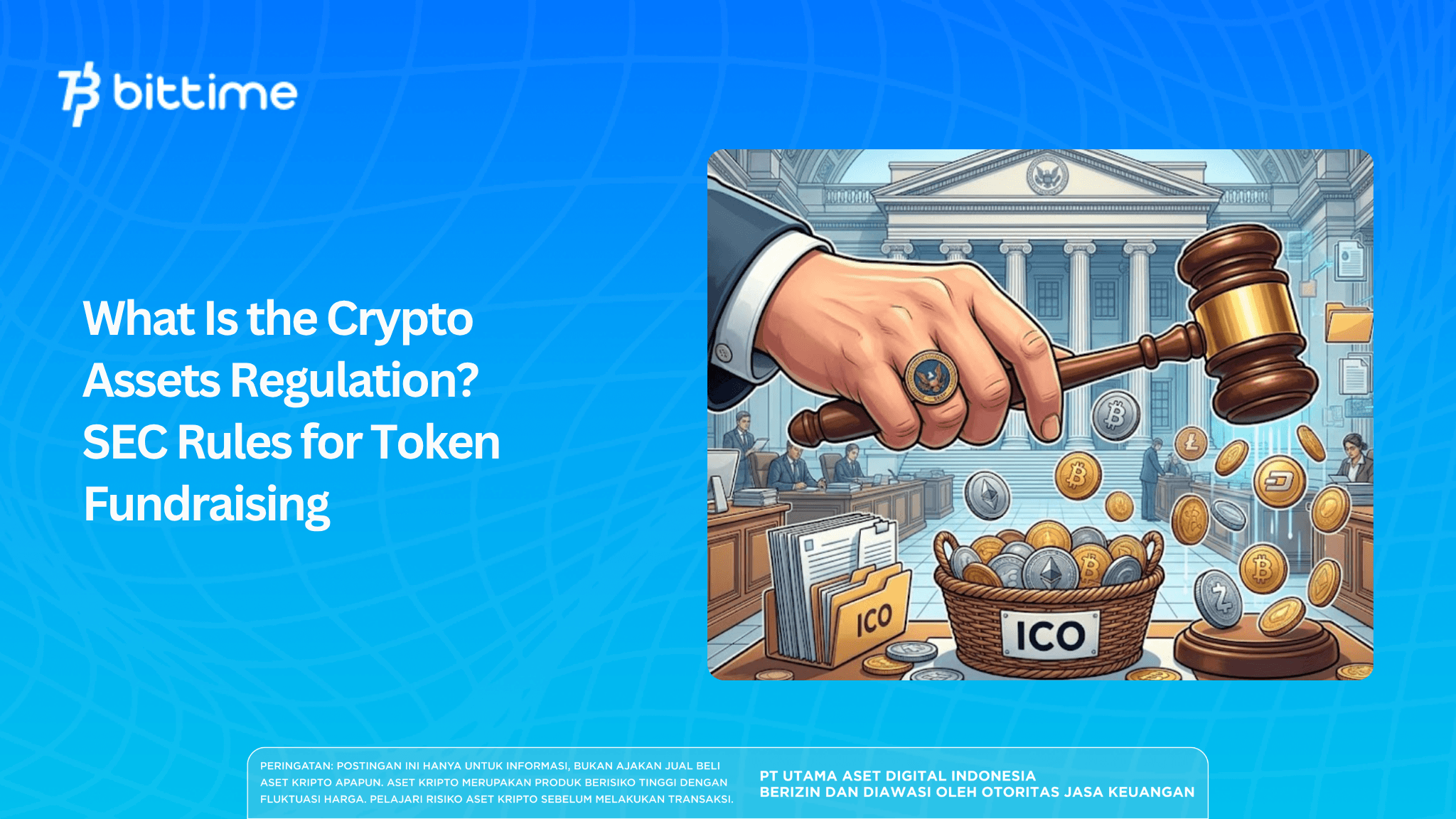
The United States is entering a new phase in SEC crypto regulation after the Securities and Exchange Commission (SEC) proposed a Regulation Crypto Assets framework to govern how crypto projects raise funds through tokens.
This proposal is important because for years, crypto startups in the US have faced uncertainty over when token sales are considered securities offerings.
In March 2026, SEC Chair Paul Atkins had already outlined the concept of a dedicated pathway for crypto startups, including a potential fundraising exemption of up to US$5 million over four years, a fundraising pathway of up to US$75 million per 12 months, and a safe harbor for tokens that eventually no longer depend on the issuer's managerial efforts.
Now, the concept has moved from a policy idea toward a formal proposal. However, the crypto token rules are not yet final law. The proposal still requires a 60-day public comment period and may change before being finalized.
Key Takeaways
- Regulation Crypto Assets creates a new pathway for crypto projects to raise capital without going through the full securities registration process.
- The proposal includes a startup exemption of up to US$5 million over four years and a fundraising pathway of up to US$75 million over a 12-month period, with different requirements based on the offering size.
- The framework also offers an investment contract safe harbor, but it is not yet a final rule, so startups should not treat its figures or requirements as legal certainty.
What Is Regulation Crypto Assets?
Regulation Crypto Assets is the name of the regulatory framework being developed by the SEC to create a dedicated regulatory pathway for certain offerings involving crypto assets.
The main idea is to reconcile two needs that have often conflicted: providing room for innovation and capital raising while continuing to protect investors.
In his March 2026 speech, Atkins explained that the SEC wants to provide a pathway that is better suited to the characteristics of crypto projects.
Under the concept, certain digital assets do not automatically become securities simply because they are used in an investment contract. Regulatory focus also shifts toward how tokens are offered and whether they still depend on the issuer's managerial efforts.
This approach differs from the enforcement model that has led many projects to choose to develop or sell tokens outside the United States.
Read Also: SEC and CFTC Clarify Regulations for Crypto Staking, Mining, and Airdrops
How Do the SEC Rules for Tokens Work?
The SEC's proposed rules for tokens essentially offer several pathways.
The first is the startup exemption, which is intended for early-stage projects. The concept outlined by the SEC allows fundraising of up to US$5 million over a four-year period, with principles-based disclosures and no specific restrictions on investor status like those applicable under some traditional securities exemptions.
The second is the fundraising exemption for more developed projects. This proposal opens a pathway for raising up to US$75 million over a 12-month period, with a tiered structure.
Summaries of the proposal reported by several sources state that Tier 1 covers up to US$20 million, while Tier 2 reaches US$75 million and carries stricter disclosure requirements, including audited financial statements.
Through this mechanism, the SEC is attempting to create a middle ground between private placement and full securities offering registration.
Start your financial journey today. Sign up on Bittime and build your investment portfolio with ease.
What Is the US$5 Million Startup Exemption?
For US crypto startups, the US$5 million pathway could be the most attractive part of the proposal.
In the early stages, crypto projects often need capital for technology development, security, marketing, and hiring before the token has a mature ecosystem.
Rather than forcing projects to undergo the full registration process from the outset, startup exemption is designed as a kind of time-limited development space.
However, an exemption does not mean a project is free from obligations. Under the concept presented by the SEC, issuers would still need to provide certain disclosures about the project, token, and investment to the public.
Therefore, the purpose of this pathway is not to eliminate investor protection, but to tailor the form of information to the characteristics of crypto projects.
Read Also: US Tightens Stablecoin Rules Through the GENIUS Act, What Does It Mean for USDT?
How Is the US$75 Million Crypto Fundraising Different?
The crypto fundraising pathway of up to US$75 million is more intended for projects that have reached a more advanced stage.
The size of this limit is important because blockchain projects require relatively large amounts of capital when they begin building infrastructure, expanding their user base, and providing liquidity.
Tier 2 will carry a higher compliance burden than Tier 1. In addition to audited financial statements, there are also certain restrictions on purchases by non-accredited investors.
Available summaries of the proposal state that the limit for non-accredited investors in Tier 2 is 10% of their income or net worth.
This model shows that the larger the amount of capital raised, the higher the transparency standards.
What Is an Investment Contract Safe Harbor?
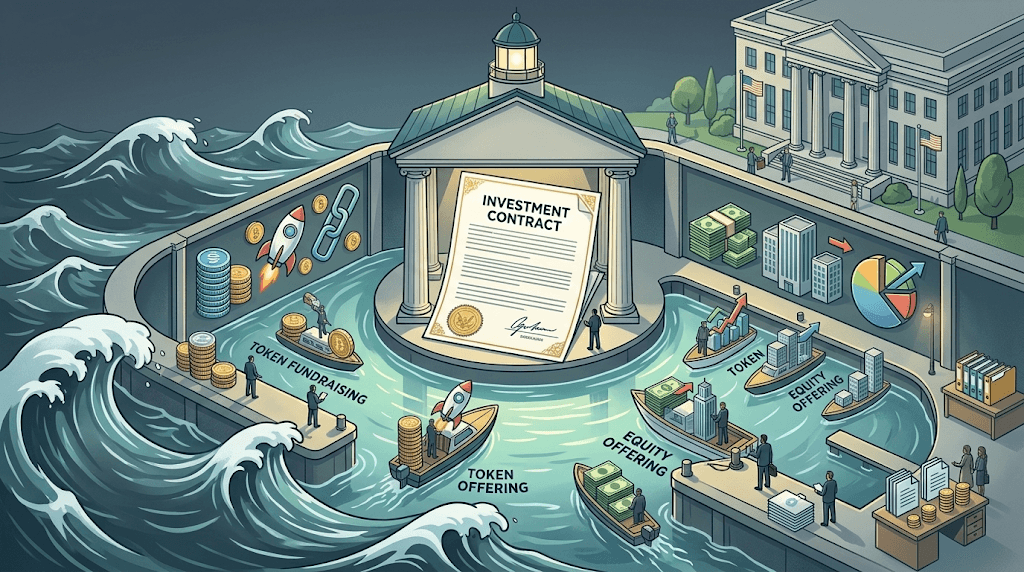
Another highly important part of the SEC's crypto asset framework is the investment contract safe harbor.
Atkins has presented this concept since March 2026. The SEC proposes a pathway that could allow a token to exit the scope of federal securities laws after the issuer completes or permanently ceases the primary managerial efforts that were previously promised to investors.
This is important because the status of a token can change as a project develops.
Source: AI Image generated
In the early stages, investors may purchase tokens with the expectation that the team will build a particular network or product. Once the network becomes more mature and no longer depends on the team's efforts in the same way, the token's status may differ.
The safe harbor attempts to turn this process from a purely interpretive decision into a more measurable standard.
Read Also: MiCA vs Indonesia Regulation: Which Is More Ready to Regulate Crypto?
Is Regulation Crypto Assets Already in Effect?
Not yet.
This is an important point when discussing 2026 token regulation. The US$5 million and US$75 million figures first appeared in Atkins' March speech and were later brought into the SEC's rulemaking agenda. The formal proposal now opens a public comment process, but it is not yet a final rule.
This means startups should not immediately assume that they can conduct fundraising under the new framework.
After the comment period ends, the SEC must consider input from companies, investors, attorneys, and market participants before establishing the final rules.
What Does It Mean for US Crypto Startups?
The biggest potential impact is increased legal certainty.
Until now, uncertainty over token classification could lead startups to avoid the US market or seek other jurisdictions. The new proposal could reduce these barriers by providing a pathway specifically designed for token development.
For US crypto startups, this could also make capital planning clearer. Projects could choose whether to use the startup pathway, a larger fundraising route, or continue using other existing securities exemptions.
However, compliance costs remain. Disclosures, audits, recordkeeping, and investor restrictions can create additional burdens, particularly for smaller projects.
Read Also: Complying with MiCA Rules, RLUSD Stablecoin Set to Operate in the European Market
Is This the Same as US ICO Regulation?
There are similarities, but US ICO regulation through Regulation Crypto Assets has a more modern context.
Early-generation ICOs often used tokens as a way to raise capital before a network was fully operational. Regulation Crypto Assets attempts to recognize this characteristic while providing a formal pathway under securities law.
The difference lies in the structure and flexibility. The SEC proposal does not simply legalize ICOs without conditions. Instead, issuers must meet certain requirements to qualify for an exemption.
In other words, this is better viewed as a legal framework for token fundraising rather than a blanket permission to conduct an ICO.
What Is Not Covered by the Proposal?
One important point is that this fundraising proposal is not the entirety of the SEC's crypto agenda.
Available materials state that this framework does not resolve issues surrounding tokenized securities, such as company shares issued in tokenized form and traded on-chain. That area remains part of a separate regulatory agenda.
This means Regulation Crypto Assets focuses more on token fundraising and investment contract status, rather than automatically opening the way for all traditional assets to be moved onto the blockchain.
Meanwhile, Congress is also considering the CLARITY Act, which has different figures and structures. Therefore, the relationship between the SEC rules and the legislation under consideration may still change.
Read Also: Will the Clarity Act Have a Major Impact on the Crypto Market in 2026?
What Does Regulation Crypto Assets Mean for Investors?
For investors, the new framework could provide access to more crypto projects operating legally in the US. However, the existence of an SEC exemption does not mean a token is automatically a good investment.
Investors still need to examine tokenomics, the business model, token utility, the issuer's financial condition, ownership structure, and product risks.
A regulatory exemption only answers the question of how a token can be legally offered, not whether that token will succeed in the market.
Conclusion
Regulation Crypto Assets represents the SEC's effort to create a clearer pathway for crypto projects to raise capital in the United States.
The concept includes a startup exemption of up to US$5 million, a fundraising pathway of up to US$75 million, and an investment contract safe harbor.
This framework could represent a major change for US crypto startups by providing an alternative to the more burdensome securities registration process. However, the rules are still a proposal and may change during the public comment process.

Start trading crypto with major assets such as BTC/IDR and ETH/IDR directly on the Bittime app.
Bittime is a licensed and OJK-supervised Digital Financial Asset Trader (PAKD) platform — where you can buy Bitcoin in Indonesia and hundreds of other crypto assets starting from Rp10,000. The registration process is fast, secure, and can be started today.
Monitor the USDT to IDR conversion rate and the price movements of your favorite crypto assets in real time. Everything is available in a single crypto investment app that can be downloaded for free from the Play Store.
Ready to get started? Sign up on Bittime now and execute your investment strategy with a platform trusted by millions of users in Indonesia.
FAQ
What Is Regulation Crypto Assets?
Regulation Crypto Assets is an SEC proposal that creates a dedicated framework for offerings and fundraising using certain crypto assets, including exemption pathways and an investment contract safe harbor.
What Is the Fundraising Limit Under Regulation Crypto Assets?
The SEC's proposed framework includes a startup exemption of up to US$5 million over four years and a fundraising exemption of up to US$75 million over a 12-month period.
Has Regulation Crypto Assets Become a Final Rule?
Not yet. The proposal is still undergoing a 60-day public comment period and may change before the SEC establishes the final rules.
What Is a Safe Harbor for Tokens?
A safe harbor is a proposed pathway intended to provide certainty that certain tokens can exit investment contract status after the issuer completes or permanently ceases the managerial efforts that formed the basis of the relationship.
What Does It Mean for US Crypto Startups?
Startups could have a clearer fundraising pathway in the United States without having to immediately use full securities registration, but they would still need to meet disclosure requirements and other conditions.
Is Regulation Crypto Assets the Same as ICO Regulation?
Not entirely. Regulation Crypto Assets could serve as a new legal framework for token fundraising, but issuers must still meet certain requirements, and not all token activities automatically qualify for an exemption.
Disclaimer: The views expressed belong exclusively to the author and do not reflect the views of this platform. This platform and its affiliates disclaim any responsibility for the accuracy or suitability of the information provided. It is for informational purposes only and not intended as financial or investment advice.

.png)