OpenAI Pay for Data? 550+ Publishers Lawsuit Could Transform ChatGPT's Business
2026-09-17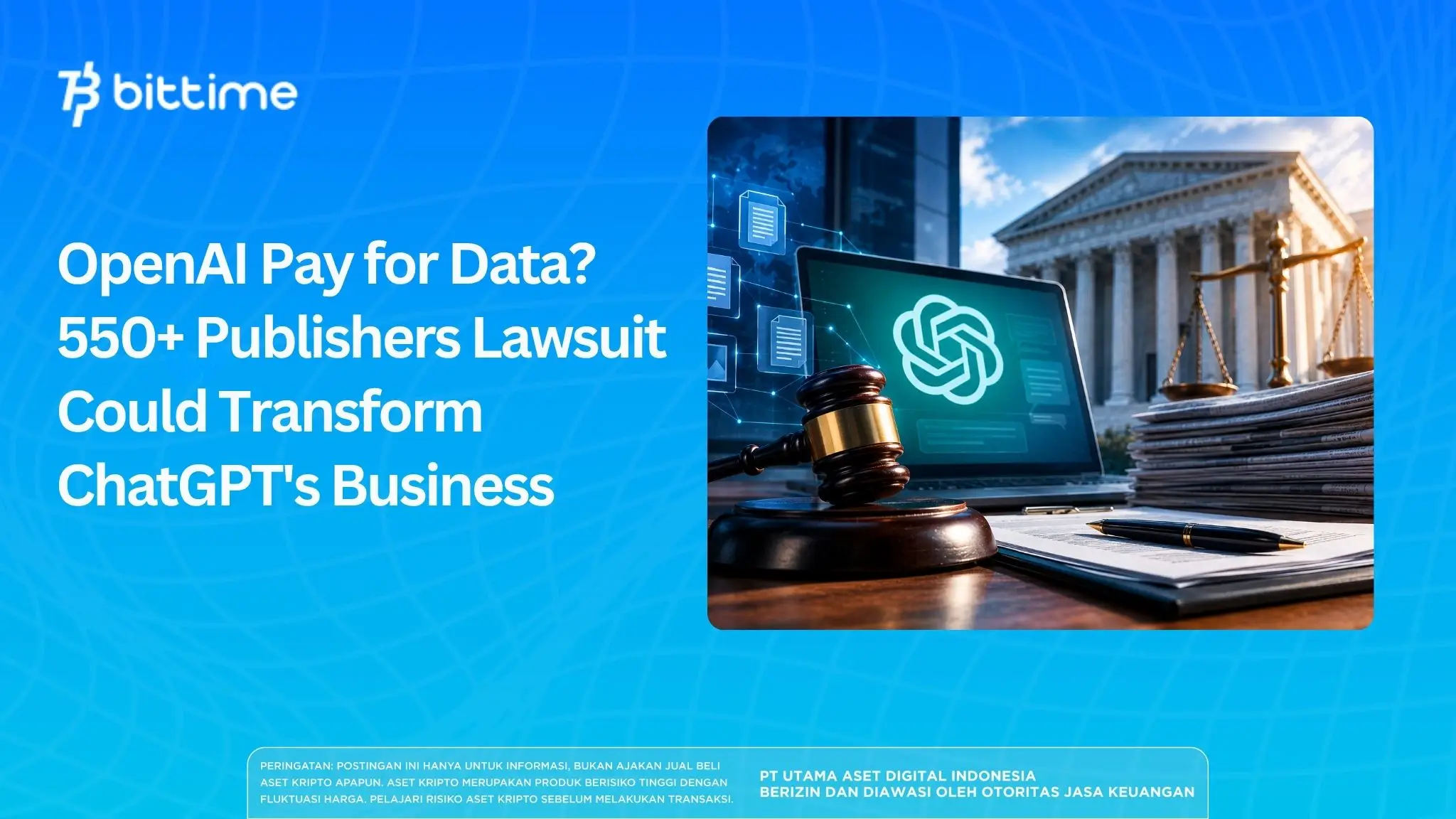
So far, internet data has been the main fuel for the development of generative AI technology.
News articles, books, images, code, and web pages help companies train language models at scale.
However, when more than 550 outlets sued OpenAI and Microsoft, free data began to turn into the biggest potential cost in the AI industry.
26 additional publishers joined a coalition questioning the use of copyrighted content to train ChatGPT, Copilot, and Bing AI.
This matter not only determines the limits of fair use, but it can also answer an important question: will AI companies continue to rely on scraping or start paying for content licenses?
Key Takeaways
Scraping without a license reduces initial costs, but increases the risk of lawsuits and business uncertainty.
AI data licensing can make content a cost component that affects the price of ChatGPT services.
OpenAI has the potential to sell access to legal, verified, and industry-specific data as a premium product.
Why is the 550+ Publisher Lawsuit a Business Problem?
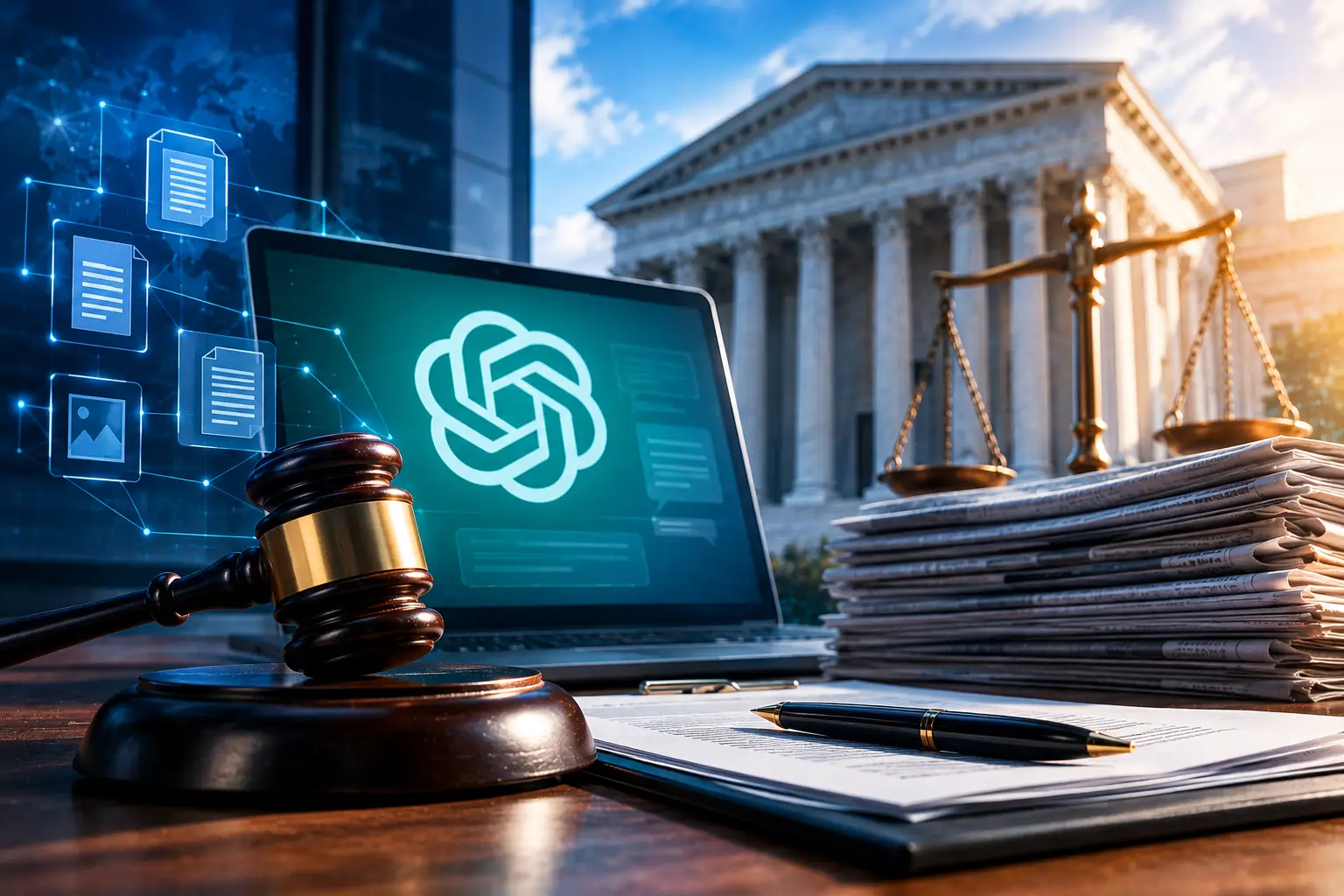
Illustration: AI Source
The main debate is not just whether ChatGPT quoted or copied the article directly.
The bigger issue is whether the process of collecting, storing, and using copyrighted works to train AI models requires permission from the content owners.
OpenAI and Microsoft argue that model training is transformative because the system learns language patterns, rather than reselling every work as a copy.
Conversely, publishers believe that commercial use without compensation can reduce the economic value of the content and disrupt the existing licensing market.
The U.S. Copyright Office called the assessment of fair use depends on the intended use, type of work, amount of material used, and its impact on the market.
Thus, legal decisions may differ based on the type of content, how the data was obtained, and the stage of use in AI development.
Read Also:AI Innovations That Are Changing the Face of Digital Finance
Let's start investing and trading Bittime, Register at Bittime with a fast, safe and easy process.
From ChatGPT to API: how does OpenAI make money?
How OpenAI makes money doesn't just depend on the number of ChatGPT users.
AI revenue also comes from subscriptions, API access, business packages, enterprise services, and model integration into various applications.
OpenAI's API platform provides developers with access to usage schemes and features for enterprise needs.
If content licensing becomes mandatory, the cost structure of ChatGPT's business model will change.
Revenue from subscriptions and APIs must cover the costs of computing, energy, security, model development, and content usage rights.
This means that licensing is no longer just a legal issue.
Licensing is part of OpenAI's margin calculations, product pricing, and business growth strategy.
In the context of Microsoft's OpenAI investment, Azure's support and large-scale funding could help the company absorb those costs.
Microsoft previously stated that its partnership with OpenAI includes a multibillion-dollar investment as well as Azure supercomputing support for the development and deployment of AI models.
Read Also: Top 5 AI Cryptocurrencies in 2026: Which Ones Are Worth Buying?
Content Licensing Could Create New Sources Of Ai Monetization
If AI data licensing becomes standard, publishers will no longer only earn revenue from advertising, reader subscriptions, or content sales.
News archives, premium articles, metadata, and knowledge bases can be assets licensed to AI companies.
This change could shift the definition of AI products.
OpenAI is not just selling the ability to generate text or images, but also selling the assurance that the information used has clear sources and more secure usage rights.
For companies, these values are very important.
Models with traceable data can reduce reputational risk, strengthen compliance, and help users hold AI-generated information accountable.
Stay up to date with developments in AI technology and the digital economy by registering at Bittime. Make sure you understand the risks before making any digital asset transactions.
Will Licensing Strengthen The Dominance Of Large Companies?
According to figures in the source report, global spending on AI platforms and models is expected to increase from US$39.31 billion in 2025 to US$64.25 billion in 2026.
The basic generative model alone is projected to reach US$23.36 billion.
This growth creates huge opportunities for publishers, but may also increase barriers to entry.
Small companies may struggle to pay for premium datasets, compute, energy, GPUs, and cloud services all at once.
The OECD warns that exclusive access to high-quality datasets could strengthen the position of large companies and make it difficult for new entrants to build competitive models.
In such circumstances, licensing has the potential to make data a source of strategic advantage, not just training material.
In Europe, providers of general-purpose AI models are required to have a copyright compliance policy and publish a summary of the materials used for training.
These regulations indicate that data provenance is starting to become part of the commercial value of AI products.
Read Also:Looking at Future Technology 2030: What Will Be Booming?
Will Chatgpt Become More Expensive?
Not necessarily directly. A more likely strategy is to segment services based on data quality, compliance level, and user needs.
ChatGPT for consumers can still use the general model.
Meanwhile, companies gain access to models or features supported by licensed content, sector data, and more comprehensive source documentation.
With this pattern, licensing fees can be charged primarily to business users who derive direct financial benefits from the technology.
This is a possible new direction for AI monetization: not simply selling tokens or computing capacity, but selling access to legal, high-quality, and verifiable information.
Bittime is a licensed and regulated Digital Financial Asset Trader (PAKD) supervised by Indonesia’s Financial Services Authority (OJK) — where you can buy Bitcoin in Indonesia and hundreds of other crypto assets starting from just Rp10,000. The registration process is fast, secure, and you can get started today.
Track USDT to IDR conversions and monitor your favorite crypto assets in real time. Everything is available in one crypto investment app that you can download for free on the Play Store
Ready to start? Register now on Bittime and execute your investment strategy with a platform trusted by millions of users in Indonesia.
FAQ
What is the essence of the shift from scraping to content licensing?
This change means AI companies are no longer relying solely on collecting data from the internet, but are entering into formal agreements with content owners. Data becomes a paid input with usage limits and distribution terms.
Does automatic content licensing make ChatGPT more expensive?
While licensing isn't automatic, it can increase operational costs. OpenAI can offset these costs through enterprise packages, API pricing, premium services, or contracts with business partners.
Why could a publisher lawsuit impact AI revenue?
Legal rulings can determine whether AI companies must pay for content usage rights. If licensing is required, data costs will factor into margin calculations and AI product pricing strategies.
Will small AI companies have a hard time competing?
The potential is significant. Larger companies have the capital, cloud computing, GPUs, user bases, and stronger partnership networks to cover licensing and model training costs.
Is OpenAI definitely moving to a full licensing model?
There's no certainty that OpenAI's entire training process will utilize a full license. However, increasing lawsuits, regulations, and the need for transparency make content licensing an increasingly difficult business direction to ignore.
Disclaimer: The views expressed belong exclusively to the author and do not reflect the views of this platform. This platform and its affiliates disclaim any responsibility for the accuracy or suitability of the information provided. It is for informational purposes only and not intended as financial or investment advice.

.png)